
Purple Aura Meaning: Intuition, Spirituality & Mystical Energy
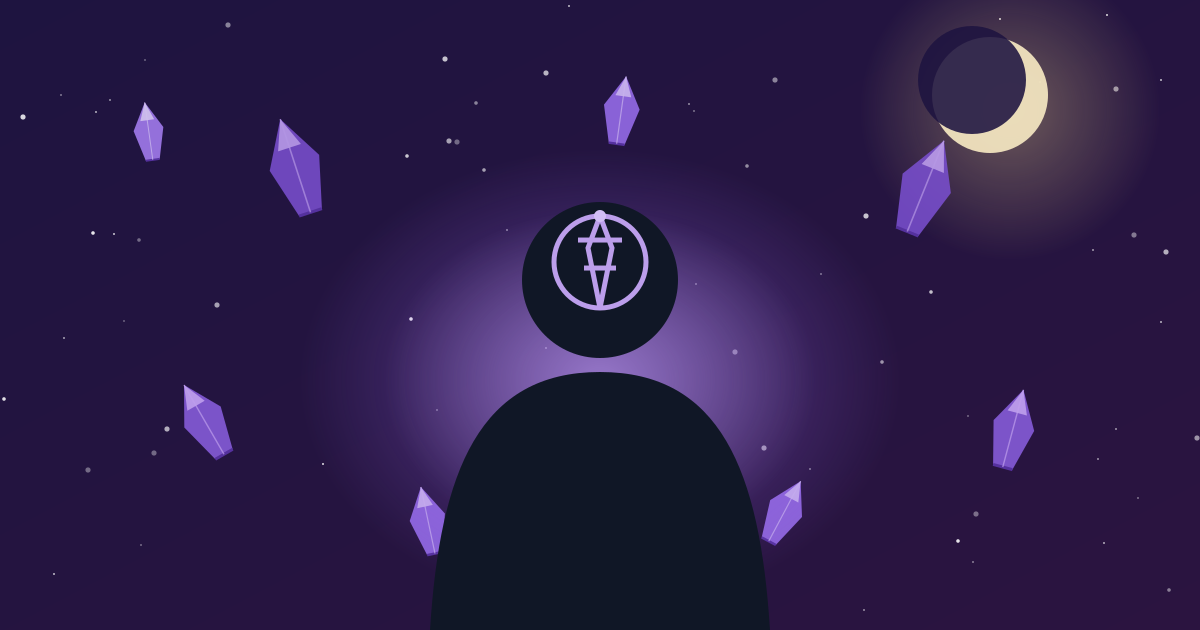
Purple is the color of twilight skies, amethyst geodes, and the hour between day and night when the world feels half dream. In aura tradition, a purple aura carries exactly those qualities: intuition, spirituality, imagination, and mystical depth. Where red charges forward and green nurtures, purple perceives — it is the color of the crown chakra, the energy center associated with higher consciousness, inner wisdom, and connection to something larger than the self.
Aura colors are understood as reflections of your emotional and energetic state rather than fixed labels — they shift with mood, season, and life chapter. Purple appearing as your dominant aura suggests that intuition, inner life, and spiritual questions are especially active for you right now. Let's explore what that means.
The Purple Aura Personality
Purple-aura individuals are traditionally described as dreamers, visionaries, and old souls. They live with one foot in the inner world: rich daydreamers, vivid dreamers at night, and people who notice patterns, symbols, and synchronicities that others walk straight past. If you've ever known someone who 'just knew' things — who sensed a mood before a word was spoken or felt a hunch that turned out exactly right — you've likely met a purple aura.
These are deeply imaginative people with a natural pull toward meaning. Purple auras don't ask just what happened; they ask what it means. Dreams, tarot cards, angel numbers, omens, art, poetry — anything that speaks in symbol feels like home territory. They are often private and introspective, processing the world inwardly before sharing anything outwardly. Small talk bores them; soul talk energizes them.
Purple is also considered the artist's aura. Painters, musicians, writers, healers, counselors, spiritual teachers — purple energy flows naturally toward creative and meaning-making work. There's a gentle, etheric quality to purple auras: they can seem to drift slightly above the noise of ordinary life, tuned to a quieter frequency than everyone else.
Shades of Purple: From Lavender to Deep Violet
Not all purples carry the same message, and aura readers distinguish several shades. Bright violet is considered the most vibrant expression — strong intuition, active spiritual awareness, and creative energy flowing freely. This is the purple of the visionary in full bloom.
Lavender, the palest shade, is traditionally linked to imagination and dreaminess. Lavender-aura people are described as gentle idealists — imaginative, sensitive, and sweetly detached from harsh realities. Lavender often appears temporarily during creative phases, deep rest, or spiritually curious seasons. Deep royal or indigo purple suggests spiritual depth and wisdom — an old-soul quality, authority in mystical matters, and the confidence of someone who has done serious inner work.
Muted, grayish, or murky purple, by contrast, is traditionally read as spiritual fog — disconnection from intuition, creative block, or drifting without direction. It's not a verdict; it's a signal. The purple tradition treats murky shades as an invitation to slow down, ground yourself, and reconnect with the practices that once made you feel plugged in.
Strengths of the Purple Aura
Purple's gifts are the quiet, inner kind that deepen every room they enter. Intuition and insight: purple auras pick up on unspoken feelings, hidden motives, and the truth beneath the performance. Imagination: they can envision what doesn't exist yet — the raw material of art, innovation, and spiritual vision. Calm spiritual presence: there's a serenity to purple energy, like standing near still water; anxious people often relax around it.
Wisdom: purple auras naturally see the big picture — how events connect, what patterns repeat, where things are heading. Emotional depth: they feel things fully and aren't afraid of the shadowy corners of the heart. In work, purple strengths shine in creative fields, counseling, healing professions, spiritual teaching, writing, and any role where insight matters more than speed.
Challenges and Growth Edges
Purple's shadow is the cost of living so far inward. Escapism: purple auras can retreat into fantasy, dreams, and spiritual theory to avoid practical reality — bills, deadlines, and difficult conversations get postponed into a fog. The growth lesson is grounding: intuition means little without the feet on the ground to act on it. Feeling misunderstood: purples often feel like outsiders, surrounded by people who don't quite speak their language. The ache of being unseen can curdle into withdrawal.
Scattered energy is the classic lavender trap in aura tradition: too many visions, not enough follow-through. Purple's imagination generates ten brilliant ideas and finishes none of them. Over-sensitivity is another edge — absorbing other people's emotions like a sponge, then confusing borrowed sadness for your own. And there's spiritual bypassing: using mystical ideas to skip the unglamorous work of therapy, apology, or habit change.
If your purple feels murky or depleted, the tradition prescribes grounding: walks in nature, body-based practices, finishing one small concrete task, and honest journaling about what you've been avoiding. Intuition brightens when life is being lived, not just contemplated.
Nurturing Your Purple Aura
If purple is your color — or the energy you want to cultivate — a few practices resonate especially well. Dream journaling: keep a notebook by the bed and write dreams before they evaporate; purple energy communicates through symbols, and the journal teaches you its language. Meditation: even ten quiet minutes strengthens the inner listening that purple runs on. Twilight and nature time: purple recharges at the edges of things — dawn, dusk, moonlight, open water.
Creative expression: paint, write, sing, dance — intuition flows through creation, and unexpressed purple energy stagnates. Crystals: amethyst, selenite, and moonstone are the traditional companions for purple-aura work. And protect the gift: sleep well (intuition starves on exhaustion), learn to tell your emotions apart from other people's, and schedule one grounded, practical win each day — a paid bill, a finished task — to keep the visionary tethered to the real.
Purple Auras and Intuition
Purple auras are said to be the natural intuitives of the spectrum — the ones who 'just know.' In aura tradition, strong purple often accompanies vivid dreams, accurate hunches, and a lifelong habit of noticing meaningful coincidences. Many professional tarot readers, astrologers, and spiritual counselors are described as purple-dominant; their clients often report feeling deeply seen in a session.
This intuitive quality shows up in ordinary life too. The purple-aura friend is the one who texts 'are you okay?' minutes before you'd have called them, the colleague who senses a project is doomed before anyone else will admit it, the family member who dreams of the phone call before it comes. Treat all of this as spiritual exploration and entertainment, of course — intuition is a wonderful compass, but it's a poor crystal ball. The purple tradition pairs inner knowing with common sense: trust the hunch, then check it.
Purple's own intuition grows on attention. The practice is simple: notice the hits and the misses without judgment, write them down, and watch your inner signal get clearer. Like a muscle, it strengthens with honest use.
Purple in Relationships
As partners, purple auras are romantic, devoted, and emotionally deep — the ones who want a soul connection, not just a companion. They love with their whole inner world: long conversations at midnight, shared dreams and meanings, a partnership that feels fated. Their partners often describe feeling understood at a level nobody else reaches.
The growth edge in love is visibility. Purples are so accustomed to the inner world that they forget their partner can't read it — they hint instead of asking, assume instead of explaining, and feel hurt when the other person misses a cue that was never really given. The purple-aura lesson in relationships: your depths are a gift only if you open the door to them. And honor the solitude need — purple recharges alone, and a partner who takes that personally will feel it as rejection when it's really just maintenance.
Frequently asked questions
What does a purple aura mean?
A purple aura is traditionally associated with intuition, spirituality, and mystical wisdom. Purple-aura people are often described as deep, imaginative souls with strong inner knowing — the dreamers, visionaries, and old souls of the aura spectrum.
Is a purple aura rare?
Purple is considered one of the rarer dominant aura colors, especially in its deeper violet form. Lighter lavender shades are more common and often temporary, appearing during creative, reflective, or spiritually curious phases.
What does a lavender aura mean?
Lavender is the softest purple shade, traditionally linked to imagination, dreaminess, and a gentle, etheric quality. Lavender-aura people are described as idealistic and sensitive, sometimes floating more in ideas than in daily reality.
What does a purple aura mean spiritually?
Spiritually, purple is linked to the crown chakra — the energy center of higher consciousness, connection, and inner wisdom. A purple aura is traditionally read as a sign that spiritual awareness and intuition are especially active in this season of life.
What does a purple aura mean in love?
In love, purple auras are traditionally seen as romantic, devoted, and deeply emotional partners who crave soul-level connection. Their growth edge is communicating their inner world — partners can only meet depths they can actually see.
Keep exploring

Blue Aura Meaning: Calm, Intuition & Emotional Depth
What does a blue aura mean? Explore the calm, intuitive blue aura personality: its strengths, challenges, shades from sky blue to indigo, and relationships.
Read the meaning →
Red Aura Meaning: Passion, Power & Grounded Energy
What does a red aura mean? Discover the red aura personality of courage, vitality and leadership, plus its strengths, challenges, shades and love life.
Read the meaning →
Green Aura Meaning: Healing, Growth & Heart Energy
What does a green aura mean? Explore the green aura personality — healing, growth, love and heart-chakra energy — plus shades, strengths, challenges, and relationships.
Read the meaning →
How to See Your Aura: 7 Techniques for Beginners
Learn how to see auras with 7 beginner-friendly techniques: hand gazing, peripheral vision, mirror work, partner exercises, candlelight and meditation.
Read the meaning →