
Rainbow Aura Meaning: What a Multicolored Aura Says About You
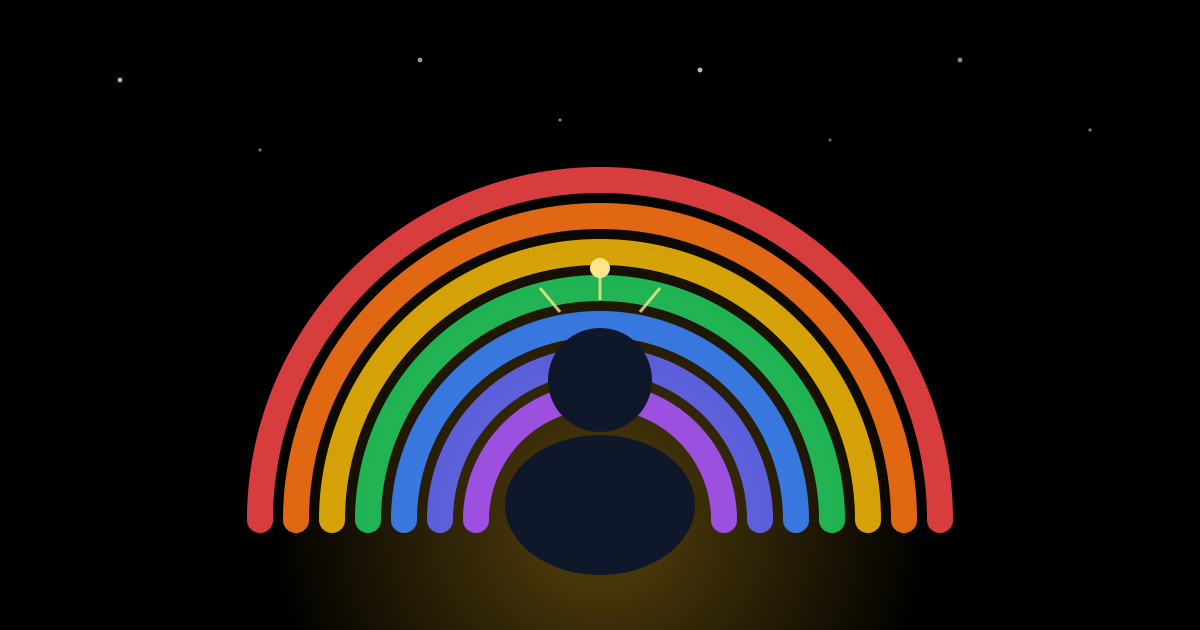
Most aura readings name a single dominant color: a blue aura for calm, a red aura for passion, a green aura for healing. A rainbow aura breaks that pattern entirely. Instead of one color leading, the whole spectrum shows up together — reds and oranges beside yellows, greens, blues, and violets, all glowing at once like light through a prism after rain. In aura tradition, this is not indecision or confusion. It is abundance: a person whose emotional life is wide enough to hold many colors without collapsing into just one.
Aura colors are understood as reflections of your emotional and energetic state rather than fixed labels — they shift with mood, season, and life chapter. Read everything here as spiritual exploration and entertainment. A rainbow aura appearing as your dominant field suggests that versatility, openness, and emotional richness are central themes for you right now. Let us explore what that means, color by color.
The Rainbow Aura Personality
Rainbow-aura individuals are traditionally described as the people who are hard to put in a box — and who like it that way. They are the friend who paints on Saturday, runs a small business on Monday, volunteers on Wednesday, and hosts a dinner party on Friday, and who brings genuine enthusiasm to all of it. Their interests are wide because their inner life is wide: they feel things in full color, and they rarely apologize for the range.
This breadth shows up as emotional fluency. A rainbow-aura person can sit with grief in the morning and laugh hard by evening without either feeling fake, because both feelings are real to them. They read rooms quickly, adapt their energy to whoever they are with, and make very different kinds of people feel at ease. Friends often describe them as the most alive person they know — not loud, necessarily, but vivid, like a room with the curtains thrown open.
There is also a deep idealism to rainbow energy. Rainbow-aura people tend to believe, stubbornly, that life can be beautiful and that people are basically good — not naively, but as a chosen stance. They are often the ones organizing the fundraiser, painting the mural, or starting the community project, because they can see how many colors a single effort can hold. Their optimism is not shallow cheerfulness; it is a practiced way of looking for the light in a situation and then helping others see it too.
What Each Color in a Rainbow Aura Means
A rainbow aura is read as a chorus, not a solo, and each color contributes its own note. Red brings grounded passion and physical vitality — the spark that turns ideas into action. Orange adds creativity and playful sensuality, the joy of making and tasting life. Yellow contributes optimism, curiosity, and mental brightness — the sunny confidence that learning is fun.
Green brings the heart: compassion, healing, and a love of growth, in gardens and in people. Blue adds calm honesty and clear communication, the steady voice that keeps the spectrum from becoming noise. Indigo contributes intuition and inner depth, the quiet knowing that arrives before words do. And violet brings imagination, spirituality, and a sense of wonder — the dreamer's color, closing the arc.
Readers also pay attention to which colors shine brightest within the rainbow. A rainbow heavy in warm reds and oranges suggests a season of creative action and bold feeling. A rainbow leaning blue and violet points to a more reflective chapter — intuition and imagination leading. A balanced, even rainbow is traditionally considered the healthiest expression: every part of life getting some light, none of it starved or overfed.
Is a Rainbow Aura Rare?
Rainbow is considered one of the rarest dominant aura presentations, and the tradition gives a simple reason: most people lean on one or two energies most of the time, the way most singers have one comfortable range. Holding the full spectrum steadily takes unusual openness — a willingness to feel many things, try many roles, and stay curious instead of settling into a single identity.
That said, flashes of rainbow are common. Many people show multicolored energy in passing — during falling in love, after a breakthrough, on a joyful holiday, or in a season of healing when old walls come down. Aura readers distinguish these passing rainbows from a stable rainbow field: the first is a beautiful weather event, the second is a climate. Both are welcome. If your rainbow comes and goes, the tradition reads it as proof of your range, not as a failure to hold it permanently. Auras shift, and that shifting is the point.
Strengths of the Rainbow Aura
Rainbow strengths are the connective kind that bring unlike things together. Adaptability: rainbow-aura people adjust to new jobs, cities, friendships, and phases without losing themselves — they bend like light, they do not break. Empathy across difference: because they carry many colors, they can meet many kinds of people where they are, which makes them natural bridge-builders in divided rooms. Creativity: ideas come to them in combinations others miss — the business idea from a painting, the song from a conversation, the solution from a walk.
Joy as a practice is another rainbow gift. Rainbow-aura people are often described as delight collectors: they notice the good meal, the funny dog, the perfect sunset, and they share it. This is not denial of hardship — rainbow people feel hardship fully — but a habit of also noticing what is bright. In work, rainbow strengths shine in creative fields, teaching, community building, event planning, and any role that rewards range: the generalist who connects specialists, the host who makes a gathering sing, the founder who can talk to the artist and the accountant in the same afternoon.
Challenges and Growth Edges
A spectrum has a shadow side too, and rainbow tradition names it honestly. Scattered energy: with so many colors calling, rainbow-aura people can start ten projects and finish two, or say yes to every invitation and end the week exhausted. Breadth without a spine becomes drift. Emotional overwhelm: feeling everything vividly means the hard days hit vividly too, and a rainbow person can absorb a room's sadness along with its joy.
Identity questions follow naturally: when you contain multitudes, the question "who am I, really?" can feel harder, not easier. Well-meaning people may call rainbow-aura folks unfocused or inconsistent, mistaking range for unreliability. And boundary blur is a classic rainbow trap — adapting so well to others that your own colors dim, and you wake up one day unsure which preferences are actually yours.
The growth edge, in rainbow tradition, is choosing an anchor without shrinking the spectrum: one daily practice, one clear priority per season, one honest no per week. A prism still makes a rainbow when it stands still. Rest, routine, and a small circle of people who know the real you are what keep rainbow energy bright instead of scattered.
Rainbow Auras in Relationships and Work
As partners, rainbow auras are warm, surprising, and deeply present — the ones who plan the spontaneous picnic, remember the obscure anniversary, and make ordinary Tuesdays feel like small celebrations. They love with their whole spectrum: passion, play, tenderness, honesty, and imagination all get a turn. Their growth edge in love is steadiness through the gray days — staying present when the rainbow dims, instead of chasing the next bright thing.
At work, rainbow-aura people thrive where variety is a feature, not a bug: creative studios, startups, classrooms, community organizations, and hospitality. They make excellent collaborators because they speak several professional languages at once. The trap is the same as in life — too many open tabs. Rainbow professionals do best with one flagship project at a time, supported by smaller creative outlets, rather than five flagships competing for the same light.
Nurturing and Balancing a Rainbow Aura
If rainbow is your color — or the energy you want to cultivate — a few practices resonate especially well. Color play: wear, paint, eat, and arrange the colors you feel drawn to, and notice which ones you avoid; both attractions and avoidances are information. One-anchor routines: a morning walk, a journal page, a weekly creative hour — a single steady habit that lets the rest of the spectrum play freely. Nature time: rainbows belong to sky and water, so time outdoors after rain, near rivers, or in gardens is a traditional recharge for rainbow energy.
And protect the gift: practice finishing one thing before starting the next, and treat rest as part of the spectrum, not an interruption of it. A rainbow that never rests becomes glare. The brightest rainbows appear after rain — they need both the storm and the sun, in their proper seasons.
Rainbow Auras, Chakras, and Shifting Colors
In chakra language, a rainbow aura is read as energy moving through the whole system rather than pooling in one center — root to crown, all lit at once. That is why rainbow-aura people often describe themselves as feeling balanced and buzzy at the same time: grounded and dreaming, practical and mystical, in the same hour. No single chakra dominates, which the tradition reads as wholeness rather than excess.
Expect your rainbow to shift. Some seasons it will lean warm, some cool; some years one color will lead the parade. This is normal, and it is not a loss of the rainbow — it is the rainbow responding to your life. If your colors ever feel dimmed or chaotic, the tradition's advice is gentle and practical: sleep, water, daylight, one honest conversation, and one small finished thing. Then look again. The spectrum has a way of returning when the sky clears, and it usually returns brighter for having passed through the rain.
Frequently asked questions
What does a rainbow aura mean?
A rainbow aura is traditionally read as a field showing many colors at once rather than one dominant shade — a sign of a versatile, emotionally open person who draws on many energies: passion, creativity, joy, compassion, honesty, intuition, and imagination. It is associated with adaptability, curiosity, and a wide emotional range.
Is a rainbow aura rare?
Rainbow is considered one of the rarest aura presentations as a dominant field, though flashes of many colors are common in passing moods. A stable rainbow aura is usually described as appearing in people going through rich, expansive life chapters — or in children and highly sensitive, creative adults.
What does it mean if my aura changes to rainbow?
A shift toward rainbow colors is traditionally read as an opening-up: new interests, new relationships, healing, or a season when you are feeling many things at once. Like all aura colors it is treated as a reflection of a current chapter, not a permanent label.
Can a rainbow aura be a sign of imbalance?
In aura tradition, a scattered or flickering rainbow — colors that feel chaotic rather than bright — can be read as overstimulation or too many directions at once. The suggested response is grounding rest, fewer commitments, and one quiet practice at a time, not worry.
How do I know if I have a rainbow aura?
No test can prove an aura color. People explore this through self-reflection: noticing which colors they feel drawn to, feedback from aura readers or aura photography, and which personality descriptions resonate most. Treat the result as entertainment and a prompt for self-reflection.
Keep exploring
Blue Aura Meaning: Calm, Intuition & Emotional Depth
What does a blue aura mean? Explore the calm, intuitive blue aura personality: its strengths, challenges, shades from sky blue to indigo, and relationships.
Read the meaning →
Green Aura Meaning: Healing, Growth & Heart Energy
What does a green aura mean? Explore the green aura personality — healing, growth, love and heart-chakra energy — plus shades, strengths, challenges, and relationships.
Read the meaning →
What Is My Aura Color? How to Discover Your Dominant Aura
What is my aura color? Discover your dominant aura through guided self-reflection questions, a quick 7-question check-in and full color meanings explained.
Read the meaning →
How to See Your Aura: 7 Techniques for Beginners
Learn how to see auras with 7 beginner-friendly techniques: hand gazing, peripheral vision, mirror work, partner exercises, candlelight and meditation.
Read the meaning →