
Teal Aura Meaning: Calm Clarity, Honest Communication & Emotional Balance
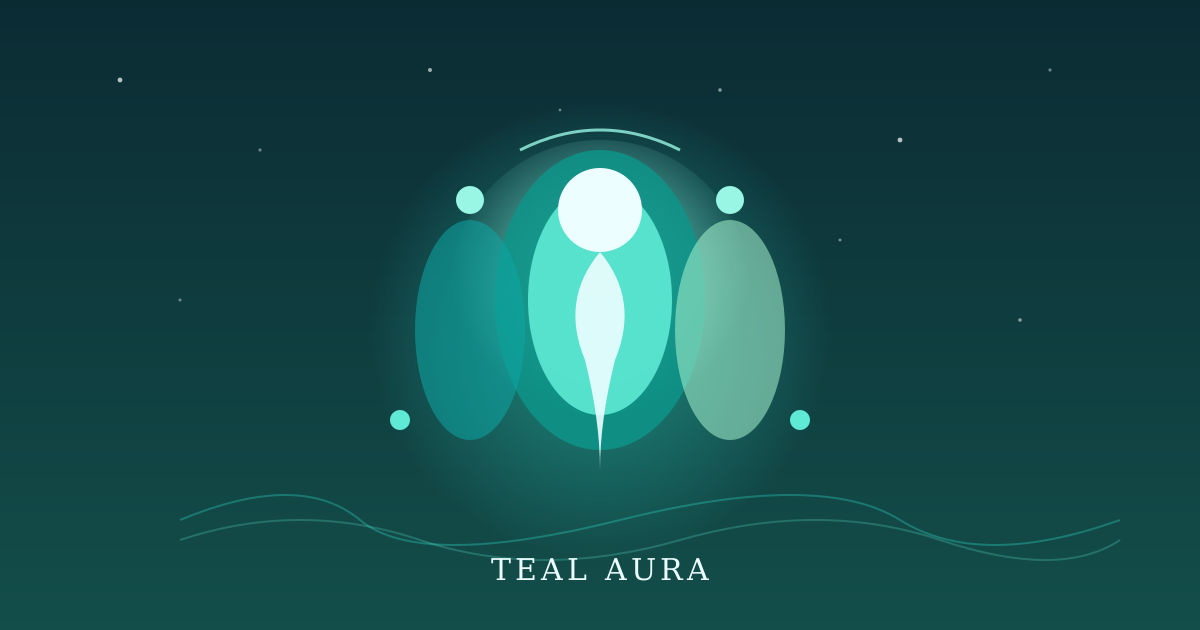
Teal is the color of deep water on a still morning: blue enough to calm, green enough to grow. In aura tradition, it sits right at the meeting point of two great families — the blue of communication and peace, and the green of the heart and healing. A teal aura is read as the energy of someone who can hold a difficult conversation without raising their voice, who notices what a room is feeling and names it gently, and who brings a rare steadiness to the people around them. Where a blue aura speaks truth and a green aura heals, a teal aura does both at once: it tells the truth in a way that heals.
Aura colors are understood as reflections of your emotional and energetic state rather than fixed labels — they shift with mood, season, and life chapter. Read everything here as spiritual exploration and entertainment. A teal aura appearing as your dominant field suggests that honest communication, emotional balance, and calm clarity are central themes for you right now. Let us explore what that means, shade by shade.
The Teal Aura Personality
Teal-aura individuals are traditionally described as the calm voice in the tense meeting, the friend who can repeat back what you just said more clearly than you said it, and the person everyone texts when a group chat turns awkward. They have a gift for translation: turning a jumble of feelings into one clean sentence, turning a conflict into a conversation, turning a vague worry into a plan with a first step. Friends often describe teal people as easy to be honest with — not because they never judge, but because their calm makes honesty feel safe.
That calm is paired with a deep emotional steadiness. Teal-aura people feel things fully, but they are rarely swept away by what they feel. There is a quality of still water to teal energy: the surface may ripple, but the depths stay clear, and you can see all the way down. This makes them natural mediators, counselors, teachers, and team anchors — the person who keeps a project moving when tempers flare, and who remembers what everyone actually agreed to once the shouting stops.
There is also a quiet independence running through teal energy. Teal-aura people value their inner life and their alone time, and they tend to think before they speak — sometimes for a long time. When they finally do speak, the words are chosen, and people listen. Their honesty is not blunt; it is precise. They would rather say one true sentence than ten impressive ones, and that restraint gives their words weight.
Teal Aura Shades and What They Mean
Like every aura color, teal is read in shades, and the shade changes the story. Bright, clear teal — vivid blue-green with a clean glow — is traditionally read as a season of honest communication: a hard conversation finally had, a truth spoken at work, a relationship becoming more direct and more kind at the same time. It is balance energy with momentum in it, and it usually arrives when someone stops avoiding a topic and starts naming it.
Deep teal, leaning toward dark ocean green, suggests a more inward season: emotional processing, healing work, and the quiet sorting of what you actually feel beneath what you say you feel. This is teal with depth — a person doing the slow work of understanding themselves, not in crisis but in concentration. Deep teal is often associated with study, therapy, journaling, and long conversations with one trusted person rather than a crowd.
Light, aqua-leaning teal sits closest to turquoise and is read as teal's most expressive face: playfulness returning to communication, creativity flowing again, a sense of humor softening hard truths. Someone showing light teal may be rediscovering joy in self-expression after a heavy chapter. And cloudy or murky teal — the color dulled, as if seen through still, dark water — is traditionally read as communication tangled with avoidance: feelings swallowed, truths postponed, or calm that has hardened into numbness. The suggested response is not alarm but one honest sentence: name the smallest true thing out loud, to one safe person, and watch the color clear.
Is a Teal Aura Rare?
Teal is considered a fairly uncommon dominant aura color, and the tradition gives a practical reason: holding a teal field takes two skills at once — feeling deeply and speaking clearly — and most people lean toward one or the other. Some feel everything and struggle to say it; others say everything and struggle to feel it. Teal asks for both, held in balance, and that balance takes practice. People who carry teal as a dominant field tend to have built it deliberately, through years of honest conversations, careful listening, and the habit of pausing before reacting.
That said, flashes of teal are very common. Many people show teal in passing — during a good, honest talk with a partner, a week of feeling emotionally steady, a season of therapy or meditation, or the calm days after a conflict is finally resolved. Aura readers distinguish these passing flashes from a stable teal field: the first is a clear pool glimpsed on a walk, the second is a well you can draw from daily. Both are welcome. If your teal comes and goes, the tradition reads it as proof of your capacity for clear, calm honesty, not as a failure to hold it permanently. Auras shift, and that shifting is the point.
Strengths of the Teal Aura
Teal strengths are the steady ones that change a life slowly. Clear communication: teal-aura people can say hard things kindly and kind things honestly, and that combination is rarer than it sounds. They do not dodge, and they do not wound; they find the sentence that is both true and bearable, and they say it at the right moment. Emotional balance: they stay steady when others escalate. In a crisis, the teal person is often the one still breathing slowly, still asking the useful question, still remembering that everyone in the room is doing their best.
Empathy with boundaries is another teal gift. Teal-aura people feel what others feel, but they do not drown in it; they can sit beside someone's sadness without climbing inside it, and offer help that actually helps instead of help that just feels involved. And healing presence: teal people are often the ones others seek out after bad news, not for advice but for atmosphere — the calm room, the unhurried listener, the person whose very steadiness makes the next step feel possible. In work, teal strengths shine in counseling, teaching, mediation, healthcare, writing, and any role that rewards a clear head and a kind voice: the person whose presence feels like clean water.
Challenges and Growth Edges
A color this balanced has a shadow side too, and teal tradition names it honestly. Over-mediating: when calm is your gift, you can start performing it — smoothing over every conflict, translating everyone's feelings, and never letting a disagreement simply be uncomfortable. Teal-aura people can become the group's permanent peacekeeper and forget they are allowed to have a side. Emotional withholding is the quieter trap: staying so composed that real needs never get named, so that everyone else feels heard while the teal person quietly goes unheard.
Calm mistaken for coldness follows naturally. Because teal people rarely raise their voices or show big reactions, others can misread their steadiness as distance, and assume they do not care as much as they do. And perfectionism about honesty can freeze them: waiting for the perfect, kindest, truest sentence and saying nothing at all while the moment passes. The growth edge, in teal tradition, is pairing calm with courage: one direct sentence a day, one need named before resentment grows, one conflict entered rather than smoothed. A still pool is beautiful because it is deep, not because nothing ever disturbs it.
Teal Auras in Relationships and Work
As partners, teal auras are steady, loyal, and refreshingly direct — the ones who actually say what they mean, who listen all the way to the end of the sentence, and who make a relationship feel like a safe place to be honest. They love with clarity rather than drama: the check-in that prevents the fight, the apology made promptly and specifically, the difficult topic raised gently before it hardens. Their growth edge in love is letting themselves be comforted, not just being the comforter — trusting that their own feelings deserve the same patient attention they give everyone else.
At work, teal-aura people thrive where clear communication is a skill, not a chore: counseling, teaching, mediation, management, healthcare, writing, and any field where a calm voice changes outcomes. They make excellent collaborators because they hear what is not being said in a meeting and name it kindly, and they make excellent leaders because people trust their steadiness. The trap is the same as in life — too much mediating, and a reluctance to claim credit for the calm they create. Teal professionals do best with one honest conversation a day, a practical outlet for their own feelings, and a daily ritual that turns at least one unspoken need into one spoken sentence.
Teal vs. Blue, Green, and Turquoise Auras
Teal is often confused with its neighbors, so it helps to draw the lines clearly. Blue is traditionally read as the color of communication and peace: truth spoken, calm maintained, wisdom shared. Teal keeps blue's clarity but adds green's heart, so where blue speaks truth, teal speaks truth that heals. Green is the color of the heart: love, growth, compassion, and healing. Teal borrows green's warmth but adds blue's precision, so where green feels deeply, teal feels deeply and says so clearly.
Turquoise is teal's brightest cousin: joyful expression, creativity, and spiritual openness, the playful side of the blue-green family. Teal is turquoise grown steadier and deeper — less sparkle, more ballast, more focused on honest conversation and emotional balance than on creative play. Think of it this way: blue speaks, green heals, turquoise plays, and teal does all three quietly — and then writes down the one sentence that makes everything clearer.
How to Tell If You Have a Teal Aura
No test can prove an aura color, and any reader or photograph that claims certainty should be treated with healthy skepticism. What people actually do is gather clues. Do you feel drawn to teal again and again — in clothing, in decor, in the colors you choose for your home? Are you the calm voice when conversations get tense, the person friends call to help them find the right words? Do you need quiet water — a lake, a bath, a long shower — the way other people need coffee, and come back from it more yourself than when you left?
Another clue is how you handle conflict. Teal-aura people are often the first to feel the tension in a room and the last to raise their voice about it, preferring a clear sentence to a loud one. If that sentence feels like it was written about you, take it as a meaningful resonance, not a diagnosis. Aura colors are best used as a mirror for self-reflection, a colorful language for noticing what is already true about you, rather than a label to wear or defend.
Nurturing and Balancing a Teal Aura
If teal is your color — or the energy you want to cultivate — a few practices resonate especially well. One honest sentence a day: each morning, name one true thing to one person — a need, a feeling, a boundary — simply and kindly, before the day fills up with easier words. Time near water: teal is a water color before it is a personality, and sitting beside real water, real sky, and real quiet restores teal energy faster than almost anything else. A protected quiet hour: one hour a day with no input — no feed, no noise, no demands — so your inner clarity has room to settle.
And protect the gift: practice one firm boundary a week, and treat rest as a practice, not a reward for exhaustion. A teal that never rests becomes murky; a teal that rests well becomes clear. The most balanced teal appears in people who have learned to speak for themselves as kindly as they speak for others — not by hardening, but by choosing where their calm goes. Keep one conversation honest, let the others be easy, and remember that steadiness is not the absence of feeling. It is feeling, held clearly.
Teal Auras, Chakras, and Shifting Colors
In chakra language, teal is often linked to the bridge between the heart and the throat — the point where what you feel becomes what you say. Some traditions place teal at the higher heart, the soft blue-green center where compassion meets expression, and that is why teal-aura people often describe themselves as feeling both deeply and clearly at the same time: their own emotions matter intensely, and yet they can name them in a sentence someone else can actually hear.
Expect your teal to shift. Some seasons it will glow bright and clear, some seasons it will deepen into dark green-blue, and some years it will fade into blue or green as your life asks for pure expression or pure healing instead. This is normal, and it is not a loss of teal — it is teal responding to your life. If your color ever feels dimmed or murky, the tradition's advice is gentle and practical: say one honest thing, spend time near water, take one small step, and finish one small task. Then look again. Clear colors have a way of returning when they are given room to breathe, and they usually return clearer for having passed through a quiet season.
Frequently asked questions
What does a teal aura mean?
A teal aura is traditionally read as a blend of blue calm and green growth: clear-headed communication, emotional balance, and a steady, healing presence. It is associated with honest self-expression, empathy, and the ability to stay composed when conversations get difficult.
Is a teal aura rare?
Teal is considered a fairly uncommon dominant aura color. It often appears during seasons when someone is learning to speak honestly, recovering emotional balance, or stepping into a helping or mediating role, and it tends to deepen into a stable field when clear communication becomes a daily habit rather than a one-time effort.
How is teal different from a turquoise aura?
Turquoise is traditionally read as the brighter, more playful side of the blue-green family: joyful expression, creativity, and spiritual openness. Teal is its deeper, steadier sibling — calmer, more grounded, and more focused on honest conversation and emotional balance than on creative sparkle.
What are the challenges of a teal aura?
The classic teal challenges are over-mediating and emotional withholding: smoothing over every conflict, carrying other people's feelings, or staying so composed that real needs never get named. The traditional remedy is honest, direct speech — one clear sentence at a time — plus regular rest so calm does not become numbness.
How do I know if I have a teal aura?
No test can prove an aura color. People explore this through self-reflection: noticing whether they are drawn to teal, whether they are the calm voice in tense conversations, and whether the teal personality description resonates. Treat the result as entertainment and a prompt for self-reflection.
Keep exploring
Turquoise Aura Meaning: Joyful Expression & Spiritual Openness
What does a turquoise aura mean? Explore the turquoise aura personality — joyful expression, creativity, and spiritual openness — plus shades, strengths, challenges, and relationships.
Read the meaning →
Blue Aura Meaning: Calm, Communication & Inner Peace
What does a blue aura mean? Explore the blue aura personality — calm, honest communication, and inner peace — plus shades, strengths, challenges, and relationships.
Read the meaning →
Green Aura Meaning: Growth, Healing & Heart-Centered Energy
What does a green aura mean? Explore the green aura personality — growth, healing, compassion, and heart-centered energy — plus shades, strengths, challenges, and relationships.
Read the meaning →
What Is My Aura Color? How to Discover Your Dominant Aura
What is my aura color? Discover your dominant aura through guided self-reflection questions, a quick 7-question check-in and full color meanings explained.
Read the meaning →