
Birthstone Healing Properties: What Each Month's Stone Is Traditionally Said to Support
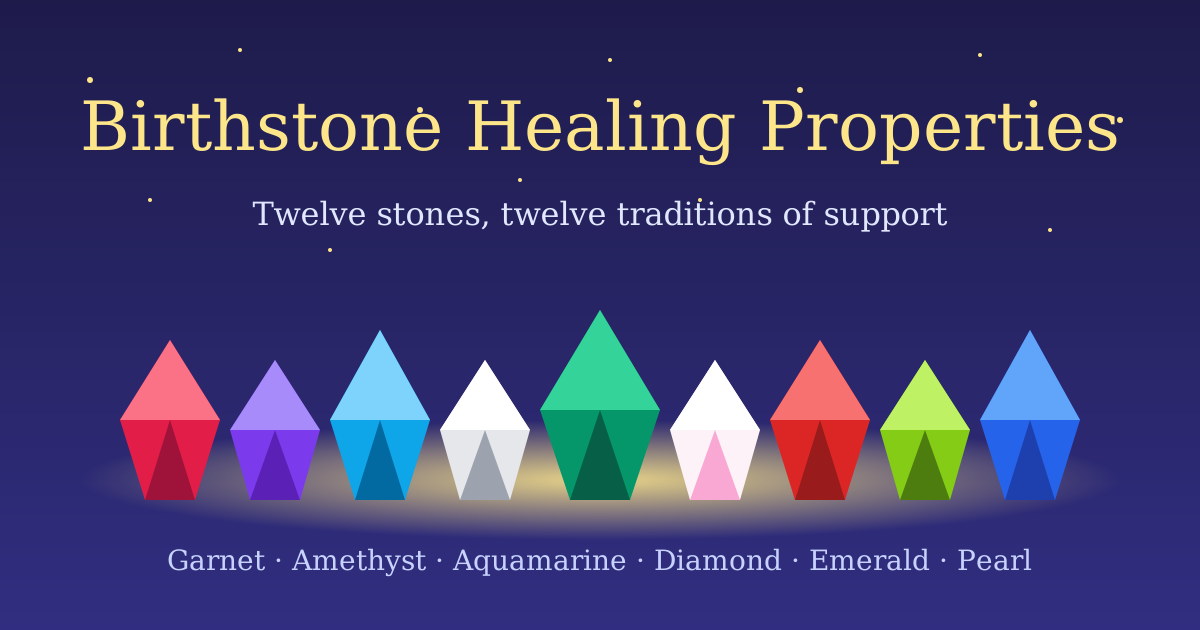
For as long as people have worn birthstones, they have assigned them meanings that go far beyond beauty. A garnet was not just a red stone; it was a stone of courage carried into battle. An amethyst was not just purple quartz; it was a guard against excess, kept beside the bed for clear-headed sleep. This is the healing side of the birthstone tradition: a centuries-old symbolic language in which each stone is said to support something in the wearer's inner life — calm, courage, clarity, love, or luck.
Let us be clear from the start, because this is the kind of topic where clarity matters: there is no scientific evidence that gemstones heal illness, change the body, or alter your fortunes. Birthstone healing properties are folklore and entertainment, passed down through cultures and jewelers' lore, not findings from a laboratory. What a stone can genuinely do is act as a reminder — a small, beautiful object you can touch when you need to pause, breathe, or remember an intention. That psychological effect is real, and it is the honest heart of this tradition. With that framing in place, here is what each month's stone is traditionally said to support.
How Birthstone Healing Lore Works
The healing associations of birthstones come from several overlapping traditions. Ancient cultures linked stones to planets and gods: garnet to Mars and vitality, sapphire to Saturn and wisdom, emerald to Venus and love. Medieval lapidaries — books cataloguing the virtues of stones — claimed that wearing a stone could protect its bearer from specific harms. Later, the chakra system of Indian tradition assigned stones to energy centers of the body, and modern crystal culture folded all of this together into the associations jewelers and crystal shops use today.
Two patterns run through nearly all of it. First, color does much of the symbolic work: red stones are tied to energy and courage, blue stones to calm and communication, green stones to the heart and growth, purple stones to the mind and spirit. Second, hardness and rarity shaped reputation: diamond, the hardest stone, became the stone of endurance; pearl, born in water, became the stone of purity and emotional balance. Knowing these patterns makes the whole list easier to remember — and easier to enjoy without taking it literally.
The Twelve Birthstones and Their Traditional Associations
January — Garnet: Grounding and Courage
Garnet, January's deep red stone, is traditionally the stone of grounding and revitalized energy. In folklore it was carried by travelers for protection on long journeys and worn to steady the nerves before difficult tasks. Today it is the stone people reach for when they want to feel rooted — a reminder to stand firm, finish what they started, and meet a challenge with steady courage rather than frantic effort.
February — Amethyst: Calm and Clear Thinking
Amethyst is the classic stone of calm in birthstone lore. Its name comes from the Greek word for not intoxicated, and ancient drinkers wore it in the belief that it kept the mind clear. In modern tradition it is the stone of the bedroom and the meditation corner: placed under a pillow for restful sleep, worn during stressful days, or held during a few minutes of quiet breathing. If your birthstone had to be one word, amethyst's would be stillness.
March — Aquamarine: Clear Communication
Aquamarine, March's pale blue-green stone, is traditionally linked to clear communication and calm under pressure. Sailors once carried it for safe passage across rough seas, and that watery symbolism survives: aquamarine is the stone of saying what you mean, especially in conversations you have been avoiding. It is a popular choice for people who want to speak up in a meeting, a relationship talk, or a creative pitch.
April — Diamond: Strength and Endurance
Diamond's traditional association is strength — not flashiness, but endurance. The hardest natural stone became a symbol of unbreakable commitment, which is why it crowns engagement rings. In healing folklore, diamond is said to support clarity of purpose and the stamina to see a long project through. It is less a stone of comfort and more a stone of resolve: the reminder that you can outlast a hard season.
May — Emerald: The Heart and Compassion
Emerald, May's rich green stone, is traditionally the stone of the heart: love, compassion, and emotional balance. In lore it was believed to reveal truth in relationships and to soften a hardened heart. As a daily reminder, emerald suits anyone working on patience with a partner, forgiveness after a falling-out, or simply being kinder to themselves. Its green is the color of growth, and that is the association people carry with it.
June — Pearl: Emotional Balance and Honesty
Pearl, June's luminous birthstone, is traditionally tied to emotional balance, sincerity, and calm self-knowledge. Formed slowly inside an oyster, pearl became a symbol of wisdom earned over time rather than won in a moment. In folklore it is the stone of honest self-reflection — worn when you want to understand your own feelings before reacting to someone else's. Moonstone, June's traditional alternative, carries a similar reputation for easing restlessness and supporting intuition.
July — Ruby: Passion and Vitality
Ruby, July's fiery red stone, is traditionally the stone of passion and vitality. In ancient lore it was called the king of gems, believed to protect its wearer and to lend warmth and boldness to everything from love to leadership. As a reminder stone, ruby suits a season when you want more energy, more courage to pursue what you want, or a rekindling of enthusiasm for something that has gone flat.
August — Peridot: Confidence and Letting Go
Peridot, August's olive-green stone, is traditionally associated with confidence, optimism, and releasing old resentments. Formed in volcanic rock and even found in meteorites, peridot carries a reputation for lightness — the stone people choose when they want to stop carrying a grudge or a worry that no longer serves them. Its sunny green is a reminder to look forward rather than backward.
September — Sapphire: Wisdom and Focus
Sapphire, September's deep blue stone, is traditionally the stone of wisdom, focus, and clear judgment. Kings and clergy wore it for centuries as a symbol of truth and clear thinking, and that reputation endures: sapphire is the stone students, writers, and decision-makers reach for when a choice needs a cool head. In daily life it is a reminder to slow down, gather the facts, and decide without drama.
October — Opal: Creativity and Possibility
Opal, October's shimmering birthstone, is traditionally linked to creativity, imagination, and openness to possibility. Its play of color — flashes of green, blue, orange, and violet in a single stone — made it the stone of artists and dreamers in folklore. Opal suits a creative block or a life crossroads: a reminder that more than one outcome is possible, and that inspiration often arrives sideways, not on schedule.
November — Citrine: Optimism and Abundance
Citrine, November's golden stone, is traditionally the stone of optimism, confidence, and abundance — the birthstone most often recommended for a fresh start. Its sunny color made it a natural symbol of prosperity in folklore, and modern crystal tradition keeps it as the stone of a positive mindset: not a promise of wealth, but a reminder to notice opportunities and to act on them with confidence. Topaz, November's traditional alternative, shares this reputation for clarity and good cheer.
December — Turquoise: Protection and Wholeness
Turquoise, December's sky-blue stone, is traditionally the stone of protection and wholeness. Worn for thousands of years across Egypt, Persia, and the American Southwest, turquoise was believed to guard travelers and to unite the wearer with sky and earth. Today it is the stone people choose when they want to feel safe and whole — a grounding companion for travel, big changes, and new beginnings.
How to Choose a Stone for an Intention
Start with what you actually want support with, not with the calendar. If you need calm, amethyst is the traditional pick regardless of your birth month; if you need courage, garnet or ruby; if you need to speak clearly, aquamarine; if you need a creative spark, opal. Many people wear their birthstone for identity and a second stone for intention — a garnet ring beside an aquamarine pendant, for example. The alternative birthstone lists exist precisely because tradition itself always allowed a second stone.
Then choose a form you will actually wear. A stone that lives in a drawer cannot remind you of anything. Rings and bracelets keep the stone in sight and in touch all day, which is why they are the most popular intention pieces; pendants sit close to the heart and suit heart-centered intentions; a small tumbled stone in a pocket works just as well and costs far less. Price is not a measure of meaning here — a modest garnet does the same symbolic work as a flawless one.
Caring for Your Stone — and Keeping Perspective
Care for a birthstone the way you would care for any piece of jewelry: lukewarm water, mild soap, and a soft cloth for most stones, with extra gentleness for soft or porous ones such as pearl, opal, and turquoise, which should stay away from perfumes, chemicals, and hard knocks. Many people also like a small cleansing ritual — moonlight overnight, a bell's sound, or simply wiping the stone and setting an intention — as a way of marking a fresh start. Rituals of care are part of the pleasure, not an obligation.
And keep the perspective the tradition itself deserves. A stone can remind you to breathe, to speak kindly, or to keep going, and those reminders can genuinely change a day. But a stone cannot diagnose, treat, or cure anything, and it should never replace medical care, therapy, or professional advice. If you are struggling with health, anxiety, or a problem that affects your daily life, the strongest move is a professional's help — with your birthstone, if you like, riding along as a comforting companion rather than a cure.
From garnet's grounding to turquoise's protection, the twelve birthstones carry twelve small stories about what people have always wanted: calm minds, brave hearts, clear words, and a little more light. Wear yours for the story it tells you — and let the story do its quiet work.
Frequently asked questions
Do birthstones actually heal anything?
There is no scientific evidence that gemstones heal illness or change the body directly. Birthstone healing properties are folklore and symbolism, not medicine. What stones can genuinely do is serve as reminders — a calming touchstone in a pocket, a daily intention you can see — and that psychological effect is real even though the stone itself is not treating anything.
Can I wear a birthstone that is not my birth month's stone?
Yes, and many people do. The birthstone list is a tradition, not a rule. If you are drawn to amethyst's calm or citrine's optimism but were born in another month, wear the stone that speaks to you. Many jewelers and crystal traditions suggest choosing by intention rather than by birth month, and the alternative birthstone lists exist precisely for this reason.
Which birthstone is traditionally linked to calm and sleep?
Amethyst, the February birthstone, is the classic stone of calm in birthstone lore — traditionally placed under a pillow or worn at night to encourage restful sleep and quiet the mind. Moonstone, a traditional June alternative, carries a similar reputation for easing nighttime restlessness.
How do you cleanse a birthstone?
The most common gentle methods are running water (for hard stones only), moonlight overnight, sound from a bell or singing bowl, or simply wiping the stone with a soft cloth and setting an intention. Avoid water for soft or porous stones such as pearl, opal, turquoise, and malachite, and avoid salt water for most stones. Cleansing is a ritual of care, not a requirement.
Should I replace medical care with a birthstone?
No. Birthstones are entertainment and personal symbolism, never a substitute for medical care, therapy, or professional advice. If you are dealing with a health concern, anxiety, or any condition that affects your daily life, talk to a qualified professional. A stone can be a comforting companion to real care, but it is not care itself.
Keep exploring

Birthstone Chart by Month: Every Stone, Meaning & History
The complete birthstone chart by month — all 12 months' stones, their meanings, alternative birthstones, fascinating stories, and the history of the tradition.
Read the meaning →
Birthstone Anniversary Gifts by Year: The Complete Chart from Year 1 to 60
Birthstone anniversary gifts by year: the complete chart from year 1 to 60 — garnet, pearl, diamond, ruby, emerald, sapphire, gold and more — plus milestone spotlights, budget swaps, and how to choose.
Read the meaning →
Birthstone Alternatives for Every Month: Affordable Swaps & Second Stones
Love your birth month but not its stone? Explore birthstone alternatives for every month — affordable swaps, traditional second stones, and how to choose one that suits your style and budget.
Read the meaning →
How to Clean Birthstone Jewelry: A Stone-by-Stone Care Guide
How to clean birthstone jewelry safely — the universal soap-and-water method, what never to do, and a stone-by-stone care guide for all 12 birthstones, from diamond to opal and pearl.
Read the meaning →