
February Birthstone: Amethyst Meaning, History & Jewelry Guide
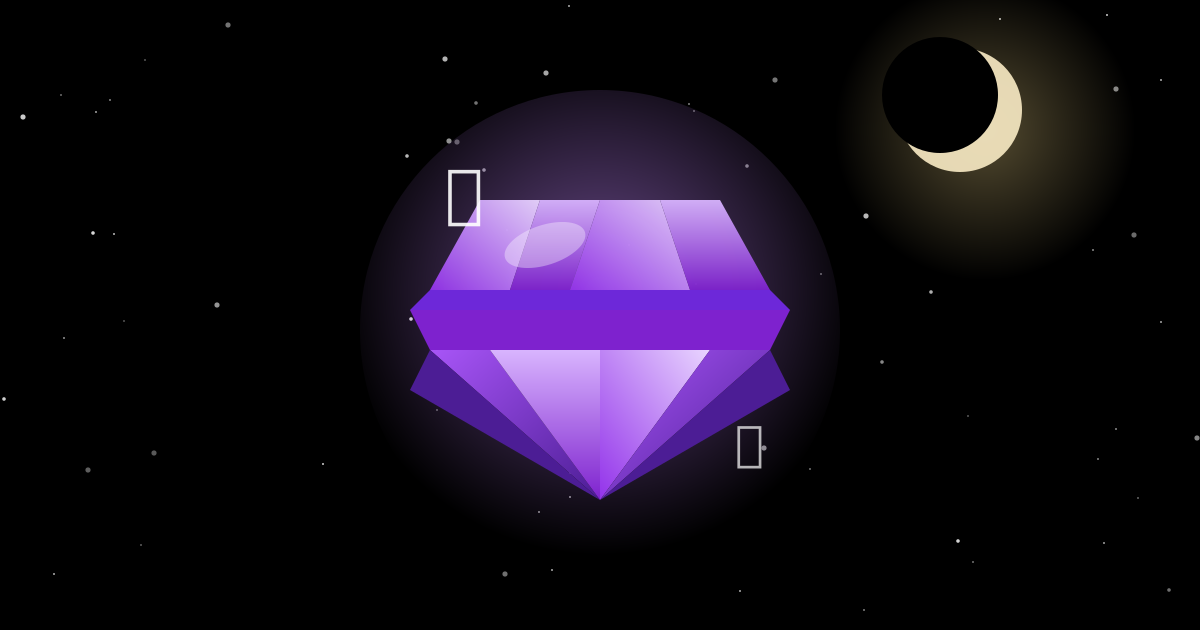
February's birthstone is the amethyst — a gem of quiet violet light that has calmed and charmed humanity for thousands of years. Its name comes from the Greek amethystos, meaning "not intoxicated": the ancient Greeks believed the stone could keep a person clear-headed, and they carved drinking vessels from it, convinced it would ward off drunkenness. Whether or not you credit the legend, the stone's cool, contemplative color still seems to do something to the mind — one look at a fine amethyst and your breathing slows a little.
Amethyst is a variety of quartz, the most abundant mineral family on Earth, yet its finest specimens are anything but ordinary. Once counted among the cardinal gems — alongside sapphire, ruby, diamond, and emerald, and priced accordingly — amethyst was a stone of bishops, monarchs, and empire-builders. The discovery of vast deposits in Brazil in the 19th century brought it within everyone's reach, but it lost none of its meaning: a gem of peace, clarity, and spiritual protection, perfectly suited to February, the shortest and most inward-turning month of the year.
Amethyst Meaning and Symbolism
In the language of stones, amethyst speaks in a low, steady voice. Where garnet urges forward and ruby blazes, amethyst settles. Its traditional meanings cluster around peace of mind, emotional balance, and clear thinking — the Greek "not intoxicated" idea extended over the centuries into a broader symbolism of sobriety in every sense: freedom from confusion, from turbulent emotions, from the noise of the world. It is a stone associated with protection during sleep (ancient cultures placed it under pillows to ward off nightmares), with quiet wisdom, and with devotion — bishops wore amethyst rings as emblems of spiritual dignity.
Modern crystal enthusiasts associate amethyst with the third eye and crown chakras, describing it as a stone for meditation, intuition, and restful sleep — though it is worth noting these are spiritual and symbolic attributions rather than proven effects. What is certain is the psychological pull of the color itself: violet has long been linked in art and design with contemplation and calm. Dreamworkers sometimes note amethyst appearing in dreams of people going through stressful periods, which they read as the dreaming mind reaching for the stone's archetypal calm. Taken as metaphor rather than medicine, amethyst's message is a gentle one — slow down, think clearly, rest well.
A Brief History of Amethyst
Amethyst's story winds through nearly every great civilization. The ancient Egyptians carved it into amulets and intaglios; the Greeks and Romans wove it into the mythology of Bacchus, god of wine, whose tears were said to have stained white quartz purple. Medieval bishops wore amethyst rings as symbols of piety, and the stone adorned the crowns and scepters of European royalty — Catherine the Great collected amethysts, and the British Crown Jewels contain magnificent examples.
For most of history, amethyst was genuinely rare and correspondingly precious. It ranked with sapphire and emerald among the most valuable colored stones in the world — until the discovery of enormous deposits in Brazil in the 1800s collapsed its price and democratized it overnight. Today the finest amethysts come from Brazil, Uruguay, and Zambia, with Siberian and Uruguayan stones famed for deep color with red and blue flashes. The stone's journey from imperial treasure to accessible gem is one of gemology's great plot twists — and it means a February birthday can now wear a stone that once only queens could afford.
Amethyst Varieties and Colors
Amethyst's famous violet comes from iron impurities and natural irradiation in the quartz crystal — and the shade range is surprisingly wide:
- Light lavender: Pale, delicate, almost dreamlike — lovely in larger statement pieces where the color can breathe.
- Medium violet: The classic amethyst purple most people picture; balanced and luminous in rings and pendants.
- Deep Siberian: Rich, velvety purple with flashes of red and blue — the most prized (and priciest) grade.
- Ametrine: A natural wonder — a single crystal that is part purple amethyst, part golden citrine, split into two zones.
- Green amethyst (prasiolite): The same mineral, heat-treated or naturally occurring, in soft mint and sage green.
- Chevron amethyst: Banded with white quartz in V-shaped "chevrons" — rustic, bold, and popular in beads and carvings.
- Cactus or spirit amethyst: Druzy clusters of tiny amethyst points growing on a central crystal — miniature violet forests.
For February birthstone jewelry, even medium-violet stones with good saturation look superb; the finest "Siberian" grades are collector territory. Color zoning — pale patches within the stone — is natural; the best cuts minimize its visibility.
Amethyst in Jewelry: What to Know
Amethyst is one of the most practical gemstones for everyday wear. At 7 on the Mohs hardness scale, it is durable enough for rings worn daily, and it is tough enough for virtually any setting. Its color flatters every skin tone, and it pairs beautifully with white gold, platinum, and sterling silver (which makes amethyst jewelry very affordable) as well as yellow gold for a regal contrast.
When shopping, look for even color saturation — the most desirable stones show rich purple face-up without obvious pale or overly dark zones, and the finest have subtle reddish-purple flashes when tilted. Large amethysts are surprisingly affordable, which is why the stone shines in cocktail rings and statement pendants: you can wear a substantial gem for the price of a modest sapphire. Ask whether the stone is natural or heated — gentle heating is common and accepted, but you should know what you are buying. And because amethyst's color can fade with long, strong sun exposure, save the amethyst ring for evenings and indoor days if you want to keep its violet at its deepest.
Who Should Wear Amethyst?
Beyond February birthdays, amethyst is traditionally chosen by students and thinkers (its "clear mind" symbolism makes it a popular desk stone and exam-season gift), by those seeking calm — new parents, caregivers, anyone weathering a hectic season — and by the spiritually inclined, who have used it in meditation practices for centuries. It is the traditional gift for sixth wedding anniversaries and a thoughtful stone for anyone starting therapy, a meditation practice, or simply a quieter chapter of life. Light sleepers have long kept an amethyst on the nightstand as a symbol of peaceful rest — an old custom that costs nothing to try. And anyone who loves purple needs no other reason: amethyst is purple perfected by geology.
Caring for Your Amethyst
Amethyst asks little and gives much. Clean it with warm water, mild soap, and a soft brush, then pat dry — skip ultrasonic and steam cleaners, which can damage the stone or its setting. Keep amethyst away from harsh chemicals and sudden temperature shocks, and store it separately from harder stones like diamond and sapphire that could scratch it. The one real vulnerability is sunlight: prolonged strong UV exposure can gradually bleach the violet color, so store pieces in a box or pouch rather than on a sunny windowsill. With that small care, an amethyst will keep its cool violet fire for a lifetime — which suits a stone that has symbolized endurance and calm for three thousand years.
Whether you were born in February, are shopping for someone who was, or simply feel your mind quiet when you look into violet depths, amethyst offers something precious: a gemstone that once graced imperial crowns, now within everyone's reach, carrying three millennia of meaning about peace, clarity, and the wisdom of a clear head. That is a combination worth celebrating — preferably in deep, contemplative purple.
Frequently asked questions
What is February's birthstone?
Amethyst is the traditional and modern birthstone for February. This violet variety of quartz — its name comes from the Greek amethystos, meaning "not intoxicated" — has been treasured for millennia as a stone of clarity, calm, and protection.
What does amethyst symbolize?
Amethyst symbolizes peace and emotional balance, mental clarity and sobriety (its name literally means "not drunk" in Greek), spiritual protection, and quiet wisdom. It is the traditional gift for sixth wedding anniversaries.
What colors does amethyst come in?
Amethyst ranges from pale lavender and lilac through medium purple to deep, velvety violet — the most valued shades have rich, even saturation with subtle red flashes. Green amethyst (prasiolite) and ametrine (part amethyst, part citrine) are striking natural variations.
Is amethyst durable enough for everyday jewelry?
Yes — amethyst ranks 7 on the Mohs hardness scale, making it durable enough for everyday rings, pendants, and earrings. It can scratch, so store it separately from harder stones like diamond and sapphire, and keep it out of prolonged direct sunlight, which can fade its color.
How do I care for amethyst jewelry?
Clean amethyst with warm water, mild soap, and a soft brush, then pat dry. Avoid steam and ultrasonic cleaners, harsh chemicals, and long exposure to strong sunlight, which can bleach the violet color over time.
Keep exploring
May Birthstone: Emerald Meaning, History & Jewelry Guide
May's birthstone is emerald — explore its lush meaning, royal history from Cleopatra to the Mughals, famous mines, and expert tips for choosing emerald jewelry.
Read the meaning →
Birthstone Chart by Month: Every Stone, Meaning & History
The complete birthstone chart by month — all 12 months' stones, their meanings, alternative birthstones, fascinating stories, and the history of the tradition.
Read the meaning →
What Does It Mean to Dream About Pregnancy?
Dreaming about pregnancy isn't always about a baby. Explore what pregnancy dreams symbolize — new beginnings, creativity, growth — and what yours mean
Read the meaning →
Taurus Zodiac Sign: Personality, Traits & Compatibility
Taurus (Apr 20–May 20) is a steady earth sign ruled by Venus. Learn Taurus personality traits, strengths, love compatibility, and money habits in this
Read the meaning →