
Bay Leaf Burning Ritual: How to Burn Wishes for Manifestation
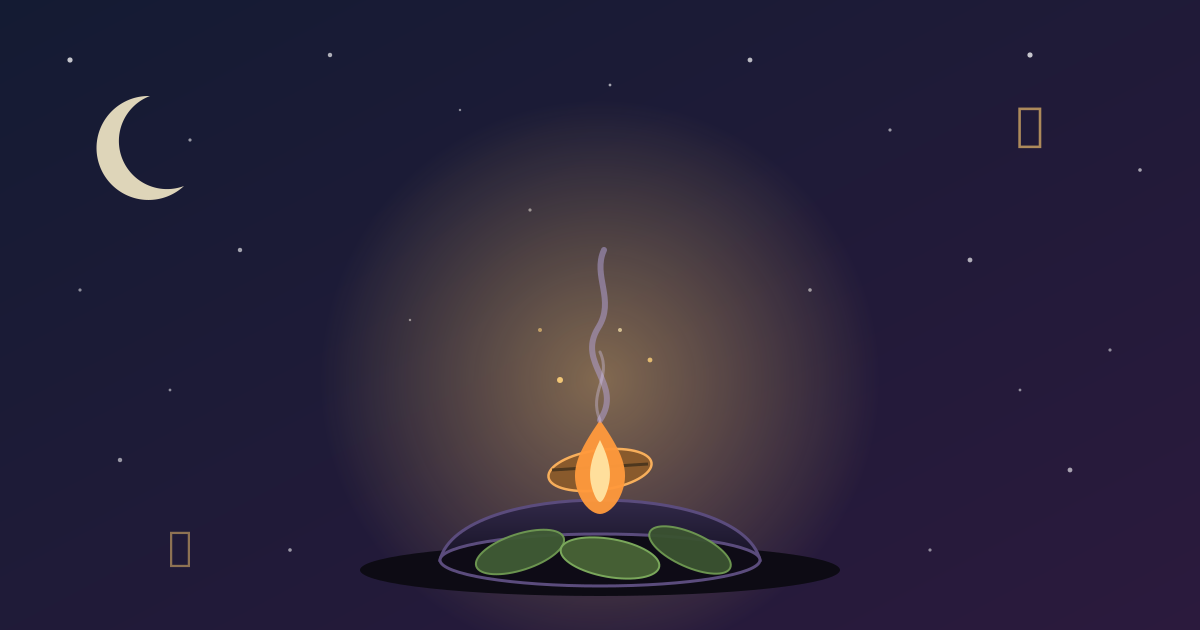
Some rituals need an altar, a circle of candles, and a full moon. The bay leaf ritual needs a kitchen spice, a lighter, and two minutes of honesty. That is exactly why it spread the way it did: on a quiet evening, you take a dried bay leaf — the same kind that goes into soup — write a single wish on it, and burn it. The flame takes the words, the smoke rises, and the wish is, in the language of the tradition, released.
It is one of the simplest practices in the folk-manifestation world, and one of the most satisfying. This guide covers where the lore comes from, what to write, the six steps of the ritual, moon timing, fire safety, and the honest reading of what the smoke and the burn can and cannot tell you.
Where the Bay Leaf Lore Comes From
The bay laurel is an old sacred plant, and its story starts with the Greeks. Laurel leaves crowned victors — athletes, generals, poets — and the Oracle of Delphi was said to chew or inhale bay leaves before speaking prophecies. The leaf meant victory, protection, and divine clarity before it ever met a candle flame.
Folk traditions across the Mediterranean and the Americas kept the leaf in the pantry of the sacred: tucked in wallets for luck, placed under pillows for prophetic dreams, hung in doorways for protection. The burning part is the newer addition — a mashup of ancient laurel lore and the universal folk logic that fire carries messages. Smoke has always been read as going somewhere: up, out, away from you and toward whatever listens. Writing the wish makes it specific; burning it makes it final.
It is worth knowing what the ritual is not. It is not an ancient, unbroken rite — it is a modern folk practice with old ingredients. That does not disqualify it. Folk magic has always worked this way: a leaf, a flame, and a wish are materials any human, in any century, could assemble. The ritual's age is not the point. The point is what it does to you in the two minutes it takes.
What to Write on the Bay Leaf
The tradition is strict about exactly one thing: one leaf, one wish, one clear line. Everything else is flexible. Write with a pencil or a fine-tip marker — the leaf is small and dry, and pencil does not gum up the burn the way thick ink can.
- Write in the present tense. The lore says to write the wish as though it has already happened: "I am calm and steady in my interview" beats "I hope my interview goes okay." Whether or not the universe parses grammar, your brain reads certainty differently than hope — and the ritual is aimed at your brain as much as anywhere.
- Be concrete. "More money" is a fog. "I booked three new clients this month" is a target. The clearer the sentence, the clearer the mind that wrote it — and a clear mind is the actual mechanism here.
- Keep it short. Three to eight words fit a leaf comfortably. If your wish needs a paragraph, it is really two wishes; pick the one that matters and save the other for its own leaf.
- Positive framing. The tradition favors what you want, not what you fear: "my home feels peaceful" rather than "no more arguments." This is folk psychology with a long tail — attention goes where the sentence points.
Common wishes in the practice: career moves ("I signed the offer"), confidence ("I speak up in the meeting"), peace ("I sleep through the night"), and fresh starts ("my move goes smoothly"). Notice that none of these try to change another person — the tradition holds the same ethical line as the rest of candle magic: your wishes, your life, your leaf.
The Bay Leaf Burning Ritual: 6 Steps
The whole ritual takes about five minutes. Do it when the house is quiet — the point is focus, and focus needs a door that stays shut.
1. Set up your fireproof station
Place a fireproof dish — ceramic, metal, a baking dish — on a clear surface, away from curtains, papers, and anything flammable. Have your bay leaf, a pencil, a lighter or candle, and a pair of metal tweezers or tongs within reach. Open a window slightly: the smoke is fragrant and you will want ventilation. This is the same setup discipline used in every working on this site — if you are new to fire rituals, our beginner's guide to candle magic covers the full safety baseline.
2. Write the wish
Sit with the leaf for a moment first. The tradition treats this pause as part of the working, not dead time: you are choosing the wish, not just any wish. Then write your one short line in the present tense. Read it back to yourself once. If it does not land, rewrite it on a fresh leaf — a wish you do not quite believe is a leaf that should wait.
3. Hold the leaf and state the wish aloud
This is the step beginners skip and practitioners insist on. Hold the written leaf and say the wish out loud, in your own words, once. Speaking it does two things the tradition cares about: it moves the wish from private thought into the physical world, and it lets you hear whether you actually want it. If saying it aloud feels wrong, the wish needs editing, not burning.
4. Light the leaf and let it burn completely
Hold the leaf by one end with the tweezers, touch the flame to the other end, and hold it over the fireproof dish. Bay leaves are oil-rich and slow to catch — they may need a few seconds of steady flame before they take. Once lit, let the leaf burn all the way down. The tradition reads a complete burn as a clean release; a half-burned leaf is unfinished business. If the flame falters, relight rather than quitting.
5. Watch the smoke — then let it go
As the leaf burns, the lore says the smoke carries the wish outward — this is the moment of release. Watch it rise for a breath or two, then stop watching. The ritual's job ends at the burn; the lore is explicit that hovering, rechecking, and worrying about the outcome undoes the release. You stated the wish, you burned it, you let it go. That sequence — clarity, commitment, release — is the whole architecture of the practice.
6. Scatter the ash and close
When everything is cool, tip the ash out the open window, into a plant, or onto the wind outside. The tradition treats the scattering as the final punctuation mark: the wish now belongs to the future, not to you. Blow out any candle you used for the flame, wash the dish, and go do one small concrete thing toward the wish — an email, a plan, a phone call. The lore pairs the ritual with action; the psychologists on this site's reading list would call that the actual active ingredient.
Moon Timing for the Ritual
Like most candle-magic workings, the bay leaf ritual is traditionally timed with the moon — and the logic is clean enough to remember without a chart:
- Waxing moon (new to full): for wishes you want to grow — new projects, confidence, abundance, attraction of any kind. The tradition's growth phase is the default choice for most wishes.
- Waning moon (full to new): for wishes about release — breaking a habit, ending anxiety, letting go of a grudge, calming a restless mind. The smoke takes the thing away, the lore says.
- Full moon: the traditional peak for the biggest wishes — the night the folk sources treat as the loudest megaphone. If a wish feels important enough to schedule, this is its night.
- New moon: for intentions and fresh beginnings — wishes that are really decisions wearing wish clothes.
Honest footnote: the moon matters in the tradition the way candle color matters — as structure for attention, not as a switch. A wish burned on a Tuesday with total conviction out-performs one burned on a full moon with a wandering mind. Use the moon when it pleases you; do not let it gatekeep a kitchen-spice ritual.
Reading the Burn: Folk Signs and Honest Answers
The tradition, like candle flame reading, attaches commentary to how the leaf burns. Kept honest, the classic readings run:
- Burns fast and completely: the lore reads this as a clear path — the wish is aligned and the way is open. Practically, it means you picked a dry leaf.
- Won't catch, or keeps going out: folk reading says resistance around the wish — reconsider it, restate it, or admit it is not really yours. Practical reading says bay leaves are stubbornly oily; pick an older, drier leaf and give the flame more time.
- Burns slowly and evenly: traditionally read as a wish that will unfold gradually rather than arrive all at once. A good reading for career and relationship wishes, which in fact do unfold gradually.
- Thick, fragrant smoke: the lore calls this the wish being "loud." Chemically, it is the leaf's essential oils — cineole and eugenol — doing what essential oils do. The smell is pleasant; enjoy it.
- Sparks or crackling: folk reading says strong energy around the wish; practical reading says a tiny air pocket in the leaf. It also says: keep the tweezers steady and your eyebrows clear of the flame.
The old rule holds, same as with flame reading: physics first, folklore second. A dry leaf burns; a damp leaf sulks. Check the material before the message.
Fire Safety for Burning Bay Leaves
The ritual is small, but fire is fire — and bay leaves have their own quirks:
- Always use tweezers or tongs. Bay leaves burn close to the fingers holding them and drip tiny embers. Never hold a burning leaf with your bare hand, no matter how short it is.
- Always burn over a fireproof dish. Embers fall. Ash falls. So does the leaf, sometimes, mid-burn. A wide ceramic or metal dish catches all of it.
- Ventilate, but mind smoke alarms. Bay smoke is fragrant and noticeable — one leaf will not fog a room, but it will find the hallway smoke alarm if the air is still. Crack a window and keep distance from detectors.
- Asthma and fragrance sensitivity: skip this one. Burning bay releases aromatic compounds that some lungs do not like. This is a firm no-go for anyone with respiratory sensitivity — a written-and-torn wish works as the smokeless alternative.
- Never leave the flame unattended. The ritual is five minutes long. Five minutes is exactly the length of a distraction. Stay with the flame until it is fully out.
- Let ash cool before touching. Bay ash looks done long before it is done. Wait, then scatter.
Common Mistakes to Avoid
Writing a wish list instead of a wish. One leaf, one line. The tradition's discipline is the point: forcing yourself to choose the wish is what makes the ritual do anything at all. Five wishes on one leaf is a to-do list with smoke.
Burning and then hovering. The lore is unusually blunt on this: the release is the working, and rechecking whether it "worked" every day un-releases it. State it, burn it, act on it, and let the future do its job. Anxiety is not a manifestation strategy.
Wishing to change another person. The ethical line holds here as everywhere in candle magic: your wishes, your leaf. Wishes aimed at making someone feel, choose, or stay are out of bounds in the tradition — and in practice, they tend to curdle into fixation.
Burning bay leaves as aromatherapy with no wish. Some wellness content suggests burning bay leaves just for the smell. It is a pleasant smell — but burning them without the wish is not the ritual, and claims about "instant calm" or anxiety cures cross from folk lore into health claims this site does not make.
Using a bay leaf like a candle. Leaves are not candles; do not try to make them do candle jobs. If you want a longer working, pair the leaf-burning with a proper manifestation candle ritual — the leaf for the moment of release, the candle for the weeks of attention after.
A Grounded View: Why a Two-Minute Ritual Works
You do not need to believe in carried wishes to get something real out of a bay leaf. The ritual is doing three thoroughly ordinary things in sequence: it forces articulation (the wish must fit on a leaf, in the present tense — vagueness dies on contact with a pencil), it marks commitment (burning is irreversible; you cannot unsay what you watched turn to smoke), and it creates release (the tradition's word for the felt shift from wanting to having-decided).
Psychologists recognize the pattern. Writing goals down measurably increases follow-through — the act of articulation recruits commitment that private wishing does not. Rituals reduce anxiety around uncertain outcomes by giving the mind a completed action to point to. And the "let it go" step, unglamorous as it sounds, is the part most goal-chasers skip: done right, it replaces the background hum of anxious wanting with a quiet "stated, burned, handled," which is precisely the mental state in which people act instead of ruminate.
The leaf will not rearrange the universe. But the sentence you finally wrote down, said aloud, and committed to flame might rearrange your week — not by magic, but by clarity. Fire has carried human messages for as long as humans have had things to say. Tonight, yours says exactly what you want. That is worth a leaf.
Frequently asked questions
Does burning a bay leaf actually make a wish come true?
There is no evidence that burning a bay leaf changes events in the world. Practitioners value the ritual as a focus tool: writing the wish clarifies it, burning it marks commitment, and watching the smoke creates a felt sense of release. Read it as cultural lore and entertainment — the real value is the clarity and the commitment it creates in you.
What should I write on a bay leaf before burning it?
Write one short wish or intention in the present tense, as if it is already true — for example "I am calm and confident at my interview" rather than "I hope I do well." Use a pencil or a thin marker so the leaf stays dry and burns cleanly. Keep it to a few words; the leaf is small and the tradition favors one clear line over a paragraph.
Do I burn the whole bay leaf or just part of it?
Burn the whole leaf. Hold one end with tweezers, light the other, and let it burn down over a fireproof dish until nothing is left but ash. The tradition treats a complete burn as a clean release; a half-burned leaf is just a leaf you did not finish.
Is it safe to burn bay leaves indoors?
Burning one or two leaves over a fireproof dish is generally safe, but bay leaves produce fragrant, noticeable smoke — ventilate the room, open a window, and keep it away from smoke alarms. Use metal tweezers or tongs, never your fingers, and never leave the flame unattended. People with asthma or fragrance sensitivity should skip this ritual.
What does it mean if my bay leaf won't catch fire?
In folk lore, a leaf that refuses to burn is read as resistance around the wish — a sign to reconsider or restate the intention. Practically, bay leaves are slow to catch because of their oil and moisture content; older, drier leaves burn faster. Try a drier leaf and a steady flame, and treat the folk reading as entertainment.
Keep exploring

Manifestation Candle Ritual: Step-by-Step
Manifestation candle ritual: a complete step-by-step guide. Choose your color, carve your intention, dress the candle, and burn it daily to focus your desires.
Read the meaning →
How to Do Candle Magic: A Beginner's Guide
How to do candle magic: a complete beginner's guide. What you need, the 8 steps of a candle spell, timing with moon phases, and common mistakes to avoid.
Read the meaning →
Candle Flame Meanings: How to Read Your Ritual's Fire
Candle flame meanings: what a dancing, flickering, tall, or dying flame means in candle magic. Learn pyromancy basics, plus how to read smoke and wax too.
Read the meaning →
Candle Color Meanings: The Complete Guide
Candle color meanings explained: what each candle color means in magic, how to pick the right one for love, money, protection, or healing, plus pairings.
Read the meaning →