
Blue Candle Meaning & Uses: Peace, Healing & Communication Rituals
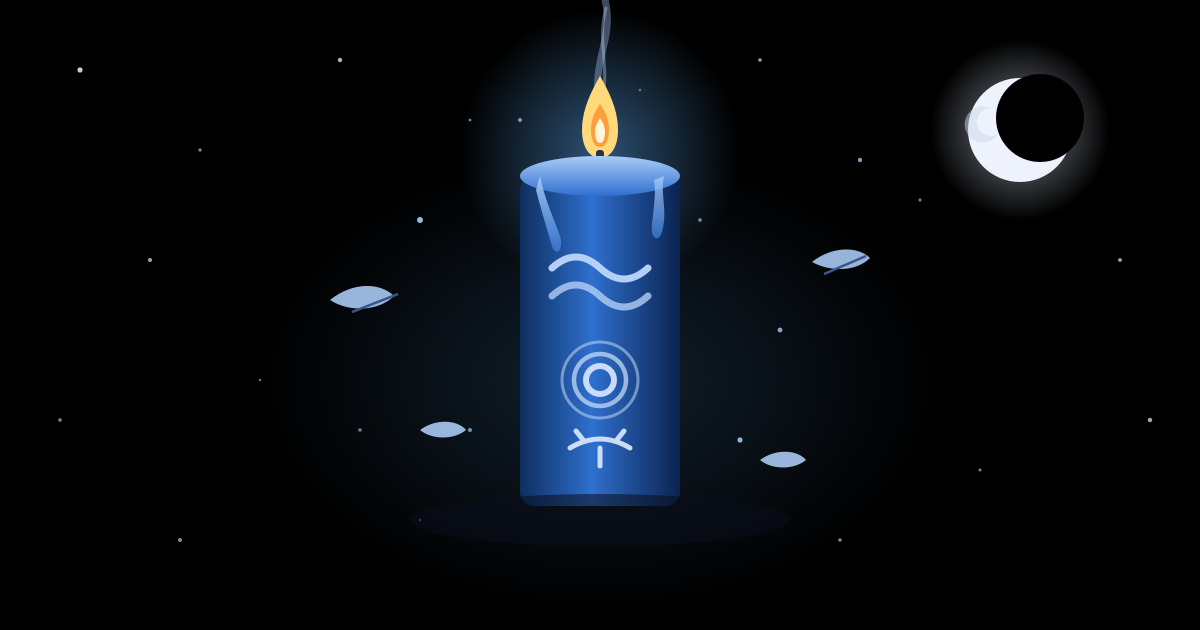
If the red candle is the craft's exclamation point, the blue candle is its deep breath. Where red reaches outward to confront and charge, blue reaches inward to settle and soothe. It is the candle of the peacemaker, the honest talker, the sleepless finally sleeping — practitioners reach for it when the problem is not that something must be done, but that something must be said, understood, or forgiven.
Blue is the color of the calm after the storm — and of the calm you deliberately choose before the storm arrives. That is why its uses cluster around words and feelings: communication, truth, peace, healing, patience. This guide covers what blue candles mean, their classic uses, the difference between light and dark blue, a simple communication ritual, flame readings, and the grounded reasons the craft's quietest candle has such a loyal following. Folk lore presented for entertainment, not guaranteed outcomes.
What Does a Blue Candle Mean?
Blue's meanings share a single root — water put to purpose:
- Peace and calm. The famous one. Blue is serenity made visible — the color practitioners burn when a house feels tense, when the week has been loud, when the body has forgotten what relaxed means. It is the candle of turning the volume down.
- Honest communication. Blue's signature. Blue candles are burned before the interview, the apology, the negotiation, the talk you have been rehearsing in the shower for weeks. In the folk tradition, blue loosens the throat and steadies the words.
- Emotional healing. The color of the long, quiet mending: grief, heartbreak, the slow recovery of trust. Practitioners describe blue as the candle you burn when there is nothing left to do — only time, patience, and care.
- Truth and honesty. Blue is burned to see clearly — in readings, in decisions, in the moments when you need the honest version of the story instead of the comfortable one. Practitioners keep a blue candle on the altar when the working requires candor.
- Patience. The overlooked virtue of the color. Blue workings are slow workings: the practice of waiting well, of not forcing the door before it is ready to open. It is the candle of giving things the time they actually need.
- Gentle protection. Where black candles absorb and red candles push back, blue candles soothe the field around you — a calm boundary, the kind of protection that de-escalates instead of confronting. Practitioners burn blue when they want trouble to lose interest quietly.
- Water and the throat chakra. Blue belongs to water — the element of feeling, dreams, and the unconscious — and to the throat chakra, the body's seat of voice and truth. In the folk correspondence it is linked to Thursday and to Jupiter, the planet of wisdom and honesty.
Together, blue is not one symbol but a depth: turn it toward any wound and the wound gets quieter, any conversation and the conversation gets truer, any storm and the storm loses its edges.
The Classic Uses of Blue Candles
Here are the traditional uses, in the order practitioners actually reach for them:
1. Calm, honest communication
The use everyone has heard of. Blue candles are burned before the apology, the performance review, the salary conversation, the family talk nobody wants to have. The folk method is simple: light the candle and say the hard sentence aloud once, slowly, listening to how it lands in the room. Practitioners report that the ritual's real product is not magic but editing — hearing your own words before the other person has to. Our guide on how to do candle magic covers the intention-setting that keeps communication workings aimed at honesty rather than performance.
2. Peace in the home
The household use. Blue candles are burned to cool a tense atmosphere — after an argument, during a stressful week, when visitors are coming and the house needs to feel like itself again. Practitioners walk the lit candle (safely, in its dish, at a standstill in each room — never carried around lit) from room to room in intention, or simply burn one on the kitchen table while the household eats together. The lore: blue settles the space so the people in it can settle too.
3. Emotional healing
The long-mending use. A blue candle burned through the season of grief, after a breakup, during the slow rebuilding of trust. The folk rhythm is nightly — the same candle, a few quiet minutes, until it is burned through, then another. Practitioners describe it as keeping a small, steady promise to yourself: every evening, you sit with the feeling instead of outrunning it. That is not a substitute for therapy — it is a companion to the real work of healing.
4. Truth and clarity
The candor use. Blue candles appear in workings where the honest answer is needed: before a decision, during a reading, when you have been avoiding the true shape of a situation. Practitioners burn blue and ask the plain question, then sit with whatever surfaces. The folk warning is honest too: blue does not guarantee the answer you want. It promises the answer you need, which is a different thing.
5. Patience in waiting
The slow use. Applications, diagnoses, messages that have not been answered, outcomes that are not yours to hurry. Blue candles are burned in workings of deliberate waiting — not passivity, but the discipline of not forcing. The ritual shape: light the candle, name what you are waiting for, and practice leaving it alone until the flame is snuffed. The tradition treats impatience as the enemy of good outcomes, and blue as its antidote.
6. Gentle, de-escalating protection
The quiet-boundary use. Where black candles absorb hostility and red candles confront it, blue candles are burned to make a situation lose its charge: the tense workplace, the neighborly friction, the family dynamic that keeps sparking. Practitioners carve a circle — the folk sign of a calm perimeter — into the wax and set the intention that everyone involved gets the steadiness they need. The goal is not victory. It is quiet.
7. Sleep and the wind-down
The evening use. Blue candles close out the day in practitioner households: lit for thirty quiet minutes in the evening, then snuffed before bed — never while sleeping. The ritual pairs with the practical advice every sleep researcher would give: screens down, lights low, the racing mind given one calm task. The candle does not make you sleep. It marks the night as finished with the day.
Light Blue vs Dark Blue Candles
Blue is not one color in the tradition — the shade tilts the working:
- Light blue / sky blue: spiritual peace, healing, openness, calm clarity. This is the shade for grief, anxiety, forgiveness, and anything where the goal is softness. Light blue is the color practitioners burn when the wound is fresh.
- Royal / medium blue: communication, truth, wisdom, and trust. The classic all-rounder — the shade for conversations, interviews, and honest decisions. When a guide says "blue candle" without specifying, this is usually the shade meant.
- Dark blue / navy: intuition, dreams, the unconscious, deep protection. The shade for dream work, spiritual insight, and steadying yourself before a storm outside you rather than inside. Dark blue is blue at its most serious.
The practical rule: pick the shade by asking whether the goal needs softening (light blue) or steadying (dark blue). If you only own one blue candle, the tradition is unbothered — intention, not shade, does the heavy lifting.
A Simple Blue-Candle Communication Ritual
This is the classic: about thirty minutes, one conversation you have been dreading, and an honest mouth. Fire safety first — everything else second.
1. Write the true sentence
Take paper and write the one sentence you most need to say — the honest version, not the polite draft. "I feel hurt when you dismiss my work" beats "I wanted to talk about communication." Folk practitioners insist on the true sentence because the ritual only works on what is real; rehearsing the polite version prepares you for a conversation that will never happen.
2. Prepare the candle
Set a blue candle in a fireproof dish. If you have lavender or chamomile oil, anoint the candle lightly — both are traditional calm herbs — drawing the oil downward, from wick to base, which the tradition reads as drawing agitation out of the working. Beginners can learn the full technique in our guide on how to dress a candle.
3. Carve the glyph
With a pin, carve expanding ripples — three concentric circles, the folk sign of a voice carrying outward — into the wax. The tradition reads the ripples as words landing gently: reaching the other person without bruising them on the way. Carving turns the candle from decoration into your specific instrument.
4. Say it aloud, then listen
Light the candle and speak the true sentence aloud — once, slowly, in your own voice. Then do the harder part: sit in silence for five minutes and imagine hearing it as the other person would. The folk understanding is that most conversations fail not from bad words but from no listening — and the ritual gives listening a ceremonial slot before the talk begins.
5. Plan the opening, then snuff
Write down the actual first sentence you will say when the real conversation happens — the calm, honest opening line, practiced once by the flame. Fifteen to twenty minutes total. Then snuff the flame — never blow it out, in the folk manner — and keep the paper. The candle opened the space; the preparation fills it. The conversation, whenever it happens, will feel like something you have already survived once.
When NOT to Burn a Blue Candle
Blue is the craft's gentlest color, and even gentleness has its limits — the cases where practitioners themselves say put the candle down:
- Not as a substitute for the actual talk. The communication ritual prepares you for the conversation; it cannot have the conversation for you. Lighting a blue candle instead of apologizing is the most common way blue workings fail — the candle is the rehearsal room, not the stage.
- Not when what you need is action. Blue slows things down, and sometimes slowing down is wrong. Goals that need speed, confrontation, or decisive cutting get worse with blue, not better — a confrontation that needs red, or a banishing that needs black, will not be helped by extra calm. Check the color against the goal in the color guide before every working.
- Not as a sleep aid. The evening ritual supports a wind-down routine; it is not a remedy for insomnia, and candles are never burned while sleeping. If sleeplessness is persistent, the honest answer is a doctor or a sleep specialist, not a longer burn.
- Not for emotional avoidance. Blue can become a sedative — the ritual that soothes the feeling so you never have to face it. Practitioners warn against burning blue around a problem instead of working through it. The candle holds the feeling steady; it should not make the feeling unnecessary.
- As a substitute for professional help. A grief or anxiety ritual cannot replace therapy or medical care. The candle can sit on the nightstand and hold the intention; it cannot be the treatment.
Reading a Blue Candle: Flame and Wax Signs
Folk pyromancy treats the burn as commentary on the working — with the honest hierarchy the old practitioners used: physics first, folklore second.
- Steady, quiet flame: the tradition's great sign on a blue candle — calm energy, the working moving at the right pace. Practically, a still room and a trimmed wick also do this. Enjoy it either way.
- Tall, leaping flame: in lore, unspoken agitation — the feelings the working is about are louder than the intention; in physics, often a draft or oil near the wick. Check the room, and ask whether you need to name the louder feeling first.
- Low, dim flame: read as grief or exhaustion weighing on the working — not failure, but a signal that the goal needs rest more than ritual. Trim the wick and consider whether tonight's working is healing or sleep.
- Crackling or sputtering: the folk read is unspoken words fighting to get out — things unsaid in the situation; the practical read is moisture or herbs near the wick. Either way, the response is the same: find the unsaid thing and write it down.
- Clean, even burn with little soot: read as honesty landing well — the clearest of blue's signs, and a reminder that truth burns cleaner than performance.
For the full vocabulary of what candle flames mean and how to read the wax after the burn, see our ceromancy guide.
Fire Safety for Blue Candles
- Never burn while sleeping. The evening wind-down ritual ends with the snuff — always. A candle cannot be part of falling asleep. Set a timer for your thirty minutes so the quiet cannot turn into an unattended burn.
- Blue wax stains everything. Drips on white tablecloths, carpet, and light wood are effectively permanent. Burn on a wide, dark, disposable-safe dish — and keep the candle away from the edge of any surface.
- Dressed candles burn unpredictably. Oil and herb dressings change how wax melts and can make flames flare. Never leave a dressed blue candle unattended, and trim the wick shorter than usual — an eighth of an inch if dressed.
- The candle stays in its dish. Blue workings are meditative — closing your eyes, breathing, visualizing. Do that from a chair, not while holding the candle. The flame stays in one place; you stay a safe distance from it.
- Mind the room's stillness. Blue-candle lore loves a draft-free room, and so does fire safety. Close the window, turn off the fan, and keep pets and partners out of the ritual space for the duration.
Common Mistakes to Avoid
Skipping the true sentence. The communication ritual's power is in step one — writing the honest version, not the polite draft. Practitioners who rehearse only the careful version report the same frustration walking out of the real conversation with them. The candle cannot make you brave about a sentence you never wrote down.
Using blue to avoid instead of to face. The gentleness trap: burning blue every night to feel calm about a problem instead of addressing the problem. The tradition's test is simple — after two weeks, is anything actually different? If not, the working has become decoration, and the honest move is the conversation, the decision, or the appointment the candle has been standing in for.
Expecting instant calm. Blue is slow magic. One candle does not end a grieving season or fix a tense household; the folk rhythm is weeks, not evenings. Practitioners who burn blue expecting a single night's transformation are usually disappointed — and miss the real, gradual softening that was already underway.
Confusing the ritual for the remedy. A peace ritual before bed does nothing if the insomnia's cause — the late coffee, the glowing phone, the untreated anxiety — goes untouched. Blue's whole mythology is about honesty, and the first honesty it asks for is about what the candle can and cannot do.
A Grounded View: Why Blue Candles Work
You do not have to believe in the throat chakra to get something from a blue candle. The ritual is doing several very ordinary things at once: it forces slow preparation (writing the sentence down converts dread into a script), it creates a listening slot (the silence after speaking is practice in hearing), and it borrows the color's cultural weight — decades of research show blue environments measurably lower heart rate and blood pressure, which is why hospitals, airlines, and boardrooms are painted blue.
Psychologists would recognize the pattern as expressive writing plus exposure: articulating the feared sentence reduces its emotional charge, and rehearsing it aloud in a ceremonial frame lowers the stakes of the real thing. People who do this regularly report the same effect whether they call it magic or preparation — the conversation they dreaded turns out to be survivable, and sometimes even kind. The blue candle did not give you the words. It gave your words a quiet room to gather in.
Closing: The Quiet Flame
Every other candle in the craft asks you to feel something strongly — to burn, to build, to push, to purify. The blue candle asks you to feel something quietly. It is the only one whose whole symbolism points inward, toward the conversation you need to have with yourself before you can have it with anyone else: the grief admitted, the truth named, the apology rehearsed, the patience practiced.
So light one the next time the loud thing in your life is you: the interview, the apology, the week that will not stop buzzing, the feeling you have been outrunning. Write the true sentence plainly, say it once to the flame, listen in the silence after — and then, the part that matters, carry that steadiness into the real conversation tomorrow. Practitioners have an old saying about blue candles: every other candle changes the room, but the blue one changes the silence in it. The flame does not speak for you. It just burns there, calm and blue, until you remember you can be too.
Frequently asked questions
What is a blue candle used for in candle magic?
Blue candles are traditionally used for peace and calm, clear and honest communication, emotional healing, patience, truth, and gentle protective energy. In folk tradition blue belongs to the throat chakra and to water, and it is the color practitioners reach for when the situation needs softening rather than striking. Presented as cultural lore for entertainment, not guaranteed outcomes.
Can a blue candle help with difficult conversations?
In the folk tradition, that is one of blue's signature uses. Practitioners burn a blue candle before interviews, apologies, negotiations, and any talk they have been dreading, framing the working around speaking calmly and listening honestly. The grounded mechanism is psychological: the ritual forces slow, deliberate preparation, which is what actually steadies the words.
What is the difference between light blue and dark blue candles?
Light blue is traditionally the color of spiritual peace, healing, and openness — the color for calming a storm inside you. Dark blue (and navy) leans toward protection, intuition, wisdom, and the unconscious — the color for steadying yourself before a storm outside you. Both share blue's core of calm communication; the shade tilts the working toward inner healing or outer steadiness.
Which day is best to burn a blue candle?
Thursday is the classic day, since Thursday belongs to Jupiter, the planet of wisdom, honesty, and broad perspective that blue is traditionally linked to. The waxing moon suits blue workings meant to build something — communication skills, a calmer home, restored trust — while the waning moon suits blue workings meant to release something — anxiety, a grudge, a sleepless week.
Is a blue candle good for sleep?
Practitioners do burn blue candles as part of wind-down rituals, but never as a sleep aid on its own — and never while sleeping. The tradition pairs a short blue-candle ritual in the evening with dim lights, screens off, and a calm routine. Blue's lore is about quieting the racing mind, and the practical advice matches the folk advice here: address the habits, let the candle hold the intention.
Keep exploring
Red Candle Meaning & Uses: Passion, Courage & Strength Rituals
Red candle meaning explained: what red candles are used for — passion, courage, strength, motivation, and fiery protection — plus a simple courage ritual, flame readings, and fire safety.
Read the meaning →
Candle Color Meanings: The Complete Guide
Candle color meanings explained: what each candle color means in magic, how to pick the right one for love, money, protection, or healing, plus pairings.
Read the meaning →
How to Do Candle Magic: A Beginner's Guide
How to do candle magic: a complete beginner's guide. What you need, the 8 steps of a candle spell, timing with moon phases, and common mistakes to avoid.
Read the meaning →
White Candle Meaning & Uses: Purity, Protection & Clarity Rituals
White candle meaning explained: what white candles are used for — purity, protection, spiritual clarity, moon work, and blessing new beginnings — plus a simple clarity ritual, flame readings, and fire safety.
Read the meaning →