
Brown Candle Meaning & Uses: Grounding, Stability & Home Rituals
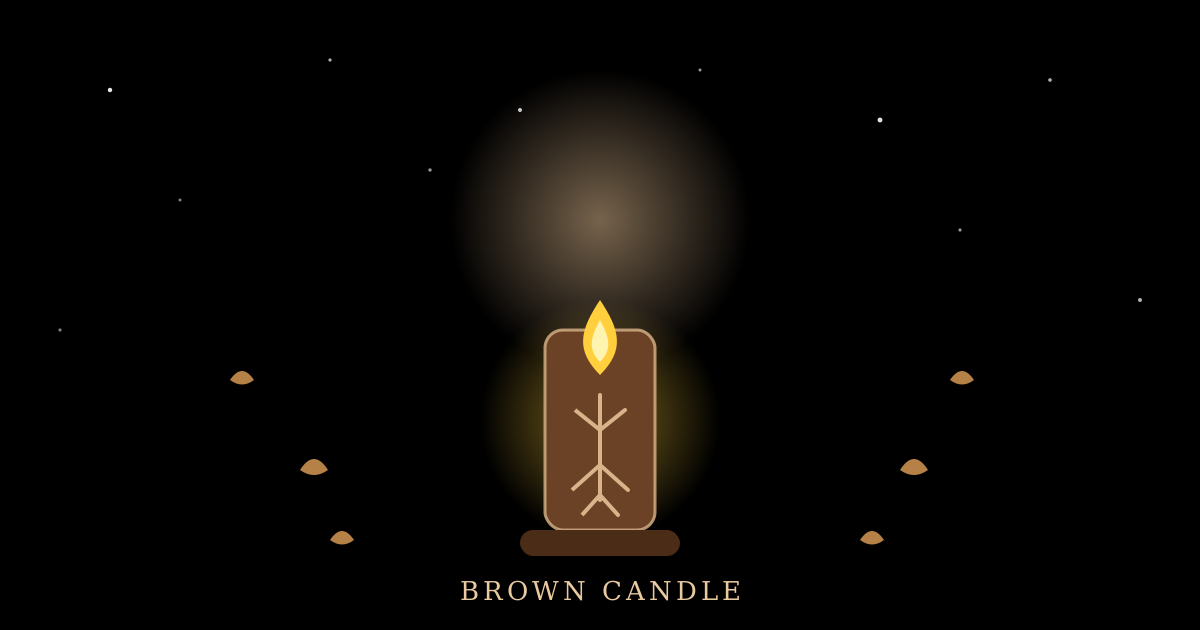
If the white candle is the craft's clean slate and the green candle its growing field, the brown candle is the ground itself. It is the least glamorous color in the candle box and, practitioners will tell you, one of the most used. Brown does not promise transformation or revelation. It promises something quieter and harder to come by: footing. When the mind will not stop spinning, when the household is frayed, when the money is uncertain and the work is piling up, brown is the color you light to come back down to earth.
Brown is the color of what holds — and of the patient work that keeps a life standing through a hard season. That is why its uses cluster around the practical and the domestic: grounding, stability, home, earned money, animals, endurance. This guide covers what brown candles mean, their classic uses, how brown differs from black and green, a simple grounding ritual, flame readings, and the grounded reasons the craft's humblest candle has such a loyal following. Folk lore presented for entertainment, not guaranteed outcomes.
What Does a Brown Candle Mean?
Brown's meanings share a single root — the earth underfoot:
- Grounding. The famous one. Brown is the color practitioners burn to come back to themselves after overwhelm, overstimulation, or a stretch of too much change. In the folk tradition, brown pulls scattered energy downward, the way roots pull a tree steady in wind.
- Stability and security. Brown's signature. Brown candles are burned for the solid things: a steady home, a reliable income, a relationship that holds, a routine that survives a hard week. Where other colors reach for more, brown reaches for enough, held steady.
- Home and hearth. The color of the house itself — its walls, its table, its threshold. Practitioners burn brown when moving into a new home, settling a restless household, or marking a home as a place of safety after a difficult time.
- Practical money. Where green draws prosperity in general, brown draws the earned kind: wages, harvests, the honest trade, the business built by hand. It is the candle of money as a result of work, not money as a wish.
- Animals and animal companions. The folk use most people forget. Brown candles are traditionally burned for pets and working animals — their health, their safety, their settling into a new home — because brown belongs to the creaturely world as much as to the human one.
- Patience and endurance. The color of the long haul. Brown workings are slow by design: the debt paid down month by month, the skill learned year by year, the garden tended through seasons. Practitioners describe brown as the candle that teaches waiting without despair.
- The earth element. Brown belongs to earth — the element of soil, stone, and root — and in the folk correspondence it is linked to Saturday and to Saturn, the planet of structure, boundaries, and time.
Together, brown is not one symbol but a foundation: turn it toward any scattered life and the life gets steadier, any restless home and the home gets quieter, any honest work and the work gets its footing back.
The Classic Uses of Brown Candles
Here are the traditional uses, in the order practitioners actually reach for them:
1. Grounding after overwhelm
The use everyone has heard of. Brown candles are burned after the day that scattered you — the bad news, the move, the argument, the stretch of too many changes at once. The folk method is simple: light the candle, sit with both feet flat on the floor, and breathe until the room feels like a room again. Practitioners report that the ritual's real product is not magic but slowing down — a twenty-minute boundary between the chaos and the rest of the evening. Our guide on how to do candle magic covers the intention-setting that keeps grounding workings aimed at the body rather than the worry.
2. Stability in uncertain times
The holding-steady use. Brown candles are burned through job hunts, house sales, illnesses in the family, and every other season where the ground itself feels uncertain. The folk rhythm is one candle per evening for a week — lit at the same hour, snuffed at the same hour — so the flame becomes a small, reliable routine inside an unreliable week. The tradition pairs the candle with the practical work every time: the applications sent, the calls made, the budget actually written down.
3. Home blessings and house settling
The hearth use. A brown candle burned on the first night in a new home, after a renovation, or when a household has been arguing and needs to feel like a household again. Practitioners carry the lit candle room to room, naming what each room is for — rest here, work here, gathering here — before setting it down at the table. The folk warning is honest too: the candle settles the atmosphere, but the conversation still has to happen. The flame does not fix the argument. It gives the argument a quieter room to be had in.
4. Practical money and honest work
The earned-money use. Brown candles are burned for the steady paycheck, the craft business finding its customers, the harvest coming in, the side work paying off. The folk distinction matters here: where green candles draw prosperity and growth, brown candles draw the grounded, hands-on kind — the money that arrives because the work was done, on time, well. The tradition pairs the candle with the ledger: the prices set, the invoices sent, the hours actually worked.
5. Animal companions
The creaturely use. Brown candles appear beside the pet's bed during a move, a vet visit, or the first nights in a new home — burned for the animal's calm, safety, and settling. Practitioners describe brown as the color animals understand best, because it smells of earth and home rather than of ambition. The honest note matters here: a candle is no substitute for veterinary care, and the tradition says so plainly. The flame keeps the human calm; the vet keeps the animal well.
6. Finding lost things
The quiet, practical use. Brown candles are traditionally burned when something is lost in the house — the keys, the document, the heirloom — with the folk logic that a grounded mind notices what a scattered mind walks past. Practitioners light the candle, sit quietly, and retrace their steps in memory before searching again. The tradition treats the candle as a focusing tool: the same light, the same signal to the mind that now we look carefully. The searching, of course, is what finds the thing.
7. Endurance and long projects
The long-haul use. Brown candles are burned at the start of the project that will take months — the degree, the renovation, the book, the debt plan — and relit on the hard days in the middle. Practitioners describe brown as the color that stays when enthusiasm leaves: the candle of showing up. Where orange candles spark a beginning, brown candles carry it.
Brown vs Black and Green Candles
Brown sits between two better-known neighbors in the tradition, and the difference matters — the shade tilts the working:
- Black: banishing, protection, endings, and cutting ties. This is the shade for removing a threat, closing a chapter, or shielding a household. Black works by removing.
- Brown: grounding, stability, home, and steady practical progress. The shade for settling a life, steadying a home, and earning money by hand. Brown works by holding.
- Green: prosperity, growth, luck, and abundance in general. The shade for money growing, opportunities opening, and the garden — literal or figurative — flourishing. Green works by growing.
The practical rule: pick black when something needs to stop, green when something needs to grow, and brown when something needs to hold steady. If you only own one brown candle, the tradition is unbothered — intention, not shade, does the heavy lifting.
Brown Candle Shade Guide
Not all browns work the same way in the tradition:
- Light tan / beige: gentle grounding, new-home settling, and calm for sensitive animals. The softest brown — the shade practitioners reach for when the household includes children or a nervous pet.
- Medium / chestnut brown: the all-rounder — stability, home blessings, practical money, and everyday grounding. When a guide says "brown candle" without specifying, this is usually the shade meant.
- Dark walnut / chocolate: deep grounding, endurance, and the long haul. The shade for debt plans, grief settling, and the projects that take years rather than weeks. Dark brown is brown at its most rooted.
A Simple Brown-Candle Grounding Ritual
This is the classic: about twenty minutes, one scattered mind, and solid ground underfoot. Fire safety first — everything else second.
1. Put your feet on the floor
Before lighting anything, sit with both feet flat on the floor and notice the weight of your body in the chair. Folk practitioners insist on this step because the ritual only works on what is physically present — grounding begins in the body, not in the thought. Feel the floor for a full minute before you reach for the match.
2. Prepare the candle
Set a brown candle in a fireproof dish. If you have patchouli or cedarwood oil, anoint the candle lightly — both are traditional grounding scents — drawing the oil downward, from wick to base, which the tradition reads as drawing energy down into the earth. Beginners can learn the full technique in our guide on how to dress a candle.
3. Carve the roots glyph
With a pin, carve a small tree with roots into the wax — a trunk, a few branches, and roots reaching down. The tradition reads the roots as the whole point: whatever grows above ground holds because something holds below it. Carving turns the candle from decoration into your specific instrument.
4. Name what needs steadying, then sit
Light the candle and speak one sentence naming what needs steadying — the job hunt, the household, the scattered week — once, plainly, in your own voice. Then do the harder part: sit in silence for ten minutes, feet on the floor, watching the flame. The folk understanding is that most overwhelm is not a lack of answers but a lack of stillness — and the ritual gives stillness a ceremonial slot before the decisions resume.
5. Write the next small step, then snuff
Write down the one small, practical step you will take tomorrow — the call, the form, the tidy room — taken once by the flame. Fifteen to twenty minutes total. Then snuff the flame — never blow it out, in the folk manner — and keep the paper. The candle steadied the ground; the step walks on it. The week, whenever it steadies, will feel like something you have already stood inside once — on solid ground.
When NOT to Burn a Brown Candle
Brown is the craft's most grounded color, and even groundedness has its limits — the cases where practitioners themselves say put the candle down:
- Not as a substitute for the actual work. The grounding ritual calms you for the job hunt; it cannot send the applications for you. Lighting a brown candle instead of doing the practical step is the most common way brown workings fail — the candle is the steadying room, not the workroom.
- Not for fast money. Brown aims at the steady paycheck, and aiming it at a windfall wastes its weight. Fast gains get green or gold, in the tradition; brown is kept for the income that arrives because the work was done. Check the color against the goal in the color guide before every working.
- Not as a cure for anxiety. The ritual supports a scattered evening; it is not a remedy for persistent anxiety, panic, or low mood. If the restlessness is constant and gnawing, the honest answer is rest, routine, a trusted person, or professional support — not a longer burn.
- Not for settling a bad situation. Brown can become a trap — the ritual that steadies you into a job, home, or relationship you should actually leave. Practitioners warn against burning brown around a situation instead of examining it. The candle holds the ground steady; it should not make an unhealthy ground unquestionable.
- As a substitute for professional help. A grounding ritual cannot replace veterinary care for a sick pet, financial advice for a debt crisis, or medical care for a health problem. The candle can sit on the table and hold the intention; it cannot be the plan.
Reading a Brown Candle: Flame and Wax Signs
Folk pyromancy treats the burn as commentary on the working — with the honest hierarchy the old practitioners used: physics first, folklore second.
- Steady, low flame: the tradition's great sign on a brown candle — calm energy, the working settling at the right pace. Practically, a still room and a trimmed wick also do this. Enjoy it either way.
- Tall, leaping flame: in lore, restlessness louder than the intention — the situation the working is about is more agitated than the plan admits; in physics, often a draft or oil near the wick. Check the room, and ask whether the situation needs calming before it needs steadying.
- Low, dim flame: read as exhaustion weighing on the working — not failure, but a signal that rest comes before the next step. Trim the wick and consider whether tonight's working is grounding or simply sleep.
- Crackling or sputtering: the folk read is competing demands on the household — voices unsaid in the situation; the practical read is moisture or herbs near the wick. Either way, the response is the same: find the competing demand and name it.
- Clean, even burn with little soot: read as a life settling well — the clearest of brown's signs, and a reminder that honest steadiness burns cleaner than performance.
For the full vocabulary of what candle flames mean and how to read the wax after the burn, see our ceromancy guide.
Fire Safety for Brown Candles
- Never burn while sleeping. The grounding ritual ends with the snuff — always. A candle cannot be part of falling asleep. Set a timer for your twenty minutes so the steady flame cannot turn into an unattended burn.
- Dark wax stains. Brown drips on light tablecloths, carpet, and pale wood are hard to remove, and dark wax shows on everything. Burn on a wide, dark, disposable-safe dish — and keep the candle away from the edge of any surface.
- Dressed candles burn unpredictably. Oil and herb dressings change how wax melts and can make flames flare. Never leave a dressed brown candle unattended, and trim the wick shorter than usual — an eighth of an inch if dressed.
- The candle stays in its dish. Grounding workings are still — sitting, breathing, writing. Do that from a chair, not while carrying the candle. The flame stays in one place; you stay a safe distance from it.
- Mind the room's stillness. Brown-candle lore loves a draft-free room, and so does fire safety. Close the window, turn off the fan, and keep pets and children out of the ritual space for the duration — the flame is for their calm, not their curiosity.
Common Mistakes to Avoid
Skipping the feet-on-the-floor step. The grounding ritual's power is in step one — feeling the floor before lighting anything. Practitioners who light first and settle never report the same effect walking out of the ritual with them. The candle cannot ground a body that never touched the ground.
Using brown to endure instead of to decide. The settling trap: burning brown every evening to feel steady about a situation instead of changing the situation. The tradition's test is simple — after two weeks, is anything actually different? If not, the working has become a comfort, and the honest move is the conversation, the application, or the departure the candle has been standing in for.
Expecting instant calm. Brown is slow magic. One candle does not end a season of overwhelm or settle a household in an evening; the folk rhythm is weeks, not evenings. Practitioners who burn brown expecting a single evening's peace are usually disappointed — and miss the real, gradual settling that was already underway.
Confusing the ritual for the remedy. A grounding ritual before a hard week does nothing if the practical step itself goes untouched. Brown's whole mythology is about steadiness, and the first steadiness it asks for is about what the candle can and cannot do.
A Grounded View: Why Brown Candles Work
You do not have to believe in earth energy to get something from a brown candle. The ritual is doing several very ordinary things at once: it forces physical stillness (sitting with feet on the floor for twenty minutes calms the nervous system in ways scrolling never does), it creates a routine anchor (the same hour, the same flame, the same small step written down), and it borrows the color's cultural weight — brown is the color of soil, wood, and home in nearly every culture, which is why it reads as safe before a single word is spoken.
Psychologists would recognize the pattern as grounding plus implementation intention: naming the one small step converts a vague overwhelm into a doable action, and the ceremonial frame lowers the stakes of starting it. People who do this regularly report the same effect whether they call it magic or routine — the week they dreaded turns out to be manageable, one steady step at a time. The brown candle did not steady your life. It gave your life a steady place to stand.
Closing: The Rooted Flame
Every other candle in the craft asks you to reach for something — to burn brighter, to grow richer, to love deeper, to see further. The brown candle asks you to stand where you already are, steadily. It is the only one whose whole symbolism points downward toward the roots: the home held, the work done honestly, the animal sleeping safely, the week survived one small step at a time.
So light one the next time life feels scattered: the move, the hard season, the household that needs quieting, the project that will take months. Put your feet on the floor, name what needs steadying plainly, sit with the flame in the silence after — and then, the part that matters, take the one small step tomorrow. Practitioners have an old saying about brown candles: every other candle changes the room, but the brown one changes the ground under it. The flame does not perform for you. It just burns there, low and brown, until you remember you can stand that steady too.
Frequently asked questions
What is a brown candle used for in candle magic?
Brown candles are traditionally used for grounding, stability, home and hearth, practical money earned by hand, and the wellbeing of animal companions. In folk tradition brown belongs to the earth — soil, wood, and stone — and it is the color practitioners reach for when life feels scattered and something solid is needed underfoot. Presented as cultural lore for entertainment, not guaranteed outcomes.
What is the difference between brown and black candles?
Black candles are the craft's color of banishing, protection, and endings — they cut and clear. Brown candles build and settle: grounding, stability, home, and steady practical progress. Practitioners reach for black when something needs to stop, and brown when something needs to hold. If the working is about removing a threat, black fits; if it is about standing steady through a storm, brown fits.
Is a brown candle good for money?
In the folk tradition, brown is used for practical, earned money — the steady income, the honest trade, the harvest of work already done — rather than windfalls or fast gains. Practitioners often pair brown with green: green for prosperity and growth, brown for the grounded, hands-on work that produces it. The candle marks the effort, but the work itself earns the pay.
Which day is best to burn a brown candle?
Saturday is the classic day, since Saturday belongs to Saturn, the planetary ruler brown is traditionally linked to — the planet of structure, endurance, and boundaries. The waning moon suits brown workings meant to settle something down — a scattered mind, a restless household — while the new moon suits brown workings meant to lay a fresh foundation.
Can you burn a brown candle with other colors?
Yes, and practitioners often do. Brown pairs with green for grounded prosperity, with white for a clean and steady home, and with yellow for steady confidence at work. The folk rule is to keep one clear goal per working: brown holds the foundation, and the second color builds on it rather than competing with it.
Keep exploring
Green Candle Meaning & Uses: Money, Prosperity & Growth Rituals
Green candle meaning explained: what green candles are used for — money, prosperity, luck, growth, and heart-chakra healing — plus a simple money ritual, a shade guide, and when to skip them.
Read the meaning →
Black Candle Meaning & Uses: Protection, Banishing & Endings Rituals
Black candle meaning explained: what black candles are used for — protection, banishing, endings, and shadow work — plus a simple banishing ritual, shade guide, and fire safety.
Read the meaning →
Candle Color Meanings: The Complete Guide
Candle color meanings explained: what each candle color means in magic, how to pick the right one for love, money, protection, or healing, plus pairings.
Read the meaning →
How to Do Candle Magic: A Beginner's Guide
How to do candle magic: a complete beginner's guide. What you need, the 8 steps of a candle spell, timing with moon phases, and common mistakes to avoid.
Read the meaning →