
Candle Magic for Love: Pink, Red & Self-Love Rituals That Open the Heart
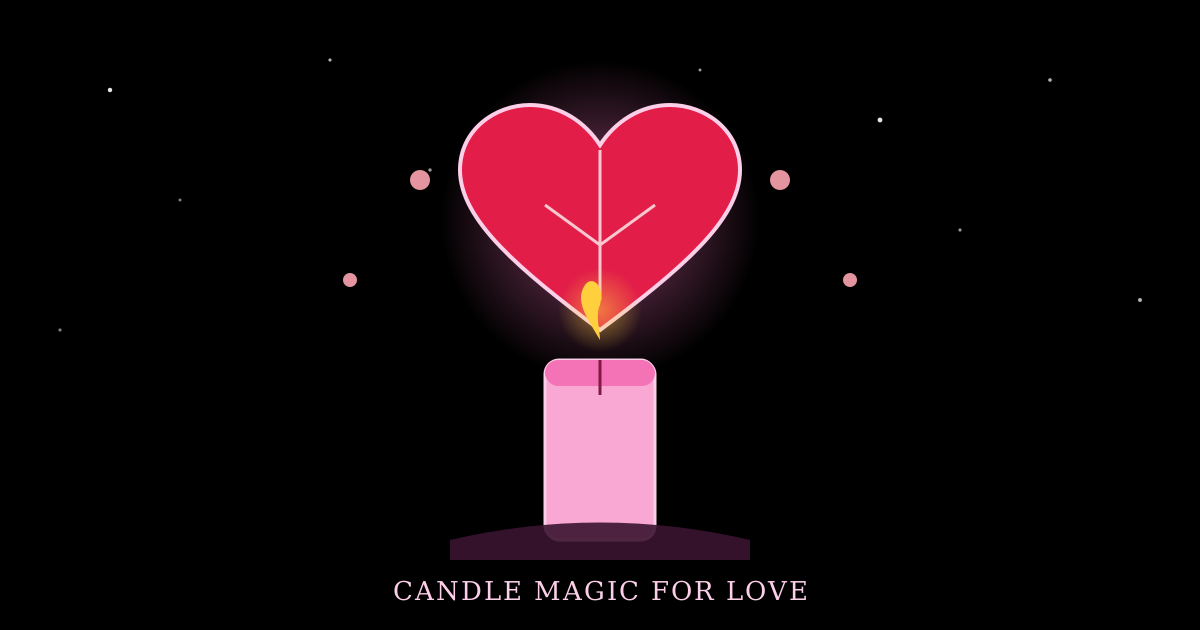
Of all the reasons people light a candle, love is the most human. A flame on a table, a wish spoken quietly, a moment set aside from a busy life to ask, honestly, what kind of love is wanted and whether the heart is ready for it — that is the real shape of a love candle ritual, whatever the folklore around it. Love candle magic grows out of that instinct: a color, a scent, and a spoken intention that says, plainly, I am ready to give and receive love well. It is the warmest branch of the craft, and also the one where its honest practitioners are quickest to draw a line: a love working is about the person lighting the candle, never about bending someone else.
That line matters, because it is what separates a love ritual from a fantasy. In folk tradition, love workings do not target a named person, do not try to break up a relationship, and do not promise that a particular someone will call, return, or fall in love. What they do, in the tradition's own language, is open the heart, clarify the kind of relationship that is actually wanted, and make the practitioner more ready to notice and welcome it. This guide covers the colors, herbs, and timing of love candles, a step-by-step love ritual, a self-love ritual for the times when the heart needs tending first, flame readings, and the honest limits every practitioner should know.
What Is Love Candle Magic?
At its simplest, love candle magic is the practice of lighting a candle with the stated intention of welcoming love into a life — or deepening the love already there. The candle is dressed, carved, or simply lit; the intention is spoken once, plainly; and the flame burns attended for a set time while the practitioner sits with it. The tradition treats the flame as a small, visible warmth — a hearth light for the heart.
Four kinds of love dominate the folk tradition, and naming which one you need is the first step, because each uses a different color and a different tone:
- New love. Opening the heart to a new relationship, after a long single stretch or after a breakup has healed. Pink candles dominate, and the waxing moon is the classic timing.
- Passion and commitment. Deepening desire and devotion in an existing relationship, or marking a serious step together. Red candles dominate, and the full moon is the classic timing.
- Self-love. Tending the relationship with oneself — rest, kindness, boundaries, and the simple practice of treating oneself as worthy of care. Pink candles dominate, often paired with a mirror or a handwritten letter to oneself.
- Healing and reconciliation. Softening a strained bond with a friend, family member, or partner, where both people are willing to talk. Pink and white candles dominate, and the tradition insists the practical conversation comes first.
Most real-life love needs are a mix of these, and the tradition is unbothered by that. A single pink candle burned at the start of a new chapter, for example, is understood to welcome new love, strengthen self-love, and heal the last chapter's bruises in one working. The folk rule is one clear intention per candle, but that intention can be as broad as I am ready for a kind, honest love.
The Best Candle Colors for Love
Color is the first choice in any candle working, and love has the clearest color map in the craft:
- Pink: the classic love color — tenderness, affection, friendship, and new romance. Practitioners reach for pink when the goal is gentle, open-hearted love, and for nearly all self-love workings. See our guide on pink candle meanings for the full picture.
- Red: passion and commitment — desire, devotion, and the kind of love that answers with its whole heart. Red is the choice when the goal is intensity in an existing relationship, or a serious, lasting bond. Our red candle guide covers its uses in detail.
- White: pure intention — clarity about what is wanted, and a clean slate after a breakup. White is the candle for a practitioner who is not sure which kind of love they want yet, and wants the ritual to be about clarity first.
- Gold: warm, generous love — the kind that shows up in gifts, celebrations, and shared abundance. Gold appears in workings for a joyful, generous partnership, and for anniversaries.
- Purple: soulful love — a deep, spiritual bond, and love that grows through shared inner life. Purple appears in workings meant to deepen understanding rather than excitement.
The practical rule practitioners repeat: pick pink when love should be tender, red when it should be deep, white when the heart needs clarity first, gold when the partnership should feel joyful, and purple when the bond should feel soulful. If you own only one candle, the tradition says pink will do for most love workings — intention, not shade, does the heavy lifting. Check the goal against the complete color guide before every working.
Herbs, Oils, and Dressing for Love
Dressing a candle — anointing it with oil and rolling it in herbs — is optional in the tradition, but love workings have the sweetest dressing vocabulary in the craft, and it is worth knowing:
- Rose petals: the classic love dressing. Practitioners scatter dried rose petals around the candle dish, or press a single petal into the wax. Folk lore credits the rose with opening the heart and softening old hurt.
- Lavender: the calming love herb, used when a relationship needs gentleness rather than heat — after an argument, during a stressful season, or when tenderness feels far away.
- Cinnamon: the warming spice, used sparingly for passion workings. A pinch near the dish, never in the flame, is the folk method — cinnamon is flammable, and a dressed candle must never be left unattended.
- Rose oil: the classic love anointing oil, floral and gentle, traditionally used for new love and self-love workings.
- Jasmine oil: the sensual alternative, used for passion workings and for rituals meant to deepen attraction between willing partners.
- Honey: a folk addition for sweetness — a thin smear on the outside of a candle, or a small dish of honey beside it, symbolizing a relationship that stays sweet.
To dress a candle, practitioners anoint from the ends toward the middle for drawing love inward — the opposite of the banishing direction. Beginners can learn the full technique in our guide on how to dress a candle. One safety note the tradition repeats with good reason: dressed candles burn unpredictably, and a dressed candle must never be left unattended.
The Love Ritual: Welcoming Love Step by Step
This is the classic love working: about twenty minutes, one pink or red candle, and an intention spoken aloud. Fire safety first — everything else second.
1. Choose the candle and name the kind of love
Pick pink for gentle, new love or red for passionate, committed love, and name the kind of love before you light anything. The tradition insists on qualities, not a person: not a name, but a love that is kind, honest, and steady, or a partner who laughs easily and keeps their word. A wish that names a person is not a love ritual in the folk sense — it is an attempt to decide for someone else, and practitioners say it fails on its own terms.
2. Prepare the space and the candle
Set the candle in a fireproof dish, on a clear surface, away from curtains, bedding, and drafts. If you are dressing the candle, anoint it now — from the ends toward the middle, drawing love inward. Carve a small heart glyph into the wax with a pin: a simple outline, nothing elaborate. Carving turns the candle from decoration into your specific instrument. Scatter a few rose petals around the dish if you have them.
3. Light the candle and speak the intention
Light the candle and speak the intention once, plainly, in your own voice: I am ready for a love that is kind, honest, and steady, and I am ready to be that kind of partner too. The folk understanding is that the speaking is the working — the flame is the witness, not the author. Say it once, clearly, and then stop negotiating with it.
4. Sit with the flame for fifteen minutes
Sit quietly and watch the flame. Practitioners describe this as the part that does the real work: fifteen minutes of imagining the relationship honestly — not a fantasy of perfection, but the ordinary shape of it: mornings together, disagreements handled kindly, a life shared. The tradition treats this honest imagining as the ritual's substance — a person who has pictured a real relationship is a person who will recognize one when it arrives.
5. Snuff, and take one practical step
Snuff the flame — never blow it out, in the folk manner — and then take one practical step that matches the intention: the message that gets answered, the profile that gets finished, the evening that gets kept free, the friend who gets told you are ready to meet someone. The ritual opened the heart in symbol; the step opens it in fact. Practitioners are blunt about this: a love candle without a practical step is a wish, and wishes do not introduce anyone.
Self-Love First: A Ritual for the Heart Itself
Many practitioners begin with self-love, and the tradition says that is not a detour — it is the foundation. A heart that has not been tended tends to accept the first attention offered, not the love actually wanted.
- Light a pink candle for yourself. Not for a partner, not for a relationship — for the person lighting it. The intention is simple: I am worthy of the same kindness I give others.
- Write one kind sentence. On paper, in your own hand, write a single true and kind sentence about yourself — something you did well, something you survived, something you like about who you are becoming. Read it aloud to the flame.
- Keep the evening gentle. The self-love ritual pairs with ordinary care: a real meal, an early night, a walk, a bath. The tradition treats these as part of the working, not separate from it — the candle marks the care, and the care is the point.
- Repeat weekly, not daily. Practitioners repeat self-love workings on Fridays, or on the new moon, as a rhythm rather than a compulsion. A ritual that must be repeated daily to feel safe is a signal to look for deeper support, not to buy more candles.
Timing: Moon Phases and Days for Love Work
Timing is optional, but the tradition has clear preferences. Friday is the classic day, linked in folk correspondences with Venus — love, beauty, and harmony. The waxing moon is the classic phase, suited to drawing love in; the full moon suits passion and celebration, when a bond is at its brightest. Practitioners also light love candles on practical occasions — before a first date, on an anniversary, after a breakup has healed, at the start of a new chapter — and the tradition treats a real need as better timing than a perfect calendar date. A love candle lit on a Tuesday because the heart is ready beats a perfect Friday that never comes.
Reading a Love Candle: Flame and Wax Signs
Folk pyromancy treats the burn as commentary on the working — with the honest hierarchy the old practitioners used: physics first, folklore second.
- Steady, even flame: the tradition's best sign on a love candle — a calm, steady heart, ready for love without desperation. Practically, a still room and a trimmed wick also do this. Enjoy it either way.
- Tall, leaping flame: in lore, passion running high — excitement, or a heart that wants love urgently; in physics, often a draft or oil near the wick. Check the room, and ask whether the urgency is joy or impatience.
- Low, dim flame: read as a heart that needs rest before it opens — not rejection, but a signal that self-love comes first. Trim the wick and consider whether tonight's working is love or simply sleep.
- Crackling or sputtering: the folk read is mixed feelings about love — hope and fear pulling in different directions; the practical read is moisture or herbs near the wick. Either way, the response is the same: name the fear honestly.
- Two flames on one wick: read in the tradition as two hearts in the working — a partnership forming, or a choice between two paths. Practically, a split wick also does this, so trim before reading meaning into it. For the full vocabulary of what candle flames mean and how to read the wax after the burn, see our ceromancy guide.
When NOT to Use a Love Candle
Love is the craft's warmest branch, and even warmth has its limits — the cases where practitioners themselves say put the candle down:
- Not to target a specific person. A working aimed at making a named person love you, return to you, or leave someone else is not love magic in the folk tradition — it is an attempt to override another person's freedom, and practitioners warn against it plainly. If the person is meant to be in your life, the honest path is a conversation, not a candle.
- Not as a substitute for a conversation. A candle can become a trap — the ritual that expresses a feeling instead of saying it to the person it concerns. Practitioners warn against burning pink candles around a relationship instead of speaking honestly within it. The candle opens the heart; it should not replace the sentence the heart needs to say.
- Not to hold a relationship that is over. Burning love candles to keep a finished relationship alive, week after week, is the tradition's classic warning sign. The honest move after a breakup is grief, rest, and then a new chapter — a protection or cleansing working, in folk terms, before any new love working.
- Not as a cure for loneliness or low mood. The ritual supports a difficult season; it is not a remedy for persistent loneliness, anxiety, or low mood. If the ache is constant and heavy, the honest answer is rest, routine, a trusted person, or professional support — not a longer burn.
- Not every night, forever. A love that needs re-lighting daily is a love that needs a practical step — a message, a date, a decision. The tradition treats daily love burnings as a signal to act in the real world, not to buy more candles.
Fire Safety for Love Candles
- Never burn while sleeping or out of the house. The love ritual ends with the snuff — always. Set a timer for your twenty minutes so the quiet flame cannot turn into an unattended burn.
- Pink and red candles and soot. Deep-colored candles soot more than pale ones. Burn on a wide, fireproof dish, away from white walls and ceilings you care about, and keep the wick trimmed to an eighth of an inch.
- Dressed candles burn unpredictably. Oil, petals, and cinnamon change how wax melts and can make flames flare. Never leave a dressed love candle unattended, and keep it far from curtains, bedding, and doorways where a draft could push the flame sideways.
- Do not carry a lit candle through a home. Love workings are still — sitting, speaking, writing. Do that from a chair, not while carrying the flame. The flame stays in one place; you stay a safe distance from it.
- The candle stays in its dish. Rose petals and honey belong around the dish, never in the flame. Keep loose petals a clear distance from the wick.
Common Mistakes to Avoid
Skipping the practical step. The love ritual's power is in step five — the message, the date, the evening kept free. Practitioners who light and never act report the same hollow feeling walking out of the ritual with them. The candle cannot open a life that no action opens.
Naming a person instead of a quality. The most common beginner mistake in love magic, and the one the tradition corrects most firmly. Name the qualities of the love you want, not the person you want it from. A quality can be welcomed freely; a person cannot be summoned.
Expecting a dramatic sign. Love is quiet magic. One candle does not deliver a soulmate or a sudden romance; the folk rhythm is weeks of small openness — a conversation started, a date accepted, a heart a little less guarded — not evenings of revelation. Practitioners who burn love candles expecting a single night's transformation are usually disappointed — and miss the real, gradual opening that was already underway.
Confusing the ritual for the relationship. A love ritual before a first date does nothing if the date itself goes untouched. Love's whole mythology is about opening, and the first opening it asks for is about what the candle can and cannot do.
A Grounded View: Why Love Candles Work
You do not have to believe in love energy to get something from a love candle. The ritual is doing several very ordinary things at once: it forces the wish to be named (vague longing becomes one speakable sentence about the kind of love wanted), it creates a routine anchor (the same hour, the same flame, the same sentence spoken aloud), and it borrows the color's cultural weight — pink as tenderness, red as passion, the rose as the ancient emblem of the heart — which is why the working reads as loving before a single word is spoken.
Psychologists would recognize the pattern as implementation intention plus a calming ritual: naming the kind of love wanted converts a vague longing into a concrete standard, and the ceremonial frame lowers the stakes of acting on it. People who do this regularly report the same effect whether they call it magic or routine — the heart feels a little more open, the standard for a partner feels a little clearer, and the step they dreaded taking turns out to be easier, one quiet flame at a time. The love candle did not bring anyone to your door. It gave your heart a room to say what it wanted — and then you opened the door yourself.
Closing: The Hearth Light
Every other candle in the craft asks you to reach for something — to burn brighter, to grow richer, to guard more firmly, to listen quieter. The love candle asks you to open, and then to stay open kindly. It is the only one whose whole symbolism points to the hearth: the table that welcomes, the evening that belongs to two people, the heart that has room for another without losing itself.
So light one the next time the heart is ready: the new chapter after a long single stretch, the anniversary that deserves marking, the self-love evening that comes first, the quiet wish for a love that is kind, honest, and steady. Choose the color honestly, speak the wish once plainly, sit with the flame — and then, the part that matters, take the practical step. Practitioners have an old saying about love candles: every other candle changes the room, but the love candle changes the heart. The flame does not perform for you. It just burns there, low and warm, until you remember that the door was yours to open all along.
Frequently asked questions
What color candle is best for love?
Pink is the classic love candle color in folk tradition — tenderness, affection, friendship, and new romance. Red is the stronger, more passionate choice, used for desire and deep commitment. Practitioners reach for pink when the goal is gentle, open-hearted love, and red when the goal is intensity. White is the neutral substitute when no pink or red candle is at hand. Presented as cultural lore for entertainment, not guaranteed outcomes.
How do you do a simple candle ritual for love?
The folk method is simple: choose a pink or red candle, set it in a fireproof dish, name one clear intention about the kind of love you want to welcome — not a named person — light the candle, sit with it attended for 15 to 20 minutes, then snuff it and take one practical step, such as replying to a message or making time for someone you care about.
Can candle magic make a specific person love you?
In folk tradition, the honest answer is no — and ethical practitioners do not try. Love workings in the tradition are aimed at the practitioner: opening the heart, clarifying what kind of relationship is wanted, and becoming ready for it. A working aimed at overriding another person's will is considered both unethical and, by the tradition's own logic, doomed, because love that is not freely given is not love at all.
What day is best for a love candle ritual?
Friday is the traditional day, since folk correspondences link it with Venus — love, beauty, and harmony. The waxing moon and the full moon are the classic phases, suited to drawing love in and celebrating it at its fullest. Practitioners also light love candles on anniversaries, before a first date, or at the start of a new chapter — the tradition treats a real need as better timing than a perfect calendar date.
Do I need special herbs or oils for a love candle?
No. A plain pink or red candle, a fireproof dish, and a clear intention are enough in the tradition. Rose petals, lavender, cinnamon, and rose or jasmine oil are optional dressing that practitioners say strengthen the working — but the folk rule is consistent: intention does the heavy lifting, and dressing is decoration. Never leave a dressed candle unattended.
Keep exploring

Pink Candle Meaning & Uses: Love, Friendship & Self-Care
Pink candle meaning explained: what pink candles are used for — love, friendship, tenderness, and self-care — plus a simple ritual, a shade guide, and fire safety.
Read the meaning →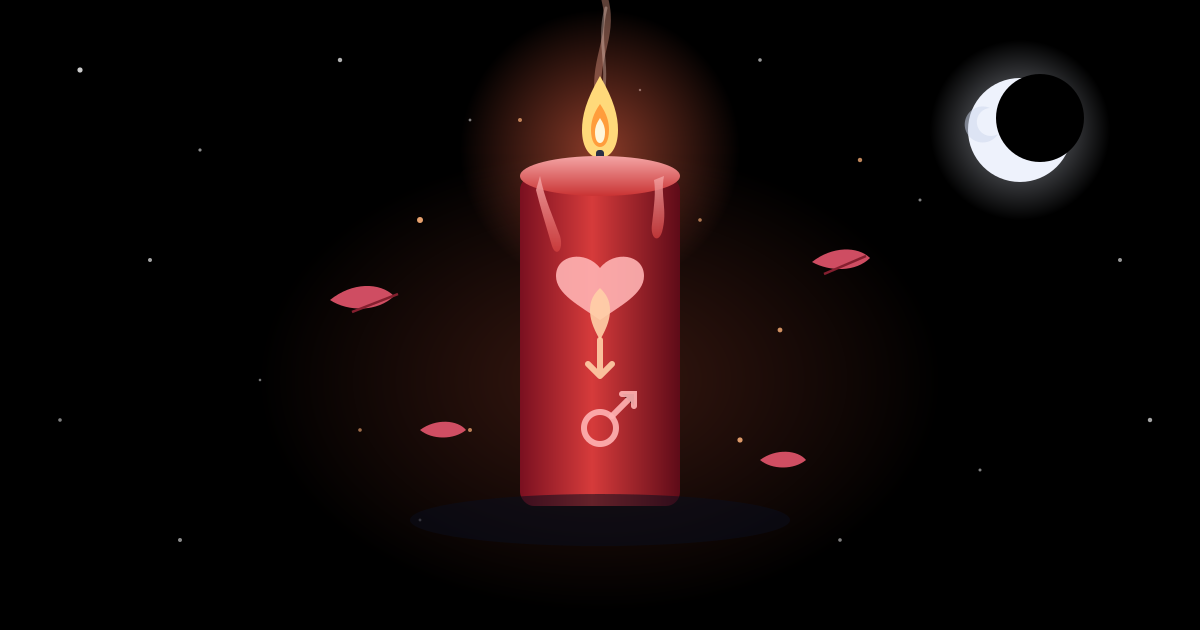
Red Candle Meaning & Uses: Passion, Courage & Strength
Red candle meaning explained: what red candles are used for — passion, courage, strength, and commitment — plus a simple ritual, a shade guide, and fire safety.
Read the meaning →
Candle Color Meanings: The Complete Guide
Candle color meanings explained: what each candle color means in magic, how to pick the right one for love, money, protection, or healing, plus pairings.
Read the meaning →
Candle Magic for Protection: Black, White & Shield Rituals for Home and Self
Candle magic for protection explained: black and white protection candles, home shielding, boundary rituals, herbs and oils — plus a step-by-step protection ritual, flame readings, and fire safety.
Read the meaning →