
Candle Wax Reading (Ceromancy): How to Read Wax Shapes & Drippings
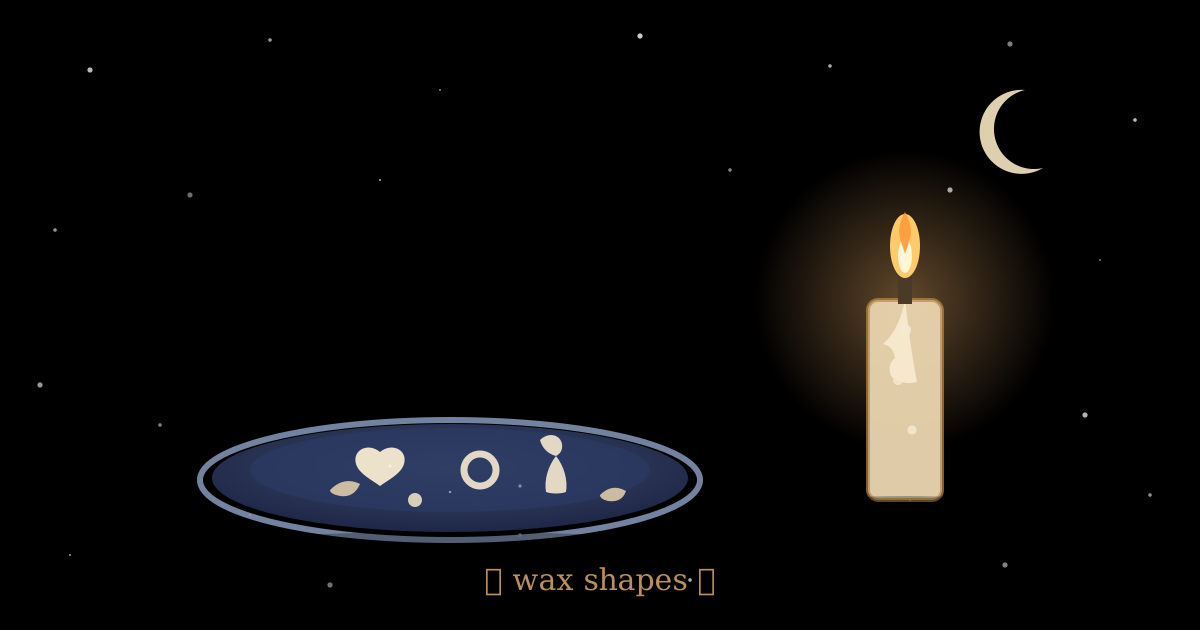
Every candle ritual ends the same way: with wax. Most practitioners sweep the remains aside without a second glance — but the wax readers, the ceromancers, see a final message in it. Ceromancy (from the Greek keros, wax) is divination by candle wax, an old folk practice with two branches: reading the shapes left behind when a ritual candle burns down, and deliberately dripping hot wax into a basin of cold water to read the shapes it forms. Both work on the same principle as tea leaf reading — the human eye finds meaning in accidental forms, and the forms become a mirror for your own intuition.
This guide covers both methods: what the folk tradition says about common wax shapes, how to do a water-basin wax reading at home, what the direction and completeness of a burn are said to mean, and the safety rules that matter more than any symbol. Everything here is framed the way experienced practitioners frame it — as folklore, reflection, and entertainment, not as literal fortune-telling.
What Is Ceromancy? Two Ways to Read Wax
Ceromancy is simply the practice of interpreting wax. Historically it belonged to household folk magic — no cards, no charts, just a candle and an observant eye. There are two traditional forms:
- Burn reading: after a ritual candle finishes burning, you study the remains. Which way did the wax drip? How much is left? Did shapes form on the plate or inside a glass-encased vigil candle? The burn itself is read as a report on the working.
- Water reading: you drip melted wax from a lit candle into a basin of cold water, where it hardens instantly into strange, abstract shapes. You fish them out and read the forms — animals, figures, letters, objects — the way you would read a Rorschach test.
Both forms assume the same folk logic: the wax is a physical record of the moment it was made, and that moment included your question, your focus, and your intention. The shapes are not believed to come from anywhere outside you — they are read as reflections of what is already in your mind, made visible so you can look at it directly.
How to Do a Water-Basin Wax Reading at Home
The water method is the most hands-on form of ceromancy and the one with the clearest procedure. Here is the traditional setup:
- You need: a wide bowl (a white or light-colored interior helps you see the shapes), cold water — some traditions add a splash of vinegar or use water drawn at dawn for symbolic flavor — one candle (a taper works best for controlled dripping), a fireproof plate, and good lighting.
- Set your question: hold your question or intention clearly in mind. Tradition says one question per reading; scattershot questions give scattershot shapes.
- Drip slowly: hold the lit taper a few inches above the water and let wax fall drop by drop, or tilt it for a thin stream. The wax hits the cold water and freezes into curls, blobs, and lacy forms. About a tablespoon of wax per reading is plenty.
- Read the shapes: lift the cooled wax out gently and study it against the light. Turn it — shapes reveal themselves from different angles. Note the first three things you see; folk readers trust the first impressions.
- Dispose respectfully: traditional practice buries the wax or keeps it on the altar until the question is resolved, then discards it. Ordinary recycling or trash disposal works fine too.
Safety first: never drip wax directly onto skin or near loose clothing; keep the candle over the bowl only, with nothing flammable nearby; and do the reading on a stable, heatproof surface. Hot wax and water can splatter, so keep your face back and your sleeves rolled.
Reading Wax Left Behind After a Ritual
Burn reading is the lazy ceromancer's method — no extra equipment, since the ritual already happened. Let the candle cool completely (at least an hour), then look at what remains:
- Direction of the drips: wax flowing toward you — pooling on your side of the plate — is traditionally read as energy moving in your favor, drawing the intention toward you. Wax flowing away, or scattering in all directions, is read as dispersed energy or resistance.
- How much wax remains: a candle that burns to nothing is read as a clean working — the intention flowed without obstruction. A candle that drowns in its own wax, leaves thick walls, or goes out with wax still piled up is read as resistance, unfinished business, or a question that needs another look.
- Shapes in the remains: leftover wax sometimes forms recognizable figures — a heart, a ring, a figure, a tower, an animal. These are read exactly like water-reading shapes, with the same symbol meanings below.
- Inside vigil candles: for glass-encased vigil candles, readers study the wax residue left on the glass — clear glass with little residue is read as a clear working; heavy black soot or thick wax streaks are read as obstacles or interference.
Practitioners emphasize that the burn record is most useful as a check-in, not a verdict. A messy burn does not mean a working "failed" — it is treated as an invitation to reflect on where your focus was scattered, and whether the intention was clear enough to hold.
Common Wax Shapes and Their Traditional Meanings
Wax shapes are read symbolically, borrowing from the same shared folklore as tea leaves and dream symbols. Here are the shapes that appear most often in ceromancy references, with their traditional readings:
- Heart: love, affection, emotional healing — or encouragement that an emotional intention is taking shape.
- Ring or circle: a commitment, a cycle completing, or something "coming full circle." A broken ring is read as an ending or a release.
- Figure (human shape): a person connected to the question — an ally, a rival, or a version of yourself. Look at whether the figure faces toward or away from you.
- Animal: read by the animal's folklore meaning — a bird for news or travel, a snake for transformation or caution, a fish for emotional depth or money luck.
- Tower or mountain: an obstacle to climb, or a challenge that brings growth. Some readers distinguish: a tower is a human-made obstacle (rules, bureaucracy), a mountain is natural (timing, readiness).
- Key: a solution presenting itself — a door about to open, a decision that unlocks the next step.
- Letter or number: an initial of someone relevant, or a meaningful date or time frame. Read it alongside the question.
- Waves or water shapes: emotions — flowing feelings, things moving, the situation being fluid rather than fixed.
- Cross or X: a choice point, or something to examine from another angle. A plus-shaped cross is read as support or blessing in some traditions.
- Star: hope, guidance, or recognition — a traditionally positive sign, read as encouragement to continue.
- Blob with no form: the most common result, and it is not a failure. Folk readers treat formlessness as a neutral answer: the situation is still forming, the question may need reframing, or the reading itself was rushed. Wait, restate the question, and try again another day.
The honest practitioner's rule: trust the shape you see, not the shape you want. If you have to squint hard to see a heart, the reading is the squinting — you are looking for what you already hope. Note the first three shapes, write them down, and look for patterns across several readings rather than treating any single blob as a message.
The Candle's Burn as a Message: Flame, Smoke, and Speed
Wax readers often read the burn behavior together with the shapes, since both come from the same candle. This overlaps with our guide to candle flame meanings, but in burn-reading context the classic interpretations run like this:
- Fast, clean burn: traditionally read as swift energy — the question is straightforward and the answer may arrive quickly.
- Slow, reluctant burn with guttering: read as resistance — something in the situation (or in your own mind) is not settled.
- One side tunneling while the other stands tall: read as imbalance — one side of the question is getting all your attention while the other is neglected.
- Heavy soot: read as interference or murky energy — the folk equivalent of "sleep on it before deciding."
- Wax melting evenly to the edges: read as a complete, balanced working — the energy reached all parts of the question.
Taken together, the flame, the speed, and the remaining wax form a kind of three-part report. Readers use it the way a coach uses game footage — not to predict the next game, but to see what happened in this one.
A Grounded Way to Use Wax Reading
If you strip away the folklore, ceromancy is a structured attention exercise. Stating a clear question, watching the wax, studying the shapes, and writing down the first impressions forces you to look at your own thinking from a slight distance — which is exactly what good decision-making requires. Psychologists would recognize the mechanism: ambiguous images surface associations your conscious mind was avoiding.
Use it that way and it works beautifully: ask the real question, read the shapes honestly, write down what you saw, and notice which interpretation your gut leans toward. The wax is not telling you the future — it is giving you a quiet surface on which your own clarity can show up. Keep that framing, and wax reading becomes what folk divination has always been at its best: a conversation with yourself, held by candlelight.
Frequently asked questions
What is ceromancy?
Ceromancy is divination by reading candle wax — either the shapes formed by dripping hot wax into cold water or the shapes of wax left behind after a ritual candle burns. The reader interprets the shapes symbolically, similar to reading tea leaves or smoke.
How do you read candle wax after a spell?
Let the candle cool completely, then study the remaining wax for recognizable shapes — hearts, rings, figures, animals, towers. Note the direction of drips, how much wax remains, and how cleanly the candle burned. Each feature is read symbolically in the folk tradition, framed as reflection and entertainment rather than prediction.
What does it mean when candle wax forms a heart?
In wax reading tradition, a heart-shaped blob or drip is read as love, affection, or emotional healing on the way — or as encouragement that your emotional intentions are taking shape. Readers treat shapes as conversation starters for reflection, not literal forecasts.
What does it mean when a candle leaves no wax?
A candle that burns down to nothing is traditionally read as a clean, unobstructed working — the intention flowed without resistance, like a clear channel. Partially burned candles with lots of leftover wax are read as signs of resistance or unfinished business.
How do you do a wax water reading at home?
Fill a wide bowl with cold water, hold your question in mind, and slowly drip melted wax from a lit candle into the water. The wax hardens instantly into shapes. Lift them out gently and read the forms — figures, animals, letters, objects — like a Rorschach of your own imagination.
Keep exploring
Candle Flame Meanings: How to Read Your Ritual's Fire
Candle flame meanings: what a dancing, flickering, tall, or dying flame means in candle magic. Learn pyromancy basics, plus how to read smoke and wax too.
Read the meaning →
How to Dress a Candle: Oils, Herbs & Inscriptions Explained
How to dress a candle: the folk tradition of anointing candles with oil, carving intentions, and adding herbs. Learn dressing directions, oil choices, and beginner recipes.
Read the meaning →
Candle Color Meanings: The Complete Guide
Candle color meanings explained: what each candle color means in magic, how to pick the right one for love, money, protection, or healing, plus pairings.
Read the meaning →
How to Do Candle Magic: A Beginner's Guide
How to do candle magic: a complete beginner's guide. What you need, the 8 steps of a candle spell, timing with moon phases, and common mistakes to avoid.
Read the meaning →