
Cord-Cutting Candle Ritual: How to Do It Step by Step
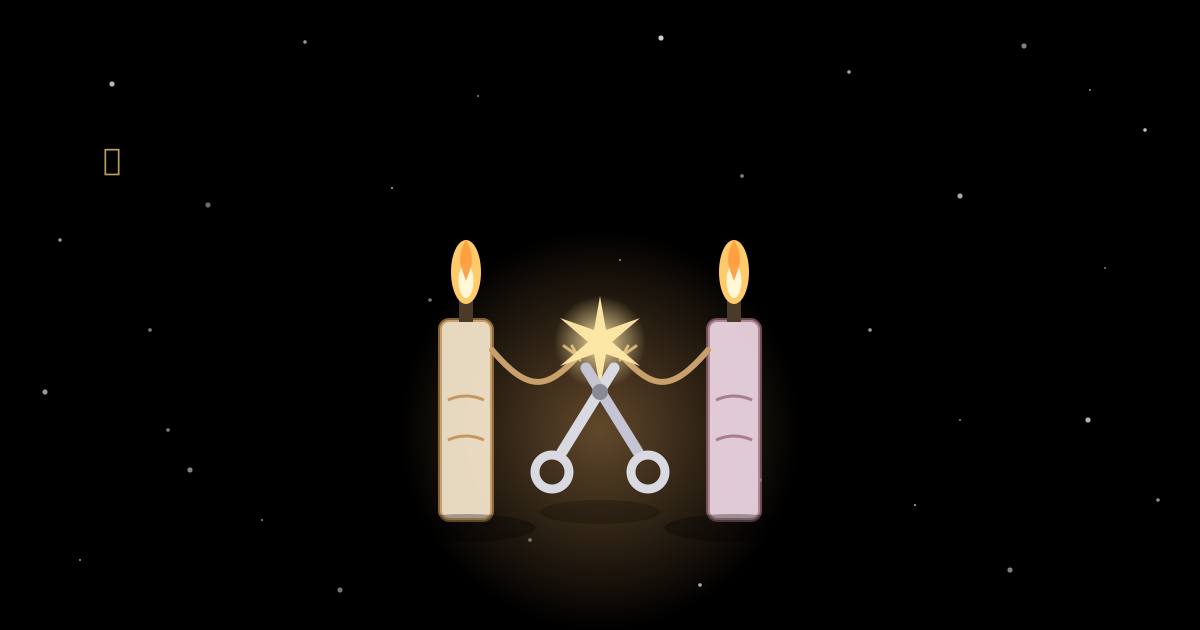
Some endings do not feel finished, even when they are over. The relationship ended, the job is behind you, the habit is technically broken — and yet some thread of it still tugs. The cord-cutting candle ritual is folk magic's answer to that feeling: two candles, a length of twine, and a deliberate act of severing that gives your psyche something it rarely gets — a moment of release, marked and witnessed.
This is one of the most requested workings in candle magic, and it is easy to see why. It is visual, tactile, and dramatic: the twine sags and chars, the cord breaks, and two flames stand on their own. Below is the traditional form of the ritual, step by step — with the practical safety notes and grounded framing it deserves.
What Is an “Energetic Cord”?
In the folk framework behind this ritual, strong connections — love, resentment, grief, obligation, even old identities — form invisible cords between people, or between a person and a situation. Healthy ties are fine; the ritual targets the ones that feel draining or stuck: the ex you keep checking up on, the old boss whose voice still lives in your head, the friendship that ended badly, a habit you cannot seem to bury.
Take this as poetry rather than physics. Nobody is claiming a measurable cable runs between you and your past. The cord is a metaphor made physical — and metaphors are powerful tools. Tying two candles together and cutting the string turns an abstract intention (“I want to move on”) into something your hands can actually do. That is the entire point of the ritual: an experience your nervous system registers as done.
When a Cord-Cutting Is Traditionally Done
Practitioners reach for this working in a handful of familiar situations:
- After a breakup or divorce — the classic use. Not to erase love, but to stop the energetic lingering: the checking, the what-ifs, the inability to picture a life on the other side.
- Cutting ties with a toxic dynamic — a draining friendship, a controlling family member, a manipulative colleague. The ritual marks your side of the boundary.
- Releasing grief patterns — note: not cutting the love for someone who died, which is not what anyone wants, but releasing the stuckness of grief so mourning can move.
- Ending career or creative chapters — leaving a job, closing a business, retiring a project. Cord cutting works for non-human attachments too.
- Habits and old identities — the smoker who quit but still feels like a smoker, the version of you tied to a past failure. The second candle can represent a habit or a former self.
A word of timing wisdom from the folk tradition: this ritual works best when you genuinely feel finished — not when you are still negotiating with hope. If part of you wants the person back, practitioners say the cord just re-ties itself. Honesty with yourself is the real ingredient; the candles are the ceremony.
What You Will Need
The traditional setup is simple:
- Two candles — tapers or chime candles work best because they are easy to tie. Colors are traditionally symbolic: a white candle for you (purity, clarity), and a black candle for what is being released (banishing) — or any two colors that feel right. Your candle and “theirs” do not need to match.
- Cotton twine or natural string — avoid synthetic cord, which melts into plastic fumes. Plain kitchen twine is perfect.
- Scissors or a knife — to cut the cord at the ritual's climax (or to let the flames burn it through — more on that below).
- A large fireproof dish, tray, or baking sheet — the ritual involves falling string and dripping wax. Give it a wide, heat-safe stage.
- Matches or a lighter.
Optional extras: anointing oil to dress your candles with intention, a few protective herbs (rosemary is the folk classic) scattered around the dish, a small slip of paper to write your release statement on, and a bowl of water or a fire extinguisher within reach. That last one is not optional in spirit — fire safety is the first rule of every working on this site.
The Cord-Cutting Ritual, Step by Step
Set aside about 30 unhurried minutes where you will not be interrupted. Put your phone away. The ritual has a theatrical quality, and half the effect comes from treating it as a real ceremony rather than a craft project.
1. Choose your moment
Folk timing favors the waning moon for release workings — the moon is shrinking, and so, symbolically, is the tie. Saturdays carry banishing associations in traditional planetary lore. But the practitioners' real answer is simpler: do it when you feel ready. A Tuesday afternoon with genuine resolve beats a perfectly timed Saturday with a divided heart.
2. Set up safely
Place your fireproof dish on a stable, clear surface away from curtains, papers, and pets. Keep the water bowl or extinguisher nearby. Clear the area the way you would clear it for any candle working — calmly, completely. Take three slow breaths. The ritual begins when you decide it does.
3. Assign the candles
Hold the first candle and name it as you: say your name aloud and state what you are reclaiming — your peace, your attention, your evenings. Hold the second candle and name it as the tie: the person's name, the habit, the situation. Be specific. “This candle is my attachment to the idea that I needed that job to matter” is stronger than a vague gesture. If you dressed your candles, do it now with intention.
4. Tie the cord
Stand the candles upright in the dish, a few inches apart — most people hold them in the dish with a drip of melted wax as a base, or use candle holders set inside the tray. Wind the twine loosely around both candles two or three times, joining them. As you tie, name what the cord is: the late-night scrolling, the anger, the guilt, the unfinished conversation. The cord should sag slightly between them, not be pulled taut.
5. Light the candles and speak your release
Light both flames. Now say your release statement aloud — your own words are always best, but a traditional shape is: “I release [name/thing] with gratitude for what was and clarity for what is. This tie no longer serves me. I am free, and I wish [them/it] well.” Feel free to adapt it. The tradition emphasizes one line that matters most: the blessing toward the other side. Cord cutting is not a curse; the ritual's emotional center is release, not revenge.
6. Cut — or burn — the cord
Here comes the climax, and there are two traditional schools. In the cutting method, you pick up the scissors and snip the twine between the candles while stating your release once more, then let the candles continue burning separately. In the burn-through method, you simply watch: the candles burn down, the twine chars, sags, and eventually breaks on its own. The burn-through version is slower and more dramatic, but it requires a fully fire-safe setup and your constant, undivided attention — string can flare, so never walk away. Either way, when the cord breaks, pause. Let the two flames burn independently for a while. That image — two separate fires — is the whole point.
7. Close the working
When you feel the ritual is complete (practitioners often let the candles burn down significantly, though snuffing is fine), extinguish the flames — snuff, do not blow, in the folk manner. Thank whatever you believe in, including yourself for showing up. Tidy the space. Done is done.
Variations on the Ritual
The single-candle version. If the two-candle setup feels like too much theater, one candle works: dress a black or white candle, carve the name or situation into it, tie the twine around your candle alone, and cut it yourself. Same symbolism, smaller stage.
The full-moon variation. Some practitioners prefer the full moon for cord cutting, reasoning that maximum light reveals everything that needs releasing. Waning versus full is a matter of tradition and taste — choose the story that resonates with you.
The water release. After cutting, some place the severed cord ends in a bowl of salted water, symbolizing the remnants being dissolved and carried away. Pour it out afterward away from your home (a drain or a patch of earth).
The written release. Write a letter to the person or situation — everything unsaid — and burn it safely in the dish during the ritual, or bury it with the wax. Many people report this is the part that actually makes them cry. Good. That is the cord loosening.
After the Ritual: What to Do with the Wax
Folk tradition offers several options for the leftovers, and they all share one theme: away from you.
- Bury it away from your home — in a park, at a crossroads, anywhere the tie symbolically rests in the ground. This is the most traditional option.
- Trash it outdoors — in a bin away from your living space, not your kitchen trash. Ordinary, but the symbolism of removal is what counts.
- Melt and discard — some practitioners melt the remnants down and pour them away, a final transformation of the tie into nothing.
What most traditions agree on: do not keep the remnants as a souvenir, and do not reuse the candles for a different intention. The working was about release; the materials have done their job.
Common Mistakes to Avoid
Skipping fire safety. This is the number one real-world risk of the ritual. String flares. Wax pools. Candles tip. Never leave the working unattended, keep the dish clear of anything flammable, and tie your hair back. A ritual you have to interrupt to put out a fire is a ritual that failed.
Using it as a weapon. The folk ethics here are explicit: cord cutting severs your tie; it does not bind, harm, or punish the other person, and it cannot make someone love you, leave you alone, or change. If your real desire is to influence someone against their will, that is a different (and, in most traditions, inadvisable) category of working entirely.
Doing it before you mean it. The ritual performed while you are still hoping the person returns tends to feel hollow — practitioners joke that the cord re-ties itself overnight. If you are not ready to release, that is honest information, not failure. Wait, or do the ritual for a smaller tie first and see how it feels.
Expecting instant emotional surgery. People sometimes light the candles expecting to wake up cured. The ritual is a marker of a decision, not the decision itself. What follows — the boundary held, the app deleted, the letter unsent — is the real magic, and it happens in daylight.
A Grounded View: Why It Can Still Help
You do not have to believe in energetic cords to get something from this ritual. Psychologists have long noted that symbolic acts — ceremonies, gestures, physical metaphors — help the brain process transitions. A funeral does not bring anyone back, but it helps the living begin. A cord-cutting ritual works the same territory: it externalizes an internal decision, gives grief and resolve a physical form, and creates a timestamp your memory can point to: that was when I let go.
Viewed this way, the twine and scissors are props in a piece of personal theater — and theater, done sincerely, changes people. The ritual will not rearrange the universe for you. But it can rearrange the furniture in your head, and sometimes that is exactly what was needed.
Closing: Two Flames, Standing Alone
There is a reason the image at the heart of this ritual — two candles, once joined, now burning on their own — shows up in so many traditions. It is the visual form of a truth most of us learn the hard way: things end, and life, stubbornly, goes on. The cord-cutting candle ritual does not pretend the tie never mattered. It honors it, thanks it, and sets it down.
So gather your candles, tie your cord, and take your thirty minutes. Cut it cleanly. Watch the two flames stand apart. And when you snuff them out and tidy the dish, notice what the room feels like — often, practitioners say, it feels like a room that belongs to you again. That is not magic. That is just the sound of a door finally, gently, closing.
Frequently asked questions
What is a cord-cutting ritual?
A cord-cutting ritual is a folk-magic working in which two candles — one representing you, one representing a person, habit, or situation — are tied together with string or twine, then the cord is cut or burned through as a symbolic act of releasing the attachment. It is framed here as an entertainment and reflection practice, not as a guaranteed spiritual outcome.
What do I need for a cord-cutting candle ritual?
You need two candles (tapers or chime candles work well), a length of cotton twine or string, scissors, a large fireproof dish or tray, and matches or a lighter. Optional extras include anointing oil, herbs, and paper to write your intention on. Fire safety comes first: never leave lit candles unattended.
When is the best time to do a cord-cutting ritual?
Folk tradition favors the waning moon for release workings, and Saturdays (Saturn's day) for banishing-type rituals. The most important timing, though, is your own readiness: practitioners say the ritual works best when you genuinely feel finished with the tie, not when you are still hoping for a different outcome.
What do I do with the leftover wax after a cord-cutting ritual?
Common folk options include burying the wax away from your home (symbolizing the tie being laid to rest), throwing it in an outdoor trash bin away from your space, or melting and discarding it. Many practitioners avoid keeping the remnants, since the point of the working was release.
Can a cord-cutting ritual harm the other person?
In the traditional framing, cord cutting severs your own energetic tie to someone or something — it does not bind, harm, or control the other party. Ethical folk guidance is firm on this: the working is about your release, not about influencing another person against their will.
Keep exploring

Candle Color Meanings: The Complete Guide
Candle color meanings explained: what each candle color means in magic, how to pick the right one for love, money, protection, or healing, plus pairings.
Read the meaning →
How to Do Candle Magic: A Beginner's Guide
How to do candle magic: a complete beginner's guide. What you need, the 8 steps of a candle spell, timing with moon phases, and common mistakes to avoid.
Read the meaning →
What Does It Mean to Dream About Death?
Dreaming about death is rarely about dying. Learn what death dreams mean — endings, transformation, new chapters — and why they appear during change.
Read the meaning →
Lucid Dreaming Basics: How to Become Aware in Your Dreams
Lucid dreaming basics: what lucid dreams are, the science behind them, and proven beginner techniques like reality checks, MILD, and dream journaling.
Read the meaning →