
Gold Candle Meaning & Uses: Wealth, Success & Recognition Rituals
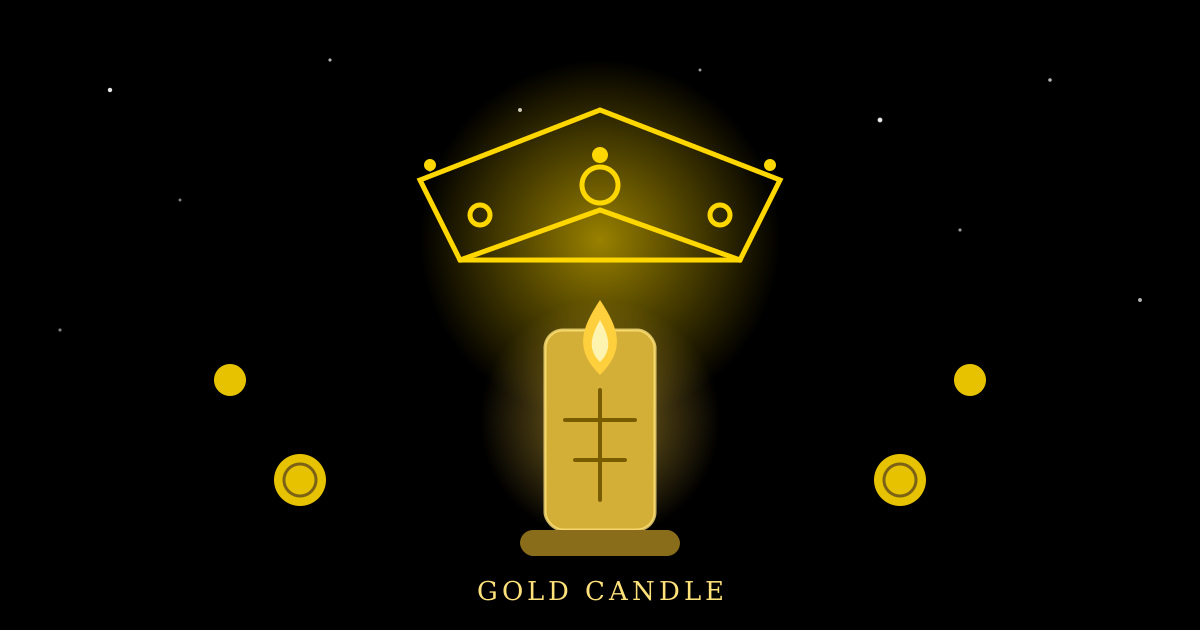
If the yellow candle is the craft's sunrise, the gold candle is its coronation. Where yellow brightens the mind and the mood, gold aims higher — at the result, the rank, the recognition. It is the candle of the top of the field: the promotion, the prize, the launch that lands, the work finally named as the best in the room. Practitioners reach for gold when the goal is not to feel better about the climb but to stand, briefly and visibly, at the top of it.
Gold is the color of arrival made visible — and of the standard you hold yourself to when ordinary progress is no longer enough. That is why its uses cluster around the outer life: wealth, status, achievement, honor. This guide covers what gold candles mean, their classic uses, the difference between gold and yellow, a simple success ritual, flame readings, and the grounded reasons the craft's most regal candle has such a devoted following. Folk lore presented for entertainment, not guaranteed outcomes.
What Does a Gold Candle Mean?
Gold's meanings share a single root — the sun at its most powerful:
- Wealth. The famous one. Gold is prosperity at scale — not the day's earnings but the level change: the raise, the major sale, the business that finally turns. It is the candle of money as a milestone, not money as a routine.
- High-level success. Gold's signature. Gold candles are burned for the outcomes that define a career or a season — the promotion, the publication, the championship, the degree. In the folk tradition, gold does not ask for a little more. It asks for the top.
- Recognition and prestige. The color of being named: awards, honors, titles, public credit for work long done quietly. Practitioners describe gold as the candle you burn when the work is excellent and the world has not yet noticed.
- Confidence of rank. Where yellow builds confidence from within, gold lends the confidence of standing — the bearing of someone who belongs at the table. Practitioners burn gold before rooms where authority matters: the board meeting, the panel, the negotiation.
- Divine favor and blessing. The oldest of gold's meanings. Across traditions, gold belongs to temples, crowns, and offerings — the metal that does not tarnish, given to what is held sacred. Gold workings carry that older weight: the request made at the highest level.
- Ambition fulfilled. The color of the long goal finally landing — the decade of practice, the years of saving, the project carried to completion. Practitioners burn gold at the finish line, not the starting line.
- The sun and solar power. Gold belongs to the sun — the element of light, vitality, and personal power at full strength — and in the folk correspondence it is linked to Sunday and to the sun itself, the brightest of the planetary rulers.
Together, gold is not one symbol but a standard: turn it toward any ambition and the ambition gets bigger, any achievement and the achievement gets named, any quiet excellence and the excellence gets its moment in full light.
The Classic Uses of Gold Candles
Here are the traditional uses, in the order practitioners actually reach for them:
1. Promotions, raises, and career advancement
The use everyone has heard of. Gold candles are burned before the performance review, the promotion interview, the salary negotiation, the application for the role that would change everything. The folk method is simple: light the candle and name the specific outcome — the title, the figure, the date — then sit with that image until it feels like a plan instead of a wish. Practitioners report that the ritual's real product is not magic but preparation — rehearsing the ask once, privately, before making it publicly. Our guide on how to do candle magic covers the intention-setting that keeps success workings aimed at the negotiation rather than the wish.
2. Wealth and major money goals
The big-money use. Gold candles are burned for the large sale, the business launch, the investment decision, the debt finally cleared. The folk distinction matters here: where green candles draw steady prosperity, gold candles aim at the single result that changes the level — the contract signed, the funding secured, the house bought. The tradition pairs the candle with the practical work every time: the numbers checked, the terms read, the offer actually made.
3. Recognition, awards, and honors
The being-seen use. A gold candle burned before the awards ceremony, the portfolio review, the grant decision, the moment a lifetime of quiet work meets a public verdict. The folk rhythm is the night before or the morning of — gold belongs to the sun, so practitioners light it with the day of the event. The ritual pairs with the honest advice: submit the best work, on time, in full. The candle does not win the prize. It marks the work as worthy of being judged.
4. Business launches and big ventures
The founding use. Gold candles appear on desks at the launch of a shop, a studio, a book, a company — the first day of something meant to last. Practitioners burn gold and write the venture's first goal in one sentence, kept where it can be seen daily. The folk warning is honest too: gold opens the door, but you still have to walk through it every morning after. The candle cannot run the business for you.
5. Exams, competitions, and high-stakes performance
The top-of-the-field use. Gold candles are burned through finals week, before the championship, ahead of the audition that decides the season. The folk rhythm is one candle per decisive day — lit at the start, snuffed at the end — so the flame becomes a boundary around the performance. The tradition treats the candle as a standard-bearer: the same light, the same signal to the mind that today we perform at our best. The performance, of course, is what earns the result.
6. Gratitude and blessing
The thankful use. Where most candle colors ask for something, gold also gives thanks — burned in gratitude for a success already received, a blessing already given, a year that turned out well. Practitioners describe gold gratitude workings as the craft's way of closing the loop: the achievement acknowledged, the favor honored, the standard kept for next time. Where white candles purify a space, gold candles consecrate a success.
7. Authority and leadership presence
The bearing use. Gold candles are burned before moments where presence itself is the work: the keynote, the pitch to investors, the first day leading a team. Practitioners describe gold as the color that steadies the voice from above rather than from within — the candle of the person who must be heard by a room, not just understood by a friend. Where yellow candles brighten a conversation, gold candles command it.
Gold vs Yellow Candles
Gold and yellow are cousins in the tradition, and the difference matters — the shade tilts the working:
- Bright yellow / lemon: mental clarity, learning, quick thinking, cheerful energy. This is the shade for exams, brainstorms, and shaking off a gloomy morning. Lemon yellow is the color practitioners burn when the mind needs sharpening.
- Warm yellow / sunflower: confidence, joy, creativity, and warm communication. The classic all-rounder — the shade for interviews, auditions, and good-mood workings. When a guide says "yellow candle" without specifying, this is usually the shade meant.
- Gold / metallic gold: wealth, status, high-level success, and divine favor. The shade for the big result rather than the bright mind — the promotion, the prize, the legacy. Gold is yellow at its most regal, and practitioners reach for it when the goal is achievement rather than attitude.
The practical rule: pick yellow when the goal is how you think and feel — confidence, clarity, joy — and gold when the goal is what you attain. If you only own one gold candle, the tradition is unbothered — intention, not shade, does the heavy lifting.
A Simple Gold-Candle Success Ritual
This is the classic: about thirty minutes, one major goal, and a standard worth meeting. Fire safety first — everything else second.
1. Write the arrival sentence
Take paper and write the one sentence that describes the goal already achieved — the specific version, not the vague wish. "I signed the contract for the spring collection at the agreed rate" beats "I hope business goes well." Folk practitioners insist on the specific sentence because the ritual only works on what is concrete enough to plan around; rehearsing the vague version prepares you for a smaller result than you can reach.
2. Prepare the candle
Set a gold candle in a fireproof dish. If you have cinnamon or bay oil, anoint the candle lightly — both are traditional success herbs — drawing the oil upward, from base to wick, which the tradition reads as drawing energy up into the working. Beginners can learn the full technique in our guide on how to dress a candle.
3. Carve the glyph
With a pin, carve a crown — three points above a band — into the wax. The tradition reads the crown as achievement without apology: the work, the rank, the result, claimed clearly. Carving turns the candle from decoration into your specific instrument.
4. Say it aloud, then see it
Light the candle and speak the arrival sentence aloud — once, slowly, in your own voice. Then do the harder part: sit in silence for five minutes and picture the moment going well, in detail — the room, the handshake, the signature, your steady hands. The folk understanding is that most big moments fail not from lack of talent but from lack of rehearsal — and the ritual gives rehearsal a ceremonial slot before the real thing.
5. Plan the first step, then snuff
Write down the actual first step you will take toward the goal tomorrow — the email, the call, the application, taken once by the flame. Fifteen to twenty minutes total. Then snuff the flame — never blow it out, in the folk manner — and keep the paper. The candle set the standard; the plan meets it. The moment, whenever it happens, will feel like something you have already stood inside once — and earned.
When NOT to Burn a Gold Candle
Gold is the craft's most regal color, and even regality has its limits — the cases where practitioners themselves say put the candle down:
- Not as a substitute for the actual work. The success ritual prepares you for the negotiation; it cannot have the negotiation for you. Lighting a gold candle instead of preparing the pitch is the most common way gold workings fail — the candle is the rehearsal room, not the boardroom.
- Not for everyday cash flow. Gold aims at the milestone, and aiming it at the grocery budget wastes its weight. Steady money gets green, in the tradition; gold is kept for the result that changes the level. Check the color against the goal in the color guide before every working.
- Not as a status cure. The ritual supports a genuine achievement; it is not a remedy for insecurity about rank. If the need for recognition is constant and gnawing, the honest answer is the work, the mentor, or the conversation — not a longer burn.
- Not for forced grandeur. Gold can become a mask — the ritual that gilds a goal so you never have to ask whether the goal is yours. Practitioners warn against burning gold around an ambition instead of examining it. The candle holds the standard steady; it should not make the ambition unquestionable.
- As a substitute for professional help. A success ritual cannot replace financial advice, legal counsel, or business planning. The candle can sit on the desk and hold the intention; it cannot be the plan.
Reading a Gold Candle: Flame and Wax Signs
Folk pyromancy treats the burn as commentary on the working — with the honest hierarchy the old practitioners used: physics first, folklore second.
- Steady, bright flame: the tradition's great sign on a gold candle — clear energy, the working moving at the right pace. Practically, a still room and a trimmed wick also do this. Enjoy it either way.
- Tall, leaping flame: in lore, ambition louder than the intention — the goal the working is about is bigger than the plan; in physics, often a draft or oil near the wick. Check the room, and ask whether the plan needs to grow to match the ambition.
- Low, dim flame: read as doubt weighing on the working — not failure, but a signal that the goal needs a smaller first step more than a bigger ritual. Trim the wick and consider whether tonight's working is success or preparation.
- Crackling or sputtering: the folk read is competing claims on the result — voices unsaid in the situation; the practical read is moisture or herbs near the wick. Either way, the response is the same: find the competing claim and name it.
- Clean, even burn with little soot: read as success landing well — the clearest of gold's signs, and a reminder that honest ambition burns cleaner than performance.
For the full vocabulary of what candle flames mean and how to read the wax after the burn, see our ceromancy guide.
Fire Safety for Gold Candles
- Never burn while sleeping. The success ritual ends with the snuff — always. A candle cannot be part of falling asleep. Set a timer for your thirty minutes so the regal flame cannot turn into an unattended burn.
- Metallic wax stains and sticks. Gold drips on white tablecloths, carpet, and light wood are effectively permanent, and metallic wax grips surfaces harder than plain wax. Burn on a wide, dark, disposable-safe dish — and keep the candle away from the edge of any surface.
- Dressed candles burn unpredictably. Oil and herb dressings change how wax melts and can make flames flare. Never leave a dressed gold candle unattended, and trim the wick shorter than usual — an eighth of an inch if dressed.
- The candle stays in its dish. Gold workings are focused — writing, visualizing, planning. Do that from a chair, not while holding the candle. The flame stays in one place; you stay a safe distance from it.
- Mind the room's stillness. Gold-candle lore loves a draft-free room, and so does fire safety. Close the window, turn off the fan, and keep pets and partners out of the ritual space for the duration.
Common Mistakes to Avoid
Skipping the arrival sentence. The success ritual's power is in step one — writing the specific achieved version, not the vague wish. Practitioners who rehearse only the hopeful version report the same frustration walking out of the real moment with them. The candle cannot crown a goal you never named.
Using gold to gild instead of to earn. The grandeur trap: burning gold every morning to feel successful about a goal instead of advancing the goal. The tradition's test is simple — after two weeks, is anything actually different? If not, the working has become decoration, and the honest move is the email, the application, or the appointment the candle has been standing in for.
Expecting instant arrival. Gold is steady magic. One candle does not end a season of striving or land a career in a morning; the folk rhythm is weeks, not mornings. Practitioners who burn gold expecting a single morning's coronation are usually disappointed — and miss the real, gradual ascent that was already underway.
Confusing the ritual for the remedy. A success ritual before a negotiation does nothing if the preparation itself goes untouched. Gold's whole mythology is about achievement, and the first achievement it asks for is about what the candle can and cannot do.
A Grounded View: Why Gold Candles Work
You do not have to believe in solar power to get something from a gold candle. The ritual is doing several very ordinary things at once: it forces deliberate specificity (writing the arrival sentence down converts a vague ambition into a measurable goal), it creates a rehearsal slot (the silence after speaking is practice in picturing success), and it borrows the color's cultural weight — decades of research show gold environments measurably raise perceptions of quality, value, and authority, which is why awards, packaging, and premium brands are gilded.
Psychologists would recognize the pattern as goal-setting plus visualization: articulating the specific outcome reduces its emotional charge, and picturing the moment going well in a ceremonial frame lowers the stakes of the real thing. People who do this regularly report the same effect whether they call it magic or preparation — the moment they dreaded turns out to be survivable, and sometimes even triumphant. The gold candle did not give you the success. It gave your success a regal room to gather in.
Closing: The Crowned Flame
Every other candle in the craft asks you to feel something deeply — to burn, to build, to push, to purify. The gold candle asks you to feel something regally. It is the only one whose whole symbolism points upward toward the crown: the promotion earned, the prize finally won, the venture launched, the work finally named as the best in the room.
So light one the next time the high thing in your life is within reach: the review, the launch, the award night, the goal you have been carrying for years. Write the arrival sentence plainly, say it once to the flame, see the moment going well in the silence after — and then, the part that matters, take the first real step tomorrow. Practitioners have an old saying about gold candles: every other candle changes the room, but the gold one changes the standard in it. The flame does not perform for you. It just burns there, clear and gold, until you remember you can stand that tall too.
Frequently asked questions
What is a gold candle used for in candle magic?
Gold candles are traditionally used for wealth, high-level success, recognition, prestige, and major achievement. In folk tradition gold belongs to the sun at its most regal — the color of crowns, prizes, and the top of a field — and it is the color practitioners reach for when the goal is not just progress but arrival. Presented as cultural lore for entertainment, not guaranteed outcomes.
What is the difference between gold and yellow candles?
Yellow is the color of the mind and the mood — confidence, clarity, joy, and communication. Gold leans toward wealth, status, and high-level success: the color of the sun at its most regal. In practice, yellow workings aim at how you think and feel, while gold workings aim at what you attract and achieve. Many practitioners use yellow for the inner work and gold for the outer result.
Is a gold candle good for money?
In the folk tradition, gold is used for major money workings — the raise, the promotion, the business launch, the large sale — rather than everyday cash flow. Practitioners often pair gold with green: green for steady prosperity and growth, gold for the big result that changes the level you operate at. The practical advice matches the lore: the candle marks the ambition, but the negotiation, the pitch, and the work close the deal.
Which day is best to burn a gold candle?
Sunday is the classic day, since Sunday belongs to the sun, the planetary ruler gold is traditionally linked to. The waxing moon suits gold workings meant to build toward something — a promotion, a launch, a prize — while the full moon suits gold workings meant to crown something already nearly complete, giving a finished effort its moment of recognition.
Can you burn a gold candle with other colors?
Yes, and practitioners often do. Gold pairs with green for wealth that grows steadily, with yellow for the confidence to pursue a big goal, and with white for clarity about what success should actually look like. The folk rule is to keep one clear goal per working: gold crowns the effort, and the second color supports it rather than competing with it.
Keep exploring
Yellow Candle Meaning & Uses: Confidence, Clarity & Joy Rituals
Yellow candle meaning explained: what yellow candles are used for — confidence, mental clarity, joy, creativity, and success — plus a simple confidence ritual, shade guide, and fire safety.
Read the meaning →
Green Candle Meaning & Uses: Money, Prosperity & Growth Rituals
Green candle meaning explained: what green candles are used for — money, prosperity, luck, growth, and heart-chakra healing — plus a simple money ritual, a shade guide, and when to skip them.
Read the meaning →
Candle Color Meanings: The Complete Guide
Candle color meanings explained: what each candle color means in magic, how to pick the right one for love, money, protection, or healing, plus pairings.
Read the meaning →
How to Do Candle Magic: A Beginner's Guide
How to do candle magic: a complete beginner's guide. What you need, the 8 steps of a candle spell, timing with moon phases, and common mistakes to avoid.
Read the meaning →