
Orange Candle Meaning & Uses: Creativity, Enthusiasm & Attraction Rituals
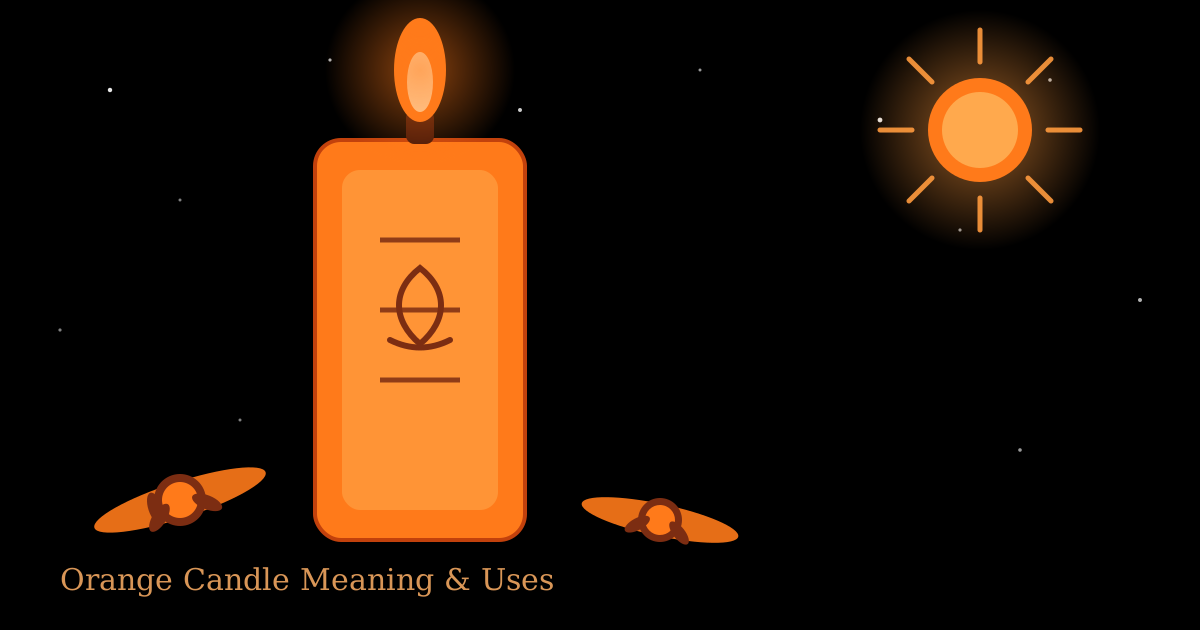
If the yellow candle is the craft's sunrise, the orange candle is its golden hour. Where yellow sharpens the mind, orange warms the mood and loosens the tongue. It is the candle of the bright idea, the easy conversation, the project that suddenly feels fun again — practitioners reach for it when the problem is not that something must be understood or released, but that something must be stirred: the imagination, the social circle, the appetite for life.
Orange is the color of energy made friendly — red's fire softened by yellow's light into something you can sit beside. That is why its uses cluster around creation and connection: creativity, enthusiasm, attraction, joy, opportunity. This guide covers what orange candles mean, their classic uses, the difference between orange and its neighbors, a simple creativity ritual, flame readings, and the grounded reasons the craft's warmest candle has such a loyal following. Folk lore presented for entertainment, not guaranteed outcomes.
What Does an Orange Candle Mean?
Orange's meanings share a single root — warmth put to work:
- Creativity. The famous one. Orange is imagination made visible — the color practitioners burn when the page is blank, the canvas is empty, or the brainstorm has gone quiet. It is the candle of the first bold idea.
- Enthusiasm and energy. Orange's signature. Orange candles are burned when motivation has gone flat — the project stalled halfway, the routine gone gray, the week that needs a lift. In the folk tradition, orange restores appetite for the work itself.
- Attraction. The social meaning of the color: not coercion, but magnetism — the warm presence that draws people, chances, and conversations closer. Practitioners describe orange as the candle you burn when you want to be noticed for the right reasons.
- Social warmth and charm. Orange is burned before gatherings, parties, first meetings, and any occasion where the goal is easy connection. Practitioners keep an orange candle lit when guests arrive, as a folk sign of welcome.
- Joy and playfulness. The color of the deliberate good time: not escape, but the choice to meet the day with pleasure instead of duty. Practitioners describe orange as the candle you burn when life has become all errands and no delight.
- Opportunity and success. Where green candles draw money and yellow candles sharpen the mind, orange candles are burned when good work needs a door to open — the audition, the pitch, the introduction. Practitioners burn orange when the work is ready and the world needs to say yes.
- The sacral chakra and the sun. Orange belongs to the sacral chakra, the body's seat of creativity and pleasure, and to the warm side of the sun — the element of vitality and visibility. In the folk correspondence it is linked to Sunday and, through its lively communicative side, to Mercury.
Together, orange is not one symbol but a warmth: turn it toward any stuck project and the project gets moving, any quiet room and the room gets louder, any flat week and the week gets a spark.
The Classic Uses of Orange Candles
Here are the traditional uses, in the order practitioners actually reach for them:
1. Creativity and unblocking the work
The use everyone has heard of. Orange candles are burned before the writing session, the painting, the design sprint, the brainstorm that keeps circling the same tired idea. The folk method is simple: light the candle and create for twenty minutes without judging the output — the bad draft, the ugly sketch, the wild list. Practitioners report that the ritual's real product is not magic but permission — a warm-up lap that lets the good ideas arrive behind the bad ones. Our guide on how to do candle magic covers the intention-setting that keeps creativity workings aimed at making rather than waiting.
2. Enthusiasm and getting unstuck
The motivation use. Orange candles are burned when a project has stalled halfway — the novel at chapter six, the business plan at page two, the hobby gathering dust. Practitioners light the candle and do the smallest possible next step by its light: one paragraph, one sketch, one email. The lore: orange does not finish the project for you. It makes starting feel good again.
3. Attraction and social magnetism
The warm-presence use. Orange candles are burned before dates, interviews, networking events, and any occasion where being liked matters — not to control anyone, but to arrive warm, open, and easy to talk to. The folk warning is honest: attraction workings aim at your own energy, never at another person's will. A candle cannot make someone choose you, and practitioners who promise otherwise are selling something else.
4. Career opportunities and open doors
The opportunity use. Orange candles are burned during job hunts, launches, and pitch weeks — the application sent, the portfolio polished, the introduction requested. Practitioners carve a flame — the folk sign of a spark catching — into the wax and set the intention that the right door opens at the right time. The goal is not luck. It is readiness made visible.
5. Joy and lifting a flat mood
The brightening use, with a warmer temperature than yellow's. An orange candle burned on a dull evening, during a tired week, when the household has forgotten how to play. The folk rhythm is afternoon or early evening — orange belongs to the golden hour, so practitioners light it as the day softens, not against the night. The ritual pairs with the practical advice every mood researcher would give: movement, music, one pleasant task done for fun. The candle does not manufacture joy. It marks the evening as worth enjoying.
6. Social confidence and easy conversation
The talkative use. Orange candles are burned before gatherings where the conversation matters: the dinner party, the reunion, the first meeting with future in-laws. Practitioners describe orange as the color that keeps a room from going stiff — the candle of the easy laugh and the story told well. Where blue candles calm a conversation, orange candles warm it.
7. New beginnings with energy
The fresh-start use. Orange candles are burned at the start of a project, a move, a season — the first day of the studio, the first morning in the new flat, the first page of the new journal. Practitioners light orange rather than white for beginnings that should feel exciting rather than solemn: the candle of the adventure, not the vow.
Orange vs Yellow, Red & Gold Candles
Orange sits between its neighbors in the tradition, and the shade tilts the working:
- Bright orange / tangerine: creativity, enthusiasm, social energy, quick attraction. This is the shade for brainstorms, parties, and shaking off a flat afternoon. Tangerine orange is the color practitioners burn when the room needs warming fast.
- Burnt orange / amber: steady attraction, warm confidence, grounded success. The classic all-rounder — the shade for job hunts, launches, and long projects. When a guide says orange candle without specifying, this is usually the shade meant.
- Peach / soft orange: gentle warmth, friendship, kindness, and tender creativity. The shade for reconciliations, thank-yous, and quiet creative mornings. Peach is orange at its softest, and practitioners reach for it when the goal is warmth rather than fire.
The practical rule: pick yellow when the goal is how you think — clarity and confidence — red when the goal is how hard you push, and orange when the goal is how warmly you shine. If you only own one orange candle, the tradition is unbothered — intention, not shade, does the heavy lifting.
A Simple Orange-Candle Creativity Ritual
This is the classic: about thirty minutes, one stalled project, and a warmer imagination. Fire safety first — everything else second.
1. Name the stuck project
Take paper and write the one project that has stalled — the chapter, the canvas, the business idea — in a single honest sentence. Not the grand version, the stuck one: the page you keep avoiding. Folk practitioners insist on the honest sentence because the ritual only works on what is actually blocked; rehearsing the grand version prepares you for a project you are not making.
2. Prepare the candle
Set an orange candle in a fireproof dish. If you have sweet orange or cinnamon oil, anoint the candle lightly — both are traditional warmth herbs — drawing the oil upward, from base to wick, which the tradition reads as drawing energy up into the working. Beginners can learn the full technique in our guide on how to dress a candle.
3. Carve the glyph
With a pin, carve a flame — a teardrop with a curling tongue — into the wax. The tradition reads the flame as a spark catching: the idea, the energy, the project, finally lit. Carving turns the candle from decoration into your specific instrument.
4. Make something bad, then keep going
Light the candle and create for twenty minutes without stopping or judging — the bad draft, the ugly sketch, the list of ten wild ideas, nine of them useless. Then do the harder part: circle the one idea worth keeping, and write down the next concrete step it needs. The folk understanding is that most creative blocks fail not from lack of talent but from the demand that the first attempt be good — and the ritual gives bad first attempts a ceremonial slot before the real work.
5. Plan the next session, then snuff
Write down when you will return to the project — the day, the hour, the first task — and keep the paper beside it. Fifteen to twenty minutes total. Then snuff the flame — never blow it out, in the folk manner — and keep the paper. The candle lit the spark; the schedule keeps it burning. The project, whenever you return to it, will feel like something already started — and enjoyed.
When NOT to Burn an Orange Candle
Orange is the craft's warmest color, and even warmth has its limits — the cases where practitioners themselves say put the candle down:
- Not as a substitute for the actual work. The creativity ritual starts the project; it cannot finish it for you. Lighting an orange candle instead of sitting at the desk is the most common way orange workings fail — the candle is the warm-up, not the workout.
- Not to influence another person's feelings. Attraction workings aim at your own warmth and openness, never at someone else's choices. A candle cannot make a person love you, hire you, or forgive you — and any working framed that way has left the folk tradition and entered manipulation.
- Not when what you need is rest. Orange wakes things up, and sometimes waking up is wrong. Grief, exhaustion, and burnout get worse with extra spark, not better — a wound that needs blue, or a banishing that needs black, will not be helped by extra enthusiasm. Check the color against the goal in the color guide before every working.
- Not as a mood cure. The evening ritual supports a brighter routine; it is not a remedy for depression or anxiety. If a low mood is persistent, the honest answer is a doctor or a therapist, not a longer burn.
- Not for forced cheerfulness. Orange can become a mask — the ritual that warms the feeling so you never have to face it. Practitioners warn against burning orange around a problem instead of working through it. The candle holds the mood steady; it should not make the feeling unnecessary.
Reading an Orange Candle: Flame and Wax Signs
Folk pyromancy treats the burn as commentary on the working — with the honest hierarchy the old practitioners used: physics first, folklore second.
- Steady, bright flame: the tradition's great sign on an orange candle — warm energy, the working moving at the right pace. Practically, a still room and a trimmed wick also do this. Enjoy it either way.
- Tall, leaping flame: in lore, unspoken excitement — the idea the working is about is louder than the intention; in physics, often a draft or oil near the wick. Check the room, and ask whether you need to name the louder idea first.
- Low, dim flame: read as enthusiasm running low — not failure, but a signal that the project needs rest or a smaller step. Trim the wick and consider whether tonight's working is creativity or sleep.
- Crackling or sputtering: the folk read is ideas fighting to get out — thoughts unsaid in the situation; the practical read is moisture or herbs near the wick. Either way, the response is the same: find the unsaid idea and write it down.
- Clean, even burn with little soot: read as warmth landing well — the clearest of orange's signs, and a reminder that honest enthusiasm burns cleaner than performance.
For the full vocabulary of what candle flames mean and how to read the wax after the burn, see our ceromancy guide.
Fire Safety for Orange Candles
- Never burn while sleeping. The evening ritual ends with the snuff — always. A candle cannot be part of falling asleep. Set a timer for your thirty minutes so the warmth cannot turn into an unattended burn.
- Orange wax stains everything. Drips on white tablecloths, carpet, and light wood are effectively permanent. Burn on a wide, dark, disposable-safe dish — and keep the candle away from the edge of any surface.
- Dressed candles burn unpredictably. Oil and herb dressings change how wax melts and can make flames flare. Never leave a dressed orange candle unattended, and trim the wick shorter than usual — an eighth of an inch if dressed.
- The candle stays in its dish. Orange workings are focused — writing, sketching, planning. Do that from a chair, not while holding the candle. The flame stays in one place; you stay a safe distance from it.
- Mind the room's stillness. Orange-candle lore loves a draft-free room, and so does fire safety. Close the window, turn off the fan, and keep pets and partners out of the ritual space for the duration.
Common Mistakes to Avoid
Skipping the bad draft. The creativity ritual's power is in step four — making something bad on purpose, without judging it. Practitioners who wait for a good idea before starting report the same frustration walking out of the session with them. The candle cannot make you creative about a project you never touch.
Using orange to charm instead of to connect. The warmth trap: burning orange every evening to feel magnetic about people instead of actually meeting them. The tradition's test is simple — after two weeks, have you had any real conversations? If not, the working has become decoration, and the honest move is the invitation, the application, or the first draft the candle has been standing in for.
Expecting instant inspiration. Orange is steady magic. One candle does not end a season of creative drought or fix a stalled career; the folk rhythm is weeks, not evenings. Practitioners who burn orange expecting a single evening's transformation are usually disappointed — and miss the real, gradual warming that was already underway.
Confusing the ritual for the remedy. A creativity ritual before a deadline does nothing if the work itself goes untouched. Orange's whole mythology is about warmth, and the first warmth it asks for is about what the candle can and cannot do.
A Grounded View: Why Orange Candles Work
You do not have to believe in the sacral chakra to get something from an orange candle. The ritual is doing several very ordinary things at once: it forces a low-stakes start (making something bad on purpose converts perfectionism into momentum), it creates a warm-up slot (the twenty minutes by the flame are practice in starting without pressure), and it borrows the color's cultural weight — decades of research show warm-colored environments measurably raise energy and sociability, which is why restaurants, studios, and gathering places are painted orange.
Psychologists would recognize the pattern as behavioral activation plus permission to fail: articulating the stuck project reduces its emotional charge, and creating badly in a ceremonial frame lowers the stakes of the real work. People who do this regularly report the same effect whether they call it magic or preparation — the project they dreaded turns out to be startable, and sometimes even fun. The orange candle did not give you the creativity. It gave your creativity a warm room to gather in.
Closing: The Warm Flame
Every other candle in the craft asks you to feel something deeply — to burn, to build, to push, to purify. The orange candle asks you to feel something warmly. It is the only one whose whole symbolism points outward toward the gathering: the idea finally started, the room finally laughing, the door finally opening, the evening finally enjoyed.
So light one the next time the dim thing in your life is your spark: the stalled project, the quiet social calendar, the flat week that will not stop buzzing, the idea you have been outrunning. Name the stuck project plainly, make something bad by the flame, circle the idea worth keeping — and then, the part that matters, carry that warmth into the real work tomorrow. Practitioners have an old saying about orange candles: every other candle changes the room, but the orange one changes the temperature in it. The flame does not perform for you. It just burns there, clear and orange, until you remember you can be warm too.
Frequently asked questions
What is an orange candle used for in candle magic?
Orange candles are traditionally used for creativity, enthusiasm, attraction, social warmth, joy, and opportunity. In folk tradition orange belongs to the sacral chakra and to the warm, outgoing side of the sun, and it is the color practitioners reach for when a situation needs energy, charm, or fresh ideas. Presented as cultural lore for entertainment, not guaranteed outcomes.
Can an orange candle help with creative blocks?
In the folk tradition, that is one of orange's signature uses. Practitioners burn an orange candle before writing, painting, brainstorming, or any creative session that has stalled, then create for a set time by the flame. The grounded mechanism is a ritualized warm-up: the candle marks the start of the session and lowers the pressure of the blank page, which is what actually gets the work moving.
What is the difference between orange and yellow candles?
Yellow is the color of the mind — clarity, confidence, and clear thinking. Orange is the color of the spark — creativity, enthusiasm, and attraction. In practice, yellow workings aim at how you think, while orange workings aim at how you feel and connect: the idea, the energy, the room warmed up. Many practitioners burn yellow to plan the work and orange to enjoy making it.
Which day is best to burn an orange candle?
Sunday is the classic day, since Sunday belongs to the sun, the warm planet orange is traditionally linked to, and Wednesday suits orange workings tied to communication and commerce, through its link to Mercury. The waxing moon suits orange workings meant to build something — a project, a social circle, a reputation — while the full moon suits workings meant to be seen.
Is an orange candle good for job hunting and opportunities?
Practitioners do burn orange candles as part of opportunity workings, and the tradition pairs the candle with the real work: applications sent, portfolios polished, and conversations started. Orange's lore is about attraction and enthusiasm, and the practical advice matches the folk advice here: the candle warms up your energy, but the applications are what open the doors.
Keep exploring
Yellow Candle Meaning & Uses: Confidence, Clarity & Joy Rituals
Yellow candle meaning explained: what yellow candles are used for — confidence, mental clarity, joy, creativity, and success — plus a simple confidence ritual, shade guide, and fire safety.
Read the meaning →
Candle Color Meanings: The Complete Guide
Candle color meanings explained: what each candle color means in magic, how to pick the right one for love, money, protection, or healing, plus pairings.
Read the meaning →
How to Do Candle Magic: A Beginner's Guide
How to do candle magic: a complete beginner's guide. What you need, the 8 steps of a candle spell, timing with moon phases, and common mistakes to avoid.
Read the meaning →
Red Candle Meaning & Uses: Passion, Courage & Strength Rituals
Red candle meaning explained: what red candles are used for — passion, courage, strength, motivation, and fiery protection — plus a simple courage ritual, flame readings, and fire safety.
Read the meaning →