
Purple Candle Meaning & Uses: Spiritual Power, Psychic Awareness & Protection Rituals
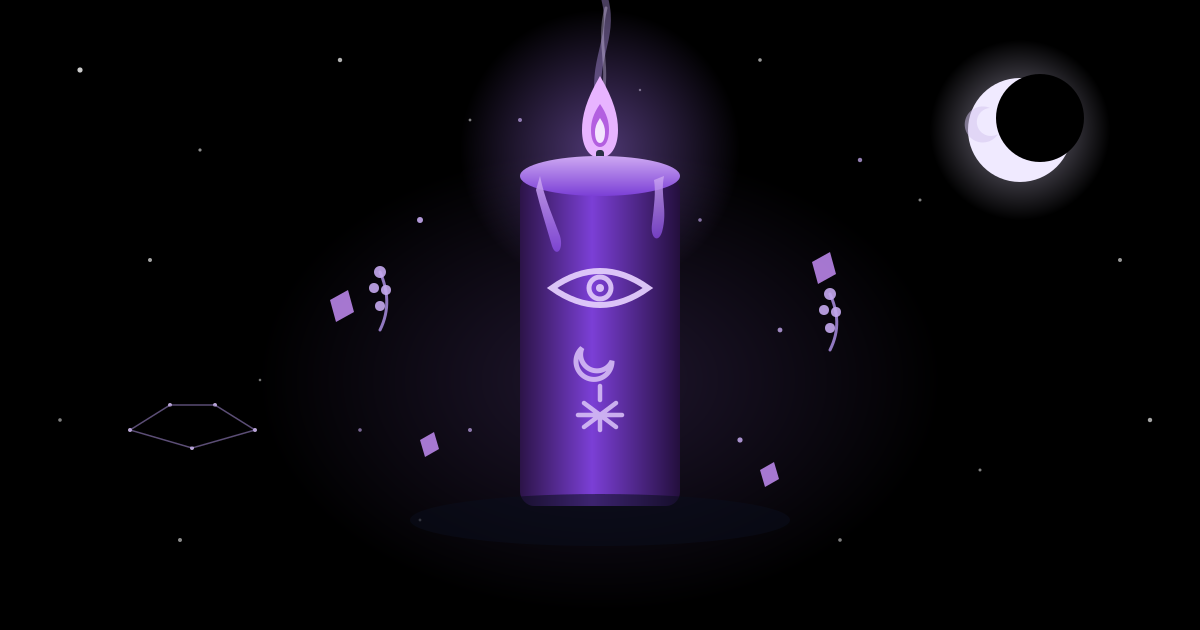
If every other candle color has a job — red charges, blue calms, black banishes — the purple candle has a throne. It is the craft's color of spiritual authority: the color worn by bishops and emperors, dyed in antiquity from thousands of sea snails until it cost more than gold, and guarded so jealously that sumptuary laws once reserved it for royalty alone. Purple has always meant power of the highest kind — not the power that pushes, but the power that knows.
That history is the whole meaning. When practitioners burn a purple candle, they are lighting the color of wisdom, psychic perception, and influence that works through understanding rather than force. This guide covers what purple candles mean, their classic uses, the difference between light and dark purple, a simple intuition ritual, flame readings, and the grounded reasons the craft's most regal candle has such a devoted following. Folk lore presented for entertainment, not guaranteed outcomes.
What Does a Purple Candle Mean?
Purple's meanings share a single root — power of the highest order:
- Spiritual power and authority. The famous one. Purple is the color of standing in your own spiritual sovereignty — of commanding respect in unseen workings, of authority that comes from depth rather than volume. Practitioners burn purple when a working needs weight.
- Psychic awareness and intuition. Purple's signature. The color of the third eye — of hunches sharpened, dreams remembered, subtle signals finally noticed. Purple candles are burned before divination, meditation, and any working where perception itself is the goal.
- Wisdom and mastery. The scholar's meaning. Purple is burned for study, for big decisions, for the long cultivation of a craft or discipline. It is the candle of knowing something thoroughly — not the flash of insight but the slow arrival of mastery.
- Ambition and high-level success. The royal meaning. Purple workings aim at positions, recognition, and influence — not grinding hustle but ascension: the promotion, the reputation, the door that opens because you are seen as someone who belongs in the room.
- Creativity and inspiration. The artist's meaning. Purple is burned for creative unblocking, for work that needs to come from somewhere deeper than habit. Practitioners keep a purple candle on the desk when the blank page needs a bigger room behind it.
- High-level protection. Where black candles absorb hostility and red candles confront it, purple candles protect by authority — the folk image is a seal rather than a shield: energy that announces you are not available for interference. Practitioners burn purple when the protection needed is about influence, office politics, or spiritual interference rather than brute-force negativity.
- Transformation and spiritual change. The alchemical meaning. Purple sits between red's fire and blue's calm, and the tradition reads that position as change with dignity — the dignified version of transformation, where the old form yields to the new without chaos. Practitioners burn purple through major life transitions.
- The crown and third-eye chakras. Purple belongs to the crown chakra — the seat of spiritual connection — and to the third eye, the seat of perception. In the folk correspondence it is linked to Thursday and to Jupiter, the planet of wisdom, expansion, and authority.
Together, purple is not one symbol but a summit: turn it toward any practice and the practice gets deeper, any ambition and the ambition gets taller, any working and the working gets quieter and more certain.
The Classic Uses of Purple Candles
Here are the traditional uses, in the order practitioners actually reach for them:
1. Psychic development and divination
The use everyone has heard of. Purple candles are burned before tarot readings, pendulum work, scrying, and meditation — the folk belief being that the color opens the third eye and steadies the mind into a receptive state. Practitioners sit with the flame for ten to twenty minutes, softening the gaze and noticing whatever surfaces. The grounded read is attention training: regular, quiet sitting teaches you to catch impressions you normally filter out. Our guide on how to do candle magic covers the intention-setting that keeps psychic workings grounded rather than wishful.
2. Spiritual protection
The authority use. Purple candles are burned when the protection needed is energetic rather than physical — before spiritual work, after encounters that left you drained, when the household feels under subtle pressure. Practitioners carve a seal-like glyph into the wax and set the intention as a declaration, not a plea: I am not available for this. The tradition treats purple protection as the strongest of the colored candles, because it works on the level where interference begins.
3. Meditation and spiritual growth
The quiet use. A purple candle burned through the season of a serious practice — nightly meditation, a year of study, the slow building of a spiritual routine. The folk rhythm is steady: the same candle, the same time, until it is burned through, then another. Practitioners describe purple meditation candles as witnesses to the practice — a small, visible commitment that makes the invisible discipline easier to keep.
4. Wisdom and decision-making
The counsel use. Purple candles appear in workings where the answer must come from depth: the career crossroads, the relationship question, the decision that keeps you awake. Practitioners burn purple and ask the plain question, then sit with whatever surfaces — not hunting for the comforting answer but for the wise one. The folk warning is honest: purple does not make decisions easier. It makes them truer.
5. Ambition and success
The ascension use. Purple candles are burned for promotions, recognition, creative reputation, and any working aimed at being seen as someone who matters. The folk method pairs the flame with visible, practical ambition: updating the portfolio, taking the meeting, doing the work in daylight while the candle holds the intention at night. The tradition is explicit — purple opens doors, but you still have to walk through them.
6. Creativity and inspiration
The artist's use. Purple candles are burned in the studio, over the manuscript, beside the sketchbook — the folk belief that the color loosens the grip of the critical mind and lets stranger material through. The ritual shape: light the candle, begin the work, and let the flame be the signal to the mind that this hour is for making. Writers in the tradition pair purple candles with the same discipline as any craft — the flame marks the time, the practice makes the work.
7. Dream work and spirit communication
The nocturnal use. Purple candles are burned in the evening before dream journaling, and practitioners keep dream diaries beside them — the tradition holds that purple thins the boundary between waking and sleeping perception. Our related guide on what candle flames mean is a natural companion here, since purple-candle practitioners read the burn as commentary on the receptivity of the working.
Light Purple vs Dark Purple Candles
Purple is not one color in the tradition — the shade tilts the working:
- Light purple / lavender: spiritual growth, intuition, peace of mind, gentle creativity, emotional healing through understanding. This is the shade for opening — for the beginner, the meditator, the artist, anyone asking the tradition to let more in.
- Medium purple / amethyst: psychic awareness, wisdom, spiritual balance, sobriety of mind. The classic all-rounder — the shade for readings, meditation, and honest spiritual work. When a guide says purple candle without specifying, this is usually the shade meant.
- Dark purple / violet: power, authority, mastery, ambition, deep protection, serious transformation. The shade for standing in your full weight — for workings that ask for results, not just insight. Dark purple is purple at its most commanding.
The practical rule: pick the shade by asking whether the goal needs opening (light purple) or authority (dark purple). If you only own one purple candle, the tradition is unbothered — intention, not shade, does the heavy lifting.
A Simple Purple-Candle Intuition Ritual
This is the classic: about twenty minutes, a quiet room, and a willingness to notice. Fire safety first — everything else second.
1. Clear the space
Turn off the overhead lights. Silence the phone — not vibrate, off. The tradition treats this as the first act of the working: you cannot hear subtle signals in a loud room. Sit somewhere you will not be interrupted. This preparation is the ritual already beginning; the candle only deepens what you have started.
2. Prepare the candle
Set a purple candle in a fireproof dish. If you have lavender or mugwort oil, anoint the candle lightly — both are traditional allies of dreams and intuition — drawing the oil upward, from base to wick, which the tradition reads as drawing perception upward into the working. Beginners can learn the full technique in our guide on how to dress a candle.
3. Carve the third eye
With a pin, carve a simple eye glyph into the wax: an almond outline with a circle at its center, the folk sign of opened perception. The tradition reads the carving as a command to yourself — notice. Carving turns the candle from decoration into your specific instrument, and the act of drawing the eye focuses the mind before the flame is even lit.
4. Ask, then watch the flame
Light the candle and state the question you are sitting with — aloud, plainly, once. Then do the actual work: soften your gaze on the flame and watch for ten minutes without trying. The folk instruction is to notice what comes uninvited — the memory, the image, the sentence that drifts in — and write each one down without judging it. Judging is the mind doing its daytime job; this hour is for a different kind of noticing.
5. Journal, then snuff
Write everything you noticed, in plain words, even the parts that feel like nothing. The tradition holds that intuition is a muscle and journaling is the training log — patterns only appear across weeks of entries. Ten to twenty minutes total. Then snuff the flame — never blow it out, in the folk manner — and keep the journal. The candle opened the perception; the pages keep the proof. Check the color against the goal in the color guide before every working.
When NOT to Burn a Purple Candle
Purple is the craft's most regal color, and even royalty has its limits — the cases where practitioners themselves say put the candle down:
- Not as a substitute for the actual work. The ambition ritual pairs with the portfolio, the application, the meeting. Lighting a purple candle instead of doing the work is the most common way purple workings fail — the candle is the rehearsal room, not the stage.
- Not for manipulation. Purple is a power color, and the tradition draws a hard line: workings aimed at controlling another person — binding someone's choices, dominating a negotiation, influencing a decision-maker's will — are not beginner-safe and, in most traditions, not acceptable at all. Purple's authority is meant to be earned, not aimed.
- Not when what you need is grounding. Purple lifts — perception, spirit, ambition — and sometimes lifting is wrong. When life is already unmoored, when anxiety is high, when the need is for steadiness and routine, a dark-purple psychic working can make the floating worse. Green or brown candles suit grounding; purple suits ascent.
- Not as a substitute for professional guidance. Purple's wisdom is the folk kind — reflection, ritual, and patience. It is not a substitute for a therapist, a doctor, a lawyer, or a financial advisor when the question is real and the stakes are high.
- Not on a timer you cannot keep. Purple workings are slow magic — intuition deepens over weeks, mastery over months. Practitioners warn against burning one candle, seeing nothing, and declaring the tradition empty. The old test: give the practice a full moon cycle before judging it.
Reading a Purple Candle: Flame and Wax Signs
Folk pyromancy treats the burn as commentary on the working — with the honest hierarchy the old practitioners used: physics first, folklore second.
- Steady, quiet flame: the tradition's great sign on a purple candle — deep receptivity, the working moving at the right pace. Practically, a still room and a trimmed wick also do this. Enjoy it either way.
- Tall, leaping flame: in lore, spiritual agitation — strong energy around the question, something in the working that wants attention; in physics, often a draft or oil near the wick. Check the room, and ask whether the question itself needs restating.
- Blue-violet halo at the flame's base: the classic sign of a purple candle working well — the tradition reads the violet fringe as the third eye responding. Physically, this is simply clean combustion, which is why the folk read pairs it with the candle burning well and clean.
- Crackling or sputtering: the folk read is static — interference, strong feelings, or a crowded mind clouding perception; the practical read is moisture or herbs near the wick. Either way, the response is the same: quiet the inputs before asking again.
- Clean, even burn with little soot: read as clarity landing well — perception unobstructed, the clearest of purple's signs.
For the full vocabulary of what candle flames mean and how to read the wax after the burn, see our ceromancy guide.
Fire Safety for Purple Candles
- Never burn while sleeping. Purple-candle workings are evening rituals — dream journaling, meditation, readings — and every one of them ends with the snuff. A candle cannot be part of falling asleep. Set a timer for your twenty minutes so the quiet cannot turn into an unattended burn.
- Purple wax stains everything. Drips on white tablecloths, carpet, and light wood are effectively permanent — dark violet dye is the worst of all the color candles for this. Burn on a wide, dark, disposable-safe dish.
- Dressed candles burn unpredictably. Oil and herb dressings change how wax melts and can make flames flare. Never leave a dressed purple candle unattended, and trim the wick shorter than usual — an eighth of an inch if dressed.
- The candle stays in its dish. Purple workings are meditative — closing your eyes, breathing, watching the flame. Do that from a chair, not while holding the candle. The flame stays in one place; you stay a safe distance from it.
- Mind the room's stillness. Purple-candle lore loves a draft-free room for clear flame-reading, and so does fire safety. Close the window, turn off the fan, and keep pets and partners out of the ritual space for the duration.
Common Mistakes to Avoid
Chasing the spectacular. Beginners sit with a purple candle expecting visions and get boredom instead — then quit in week one. The tradition's first lesson: intuition arrives as small things noticed, not lightning bolts. The journal entry that says felt calmer and remembered the dream is a success, not a failure.
Using purple to avoid instead of to ascend. The altitude trap: burning purple every night to feel elevated about a problem instead of doing the earthly work the problem requires. The tradition's test is simple — after a moon cycle, is anything actually different? If not, the working has become decoration.
Confusing the ritual for the remedy. A protection ritual does nothing if the drain's cause — the relationship, the workload, the boundary never set — goes untouched. Purple's whole mythology is about wisdom, and the first wisdom it asks for is about what the candle can and cannot do.
Forgetting the grounding. Weeks of purple work — meditation, dream journaling, readings — can leave practitioners floaty and unanchored. The old advice: for every hour of purple, spend an hour in the body — walking, cooking, cleaning. Ascent needs ballast.
A Grounded View: Why Purple Candles Work
You do not have to believe in the third eye to get something from a purple candle. The ritual is doing several very ordinary things at once: it creates a noticing slot (the ten minutes of soft gaze is practice in attending to impressions you normally dismiss), it externalizes the question (saying it aloud converts a vague worry into something the mind can work on), and it borrows the color's cultural weight — centuries of purple meaning royalty and wisdom nudge the mind toward taking the sitting seriously.
Psychologists would recognize the pattern as mindfulness plus expressive writing: sustained, non-judgmental attention lowers the mind's noise floor, and writing down unfiltered impressions is the same mechanism that makes dream journals and therapy notes work. People who do this regularly report the same effect whether they call it psychic development or attention training — they start noticing the things they used to walk past, including their own honest answers. The purple candle did not give you the perception. It gave your perception a quiet, violet room to gather in.
Closing: The Regal Flame
Every other candle in the craft asks you to do something — to burn, to build, to calm, to push. The purple candle asks you to become someone: the person who perceives clearly, decides wisely, and carries weight without raising their voice. It is the only color whose whole symbolism points upward — toward the crown, the third eye, the part of you that already knows and is waiting for the quiet to say it.
So light one the next time the question is too big for daylight thinking: the crossroads, the craft you are mastering, the dream that would not let go, the influence you need to carry with grace. Carve the eye plainly, ask the question once, watch the flame without hunting — and then, the part that matters, write down what surfaced and act on it in the ordinary, un-magic hours. Practitioners have an old saying about purple candles: every other candle changes the room, but the purple one changes the person watching the flame. The flame does not make you powerful. It just burns there, calm and violet, until you remember you already are.
Frequently asked questions
What is a purple candle used for in candle magic?
Purple candles are traditionally used for spiritual power and connection, psychic awareness and intuition, wisdom, ambition and success, creativity, and high-level protection — the kind of protection that works on energy and influence rather than brute force. Purple belongs to the crown and third-eye chakras and to Jupiter, and practitioners reach for it when a working needs spiritual authority. Presented as cultural lore for entertainment, not guaranteed outcomes.
What is the difference between light purple and dark purple candles?
Light purple and lavender candles are traditionally the shades of spiritual growth, intuition, peace of mind, and gentle creativity — the softer, dreamier face of the color. Dark purple and violet are the shades of power: spiritual authority, ambition, mastery, deep protection, and serious psychic work. Light purple opens the door; dark purple stands at the threshold. Both share the color's core of spiritual power; the shade tilts the working toward growth or authority.
Which day is best to burn a purple candle?
Thursday is the classic day for purple, since Thursday belongs to Jupiter — the planet of wisdom, expansion, spiritual authority, and high-level success that purple is traditionally linked to. Saturday suits purple workings aimed at protection and banishing, since Saturday belongs to Saturn, the boundary-keeper. The waxing moon builds (power, success, skill) and the waning moon releases (negative influence, spiritual static).
Can purple candles enhance psychic ability?
That is the folk tradition's most famous claim for purple: that the color opens the third eye and sharpens intuition, dreams, and subtle perception. Practitioners pair purple candles with meditation, dream journaling, and divination practice. The grounded read is that the ritual trains sustained attention — sitting quietly with an intention night after night is exactly the kind of practice that teaches you to notice what you have been overlooking.
Is purple candle magic safe for beginners?
Purple is considered beginner-safe in the folk tradition — it is a power color, not a banishing one, so there is no aggressive working to mishandle. Beginners are advised to start with light purple rather than dark violet, keep the intention positive and specific, and focus on the classic beginner workings: meditation, protection, and intention-setting. The usual fire-safety rules apply exactly as they do to every candle.
Keep exploring
Black Candle Meaning & Uses: Protection, Banishing & When to Burn One
Black candle meaning explained: what black candles are used for — protection, banishing, absorbing negativity — plus a simple protection ritual, when to skip them, and safety tips.
Read the meaning →
Candle Color Meanings: The Complete Guide
Candle color meanings explained: what each candle color means in magic, how to pick the right one for love, money, protection, or healing, plus pairings.
Read the meaning →
Candle Flame Meanings: How to Read a Candle Flame
Candle flame meanings explained: what a dancing, tall, low, crackling, or smoky flame means in candle magic — plus wax signs and the physics behind them.
Read the meaning →
Candle Wax Reading (Ceromancy): How to Read Melted Wax
Learn ceromancy: how to read candle wax shapes, drips, and soot for signs in your workings — plus preparation, the shape library, and grounded interpretation.
Read the meaning →