
Red Candle Meaning & Uses: Passion, Courage & Strength Rituals
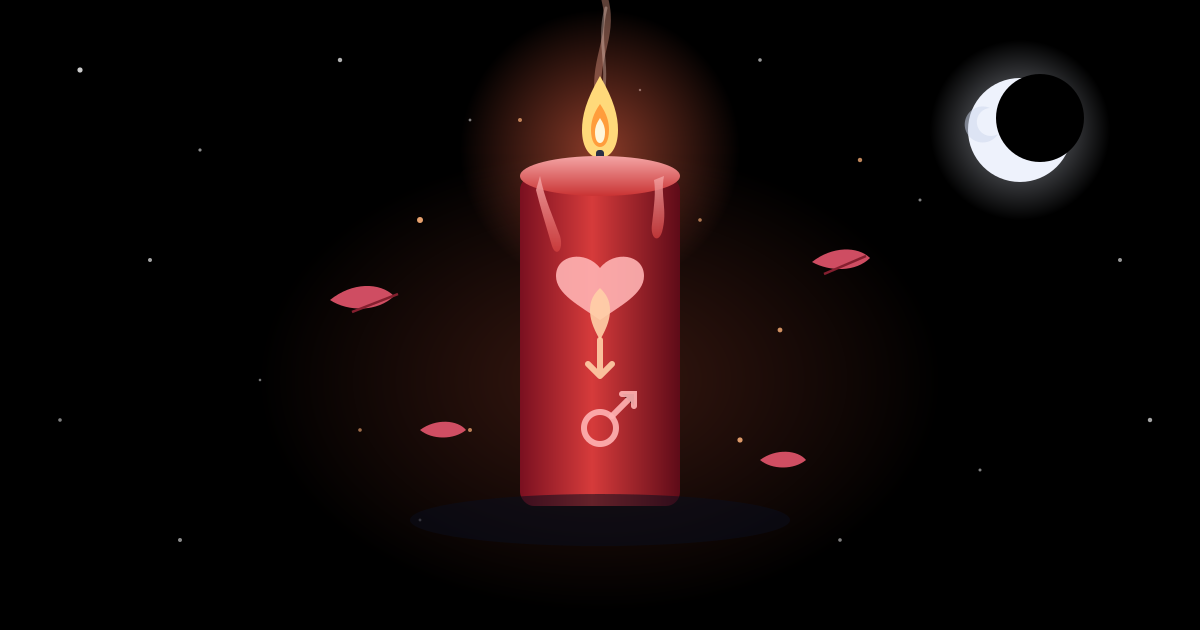
If the white candle is the craft's blank page, the red candle is its exclamation point. It is the first color a beginner reaches for and the color that needs the least explanation: everybody knows what red means before they ever hear of candle magic. Blood. Fire. The heart. The flag waved before the charge. Practitioners simply take that universal symbolism and give it a job to do.
Red is the color of wanting something enough to act on it. That is why its uses fan out so widely — romance, courage, ambition, strength, protection — while staying one coherent idea underneath. This guide covers what red candles mean, their classic uses, a simple courage ritual, how to read their flame and wax, and the grounded reasons the craft's loudest candle earns its reputation. Folk lore presented for entertainment, not guaranteed outcomes.
What Does a Red Candle Mean?
Red's meanings share a single root — fire put to purpose:
- Passion and romance. The famous one. Red is desire made visible — attraction, sensuality, romantic boldness. It is the candle of couples, anniversaries, and anyone tired of waiting quietly to be noticed.
- Courage and bold action. Red is the color of doing the frightening thing anyway. Job interviews, hard conversations, public performances, first attempts — practitioners burn red before the act, treating the flame as a reservoir of nerve they can draw from.
- Strength and endurance. The color of the long fight: illness recovery, grief endurance, the season that just will not end. Red is burned for stamina — not quick victory but the ability to keep standing.
- Vitality and life force. Red belongs to the root chakra, the body's seat of survival, energy, and grounded aliveness. It is the candle of feeling awake in your own skin — motion, appetite, warmth, presence.
- Willpower and desire. Underneath all the rest sits the core meaning: red is the will itself, the part of you that decides and does not negotiate. Goal work, habit-breaking, stalled projects — red candles are burned where the obstacle is not knowledge but follow-through.
- Fierce protection. Where black candles absorb and white candles cleanse, red candles push back. It is protection as confrontation — the flame that does not hide you but makes you someone trouble passes by.
- Mars and Tuesday. Red belongs to Mars, the planet of action and assertion, and Tuesday — Mars's day — is its classic timing. Soldiers, athletes, and arguers have all claimed Mars's color, and the folk tradition borrowed it wholesale.
Together, red is not a single symbol but a temperature: turn it toward any goal and the goal gets hotter, brighter, and harder to ignore — including the parts of yourself you have been keeping politely dim.
The Classic Uses of Red Candles
Here are the traditional uses, in the order practitioners actually reach for them:
1. Passion and romance
The use everyone has heard of. Red candles are burned to rekindle desire in a long relationship — the anniversary dinner table, the evening set apart for two people to notice each other again — and by single practitioners to make themselves magnetically visible: not to summon a specific person, but to step into rooms as someone worth noticing. The ethical rule of the tradition is firm here: workings target your own qualities — your own warmth, boldness, openness — never someone else's will. Our guide on how to do candle magic covers the intention-setting that keeps love work on the right side of that line.
2. Courage before the hard thing
The use practitioners swear by most. Burn a red candle before the interview, the performance review, the apology, the doctor's appointment you have been dreading, the stage. The folk method: name the frightening thing aloud to the flame — the actual thing, in plain words — then sit with it until the fear stops being an abstraction and becomes a task with edges. Many people report walking out of that room measurably steadier.
3. Strength through the long season
The endurance use. A red candle burned during illness recovery, during grief, during the months of hard work that offer no applause — practitioners describe it as lighting a small, daily proof that they are still in the fight. One practitioner tradition burns a red candle every evening of a long treatment, a quiet nightly vote for the body still working.
4. Motivation and ambition
The stalled-project candle. When the plan is clear but the doing has collapsed, practitioners light red at the desk and write the one next action on paper before the wax has softened. The rule: the candle burns only while you work — if you reach for your phone, the ritual ends. That constraint is the whole mechanism. The flame becomes an accountability partner with no patience for scrolling.
5. Vitality and grounded aliveness
The root-chakra use. Red candles appear in workings for feeling in the body again — after burnout, after a depressive slump, after the months of living in your head. Practitioners pair red with movement: light the candle, then walk, stretch, dance, cook something with real spice. The candle is the ignition; the body does the driving.
6. Fierce, active protection
The confrontational use. Where black candles are burned to absorb and turn away harm, red is burned when the situation calls for standing ground: the boundary you need to hold, the person you need to stop accommodating, the no you have been swallowing. Practitioners carve a line or wall into the wax and name the boundary aloud — what crosses and what does not.
7. Breaking a rut
The overlooked use. Red is the color of interruption — of patterns, habits, loops. Practitioners burn red to mark the night a cycle ends: the last evening of the old routine, the lighting of the first page of the new one. The tradition treats the flame as a cut in the timeline: everything before the burn is the old pattern; everything after is the new one.
A Simple Red-Candle Courage Ritual
This is the classic: about thirty minutes, and one frightening thing you have been putting off. Fire safety first — everything else second.
1. Name the frightening thing
Take paper and write the exact thing you are afraid of, in one honest sentence. Not the category — the thing. "I am afraid the interview panel will see I am unqualified" beats "I am nervous about the interview." Folk practitioners insist on precision because a vague fear cannot be faced; only a specific one can.
2. Prepare the candle
Set a red candle in a fireproof dish. If you have cinnamon or ginger oil, anoint the candle lightly — both are traditional courage herbs — drawing the oil upward, from base to wick, which the tradition reads as drawing strength into the working. Beginners can learn the full technique in our guide on how to dress a candle.
3. Carve the glyph
With a pin or the dull edge of a knife, carve an upward arrow — the flame-arrow, the folk sign of will moving toward its target — into the wax. Some practitioners carve it three times, once for body, once for voice, once for nerve. Carving turns the candle from decoration into your specific instrument.
4. Speak the exchange
Light the candle and speak the traditional exchange aloud: what you are giving the flame, and what you are asking it for. "I give this flame my shaking hands, and I take back steady ones." The wording is yours; the shape is old — you hand over the fear's symptoms and name the capacity you want instead. Speak it like you mean it; the tradition is blunt that a mumbled ritual is just a candle burning.
5. Rehearse by the flame
Do not just meditate — rehearse. If it is a conversation, say the opening sentence aloud to the flame. If it is an exam, do one practice question. If it is the interview, answer one likely question out loud. The folk understanding is that courage is not a feeling that arrives before the act; it is the residue of practice done in a ceremonial frame. Fifteen to twenty minutes. Then snuff the flame — never blow it out, in the folk manner — and keep the paper. Burn or bury it after the frightening thing is done.
When NOT to Burn a Red Candle
Red is the craft's loudest color, and loud colors need the clearest limits — the cases where practitioners themselves say put the candle down:
- Never for coercion. No binding a named person's feelings, no love workings aimed at someone who said no, no red candles lit to make anyone choose you. The tradition's ethic is explicit: red targets your own will, never someone else's. Workings that try to override another person's freedom are a different category, and this site does not teach them.
- Not when you are furious. Red amplifies what is already burning. Lighting one in the middle of rage is, in the old phrase, pouring oil on your own fire — the working you do angry will be an angry working. Cool down first, sleep if you need to, then decide whether the candle is still wanted.
- Not when the body is spent. Red demands energy it does not supply. If you are exhausted, the honest ritual is rest — not a vitality working that borrows from a body already in debt. The root-chakra use comes after sleep, not instead of it.
- Not aimed at forcing an outcome. A red candle cannot make the panel hire you, the text come, or the verdict go your way. It prepares you — your steadiness, your clarity, your follow-through. Wanting the candle to be the whole strategy is the most common way red workings fail.
- As a substitute for professional help. A strength-through-recovery ritual cannot replace medical care, therapy, or a lawyer. The candle can sit on the nightstand and hold the intention; it cannot be the treatment.
A quick cross-check: our complete guide to candle color meanings lists what each color traditionally covers, so you can check whether red is truly the right candle for your goal — or whether the goal wants the quiet of white or the absorption of black instead.
Reading a Red Candle: Flame and Wax Signs
Folk pyromancy treats the burn as commentary on the working — with the honest hierarchy the old practitioners used: physics first, folklore second.
- Tall, bold flame: the tradition's great sign on a red candle — strong will behind the working, the desire burning clean. Practically, a well-trimmed wick and good wax also do this. Enjoy it either way.
- Sputtering, leaping flame: in lore, the will is strong but scattered — too much fire in too many directions; in physics, often a draft or oil near the wick. Check the room, and ask yourself whether the goal itself needs focusing.
- Smoky burn: read as the working meeting resistance — an obstacle worth naming, not a verdict. Red candles soot more than most when the wick is long, so trim before you read.
- Flame that leans or bends: the folk read is a force pulling the working off course — a distraction, a competing desire. The practical read is often a draft. Both suggest the same response: steady the environment, then steady the intention.
- Fast, clean burn: read as desire that knows exactly what it wants; slow, tunneling burn: read as a will that has not fully committed. Neither overrides the actual effort you put in after the candle is snuffed.
For the full vocabulary of what candle flames mean and how to read the wax after the burn, see our ceromancy guide.
Fire Safety for Red Candles
- Red wax stains everything. Drips on white tablecloths, carpet, and light wood are effectively permanent. Burn on a wide, dark, disposable-safe dish — and keep the candle away from the edge of any surface.
- Carved candles burn unpredictably. Deep carvings and herb dressings change how wax melts and can make flames flare. Never leave a dressed or heavily carved red candle unattended, and trim the wick shorter than usual — an eighth of an inch if dressed.
- Courage rituals happen in real rooms. Rehearsing a speech while pacing with a lit candle in hand is how accidents happen. The candle stays in its dish, in one place, for the whole ritual. You move around it, not with it.
- Never leave it unattended. The universal rule. Set a timer for your thirty minutes so rehearsing cannot turn into an hour away from the flame.
- Mind pets and partners mid-ritual. Red-candle workings are physical — pacing, speaking aloud, gesturing. A knocked candle mid-declaration is a classic accident. Ritual space should be pet-free and closed-door for the duration.
Common Mistakes to Avoid
Lighting red for someone else's feelings. The coercion line again, because it is the most common misuse: a red candle aimed at a named person is not a love working, it is a control working. The tradition's alternative — burning red to become braver, warmer, and more openly yourself — works better anyway, because it is aimed at the one will you actually control.
Skipping the rehearsal. The courage ritual's power is in step five — saying the hard sentence aloud to the flame. Practitioners who only meditate and never rehearse report the same fear walking out the door with them. The candle opens the space; the rehearsal fills it.
Using red for every goal. Red is addictive — the feeling of burning it is the feeling of doing something. But goals that need patience, listening, or quiet clarity get worse with red, not better. Check the color against the goal in the color guide before every working.
Expecting the candle to replace the attempt. A courage candle burned the night before an interview does nothing if you skip the interview. Red's whole mythology is about action — the flame is the prologue, and prologues do not count as the story.
A Grounded View: Why Red Candles Work
You do not have to believe in Mars to get something from a red candle. The ritual is doing several very ordinary things at once: it names the fear precisely (writing it down converts a mood into a problem), it rehearses the feared act (exposure in a ceremonial frame), and it borrows the color's cultural weight — centuries of associating red with boldness act as a psychological prime, the same way a red jersey or a red dress measurably changes how the wearer carries themselves.
Psychologists would recognize the pattern as implementation intention: a specified trigger, a rehearsed first action, and a defined time window. People who do this regularly report the same effect whether they call it magic or preparation — the dread loses its abstraction, the first sentence gets said, and the rest turns out to be easier than the anticipation. The red candle did not give you courage. It gave your courage a room to warm up in.
Closing: The Bold Flame
Every other candle in the craft asks you to sit still — to cleanse, to clarify, to protect. The red candle asks you to stand up. It is the only one whose whole symbolism points outward, toward the thing you have been avoiding, the person you need to become, the move you keep rehearsing in your head and never making.
So light one the next time the fear is louder than the plan: the interview, the apology, the first step on the project, the boundary that needs holding. Name the frightening thing plainly, rehearse by the flame, and then — the part that matters — do it the next day with the steadiness you practiced. Practitioners have an old saying about red candles: every other candle changes the room, but the red one changes the person in it. The flame does not burn the fear away. It just stands there, tall and unafraid, until you remember you can too.
Frequently asked questions
What is a red candle used for in candle magic?
Red candles are traditionally used for passion and romance, courage and bold action, physical strength and vitality, ambition and motivation, and fierce, active protection. In folk tradition red belongs to the planet Mars and to Tuesday, and it is the color of the root chakra — the fire of will, desire, and life force. Presented as cultural lore for entertainment, not guaranteed outcomes.
Are red candles only for love?
No — love is only one thread of red. Folk tradition also burns red for courage before a difficult conversation or exam, for strength through illness recovery and hard seasons, for motivation on stalled projects, and for protection that actively pushes trouble back. Red is the color of willpower itself, and willpower applies to far more than romance.
Can a red candle help with courage?
In the folk tradition, yes — that is one of red's oldest uses. Practitioners burn a red candle before doing something frightening: a job interview, a hard conversation, a public performance. The ritual frames the courage as already present — the candle's job is to make it accessible. The honest mechanism is psychological: the ritual interrupts fear and gives the nervous system a focused, ceremonial task.
Which day is best to burn a red candle?
Tuesdays are the classic day, since Tuesday belongs to Mars, red's ruling planet. The waxing moon is favored for red workings meant to build something — strength, motivation, passion — while the waning moon suits red workings meant to cut something away, like a fear or a bad habit. The folk saying goes: the right timing sharpens the working, but a red candle lit with honest urgency on any night beats a perfectly timed one lit coldly.
Is it okay to burn a red candle for a specific person?
The ethical tradition says no. Red candle workings are meant to target your own qualities — your own courage, magnetism, and desire — never to bend another person's will or feelings. Love-drawing workings in this tradition aim at opening yourself to love and making yourself radiant, not at binding a named individual. This site does not teach coercive love workings.
Keep exploring

Candle Color Meanings: The Complete Guide
Candle color meanings explained: what each candle color means in magic, how to pick the right one for love, money, protection, or healing, plus pairings.
Read the meaning →
How to Do Candle Magic: A Beginner's Guide
How to do candle magic: a complete beginner's guide. What you need, the 8 steps of a candle spell, timing with moon phases, and common mistakes to avoid.
Read the meaning →
How to Dress a Candle: Oils, Herbs & Inscriptions Explained
How to dress a candle: the folk tradition of anointing candles with oil, carving intentions, and adding herbs. Learn dressing directions, oil choices, and beginner recipes.
Read the meaning →
Candle Flame Meanings: How to Read Your Ritual's Fire
Candle flame meanings: what a dancing, flickering, tall, or dying flame means in candle magic. Learn pyromancy basics, plus how to read smoke and wax too.
Read the meaning →