
Silver Candle Meaning & Uses: Moonlight, Intuition & Reflection Rituals
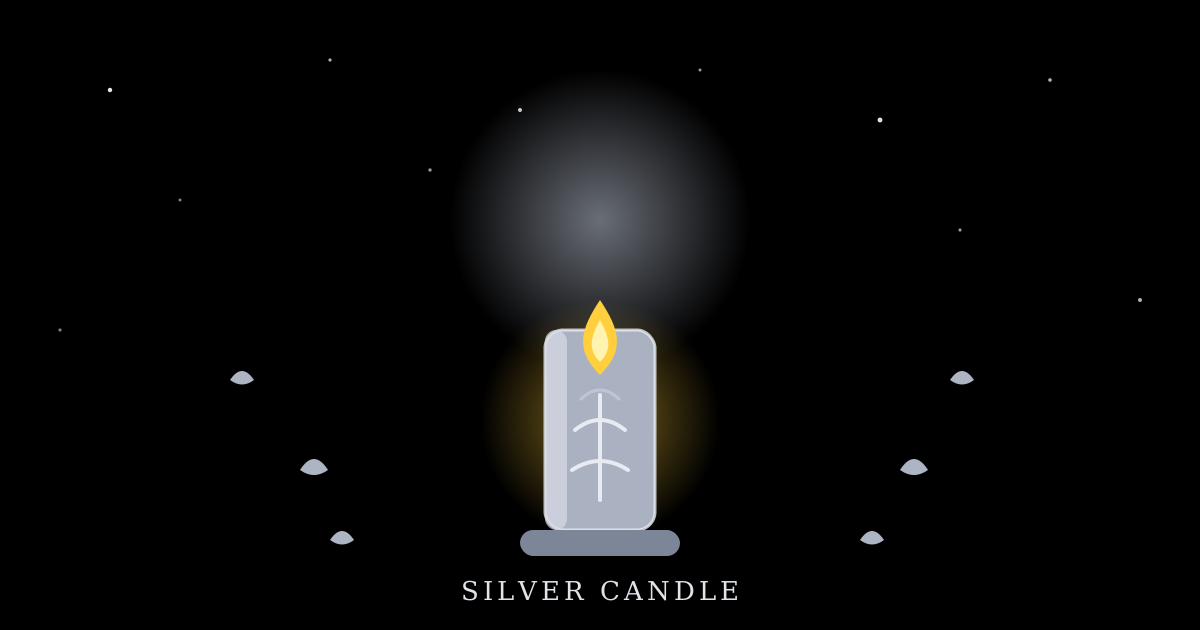
If the gold candle is the craft's sunlight and the white candle its clean slate, the silver candle is its moonlight. It is the color practitioners reach for after dark, when the day's noise has settled and the quieter questions surface: What am I actually feeling? What did that dream mean? What is the next step, really? Silver does not promise answers shouted from above. It promises something subtler and, practitioners will tell you, more trustworthy: a clear reflection. Like moonlight on still water, silver shows you what is already there, only easier to see.
Silver is the color of what reflects — and of the patient listening that lets a feeling name itself before a decision is forced. That is why its uses cluster around the inward and the lunar: intuition, dreams, moon phases, reflection, gentle protection, and the honoring of cycles. This guide covers what silver candles mean, their classic uses, how silver differs from white and gold, a simple moonlight ritual, flame readings, and why the craft's quietest candle has such a devoted following. Folk lore presented for entertainment, not guaranteed outcomes.
What Does a Silver Candle Mean?
Silver's meanings share a single root — the moon and its light:
- Intuition. The famous one. Silver is the color practitioners burn to hear their own inner voice more clearly — before a decision, after a confusing conversation, or whenever gut feeling has gone quiet under other people's opinions. In the folk tradition, silver sharpens the inner ear the way moonlight sharpens a dark road.
- Moon magic. Silver belongs to the moon itself — its phases, its cycles, and its timing. Practitioners burn silver at the full moon for clarity, at the new moon for quiet beginnings, and at the waning moon for release. If a working is timed by the moon at all, silver is usually the candle on the altar.
- Dreams and dream recall. The color of the dreaming mind. Silver candles are burned before bed, or beside a dream journal, by practitioners who want to remember their dreams more vividly or understand a recurring one. The folk logic is simple: silver is the color of the night mind, and lighting it signals that mind to pay attention.
- Reflection and self-knowledge. Silver's mirror quality. Where other colors push outward — toward money, love, or action — silver turns the gaze back. Practitioners use it for honest self-review: what worked this month, what pattern keeps repeating, what needs to change that only you can change.
- Gentle protection. The reflective kind. Silver is traditionally burned for calm boundaries and peaceful sleep — a mirror that turns unkind energy back rather than a wall that blocks it. It is the protection of a quiet house with the curtains drawn, not of a fortress.
- Feminine energy and cycles. In the folk correspondence, silver belongs to the moon and to feminine energy in its broad, symbolic sense — receptivity, rhythm, intuition, and the cycles of rest and renewal. Practitioners burn silver to honor a cycle ending or beginning, from a season of life to a single month.
- Clarity through calm. Silver's quiet gift. Not the clarity of a solved problem but the clarity of a settled mind — the moment after the noise stops when the next step is simply obvious. Practitioners describe silver as the candle that lowers the volume so the answer can be heard.
Together, silver is not one symbol but a mirror: turn it toward any noisy decision and the decision gets quieter, any forgotten dream and the dream gets brighter, any moon phase and the phase gets its proper ceremony.
The Classic Uses of Silver Candles
Here are the traditional uses, in the order practitioners actually reach for them:
1. Listening to intuition before a decision
The use everyone has heard of. Silver candles are burned the night before a decision that logic alone cannot settle — the job offer, the move, the relationship question. The folk method is simple: light the candle, sit quietly, and ask the question once, plainly, then stop trying to answer it. Practitioners report that the ritual's real product is not magic but silence — twenty minutes without advice, feeds, or other people's voices, in which their own sense of the thing finally gets a word in. Our guide on how to do candle magic covers the intention-setting that keeps intuition workings aimed at listening rather than at forcing an answer.
2. Full moon and new moon workings
The lunar use. Silver is the moon's candle, so it anchors nearly every moon-phase ritual: full moon clarity, new moon intentions, waning moon release. The folk rhythm is one candle per moon phase, lit at nightfall and snuffed before bed, so the flame becomes a small monthly ceremony inside an otherwise unmarked calendar. The tradition pairs the candle with the practical work every time: the intention written down, the worry named, the step actually taken the next morning.
3. Dream recall and dream journaling
The dreaming use. A silver candle burned for a few minutes before bed, then snuffed, is the folk method for remembering dreams — followed by a notebook kept beside the bed and written in before anything else in the morning. Practitioners describe silver as the color that tells the dreaming mind it is being listened to, which is why the dreams start arriving more vividly. The honest note matters: the candle does not interpret the dream. The journal does that, slowly, over weeks of entries.
4. Reflection and honest self-review
The mirror use. Silver candles are burned at the end of a month, a season, or a year, for a review with no audience — what worked, what repeated, what quietly needs to change. Practitioners light the candle, write three honest sentences, and sit with them. The folk warning is honest too: reflection without action is just rumination with a nicer light. The flame shows the pattern; the next week has to break it.
5. Gentle protection and peaceful sleep
The quiet-house use. Silver candles appear on the bedside table during restless stretches — burned briefly before sleep for calm boundaries and a settled night. Practitioners describe silver as the color that makes a room feel watched over without making it feel guarded. The honest note matters here: a candle is no substitute for real safety measures or for help with persistent sleep problems, and the tradition says so plainly. The flame keeps the evening calm; the rest of the routine does the rest.
6. Honoring cycles and transitions
The marking use. Silver candles are traditionally burned to mark a cycle ending or beginning — a birthday, a move, the end of a project, the start of a quieter season. The folk logic is that unmarked transitions blur together, and a small ceremony gives the mind a door to walk through. Practitioners light the candle, name what is ending and what is beginning, and let the flame hold the threshold for a few minutes.
7. Calming an overstimulated mind
The volume-lowering use. Silver candles are burned after the day that left the mind buzzing — too many screens, too many voices, too much input. The folk method is the simplest of all: light the candle, dim the other lights, and sit until the buzz fades. Practitioners describe silver as the color that lowers the volume of everything at once, which is why it is the candle of the evening wind-down rather than the morning launch.
Silver vs White and Gold Candles
Silver sits between two better-known neighbors in the tradition, and the difference matters — the shade tilts the working:
- White: cleansing, clarity, and new beginnings in general. The all-purpose candle, used when any clean start will do or when no other color quite fits. White works by clearing.
- Silver: intuition, dreams, moon workings, and reflection. The lunar candle, used when the work is specifically about listening inward, honoring a moon phase, or remembering a dream. Silver works by reflecting.
- Gold: success, abundance, confidence, and solar energy. The candle for outward achievement — money growing, recognition arriving, the day seized. Gold works by shining.
The practical rule: pick white when you need a clean slate, gold when you need to shine outward, and silver when you need to listen inward. If you only own one silver candle, the tradition is unbothered — intention, not shade, does the heavy lifting.
Silver Candle Shade Guide
Not all silvers work the same way in the tradition:
- Pale silver / moonlight: gentle intuition, dream recall, and peaceful sleep. The softest silver — the shade practitioners reach for at bedtime or when the mind needs quiet rather than answers.
- Bright silver / metallic: the all-rounder — moon rituals, reflection, and clear intuition. When a guide says "silver candle" without specifying, this is usually the shade meant.
- Dark silver / pewter: deep reflection, shadow-side honesty, and the releasing work of the waning moon. The shade for the review that is not entirely comfortable — and therefore the most useful.
A Simple Silver-Candle Moonlight Ritual
This is the classic: about twenty minutes, one quiet question, and moonlight — real or remembered. Fire safety first — everything else second.
1. Dim the other lights
Before lighting anything, turn off the overhead lights and silence the phone. Folk practitioners insist on this step because the ritual only works on what is actually quiet — listening begins in the room, not in the thought. Sit in the dimness for a full minute before you reach for the match.
2. Prepare the candle
Set a silver candle in a fireproof dish. If you have jasmine or sandalwood oil, anoint the candle lightly — both are traditional lunar scents — drawing the oil upward, from base to wick, which the tradition reads as drawing energy up toward the moon. Beginners can learn the full technique in our guide on how to dress a candle.
3. Carve the crescent glyph
With a pin, carve a small crescent moon into the wax — a single curved line, open to the right. The tradition reads the crescent as the whole point: the part of the moon you can see is only ever part of the story, and intuition is the art of honoring the unseen part too. Carving turns the candle from decoration into your specific instrument.
4. Ask once, then sit
Light the candle and speak one question — the decision, the dream, the pattern — once, plainly, in your own voice. Then do the harder part: sit in silence for ten minutes, watching the flame, and refuse to argue with whatever comes to mind. The folk understanding is that most confusion is not a lack of information but a lack of quiet — and the ritual gives quiet a ceremonial slot before the deciding resumes.
5. Write what came, then snuff
Write down whatever arrived — a sentence, an image, a feeling, even a refusal — taken once by the flame. Fifteen to twenty minutes total. Then snuff the flame — never blow it out, in the folk manner — and keep the paper. The candle held the mirror; the sentence is what was reflected. The decision, whenever it comes, will feel like something you have already heard once — in the quiet.
When NOT to Burn a Silver Candle
Silver is the craft's quietest color, and even quietness has its limits — the cases where practitioners themselves say put the candle down:
- Not as a substitute for deciding. The moonlight ritual clarifies the question; it cannot answer it for you. Lighting a silver candle instead of choosing is the most common way silver workings fail — the candle is the listening room, not the decision.
- Not for fast action. Silver aims at listening, and aiming it at urgency wastes its weight. Fast results get red or orange, in the tradition; silver is kept for the decisions that deserve a night's quiet. Check the color against the goal in the color guide before every working.
- Not as a cure for sleeplessness or low mood. The ritual supports a restless evening; it is not a remedy for persistent insomnia, anxiety, or low mood. If the restlessness is constant and gnawing, the honest answer is rest, routine, a trusted person, or professional support — not a longer burn.
- Not for avoiding an honest conversation. Silver can become a trap — the ritual that reflects on a situation instead of speaking about it. Practitioners warn against burning silver around a relationship instead of examining it aloud. The candle holds the mirror steady; it should not replace the conversation the mirror reveals.
- As a substitute for professional help. A moonlight ritual cannot replace medical care for a health problem, counseling for a persistent worry, or practical advice for a money crisis. The candle can sit on the table and hold the intention; it cannot be the plan.
Reading a Silver Candle: Flame and Wax Signs
Folk pyromancy treats the burn as commentary on the working — with the honest hierarchy the old practitioners used: physics first, folklore second.
- Steady, low flame: the tradition's great sign on a silver candle — calm energy, the listening settling at the right pace. Practically, a still room and a trimmed wick also do this. Enjoy it either way.
- Tall, leaping flame: in lore, a mind louder than the question — the situation the working is about is more agitated than the plan admits; in physics, often a draft or oil near the wick. Check the room, and ask whether the question needs quieting before it needs answering.
- Low, dim flame: read as tiredness weighing on the working — not failure, but a signal that sleep comes before the next insight. Trim the wick and consider whether tonight's working is reflection or simply rest.
- Crackling or sputtering: the folk read is competing voices in the situation — opinions unsaid or unheard; the practical read is moisture or herbs near the wick. Either way, the response is the same: find the competing voice and name it.
- Clean, even burn with little soot: read as a mind settling well — the clearest of silver's signs, and a reminder that honest listening burns cleaner than performance.
For the full vocabulary of what candle flames mean and how to read the wax after the burn, see our ceromancy guide.
Fire Safety for Silver Candles
- Never burn while sleeping. The moonlight ritual ends with the snuff — always. A candle cannot be part of falling asleep, even a bedtime one. Set a timer for your twenty minutes so the quiet flame cannot turn into an unattended burn.
- Metallic wax and glitter. Silver candles are often made with mica or metallic finishes that can flare or throw sparks. Burn on a wide, fireproof dish, keep the candle away from curtains and bedding, and never leave a metallic-finish candle unattended.
- Dressed candles burn unpredictably. Oil and herb dressings change how wax melts and can make flames flare. Never leave a dressed silver candle unattended, and trim the wick shorter than usual — an eighth of an inch if dressed.
- The candle stays in its dish. Moonlight workings are still — sitting, breathing, writing. Do that from a chair, not while carrying the candle. The flame stays in one place; you stay a safe distance from it.
- Mind the room's stillness. Silver-candle lore loves a draft-free room, and so does fire safety. Close the window, turn off the fan, and keep pets and children out of the ritual space for the duration — the flame is for their calm, not their curiosity.
Common Mistakes to Avoid
Skipping the dimming step. The moonlight ritual's power is in step one — quieting the room before lighting anything. Practitioners who light first and settle never report the same effect walking out of the ritual with them. The candle cannot quiet a room that never went quiet.
Using silver to avoid deciding. The listening trap: burning silver every evening to feel thoughtful about a decision instead of making it. The tradition's test is simple — after two weeks, is anything actually decided? If not, the working has become a comfort, and the honest move is the choice the candle has been standing in for.
Expecting a dramatic revelation. Silver is quiet magic. One candle does not deliver a voice from above or a dream that explains everything; the folk rhythm is weeks of small noticings, not evenings of revelation. Practitioners who burn silver expecting a single night's answer are usually disappointed — and miss the real, gradual clarity that was already underway.
Confusing the ritual for the remedy. A moonlight ritual before a hard week does nothing if the practical step itself goes untouched. Silver's whole mythology is about reflection, and the first reflection it asks for is about what the candle can and cannot do.
A Grounded View: Why Silver Candles Work
You do not have to believe in moon energy to get something from a silver candle. The ritual is doing several very ordinary things at once: it forces physical stillness (sitting in dim light for twenty minutes calms the nervous system in ways scrolling never does), it creates a routine anchor (the same hour, the same flame, the same sentence written down), and it borrows the color's cultural weight — silver is the color of the moon and of mirrors in nearly every culture, which is why it reads as reflective before a single word is spoken.
Psychologists would recognize the pattern as quiet reflection plus implementation intention: writing down what arrived converts a vague feeling into a namable thought, and the ceremonial frame lowers the stakes of admitting it. People who do this regularly report the same effect whether they call it magic or routine — the decision they dreaded turns out to be clearer, one quiet evening at a time. The silver candle did not answer your question. It gave your question a quiet room to be heard in.
Closing: The Reflected Flame
Every other candle in the craft asks you to reach for something — to burn brighter, to grow richer, to love deeper, to stand steadier. The silver candle asks you to listen to what is already there, quietly. It is the only one whose whole symbolism points back at you like a mirror: the intuition heard, the dream remembered, the cycle honored, the decision finally clear in the stillness after the noise.
So light one the next time the noise gets loud: the decision that will not settle, the dream that keeps returning, the month that needs an honest review, the evening that needs lowering to a whisper. Dim the lights, ask once plainly, sit with the flame in the silence after — and then, the part that matters, write down what came. Practitioners have an old saying about silver candles: every other candle changes the room, but the silver one changes the listener. The flame does not perform for you. It just burns there, low and silver, until you remember you can hear that quietly too.
Frequently asked questions
What is a silver candle used for in candle magic?
Silver candles are traditionally used for intuition, moon magic, dream work, reflection, and gentle protection. In folk tradition silver belongs to the moon — its cycles, its light, and its pull on tides and feelings — and it is the color practitioners reach for when a decision needs quiet listening rather than loud action. Presented as cultural lore for entertainment, not guaranteed outcomes.
What is the difference between silver and white candles?
White candles are the craft's all-purpose color — cleansing, clarity, and new beginnings in general. Silver candles are narrower and more lunar: intuition, dreams, moon workings, and reflection. Practitioners reach for white when any clean start will do, and silver when the work is specifically about listening inward, honoring a moon phase, or remembering a dream.
Is a silver candle good for protection?
In the folk tradition, silver offers a gentle, reflective kind of protection — the mirror that turns unkind energy back rather than the wall that blocks it. Practitioners burn silver for calm boundaries, peaceful sleep, and a sense of being watched over, but for active banishing or strong shielding they reach for black instead. Silver protects by reflecting, not by fighting.
Which moon phase is best for a silver candle?
The full moon is the classic phase, since silver belongs to the moon at its brightest — the night for intuition, dream recall, and seeing a situation clearly. The new moon suits silver workings meant to plant a quiet intention, and the waning moon suits silver workings meant to release a worry or let a feeling settle. Monday, the moon's day, is the traditional weekday.
Can you burn a silver candle with other colors?
Yes, and practitioners often do. Silver pairs with white for clear intuition, with blue for calm dreams and peaceful sleep, and with purple for deeper spiritual reflection. The folk rule is to keep one clear goal per working: silver holds the lunar, listening quality, and the second color shapes what you are listening for.
Keep exploring
Gold Candle Meaning & Uses: Success, Wealth & Solar Rituals
Gold candle meaning explained: what gold candles are used for — success, wealth, confidence, and solar energy — plus a simple success ritual, a shade guide, and when to skip them.
Read the meaning →
White Candle Meaning & Uses: Cleansing, Clarity & New Beginnings
White candle meaning explained: what white candles are used for — cleansing, clarity, peace, and new beginnings — plus a simple cleansing ritual, a shade guide, and fire safety.
Read the meaning →
Candle Color Meanings: The Complete Guide
Candle color meanings explained: what each candle color means in magic, how to pick the right one for love, money, protection, or healing, plus pairings.
Read the meaning →
How to Do Candle Magic: A Beginner's Guide
How to do candle magic: a complete beginner's guide. What you need, the 8 steps of a candle spell, timing with moon phases, and common mistakes to avoid.
Read the meaning →