
White Candle Meaning & Uses: Purity, Protection & Clarity Rituals
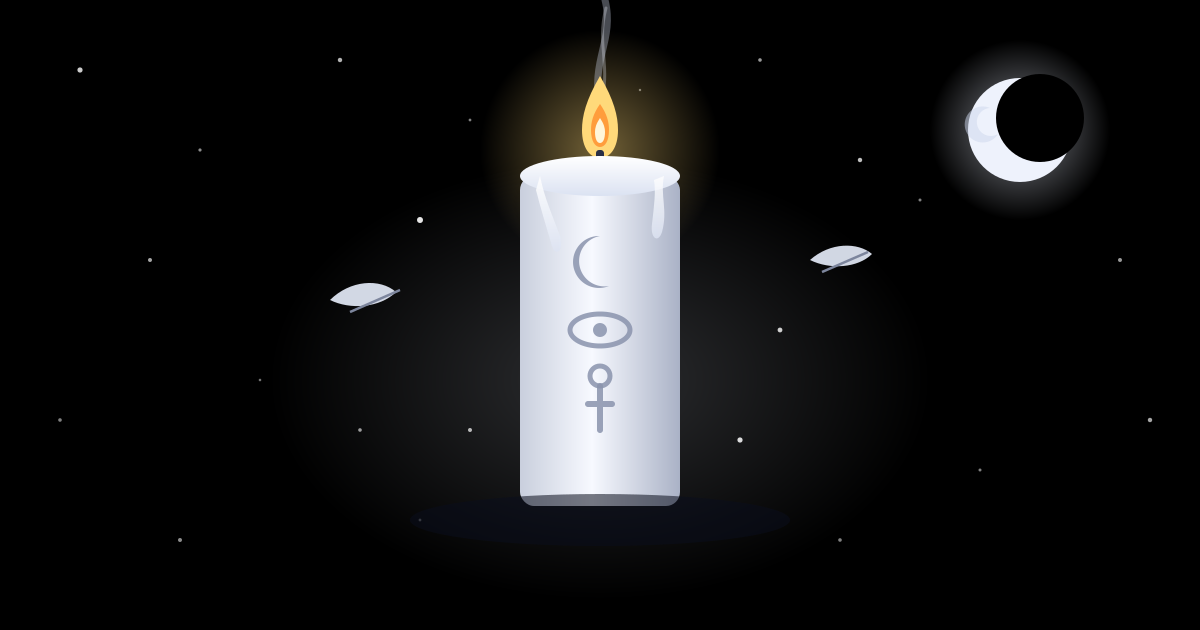
Walk into any shop that sells ritual candles and white is the color you will see in every size, every price, every corner of the shelf. There is a reason it outnumbers all the others combined: the white candle is the craft's blank page. It carries no fixed agenda, which means it can carry any of them — purity, protection, clarity, prayer, the moon itself. Practitioners call it the universal candle, and beginners are often told to learn the whole craft with nothing but white ones.
That universality has a quiet depth worth understanding. White is not the absence of intention; it is intention in its clearest form — the flame before you have named what the flame is for. This guide covers what white candles mean, their classic uses, a simple clarity ritual, how to read their flame and wax, and the grounded reasons the simplest candle in the drawer is often the most powerful one. Folk lore presented for entertainment, not guaranteed outcomes.
What Does a White Candle Mean?
White's symbolism runs across nearly every tradition on earth, and the threads converge:
- Purity and cleansing. The core meaning. White is the color of things made clean — fresh linen, new snow, blank paper. White candles are burned to clear stale or heavy energy from a room, to mark the end of a bad stretch, and to begin any work that needs a clean slate.
- Protection. White is the light that holds darkness out. Practitioners burn white candles as a nightly protection marker — a lit point of order in the room — and place them at thresholds, windowsills, and bedside tables when they want the home to feel watched over.
- Clarity and clear sight. White is the color of illumination. It is the candle of decision-making, studying, meditation, and any situation where the fog in the head matters more than the facts on the table.
- The Moon. White belongs to the Moon the way gold belongs to the Sun. Monday — the Moon's day — and the full moon are white's classic timings, which is why white candles dominate moon rituals, release workings, and anything done by night.
- The universal substitute. Because white light contains every color, folk tradition treats the white candle as able to stand in for any other color when properly consecrated. No pink candle for a love working? Carve a heart into a white one, dress it with rose oil, name the intention — and in this tradition it is a pink candle for the evening.
- Spiritual connection and prayer. White candles sit on altars, shrines, and graves across cultures because white is the color of reverence — the candle of remembering, honoring, and reaching upward.
- New beginnings. Weddings, new homes, the first page of a journal, the morning after a hard ending — white marks the start. It is the candle you light when you want the record to show: this is where it begins.
Taken together, the white candle is not one symbol but a prism: turn it toward any goal and it takes that color, while staying, underneath, the color of clarity itself.
The Classic Uses of White Candles
Here are the traditional uses, roughly in the order practitioners reach for them:
1. Protection and space clearing
The most common use. Light a white candle in a room that feels heavy after an argument, a bad day, or a move, and let it burn in its dish while you open a window and tidy the space. Practitioners name the protection aloud — "this room is cleared, this home is steady" — treating the spoken word as the boundary and the flame as its witness. For a fuller practice, our guide on how to do candle magic includes the protection sequence beginners start with.
2. Clarity, focus, and decision-making
The candle of the clear head. Burn one on the desk during difficult thinking — the decision that has been circling for weeks, the study session, the journaling that finally has to happen. Practitioners say the trick is not mystical: the flame gives restless attention somewhere gentle to rest, and a mind that stops skittering can finally think straight.
3. Moon rituals and night workings
Full-moon releases, new-moon intentions, and anything timed to the lunar cycle — white is the moon's candle. On the full moon, practitioners write what they are releasing, burn the paper in the candle's dish, and let the white flame mark the letting-go. On the new moon, they light white to bless what is just beginning.
4. Prayer, meditation, and spiritual work
The quiet use. A white candle lit before prayer or meditation is the tradition's way of saying this time is set apart — no agenda beyond presence. Grief altars, ancestor remembrance, the bedside candle during illness: white carries the solemn work the craft holds most tenderly.
5. Blessing new beginnings
The candle of thresholds. New home, new job, new year, new relationship, the first night in a room that does not feel like yours yet — a white candle lit with a spoken blessing is the folk version of cutting a ribbon. Simple words work best: name what is beginning and what you hope it becomes.
6. Healing and calm
White candles appear in gentle healing work — the sickroom, the recovery period, the evening after bad news. The tradition does not claim candles heal bodies; what practitioners report is subtler, a room that feels steadier, and a steadier room makes rest easier. Rest does the real healing. The candle just keeps the light on for it.
7. The substitute for everything else
The practical magic of white. Carve the intention, dress the candle with the oil that matches the goal, and name aloud what color it is standing in for — "tonight this candle burns as green, for the job search" — and the folk tradition accepts the substitution. Most experienced practitioners keep a stock of white candles precisely because they are a whole color shelf in one.
A Simple White-Candle Clarity Ritual
This is the beginner classic: about twenty quiet minutes, and one question you have been avoiding. Fire safety first — everything else second.
1. Write the question
Take paper and write the decision in one honest sentence: the thing you actually need to choose, not the story around it. "Do I take the job in Chicago?" or "Is it time to end this?" Fold the paper and set it under the candle's dish. Vague questions get vague rituals — precision is the folk tradition's most repeated rule.
2. Prepare the candle
Set a white candle in a fireproof dish — ceramic plate, baking dish, wide bowl. If you have rosemary or lavender oil, anoint the candle lightly with a drop or two; if not, skip the oil entirely. White needs no costume. Beginners who want the full technique can read our guide on how to dress a candle.
3. Name the intention
Hold the unlit candle and say what you are asking for: not the answer, but the conditions for finding it. "Tonight I sit with this clearly — no dodging, no rehearsing, just honest looking." Place the candle back in its dish. The tradition treats the spoken naming as the ritual's engine.
4. Light it and think by the flame
Light the candle. Put the question out of your head on purpose for five minutes — watch the flame the way you would watch a campfire, attention without analysis. Then let the question back in, gently. Practitioners describe this as the part where the mind finally talks straight: the rehearsed arguments fall quiet and the thing you have been avoiding saying to yourself gets said. Fifteen to twenty minutes total.
5. Snuff, sleep, decide
Snuff the flame — pinch it, cap it, use a snuffer — the folk manner holds that blowing scatters the intention. Then do not decide tonight. The tradition says clarity rituals work overnight: sleep on it, and notice which option your gut has already chosen by morning. Write the decision on the same paper the next day, and burn or bury the paper to close the working.
When NOT to Burn a White Candle
Even the universal candle has its limits — the cases where practitioners themselves say put the candle down:
- When clarity is a weapon against someone. White candles serve honest seeing — your own decision, your own grief, your own next step. Workings meant to expose, corner, or manipulate someone else are a different category, and this site does not teach them.
- As a substitute for professional help. A clarity ritual cannot replace medical care, therapy, or legal advice. If the decision involves health, safety, or serious money, the candle can steady you before the appointment — it cannot be the appointment.
- When the house needs sleep, not ritual. A candle burning at 2 a.m. while you spiral is not clarity work; it is rumination with ambiance. The tradition is practical about this: exhausted minds make poor ritual. Sleep first, candle tomorrow.
- Aimed at forcing an outcome. White is the candle of clear sight, not control. Lighting one to make someone call, make a test pass, or make a situation resolve on your terms is asking the candle to be something it is not. See the situation clearly; then act on what you see.
A quick cross-check against the wider craft: our complete guide to candle color meanings lists what each color traditionally covers, so you can check whether white is truly the right candle for your goal — or just the closest one on the shelf.
Reading a White Candle: Flame and Wax Signs
Folk pyromancy treats the burn as commentary on the working — with the honest hierarchy the old practitioners used: physics first, folklore second.
- Tall, steady flame: clear intention, clean path — the tradition's good sign, and on a white candle especially: the question has a clean answer waiting.
- Bright, generous flame: traditionally read as strong spiritual presence or abundant clarity; practically, a fresh wick and good wax. Enjoy it either way.
- Flickering or dancing flame: in lore, unsettled energy around the question — something unexamined is moving; in physics, usually a draft or an over-long wick. Check the window before you check the cosmos.
- Low, struggling flame: the working met resistance, or the wick needs trimming. Trim to about a quarter inch before every burn — it solves most "struggling flame" mysteries.
- Clean, even wax pool: read as a mind settling; heavy soot or tunneling: read as a question still carrying old residue. Both are invitations to journal, not verdicts.
For the full vocabulary of what candle flames mean and how to read the wax after the burn, see our ceromancy guide.
Fire Safety for White Candles
- White wax is deceptively invisible on light surfaces. You will not see the drip on a white tablecloth until it is set. Burn on a wide, dark, disposable-safe dish regardless of the candle's color.
- Never leave it unattended. The universal rule. Set a timer for your twenty minutes so a phone call cannot turn into an hour.
- Trim the wick. A quarter inch, every burn. This one habit prevents most soot, most guttering, and most scary flames — and soot stains white candles' reputations fastest.
- Keep moon-altar extras away from the flame. White-candle rituals love dressing the altar with flowers, feathers, and dried herbs — all flammable near a flame. Decorate the dish, not the wick's neighborhood.
- Mind the full-moon window. Moon rituals often happen on balconies and windowsills — outdoors means wind, indoors means curtains. Either way, the flame stays in its dish and within arm's reach.
Common Mistakes to Avoid
Treating white as "just the default." Beginners sometimes light white candles on autopilot because they are cheap and available, without naming any intention. The folk tradition is blunt: an unnamed candle is a lamp. Say what it is for, aloud, every time.
Skipping the consecration when substituting. A white candle only stands in for another color if you tell it to — carve the symbol, dress the oil, name the color aloud. Otherwise you have not substituted anything; you have just burned white.
Expecting the flame to decide for you. Clarity rituals steady the mind so you can decide. Watching the flame for a sign while avoiding the actual thinking is the most common way these workings fail — the candle held up the mirror, and nobody looked.
Burning through grief without support. White candles hold the solemn work — remembrance, loss, the sickroom — and they do it well, but a candle is company, not counsel. If the grief is heavy, let the ritual be one part of the support, not the whole of it.
A Grounded View: Why White Candles Work
You do not have to believe in energy to get something from a white candle. The ritual is doing several very ordinary things at once: it creates a boundary in time (this twenty minutes is for thinking, not scrolling), it externalizes the question (writing it down makes dodging harder), and it anchors attention — watching a flame is a well-worn mindfulness anchor, and twenty quiet minutes of it will lower anyone's shoulders.
Psychologists would recognize the pattern as structured reflection: a defined time, a single question, and no inputs competing for the brain's bandwidth. People who do this regularly report the same effect whether they call it magic or journaling — the rehearsed noise drops out and the real position underneath becomes audible. The white candle did not give you the answer. It just turned the lights down enough for you to see what you already knew.
Closing: The Blank Page
White has always been the color of the beginning of things — the blank page, the first snow, the clean sheet. The white candle is that whole promise compressed into one evening: the naming of the question, the quieting of the noise, the steady flame while you do the honest thinking.
So light one the next time the head is full and the path is unclear: the decision, the grief, the new start, the room that needs clearing. Name it plainly, watch the flame a while, and then — the part that matters — trust what you heard in the quiet. Practitioners have an old saying about white candles: every other candle has a job, but the white one has a purpose. It exists to make the seeing clear, and the seeing was always going to be yours. The candle just holds the light steady while you look.
Frequently asked questions
What is a white candle used for in candle magic?
White candles are traditionally used for protection, spiritual cleansing, clarity and mental focus, prayer and meditation, moon rituals, healing, and blessing new beginnings. White contains every color, so the folk tradition also treats a white candle as the universal substitute: when you lack the color a ritual calls for, a white candle consecrated with that intention stands in. Presented as cultural lore for entertainment, not guaranteed outcomes.
Can a white candle replace any other candle color?
In folk tradition, yes — white is considered the all-purpose substitute because it holds all colors of the spectrum. If a working calls for a pink candle for love or a green one for money and you only have white, practitioners carve the goal into the wax, dress it with the matching oil, and name the intention clearly, treating the white candle as that color for the duration of the ritual. Many beginners learn the craft with white candles alone.
Is a white candle good for protection?
White candles are among the most common protection candles in the folk tradition, lit to clear heavy energy from a room, mark a boundary around the home, or steady the mind before sleep. Common practice is to light one in the evening, name the protection aloud, and let it burn in its dish while you sit with it. This is presented as cultural lore for entertainment — for real safety concerns, practical measures come first.
What does it mean when a white candle burns with a tall flame?
Folk pyromancy reads a tall, steady flame on a white candle as clear, unblocked intention — a working with a clean path. A flickering flame is read as unsettled energy or, far more often, a draft or an over-long wick. The honest hierarchy the old practitioners used: physics first, folklore second — always check the room and trim the wick before reading the flame.
Which day is best to burn a white candle?
Mondays are the classic day, since Monday belongs to the Moon, which white shares as its celestial color. Full moons are the favored lunar timing for white-candle workings — clarity, cleansing, and release. New moons are also used, especially for blessing new beginnings. As the folk saying goes, a white candle lit with clear intention on any ordinary evening outworks a perfectly timed one lit distractedly.
Keep exploring

Candle Color Meanings: The Complete Guide
Candle color meanings explained: what each candle color means in magic, how to pick the right one for love, money, protection, or healing, plus pairings.
Read the meaning →
Green Candle Meaning & Uses: Money, Prosperity & Growth Rituals
Green candle meaning explained: what green candles are used for — money, prosperity, luck, growth, and heart-chakra healing — plus a simple money ritual, a shade guide, and when to skip them.
Read the meaning →
Black Candle Meaning & Uses: Protection, Banishing & When to Burn One
Black candle meaning explained: what black candles are used for — protection, banishing, absorbing negativity — plus a simple protection ritual, when to skip them, and safety tips.
Read the meaning →
How to Dress a Candle: Oils, Herbs & Inscriptions Explained
How to dress a candle: the folk tradition of anointing candles with oil, carving intentions, and adding herbs. Learn dressing directions, oil choices, and beginner recipes.
Read the meaning →