
Heart Chakra Meaning: Anahata & the Center of Love
Every other center in the chakra system has a direction — up toward the sky or down toward the earth — except one. The heart chakra sits at the exact middle, neither reaching nor grounding, and in the tradition's reading that placement is the whole teaching: love is the meeting point. Below it, the lower chakras build a self that can survive, feel, and choose. Above it, the upper chakras reach toward expression, vision, and the infinite. The heart is where the self turns outward and decides what to do with everything it has become. The Sanskrit name Anahata means "unstruck" — the sound made without two things colliding — and the tradition treats that as love's definition: it arises on its own, not as a reaction, not as a transaction, but as the original music of a self at peace with itself.
This is also the chakra people misunderstand most. In popular culture the heart chakra is reduced to romance — soulmates, twin flames, the fantasy of a love that completes you. The tradition's heart is bigger and quieter than that. It governs compassion for strangers, forgiveness of the unforgivable, grief allowed to move through instead of being stored, and — the part most people skip — love turned inward toward the person living behind your own eyes. This guide explores what the heart chakra means, how a guarded or over-giving heart shows up in everyday life, and the gentle, practical practices the tradition associates with opening it — framed as contemplative self-care and self-reflection, never as medical advice or guaranteed outcomes.
Anahata: The Heart Chakra in Depth
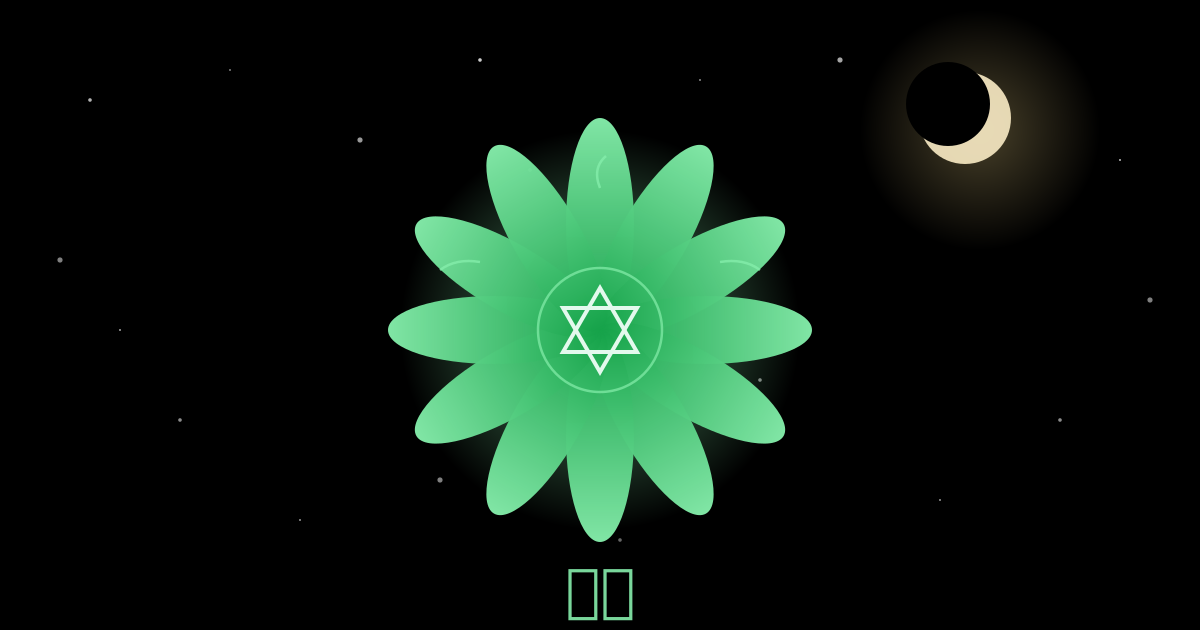
Sanskrit name: Anahata ("unstruck" — the sound not produced by impact). Location: the center of the chest, at the heart and the sternum. Color: green — the color of living things — with rose pink as its secondary, softer frequency. Element: air (vayu), the breath itself. Seed sound: YAM. Symbol: a twelve-petaled lotus containing a six-pointed star — two interlocking triangles, one pointing up, one pointing down — the union of opposites. Associated themes: love, compassion, forgiveness, acceptance, grief, generosity, and connection.
The symbolism is a philosophy compressed into geometry. The twelve petals represent the twelve qualities the tradition says a mature heart expresses: bliss, peace, harmony, love, understanding, clarity, purity, unity, compassion, kindness, forgiveness, and patience. They are not stages you graduate through; they are notes on the same chord, and the tradition holds that practicing any one of them — even mechanically, even while you do not feel it — gently tunes the rest. The six-pointed star at the center is the more startling emblem. Two triangles, one rising, one descending, locked together: masculine and feminine, giving and receiving, heaven and earth, the human and the divine. The heart, in this image, is not a chamber — it is a crossroads. Everything passes through it, and the tradition's claim is that nothing that passes through love leaves unchanged.
And then there is the name — unstruck. In the tradition's cosmology, every ordinary sound is made by collision: hands clap, sticks strike, vocal cords slap together. But the mystics claimed there is a sound behind all sound, heard only in deep stillness, that is produced by nothing hitting anything. They called it the anahata nada, the unstruck sound — the vibration of existence itself, audible to no ear but felt, they said, in the chest. Whether or not you accept the metaphysics, the poetry does real work: it tells you that love, in this framework, is not something you do to someone — a performance, a deal, a proof. It is something you tune to, the way you tune to a note already playing. The practices below are all, in different ways, attempts to get quiet enough to hear it.
Signs Your Heart Chakra May Need Attention
As with every chakra, "blocked" or "overactive" is symbolic language for patterns, not a diagnosis of anything. The heart framework offers a vocabulary for noticing how your relationship with love — given, received, and turned inward — is doing. Common themes the tradition associates with a guarded heart include:
The guarded heart: when love won't come in
- Difficulty trusting, even people who have earned it — waiting for the catch, scanning for the betrayal
- Holding grudges as identity: rehearsing old hurts years later, kept polished like heirlooms
- Emotional numbness — not sadness, but the flat gray of having muted everything to avoid feeling anything
- Jealousy framed as vigilance; generosity toward others that mysteriously never extends inward
- Keeping people at arm's length while privately aching for closeness — the push-pull pattern
- Grief that was never given its full season and instead went underground, surfacing as irritability or fatigue
- A secret belief that love must be earned through usefulness, beauty, or achievement — and revoked when you fail
The over-giving heart: when love won't stop
The heart has a shadow that runs in the opposite direction, and it is sneakier because it wears a halo. Tradition describes an overactive heart chakra as love curdled into self-erasure: giving that is secretly a contract, rescuing people who never asked, boundaries dissolved in the name of compassion, and the exhaustion of a heart that pours outward and forbids anything back in. The distinction the tradition draws is worth sitting with: love and self-sacrifice are not the same thing. Love has a center; sacrifice has a martyr. One is sustainable; the other is a slow leak that eventually leaves you with nothing to give — and resentment toward the people you emptied yourself for.
If either pattern feels familiar, the heart framework offers a compassionate reframe: the heart is not broken — it is protecting itself the only way it learned how. Most guarded hearts were trained into armor by experience: the betrayal, the abandonment, the grief that arrived before there were words for it. And if persistent difficulty trusting, grieving, or connecting is significantly affecting your daily life or relationships, please also speak with a qualified counselor or therapist — spiritual frameworks and professional support work best as allies, never as alternatives.
Why the Heart Sits at the Center
Anahata's position — fourth of seven, the exact middle — is the teaching, and the tradition is unusually explicit about it. The lower three chakras (root, sacral, solar plexus) build the personal self: I am safe, I feel, I choose. The upper three (throat, third eye, crown) build the transpersonal: I speak, I see, I belong to something larger. The heart is the bridge between the two — the place where the personal self, fully built, decides what to do with its strength. Without the heart, the lower chakras become self-interest and the upper chakras become escape. With the heart, survival becomes care, will becomes service, vision becomes wisdom. The center is not a rest stop between the two halves. It is the converter through which everything else becomes meaningful.
This also explains why the tradition pairs the heart with grief rather than only joy. Every other center has its shadow, but the heart's shadow is the most honest: you cannot love without exposing yourself to loss. The tradition does not treat grief as the failure of the heart — it treats grief as the heart doing its job. A heart that refuses to grieve is a heart that has quietly decided to stop loving, because the two are the same doorway. This is why so many of the tradition's heart practices are forgiveness practices. Forgiveness, in this framework, is not absolution and not forgetting; it is the deliberate reopening of the doorway after life has slammed it shut. The heart that can grieve and forgive is the heart that can keep loving — which is why the tradition calls Anahata not the chakra of romance but the chakra of resilience.
There is a final subtlety in the element. Air is the heart's element because the heart moves like weather: it changes, it circulates, it cannot be held in a jar. The tradition's breath practices for the heart are not about control — they are about letting the wind do what it does. Inhale: receive. Exhale: release. The grudge is held breath; the open heart is breathing normally. It is almost too simple to believe, and the tradition insists on it anyway: the doorway of the heart opens and closes with the lungs, and tending the breath is tending the love.
Heart Chakra Opening Practices
The forgiveness letter
The tradition's first prescription for Anahata is also the hardest: forgiveness as a practice, not a feeling. Write a letter to someone you have never forgiven — then do not send it. Say what happened, say what it cost you, say what you are choosing to release. The tradition is careful here: this is not about excusing what was done or reconciling with someone unsafe. It is about unhooking your own heart from the past. Some practitioners burn the letter; others keep it in a drawer as a record of the day they stopped paying rent on an old wound. The tradition's claim is that an unforgiven hurt is a closed fist, and a closed fist cannot hold anything else either.
Gratitude, on purpose
Three specific gratitudes a day — written, not just thought. The tradition treats this as heart-calisthenics: not the vague gratitude of a good mood but the deliberate kind, aimed at small, undeserved, specific things. The warmth of the coffee cup. The friend who texted back immediately. The body that carried you through the day without complaint. The tradition's observation is that the guarded heart is fluent in cataloging what is missing; gratitude is simply teaching it the other language. Over weeks, practitioners report the shift the tradition promises: the heart stops auditing and starts noticing.
Heart-opening breath
Stand or sit tall, interlace your fingers behind your back, and lift the chest toward the sky as you inhale deeply through the nose. Let the sternum rise, the shoulders roll back, the whole front of the body open like a door. Exhale slowly through the mouth with a sigh. Five breaths. The tradition treats the body's posture as the heart's weather: the hunched, folded-in chest is read as the body's way of guarding the center, and deliberately unfolding it is read as a signal — to the nervous system, to the habits, to the heart itself — that the guard is standing down. The tradition makes no medical claims; it is observing that the body that breathes fully tends to feel fully.
The hand-on-heart pause
When self-criticism starts its loop — the replay, the shame, the "how could I" — place your hand on your chest and say, silently, what you would say to a friend in the same situation. The tradition calls this self-compassion, and it treats it as the missing first step of every heart practice: the heart cannot open outward while it is at war inward. The practice takes thirty seconds. Its logic is the tradition's simplest teaching: the love you refuse yourself is the love you will be too empty to give anyone else. Start there.
Time in green
Anahata is green because green is the color of living things, and the tradition prescribes being among them: a walk under trees, ten minutes with bare feet on grass, tending a plant, watching leaves move. The tradition reads this as the heart remembering its element — air moving through living green — and its pace: growth is slow, seasons turn, nothing in nature hurries and nothing arrives late. For the over-giving heart especially, the tradition treats nature time as a recalibration: the trees do not apologize for taking sunlight, and neither, the framework suggests, should you.
Chant YAM
The tradition's sound practice for the heart: the seed syllable YAM, chanted on the exhale as a long, resonant "yummm," with the attention resting on the center of the chest. Some practitioners place a hand there to feel the vibration. The tradition treats chanting as tuning — not conjuring anything, simply resonating the body like a struck bell and noticing what the vibration touches. Pair it with the heart-opening breath above for the tradition's classic combination: posture opens the door, sound walks through it.
A 7-Day Heart Chakra Practice
A gentle week of softening the heart — steady, not forced:
- Day 1: Write three specific gratitudes. Aim small and undeserved — the smaller, the truer.
- Day 2: Five heart-opening breaths — hands interlaced behind the back, chest lifted, sigh on the exhale.
- Day 3: Write the forgiveness letter you will never send. Say what it cost you; choose to release it.
- Day 4: Ten minutes in green — a park, a garden, a single tree. Let the pace be nature's pace.
- Day 5: Chant YAM for five minutes, hand on your chest, feeling the vibration at the sternum.
- Day 6: Do one small kindness with no audience and no credit — given, not announced.
- Day 7: The hand-on-heart pause, three times through the day. Journal: what softened — and what is still guarding, and what might it need to feel safe enough to open?
Notice what none of these do: none of them demand that you feel loving. Each one simply creates the conditions — space in the chest, warmth in the attention, stillness in the noise — and lets the heart remember what it is. That is Anahata's whole method: not manufacturing love, but removing what was blocking the sound that was playing all along.
Living From the Heart: Integration
The tradition is clear that the goal is not sentimentality — the most open hearts are rarely the softest. They are the most honest. A balanced heart, in this framework, is not the absence of hurt but a changed relationship with it: it is felt, it is grieved, it is forgiven, and it does not get to vote on whether love continues. Less armoring, less rescuing, less keeping score. More of the true feeling, allowed its season, and more of the open hand — giving because there is enough, receiving because there is enough, forgiving because the fist was getting heavy.
Practitioners describe the long-term shift in plain, unglamorous terms: they apologize first. They stop rehearsing old arguments. They can hold someone else's pain without trying to fix it or flee it. They notice beauty faster — the light, the laugh, the small kindness — and they let it land instead of deflecting it. And the love that was supposed to be the whole point? It tends to show up as a side effect, the way warmth does from a fire: not as a performance to maintain, but as the natural temperature of a heart that has stopped guarding the door.
The heart's final lesson is also its first: love is not something you find — it is something you uncover. The twelve petals, the green lotus, the unstruck sound: none of them chase. They only insist, gently, that the center of you was built for connection — and that the doorway swings both ways, letting love out and letting the world in, the moment you are willing to stop holding it shut.
Frequently asked questions
What is the heart chakra?
The heart chakra (Anahata) is the fourth chakra, traditionally located at the center of the chest. Its name means "unstruck" — a sound made without two things striking together — and it represents love, compassion, forgiveness, and connection. Its color is green (sometimes rose pink), its element is air, and its symbol is a twelve-petaled lotus containing a six-pointed star formed by two interlocking triangles.
What are the signs of a blocked heart chakra?
Symbolically, a blocked heart chakra is described as guardedness — difficulty trusting, holding grudges, emotional numbness, jealousy, or keeping people at arm's length even while craving closeness. An overactive heart is associated with the opposite pattern: over-giving, poor boundaries, rescuing, and love expressed as control. These are symbolic patterns for self-reflection, not medical diagnoses.
How do you open the heart chakra?
Traditional and modern practices include a forgiveness ritual (writing and releasing old hurts), a daily gratitude practice, heart-opening breathing with the arms spread wide, self-compassion exercises like the hand-on-heart pause, spending time in nature, and chanting the seed sound YAM. The tradition also treats small everyday acts of kindness — given without keeping score — as heart-opening practice.
Why is the heart chakra in the middle of the seven chakras?
The heart is the fourth of seven chakras — the exact center — and the tradition reads that position as the teaching. Below it, the lower chakras govern survival, feeling, and will: the self. Above it, the upper chakras govern expression, vision, and spirit: the beyond. The heart is the meeting point where the personal becomes the transpersonal — where love turns the self outward toward the world.
Keep exploring

The 7 Chakras: Meanings, Colors & Balancing Guide
The 7 chakras explained: meanings, colors, signs of imbalance, and gentle balancing practices. A complete beginner-friendly guide to the chakra system.
Read the meaning →
Blocked Heart Chakra: Signs & How to Open It
Blocked heart chakra signs: difficulty trusting, guardedness, grudges, and emotional numbness. Learn what closes the heart and gentle practices to reopen it.
Read the meaning →
How to Balance Your Chakras: A Complete Routine
How to balance your chakras: a beginner routine with a 20-minute guided meditation, a 5-minute daily version, mantras, yoga poses, and a weekly focus.
Read the meaning →
Root Chakra Healing: Grounding Your Foundation
Root chakra healing: what Muladhara means, the signs it needs attention, and grounding practices — meditation, nature, routine, nourishment — for safety.
Read the meaning →