
Blocked Root Chakra: Signs & How to Heal It
There is a specific kind of unease that follows you everywhere. Not panic — something quieter and more exhausting. A hum of worry about money, about the future, about whether you are really okay. You double-check the locks, rehearse worst cases, work late to feel secure — and the security never quite arrives. In the language of the chakra system, this is the territory of the root chakra, Muladhara — the energy center of safety, belonging, and basic trust in life itself. When its themes feel shaky, we describe it as a “blocked” root chakra.
The root is the foundation of the entire chakra system. Every other center — creativity, power, love, expression, intuition, spirit — is built on top of it. A tree with deep roots can weather storms; a tree with shallow ones sways in every breeze. This guide explores the signs traditionally associated with a blocked root chakra, the life experiences that tend to shake the foundation, and gentle, practical grounding practices for rebuilding it — framed as spiritual self-care and self-reflection. Nothing here replaces professional support for anxiety or financial hardship; think of it as tending the inner soil while you handle the outer weather.
Muladhara: The Root Chakra in Depth
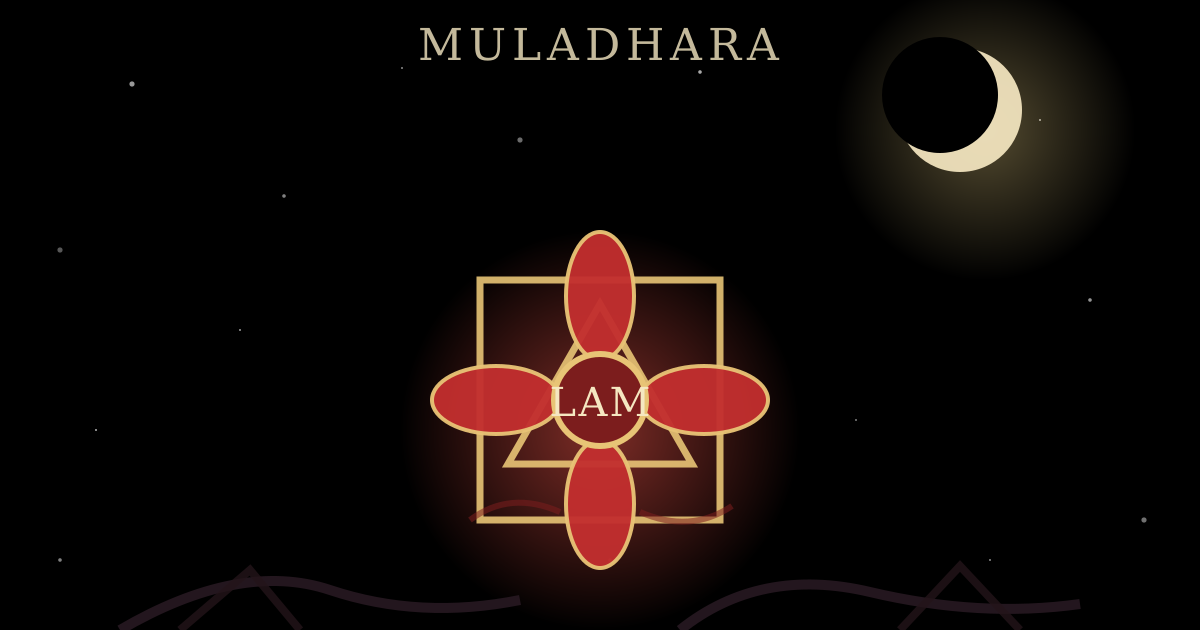
Sanskrit name: Muladhara (“root support” — mula = root, adhara = support or foundation). Location: the base of the spine, the pelvic floor. Color: red — the color of blood, earth, and survival. Element: earth. Seed mantra: LAM. Symbol: a four-petaled lotus containing a square and an inverted triangle. Themes: safety, security, survival, belonging, stability, home, money and material needs, trust in life, the right to exist and take up space.
The root chakra is the first chakra — the one that develops in earliest childhood, when we are learning whether the world is safe and whether our needs will be met. Its core question is the simplest one there is: Am I safe here? When the answer feels like yes, the system relaxes and everything above it can flourish. When the answer feels like maybe-not, energy gets stuck in survival mode — and we spend our days scanning for threats instead of living.
Signs of a Blocked Root Chakra
As always: “blocked” is symbolic language for life patterns, not a medical condition. These are the themes people commonly associate with an unsettled foundation:
In your mind
- Persistent low-grade anxiety — a background hum of worry with no clear source
- Worst-case thinking: rehearsing disasters that never happen, then feeling no relief when they don't
- Money worry spirals — checking balances compulsively, or avoiding looking at them entirely
- Scarcity thinking: “there will never be enough” applied to money, time, love, and opportunities
- An intense need for control — over plans, people, outcomes — because uncertainty feels like danger
- Difficulty feeling safe even when things are objectively fine, like waiting for the floor to drop
In your daily life
- Restlessness: an inability to relax, always doing, always bracing for the next thing
- Rigid routines — or the opposite: chaos with no rhythm, days that blur together
- Overworking to feel secure, then never feeling secure enough to stop
- Fear of change: staying in a draining job, city, or situation because the unknown feels worse
- Clutter that feels heavy, or hoarding tendencies — holding onto things “just in case”
- Home never quite feeling like home — a subtle sense of being a guest in your own life
- Difficulty sticking with decisions; second-guessing as a lifestyle
In your energy and body awareness
- Feeling ungrounded or spaced out — floaty, foggy, “not really here”
- A heaviness or sluggishness, like moving through wet sand
- Tension held in the legs, feet, or lower back — the body's way of bracing
- Exhaustion that sleep doesn't fix — the tiredness of a system stuck on alert
- Feeling disconnected from your body, living entirely in your head
- Craving heavy, comforting foods when uneasy — the classic “grounding through the stomach” pattern
If several of these resonate, take it gently. An unsettled root is not a personal failure — it is usually a reasonable response to an unreasonable stretch of life. Instability, scarcity, and upheaval teach the nervous system that safety is temporary. The practices below are about patiently teaching it something new: that steadiness can be rebuilt, one small reliable thing at a time.
What Blocks the Root? Common Foundation-Shakers
Understanding where the shakiness started often loosens it. Experiences people commonly link to root-chakra instability:
- Childhood instability — frequent moves, unpredictable caregivers, a home that didn't feel safe. The root forms early, and early turbulence echoes.
- Financial insecurity or a scarcity upbringing — growing up hearing “we can't afford it” as a constant refrain wires money to fear for decades.
- Survival scares — job loss, sudden debt, a medical bill, eviction threats. Even after the crisis passes, the body keeps flinching.
- Big life transitions — moving cities, immigration, becoming a parent, divorce, graduation. Every root gets pulled up before it can replant.
- Chronic neglect of physical needs — skimping on sleep, skipping meals, never resting. The body learns: my needs don't matter here.
- Living in “head mode” — months of pure thinking: screens, strategy, scrolling, planning, with almost no time spent in the body or in nature.
Naming the cause is not blaming the past — it is reading the map. And a note that matters: if anxiety is significantly affecting your daily life, please work with a qualified therapist or counselor. Grounding practices are a beautiful complement to professional support, not a substitute for it.
Grounding Practices for Healing the Root
Root healing is not dramatic — it is deliberately boring. Safety is built from repetition: the same bedtime, the same walk, the same meal. These practices work on that timeline.
Earth contact: bare feet on the ground
The oldest grounding practice there is. Stand or walk barefoot on grass, soil, sand, or stone — even a few minutes counts. Feel the temperature, the texture, the small unevennesses under your feet. This is not mysticism; it is attention moving downward, out of the spinning mind and into the body that is standing on solid ground. Gardeners have known this forever: hands in soil, feet on earth, and the worry quiets.
Build a rhythm: sleep, meals, routine
Nothing tells a shaky root “you are safe” like predictability. Pick a consistent wake time and bedtime — even on weekends. Eat meals at roughly the same hours. The root chakra runs on rhythm the way a baby runs on routine: when the world is predictable, the guard can stand down. Start absurdly small — one fixed anchor (say, lunch at noon) — and let steadiness compound.
Muladhara meditation with the LAM mantra
Sit comfortably with your spine straight and your sitting bones heavy on the chair or floor. Close your eyes and breathe into the base of your spine. Silently — or softly out loud — repeat the seed mantra LAM (pronounced “lahm”), letting the sound vibrate low in the body. Visualize a warm red glow at the base of your spine, like embers. Ten minutes is plenty. The mantra gives a busy mind one simple job, which is exactly what an anxious mind needs.
The tree-root visualization
A classic for a reason. Sit or stand, close your eyes, and imagine roots growing from the base of your spine and the soles of your feet, pushing down through the floor, through the soil, deep into the earth. Feel them spreading, thickening, anchoring you. With each exhale, let the roots grow a little deeper; with each inhale, draw up a warm, steady red energy. When you are done, wiggle your toes — a small signal to the body that you are back, and you are here.
Eat like you are rooting: grounding foods
Traditional associations favor root vegetables — beets, carrots, potatoes, sweet potatoes, parsnips — the foods that literally grow in the earth, plus warm, hearty, protein-rich meals. The ritual framing matters more than the menu: cook slowly, eat sitting down, without a screen. A warm bowl of soup eaten mindfully is a root-chakra practice. Skipping meals while running on caffeine is the opposite of one.
Practical grounding: tidy one corner, face one number
The root governs the material world — so material order calms it. Clear one surface, organize one drawer, or finally look at the bank balance you have been avoiding and make a simple plan. Outer order signals inner safety to a brain scanning for threats. This is also why budgeting belongs in a spiritual article: a written plan for money is one of the most direct “I am safe” messages you can send yourself.
Movement that meets the ground
Walk — especially in nature, especially without headphones sometimes. Squat, stomp, dance with heavy feet, do yoga poses that press the feet into the floor (mountain pose, warrior poses, child's pose). The root wakes up through the legs and feet. If your exercise is all screens and treadmills, add something where your body feels its own weight.
Crystals, color, and the color red
Traditional associations: red jasper (the classic grounding stone), hematite (steadiness, protection), garnet (vitality), and black tourmaline (energetic shielding). Carry one in a pocket, hold one during meditation, or place one by your front door as a symbol of a protected home. Wear red — even just red socks, hidden but present. Use these as ritual anchors: tangible reminders of your intention to feel safe, rooted, and at home in your own life.
What Healing Feels Like
People describe the shift in quiet, unglamorous terms — which is fitting, because the root is the least glamorous chakra. The worry hum gets quieter. You notice you are breathing slower without trying. Money thoughts lose their electric charge; the balance is just a number again. You start keeping small promises to yourself — the walk happens, the bedtime holds — and each kept promise is a brick in the foundation. Home starts feeling like home. Change stops feeling like a threat and starts feeling like weather: sometimes stormy, always survivable. And one ordinary Tuesday, you catch yourself fully relaxed on the couch, doing absolutely nothing, feeling completely fine about it. That is the root, healed: the radical experience of being okay right here.
Closing: Come Home to Yourself
The root chakra asks the simplest question and offers the deepest answer. You do not heal it by ascending anywhere — you heal it by descending: into your body, into your routines, into the unglamorous daily work of taking care of a human animal. Eat warm food. Sleep at the same hour. Stand on the earth. Keep one small promise. The foundation was never meant to be exciting; it was meant to hold. Tend it patiently, and everything you build on top of it — your creativity, your love, your voice, your vision — will finally have somewhere solid to stand.
Frequently asked questions
What are the signs of a blocked root chakra?
Traditionally associated signs include persistent low-grade anxiety, worry spirals about money and security, restlessness or inability to relax, feeling ungrounded or spaced out, rigidity and fear of change, overworking to feel safe, and a sense of not quite belonging anywhere. These are emotional and lifestyle patterns described in symbolic language — not medical symptoms.
What causes a blocked root chakra?
Common experiences include childhood instability or frequent moves, financial insecurity or a scarcity upbringing, survival scares like job loss or sudden expenses, big life transitions, chronic neglect of physical needs (sleep, food, rest), and long stretches of living mostly in the head — all thinking, no body.
How do you heal a blocked root chakra?
Traditional grounding practices include time in nature with bare feet on the earth, building a steady daily rhythm (regular sleep and meals), Muladhara meditation with the LAM seed mantra, tree-root visualizations, nourishing grounding meals, tidying your space and finances, and movement that meets the ground — walking, squats, dancing. Healing is framed as rebuilding a felt sense of safety, one small reliable habit at a time.
Which crystals and foods are associated with the root chakra?
Red jasper is the classic grounding stone; hematite is associated with steadiness and protection; garnet with vitality; black tourmaline with energetic shielding. Traditional grounding foods include root vegetables — beets, carrots, potatoes, sweet potatoes — plus warm, hearty, protein-rich meals. People use these as ritual anchors for their intention to feel safe and rooted.
Keep exploring

The 7 Chakras: Meanings, Colors & Balancing Guide
The 7 chakras explained: meanings, colors, signs of imbalance, and gentle balancing practices. A complete beginner-friendly guide to the chakra system.
Read the meaning →
Root Chakra Healing: Grounding Your Foundation
Root chakra healing: what Muladhara means, the signs it needs attention, and grounding practices — meditation, nature, routine, nourishment — for safety.
Read the meaning →
How to Balance Your Chakras: A Complete Routine
How to balance your chakras: a beginner routine with a 20-minute guided meditation, a 5-minute daily version, mantras, yoga poses, and a weekly focus.
Read the meaning →
How to Manifest Money: The Honest Guide
How to manifest money, honestly: clearing scarcity blocks, getting specific about wealth goals, embodiment practices, the best techniques, and aligned financial action.
Read the meaning →