
Sacral Chakra Meaning: Svadhisthana & Creative Flow
There is a particular kind of aliveness that has nothing to do with achievement. It is the way music moves through you on a good evening, the unselfconscious laughter at a joke you did not expect, the satisfaction of biting into something delicious. In the chakra tradition, that aliveness has a name and an address: Svadhisthana, the sacral chakra, the orange center just below the navel where pleasure, creativity, emotion, and desire all flow from the same spring.
And there is a particular kind of flatness, too — when the food tastes like nothing, the jokes fall flat, the hobbies gather dust, and life runs on autopilot. The tradition reads that flatness symbolically as a sacral that has gone quiet: not broken, not diseased, simply dammed. This guide explores what the sacral chakra means, how a sluggish or overactive sacral shows up in ordinary life, and the gentle, playful practices tradition associates with restoring flow — framed as contemplative self-care and creative exploration, never as medical advice or guaranteed results.
Svadhisthana: The Sacral Chakra in Depth
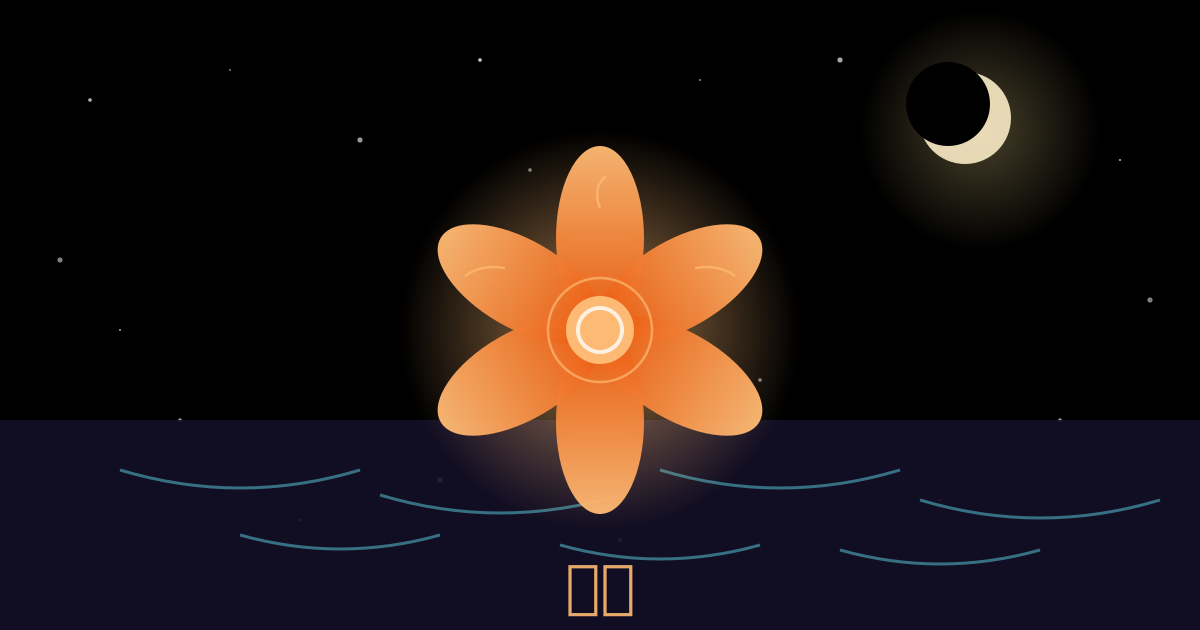
Sanskrit name: Svadhisthana (“the dwelling place of the self,” or more poetically, “sweetness”). Location: the pelvic bowl, just below the navel. Color: orange — the color of sunrise, ripe fruit, and fire at its friendliest. Element: water. Seed sound: VAM. Symbol: a six-petaled lotus cradling a crescent moon. Associated themes: pleasure, creativity, emotion, sensuality, desire, play, adaptability, and the give-and-take of intimate relationships.
The symbolism is doing philosophical work at every turn. Water is the element because emotions behave like water: they are meant to move. Try to dam them and they stagnate or flood; let them flow and they nourish everything downstream. The crescent moon in the symbol is the lunar, tidal, cyclical quality of feeling — desire waxes and wanes, moods have tides, and fighting the cycle is like arguing with the ocean. Even the lotus matters: it blooms on water, rooted in mud, turning the murkiest depths into something beautiful — which is as good a description of the creative process as anyone has offered.
There is a modern psychological echo worth noting. Researchers studying creativity consistently find that the best ideas arrive in relaxed, playful states — in the shower, on a walk, in the loose associative drift before sleep — not in white-knuckled concentration. Mammals learn through play; humans are no exception. The sacral tradition arrived at the same conclusion centuries earlier: the creative current flows through the part of you that knows how to enjoy things. A life with no pleasure in it is, creatively speaking, a dry riverbed.
Signs Your Sacral Chakra May Need Attention
As with every chakra, “blocked” or “overactive” is symbolic language for patterns, not a diagnosis of anything. The sacral framework offers a vocabulary for noticing how your relationship with pleasure, feeling, and flow is doing. Common themes the tradition associates with a sluggish sacral include:
Emotional and creative patterns
- A gray, flattened quality to life — things that used to delight you now feel like nothing
- Creativity gone dry: no urge to make, imagine, or play, and no particular feeling about its absence
- Guilt or suspicion around enjoyment, as if pleasure needs to be earned or justified
- Running on “I'm fine” autopilot — difficulty naming what you actually feel
- Trouble receiving: deflecting compliments, refusing help, feeling awkward being cared for
- Sensual disconnection — living entirely from the neck up, barely noticing your body
- A routine so rigid it never varies, and a quiet dread of anything spontaneous
The overactive sacral: when flow becomes flood
The sacral has a shadow, and it runs in the opposite direction. Tradition describes an overactive sacral as the endless chase for stimulation: emotional storms that sweep up everyone nearby, drama treated as entertainment, relationships consumed like fuel, and compulsive consumption — food, shopping, scrolling — used as feeling-substitutes. The distinction the tradition draws is sharp and useful: indulgence is not the same as pleasure. Pleasure nourishes; compulsion just postpones the numbness. One fills the cup; the other knocks it over and reaches for another.
If either pattern feels familiar, the sacral framework offers a compassionate reframe: a dammed river is still a river. The current is there; it is only waiting for an outlet. And if persistent numbness, emotional volatility, or loss of enjoyment is significantly affecting your daily life, please also speak with a qualified counselor or therapist — spiritual frameworks and professional support work best as allies, never as alternatives.
The Psychology of Pleasure: Why the Sacral Comes Second
The sacral's position — second, directly above the root — is the teaching. The root chakra governs safety: food, shelter, survival, the sense that the ground will hold. Only when safety is reasonably established does the tradition say the sacral can open. The logic is disarmingly practical: you cannot play while you are bracing for impact. Pleasure requires a nervous system that believes, at least provisionally, that it is okay to relax. This is why periods of stress so reliably flatten joy — it is not a character flaw; it is the system's priorities working as designed.
This reframes pleasure from luxury to infrastructure. In the tradition's view, the person who guards every moment of enjoyment as if it were stolen time is not being disciplined — they are starving the very current that feeds creativity, connection, and resilience. The cultures that moralize pleasure as frivolous or suspect tend to produce not virtue but a peculiar brittleness: people who cannot rest, cannot play, and eventually cannot feel. The sacral teaching pushes back gently: enjoyment is not the opposite of a serious life — it is what keeps a serious life human.
There is a final subtlety in the sequencing. The root says “I survive.” The sacral says “I feel.” Only later do the higher chakras get to “I do,” “I love,” “I speak,” “I see,” and “I know.” Feeling comes before doing in this system, which reverses the modern instinct to earn the right to enjoy life after the work is done. The tradition's quiet challenge: the work is never done — so when, exactly, were you planning to feel alive?
Sacral Chakra Balancing Practices
Move your hips, playfully
The sacral lives in the pelvis, and the tradition treats the body as the front door. The prescription is not athletic — it is playful. Dance in your kitchen to one song with nobody watching. Trace slow figure-eights with your hips. Try gentle hip-opening stretches, walking with a sway, or swaying like seaweed in water. The only rule: it must feel like play, not performance. The moment movement becomes a workout to optimize, it has left sacral territory. Silly is not the enemy of this practice — silly is the practice.
Get in (or near) water
Water is the sacral's element, and the tradition prescribes it literally. Take a long bath and treat it as a ritual — warm water, something that smells good, no phone. Swim, wade, walk beside a river or the sea. No ocean nearby? Even washing your hands slowly, feeling the temperature change, counts in the tradition's generous accounting. The idea is to remind the body what flow feels like: yielding, buoyant, held. People who live far from water are advised to bring water to them — a bowl of it on the desk, a fountain's murmur, rain sounds while falling asleep.
Create something useless
This is the most radical practice on the list, because it attacks the productivity reflex directly. Draw something badly. Sing in the car with the windows up. Arrange stones, doodle in margins, bake something experimental, write a poem you will never show anyone. The tradition is emphatic: the product does not matter; the making does. A sacral starved of creative play does not need a masterpiece — it needs evidence that making things can be joyful without being useful. Give it that evidence weekly and watch what returns.
Feed the senses
The sacral is the sensual chakra, and the tradition prescribes deliberate sensory pleasure — oranges and mangoes, the sacral's signature colors made edible, along with sweet potatoes, carrots, and anything that tastes like sunshine. But the practice is wider than food: textures worth touching, music worth closing your eyes for, sunlight on skin, scents that stop you mid-step. The key word is deliberate. Pleasure on autopilot — scrolling snacks, background music — feeds the body while the mind is elsewhere. Sacral practice means showing up for the sensation: tasting the orange as if it were the first one.
Name the feeling
Emotions behave like water, and unnamed water goes murky. The practice is disarmingly simple: several times a day, pause and ask, “What am I actually feeling right now?” — then answer in plain words, no editing. Sad and tired. Restless and hopeful. Flat and a little guilty about being flat. Journaling works, but so does a two-minute voice note to yourself. The tradition holds that feelings named lose their power to drive from the shadows; modern therapists say something strikingly similar. You cannot work with a current you refuse to look at.
Practice honest yes and honest no
The sacral governs the give-and-take of relationships, and its signature discipline is the boundary. A yes said from guilt is not generosity — it is a loan the resentment will collect later. A no that collapses under pressure is not kindness — it is self-abandonment with good manners. The practice: notice where your yes is hollow and your no is silent, and start adjusting in small doses. Desire without apology, refusal without guilt. The tradition's claim is that clean boundaries do not restrict flow — they channel it, the way riverbanks make a river a river instead of a flood.
A 7-Day Sacral Flow Practice
A gentle week of reopening the current — keep it playful, not perfect:
- Day 1: Dance to three songs in your kitchen. Nobody watches. Move however feels ridiculous and good.
- Day 2: Take the ritual bath (or a long shower done slowly). One candle, one good scent, no phone.
- Day 3: Make something useless — a doodle, a playlist, a weird sandwich. Show no one. Enjoy it anyway.
- Day 4: Eat one orange (or mango, or peach) with full attention. Notice the color, the smell, the juice. Really notice.
- Day 5: Do the feeling check-in three times today. Write each answer in plain words, no judgment.
- Day 6: Say one honest no — small and kind — to something you would normally agree to resentfully.
- Day 7: Spend 20 minutes near water: a river, the sea, a fountain, or rain on a window. Watch it move. Journal: when did I feel most alive this week?
Notice what none of these do: none of them force joy. Each one simply removes an obstruction — stiffness, hurry, numbness, guilt — and lets the current remember its own direction. That is the sacral's whole method: not manufacturing flow, but unblocking it.
Living From the Sacral: Integration
The tradition is clear that the goal is not permanent bliss — flow is not a constant high. Water does not only sparkle; it also pools, drips, freezes, and runs muddy after storms. A balanced sacral, in this framework, is not the absence of difficult feelings but a changed relationship with all feelings: they arrive, they move, they pass. Less numbness on the flat days. Less drowning on the stormy ones. A quicker return to the current.
Practitioners describe the long-term shift in plain, unglamorous terms: food tastes like something again. Music reaches them. They laugh before they decide to. They can want things — a trip, a touch, a Tuesday afternoon off — without the want curdling into guilt or compulsion. And the creativity that was supposed to be the whole point? It tends to show up as a side effect, uninvited, the way it always did in childhood: not as a project to complete, but as the natural overflow of a life that feels like living.
The sacral's final lesson is also its first: you are allowed to enjoy being alive. Not after the work is done. Not once you have earned it. The river does not ask permission to flow — it only asks that you stop damming it. Everything else is commentary.
Frequently asked questions
What is the sacral chakra?
The sacral chakra (Svadhisthana) is the second chakra, traditionally located just below the navel in the pelvic bowl. Its name is often translated as "the dwelling place of the self" or "sweetness," and it represents pleasure, creativity, emotional flow, sensuality, and the way we relate to others. Its color is orange, its element is water, and its symbol is a six-petaled lotus containing a crescent moon.
What are the signs of a blocked sacral chakra?
Symbolically, a sluggish sacral is described as creative numbness — life feeling flat or gray, guilt around enjoyment, difficulty receiving compliments or help, emotional disconnection, and a routine that never varies. An overactive sacral is associated with the opposite pattern: chasing stimulation, emotional volatility, drama-seeking, and blurry boundaries in relationships. These are symbolic patterns for self-reflection, not medical diagnoses.
How do you balance the sacral chakra?
Traditional and modern practices include moving the body with playfulness (dance, hip-opening movement), spending time in or near water, making something purely for fun with no audience, feeding the senses (orange foods, sunlight, textures, music), naming emotions honestly through journaling, and practicing clear boundaries — honest yeses and guilt-free nos.
What does the sacral chakra govern in relationships?
In the symbolic framework, the sacral governs the emotional current between people: attraction and desire, vulnerability and intimacy, the give-and-take of affection, and how we handle longing and rejection. Tradition holds that a balanced sacral shows up as the ability to enjoy closeness without losing yourself in it — receiving as easily as you give, and wanting without clinging.
Keep exploring

The 7 Chakras: Meanings, Colors & Balancing Guide
The 7 chakras explained: meanings, colors, signs of imbalance, and gentle balancing practices. A complete beginner-friendly guide to the chakra system.
Read the meaning →
Root Chakra Healing: Grounding Your Foundation
Root chakra healing: what Muladhara means, the signs it needs attention, and grounding practices — meditation, nature, routine, nourishment — for safety.
Read the meaning →
How to Balance Your Chakras: A Complete Routine
How to balance your chakras: a beginner routine with a 20-minute guided meditation, a 5-minute daily version, mantras, yoga poses, and a weekly focus.
Read the meaning →
What Does It Mean to Dream About Water?
Water in dreams mirrors your emotional state. Discover what dreaming about water means — calm seas, floods, drowning — and how each reflects feelings.
Read the meaning →