
Solar Plexus Chakra Meaning: Manipura & Personal Power
Think of the last time you did something genuinely brave. Not dramatic-brave — ordinary-brave: raising your hand with the unpopular opinion, applying for the job you were not sure you were qualified for, telling someone what you actually needed. In the chakra tradition, that quiet surge of self-direction has a name and an address: Manipura, the solar plexus chakra, the golden fire in the upper belly where wanting turns into willing, and willing turns into doing.
And think of the opposite feeling — the days when you seem to have misplaced yourself. When every decision feels like too much, when you agree to things you do not want, when your own opinion goes strangely quiet the moment it matters. The tradition reads that shrinking as symbolic language for a solar plexus that has dimmed: not broken, not weak, simply banked like a fire with too little air. This guide explores what the solar plexus chakra means, how a dimmed or overactive solar plexus shows up in everyday life, and the gentle, practical practices the tradition associates with rebuilding self-trust and personal power — framed as contemplative self-care and self-reflection, never as medical advice or guaranteed outcomes.
Manipura: The Solar Plexus Chakra in Depth
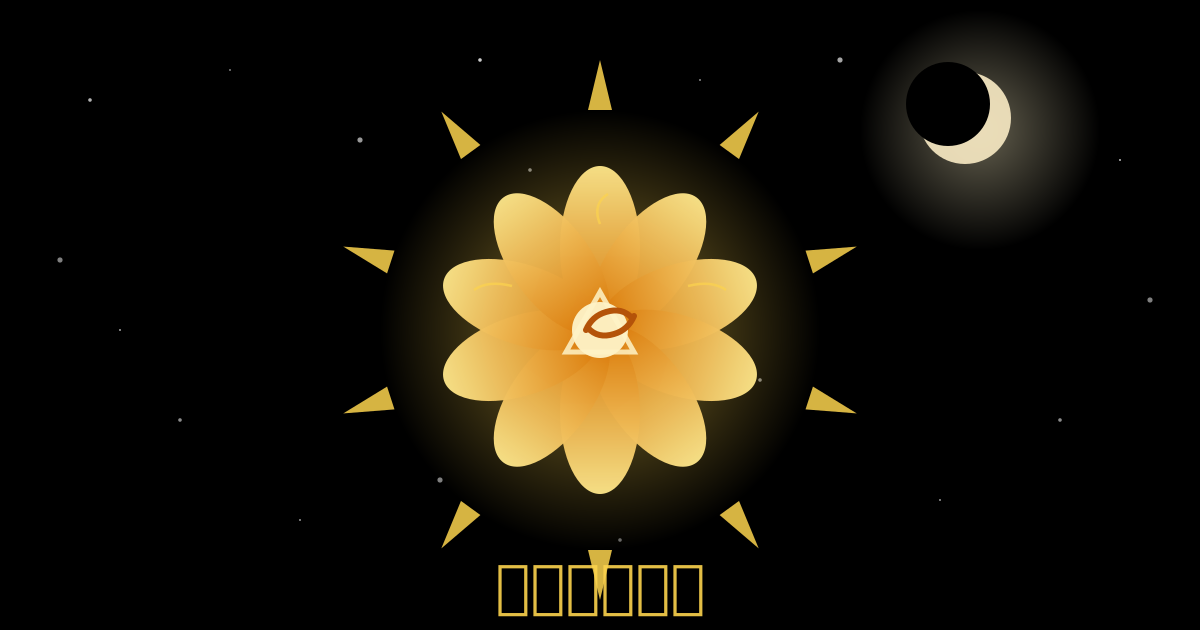
Sanskrit name: Manipura (“lustrous gem” or “city of jewels”). Location: the upper belly, around the navel and the solar plexus — the network of nerves behind the stomach. Color: yellow — the color of noon sunlight, candle flame, and ripening wheat. Element: fire. Seed sound: RAM. Symbol: a ten-petaled lotus holding a downward-pointing triangle, with the ram as its animal — the creature that butts forward, no matter the obstacle. Associated themes: personal power, willpower, confidence, self-esteem, autonomy, decision-making, and the drive to act.
The symbolism is doing philosophical work at every turn. Fire is the element because this chakra is about transformation: fire takes what it touches and turns it into energy, light, and ash. The solar plexus is where the raw materials of the lower chakras — the root's safety, the sacral's feeling — get converted into action. Nothing in your life changes until something is burned: the old story about what you are allowed to want, the comfort of indecision, the warmth of other people's expectations. The tradition's image is of a furnace, and the question it poses is blunt: what are you feeding it?
The ram matters too, and so does the triangle pointing down. The triangle is fire's geometric signature in the tradition, and its downward point is the directive: take the high, abstract idea and bring it down into the world. Vision without action is the specialty of other chakras; Manipura is where the vision gets its hands. And the ram — the animal that lowers its head and moves forward — is the tradition's reminder that willpower is rarely elegant. It is stubborn. It butts. It keeps going anyway.
There is a modern psychological echo worth noting. Researchers studying self-efficacy — the belief that you can influence outcomes — consistently find that it predicts achievement, persistence, and resilience more reliably than talent does. People who believe their actions matter act; people who act get results; results reinforce the belief. It is a flywheel, and it spins in both directions. The tradition arrived at the same conclusion centuries earlier and gave it a body part: the solar plexus is the felt sense that you count. Everything else — ambition, boundaries, change — is downstream of that single conviction.
Signs Your Solar Plexus May Need Attention
As with every chakra, “blocked” or “overactive” is symbolic language for patterns, not a diagnosis of anything. The solar plexus framework offers a vocabulary for noticing how your relationship with power — your own power — is doing. Common themes the tradition associates with a dimmed solar plexus include:
The dimmed solar plexus: when the fire banks low
- Chronic self-doubt — second-guessing decisions long after they are made, or avoiding decisions entirely
- Feeling like a spectator in your own life, watching events happen rather than steering them
- People-pleasing as a default: agreeing first, resenting later, and calling it kindness
- A shrunken sense of permission — feeling small in rooms, meetings, and relationships
- Difficulty saying what you want, even to yourself, even in a journal nobody will read
- Starting things without finishing them — enthusiasm that evaporates at the first obstacle
- A vague, persistent tiredness that rest does not fix, as if the will itself were exhausted
The overactive solar plexus: when fire becomes wildfire
The solar plexus has a shadow, and it runs in the opposite direction. Tradition describes an overactive solar plexus as power curdling into control: needing to be right more than needing to connect, micromanaging everyone within reach, anger as the default tool for getting things done, and a competitive edge that turns even friendships into contests. The distinction the tradition draws is sharp and useful: power and control are not the same thing. Power moves you forward; control pins everyone else down. One is the sun; the other is a brush fire.
If either pattern feels familiar, the solar plexus framework offers a compassionate reframe: a banked fire is still a fire. The ember is there; it is only waiting for air. And if persistent self-doubt, exhaustion, or patterns of anger and control are significantly affecting your daily life, please also speak with a qualified counselor or therapist — spiritual frameworks and professional support work best as allies, never as alternatives.
The Fire of Transformation: Why the Solar Plexus Comes Third
The solar plexus's position — third, directly above the sacral — is the teaching. The root governs safety: the ground must hold. The sacral governs feeling: the current must flow. Only then, the tradition says, can the third chakra do its work: deciding and doing. The sequence is disarmingly practical. You cannot act with confidence while bracing for danger (the root's domain), and you cannot will anything clearly while your feelings are dammed or chaotic (the sacral's domain). Willpower that skips these steps is not strength — it is strain, and strain burns out.
This reframes self-esteem from vanity to infrastructure. In the tradition's view, the person who treats confidence as arrogance and ambition as greed is not being humble — they are starving the very furnace that converts feeling into change. And the cultures that moralize self-assertion as selfish tend to produce not kindness but a peculiar passivity: people who cannot decide, cannot choose, and eventually cannot say what they want from a life. The Manipura teaching pushes back gently: wanting things and moving toward them is not selfishness — it is how a self comes into being.
There is a final subtlety in the sequencing. The root says “I survive.” The sacral says “I feel.” The solar plexus says “I can.” Only later do the higher chakras get to “I love,” “I speak,” “I see,” and “I know.” Notice the progression: love and truth arrive after agency, not before it. The tradition's quiet challenge to the self-effacing: how do you expect to love well or speak truthfully from a self that never learned to want anything?
Solar Plexus Balancing Practices
Stand in the sun
The solar plexus is the sun chakra, and the tradition prescribes the literal sun. Step outside and let morning light land on your face and belly — no phone, no podcast, just the warmth. Open curtains wide. Eat lunch on the steps. People who live through long, dark winters are advised to be deliberate about light: the bright lamp in the morning, the fire in the hearth, even the golden candle on the desk. The tradition's logic is analogical and uncomplicated: the outer fire reminds the inner fire what it is for.
Move your core
The solar plexus lives in the upper belly, and the tradition treats the body as the front door. The prescription here is not playful, like the sacral's — it is strong. Crunches, planks, boat pose, brisk walking with an upright spine. The tradition is not chasing fitness; it is chasing the felt experience of holding yourself up from your own center. Stand tall and breathe into the belly, and notice how posture alone changes the interior weather. A collapsed chest is a collapsed will, as far as this framework is concerned — so begin with the chest.
Keep small promises
This is the most psychologically precise practice on the list, and the tradition arrived at it long before the research did. Self-trust, the framework holds, is rebuilt the way any trust is rebuilt: through kept promises, kept small. Make one tiny commitment today — make the bed, answer the email, take the walk — and keep it. Then another tomorrow. Each kept promise is a small log on the fire; each broken one is a splash of water. The tradition's counsel is to set the bar embarrassingly low at first. The goal is not productivity. The goal is becoming someone you can count on — starting with yourself.
Set one boundary
The solar plexus is the seat of the autonomous self, and autonomy's signature move is the boundary. Pick one small one: decline one invitation you would normally accept with dread, end one meeting on time, say “let me think about it” instead of the automatic yes. The tradition distinguishes boundaries from battles — a boundary is not an argument won; it is a line drawn calmly, once. Each one held is evidence, entered into the body's ledger, that your will carries weight. Over time the ledger becomes confidence, and confidence becomes the freedom to want bigger things.
Keep a wins journal
A dimmed solar plexus has a biased memory: it archives every failure in high resolution and misplaces the wins. The corrective, in this framework, is deliberate: write down three things you did well today — handled, finished, faced, survived. Not grand achievements; ordinary competence counts, because ordinary competence is what the will is made of. Read the list back weekly. The tradition's claim is not mystical: attention is a fire-stoker, and what you attend to grows. Attend to evidence of your own capability, and the memory bias begins to shift.
Breathe fire
The tradition's signature breath practice for Manipura is kapalabhati — short, sharp exhales driven by the belly, like bellows stoking a forge. Sit upright, take a full breath, then exhale in quick pulses from the lower belly while the inhale happens on its own. Start with ten pulses; build slowly over weeks. The tradition treats this as direct stoking of the inner fire — heat, aliveness, resolve. A caution in the tradition's own spirit: keep it gentle, and skip it entirely if you are pregnant, have high blood pressure, or feel lightheaded. Fire is a good servant and a bad master, inside the body as well as out.
A 7-Day Solar Plexus Practice
A gentle week of stoking the inner fire — keep it steady, not heroic:
- Day 1: Stand in morning sunlight for five minutes, hand on your upper belly, and set one intention aloud: “Today I will ___.”
- Day 2: Make one small promise and keep it — the smaller the better. Write it down; check it off.
- Day 3: Do five minutes of core movement — planks, boat pose, or slow crunches. Notice the burn and stay friendly with it.
- Day 4: Set one small boundary — one honest “no,” one meeting ended on time, one request redirected. Keep it calm.
- Day 5: Write down three wins from the past week, however ordinary. Read them back slowly.
- Day 6: Practice the fire breath — ten gentle pulses of kapalabhati, or simply ten strong belly exhales through the nose.
- Day 7: Make one decision you have been avoiding — small or large — and act on it before the day ends. Journal: what did it feel like to choose?
Notice what none of these do: none of them force confidence. Each one simply feeds the fire — light, strength, trust, heat — and lets it remember its own nature. That is Manipura's whole method: not manufacturing power, but stoking it.
Living From the Solar Plexus: Integration
The tradition is clear that the goal is not invincibility — fire is not a constant blaze. It flares, it settles, it warms, it waits. A balanced solar plexus, in this framework, is not the absence of doubt but a changed relationship with doubt: it visits, it does not govern. You act despite it, and the acting dissolves it. Less shrinking on the hard days. Less steamrolling when things go your way. A steadier hand on your own direction.
Practitioners describe the long-term shift in plain, unglamorous terms: they decide faster. They ask for what they want without rehearsing the apology first. They can hold a boundary without the guilt hangover, and they can be wrong without the shame spiral. And the confidence that was supposed to be the whole point? It tends to show up as a side effect, uninvited, the way strength does: not as armor to wear, but as the quiet knowledge that whatever comes, you will meet it from your own center.
The solar plexus's final lesson is also its first: you are allowed to want things — and to go after them. Not after you have earned the right. Not once everyone approves. The fire does not ask permission to burn — it only asks for fuel and air. Everything else is commentary.
Frequently asked questions
What is the solar plexus chakra?
The solar plexus chakra (Manipura) is the third chakra, traditionally located in the upper belly, around the navel and the solar plexus. Its name is often translated as "lustrous gem" or "city of jewels," and it represents personal power, confidence, willpower, self-esteem, and the capacity to take action. Its color is yellow, its element is fire, and its symbol is a ten-petaled lotus containing a downward-pointing triangle.
What are the signs of a blocked solar plexus chakra?
Symbolically, a sluggish solar plexus is described as a dimmed sense of personal power — chronic self-doubt, difficulty making decisions, feeling like a spectator in your own life, people-pleasing, and a general sense of being small or invisible. An overactive solar plexus is associated with the opposite pattern: controlling behavior, needing to be right, anger as a default tool, and steamrolling others. These are symbolic patterns for self-reflection, not medical diagnoses.
How do you balance the solar plexus chakra?
Traditional and modern practices include sun exposure and warmth, core-strengthening movement, finishing small commitments to rebuild self-trust, setting one clear boundary at a time, journaling on personal strengths and past wins, and breath practices that stoke the body's sense of inner heat and aliveness.
What does the solar plexus chakra have to do with confidence?
In the symbolic framework, the solar plexus is where raw feeling turns into action — it is the seat of the personal will. The tradition holds that confidence is not a personality trait you are born with but a capacity you cultivate: the willingness to want something, decide on it, and act. Practices that rebuild trust in your own judgment and follow-through are what the tradition associates with a strong solar plexus.
Keep exploring
The 7 Chakras: Meanings, Colors & Balancing Guide
The 7 chakras explained: meanings, colors, signs of imbalance, and gentle balancing practices. A complete beginner-friendly guide to the chakra system.
Read the meaning →
Root Chakra Healing: Grounding Your Foundation
Root chakra healing: what Muladhara means, the signs it needs attention, and grounding practices — meditation, nature, routine, nourishment — for safety.
Read the meaning →
Sacral Chakra Meaning: Svadhisthana & Creative Flow
Sacral chakra meaning: what Svadhisthana represents — pleasure, creativity, and emotional flow — plus the symbolic signs it needs attention and gentle practices to restore balance.
Read the meaning →
How to Balance Your Chakras: A Complete Routine
How to balance your chakras: a beginner routine with a 20-minute guided meditation, a 5-minute daily version, mantras, yoga poses, and a weekly focus.
Read the meaning →