
Element Compatibility: Fire, Earth, Air & Water Sign Matches Explained
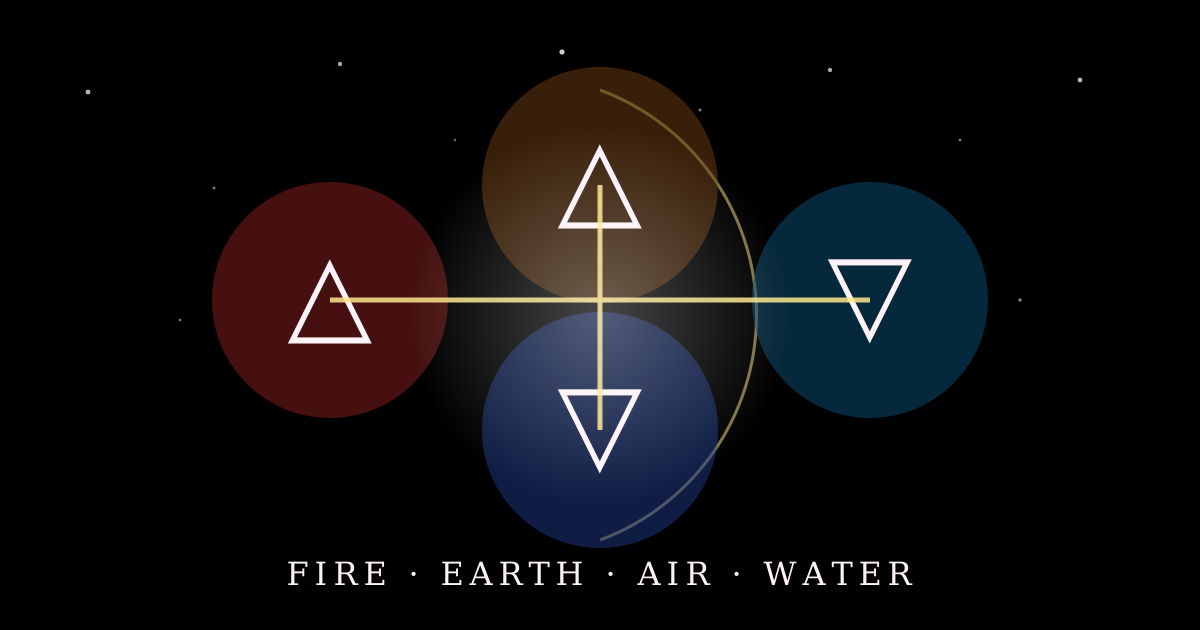
Ask an astrologer why two people click instantly while another two argue about everything from the thermostat to the holiday budget, and the answer often starts with the elements. Before the signs, before the planets, before the houses, the zodiac divides into four basic natures: fire burns, earth builds, air thinks, and water feels. Every sign belongs to one of them, and every person carries a mix — a Sun element, a Moon element, a rising element, and more. Element compatibility is the simplest layer of relationship astrology, and sometimes the most honest: it describes the climate between two people before a single word is spoken.
This is not a verdict on any couple. It is a lens, offered for entertainment and reflection, for understanding why one pairing feels like a tailwind and another feels like weather you have to dress for. A fire-water couple can last fifty years; a fire-air couple can still fall apart. What the elements explain is the default setting — what comes naturally, what takes effort, and what each partner can teach the other.
The Four Elements at a Glance
Fire signs — Aries, Leo, Sagittarius — are the zodiac's spark. They move fast, feel big, and want life to be vivid. In love, fire is direct, warm, and expressive: it says what it wants, shows what it feels, and would rather have a loud honest fight than a quiet polite distance. Fire's gift to a relationship is aliveness; its shadow is impatience, the tendency to treat a partner's slower pace as a lack of passion.
Earth signs — Taurus, Virgo, Capricorn — are the zodiac's ground. They move deliberately, build carefully, and want life to be real. In love, earth is loyal, practical, and physical: it shows affection through kept promises, cooked meals, and a home that works. Earth's gift is endurance; its shadow is rigidity, the tendency to treat a partner's need for change as a threat to stability.
Air signs — Gemini, Libra, Aquarius — are the zodiac's breeze. They move mentally, connect socially, and want life to be interesting. In love, air is curious, communicative, and fair-minded: it wants a partner who is also a conversation, a collaborator, and a friend. Air's gift is perspective; its shadow is detachment, the tendency to talk about feelings instead of feeling them.
Water signs — Cancer, Scorpio, Pisces — are the zodiac's depth. They move emotionally, bond intensely, and want life to be meaningful. In love, water is tender, intuitive, and all-in: it remembers what you said last month, senses what you are not saying, and commits with its whole heart. Water's gift is intimacy; its shadow is overwhelm, the tendency to treat a partner's independence as rejection.
Knowing your own element mix is the first step. Look up your Sun, Moon, and rising signs: the element that repeats is your dominant climate, and the element that is missing often describes what you seek — or struggle with — in a partner. A person with no fire in their chart may be drawn to fire partners for their spark; a person with no water may find water partners both fascinating and exhausting.
Same-Element Matches: Instant Recognition
Two fire signs together feel like a bonfire: immediate warmth, shared enthusiasm, and a pace both partners recognize. Two earth signs feel like a well-built house: practical, steady, and quietly affectionate. Two air signs feel like a great conversation that never ends: witty, curious, and easy. Two water signs feel like a deep tide: intuitive, tender, and emotionally fluent from day one.
The strength of a same-element match is mutual understanding without translation. Neither partner has to explain why they need what they need — the fire partner already knows why the other fire partner wants the trip, the earth partner already knows why the other earth partner wants the budget, the air partner already knows why the other air partner needs the debate, the water partner already knows why the other water partner needs the reassurance. That shared language is why same-element couples often describe meeting as "finally, someone who gets it."
The growth edge is the same trait doubled. Two fires can compete for the spotlight or burn out together; two earths can settle into a routine so comfortable it stops growing; two airs can talk about the relationship for years without ever quite living in it; two waters can merge so completely that neither person keeps a separate self. Same-element couples thrive when they deliberately borrow from the elements they lack: fire couples scheduling quiet, earth couples scheduling adventure, air couples scheduling presence, water couples scheduling space.
The Easy Matches: Fire with Air, Earth with Water
Traditional astrology calls these the harmonious cross-element pairs, and the metaphors explain why. Air feeds fire: an air partner gives a fire partner ideas, audience, and perspective, while the fire partner gives the air partner warmth, courage, and a reason to stop thinking and start doing. A Leo with a Libra, or a Sagittarius with an Aquarius, often feels like a natural team — the fire brings the spark, the air carries it further than either could alone.
Earth with water works the same way in reverse. Water nourishes earth: a water partner gives an earth partner emotional depth and tenderness, while the earth partner gives the water partner safety, structure, and a shoreline to come home to. A Taurus with a Cancer, or a Capricorn with a Scorpio, often feels like a quiet conspiracy of care — one builds the life, the other fills it with feeling.
These pairings are not effortless — no pairing is — but their friction is low because each element supplies what the other is missing without asking either partner to change their nature. The fire does not have to cool down for the air, and the air does not have to heat up for the fire. The earth does not have to dry out for the water, and the water does not have to evaporate for the earth. That is why these matches so often feel easy from the outside: the differences complement rather than collide.
The Growth Matches: Fire with Earth, Air with Water
Fire with earth is the pairing of the spark and the soil. Fire wants to move, earth wants to stay; fire wants the grand gesture, earth wants the daily proof. The classic tension is pace: the fire partner feels held back, the earth partner feels rushed. But when it works, it is one of the most productive pairings in the zodiac — fire gives earth the courage to take a risk, and earth gives fire the patience to build something that outlasts the spark. The couples who make it tend to have one rule: fire gets the adventures, earth gets the veto on the ones that would burn the house down.
Air with water is the pairing of the mind and the heart. Air wants to discuss the feeling, water wants to feel it; air wants space to think, water wants closeness to soothe. The classic tension is language: the water partner feels analyzed instead of held, the air partner feels flooded instead of understood. But when it works, it is one of the most complete pairings — air gives water the words for what it feels, and water gives air the feelings worth having words for. The couples who make it tend to have one practice: air learns to listen before solving, water learns to name the need before expecting it to be guessed.
The Hardest Matches: Fire with Water, Earth with Air
Fire with water is traditionally the zodiac's most dramatic pairing, and the metaphor is literal: fire evaporates water, water extinguishes fire. The fire partner's directness can feel like a burn to the water partner; the water partner's depth can feel like a drowning to the fire partner. Arguments escalate fast — fire says the blunt thing, water hears the wound beneath it, fire feels punished for honesty, water feels punished for sensitivity.
And yet fire-water couples are everywhere, and many of them last, because the attraction is real: fire is drawn to water's mystery and tenderness, water is drawn to fire's warmth and courage. The pairing works when both partners learn the translation. Fire learns that a pause is not a rejection, and that gentleness is not weakness. Water learns that directness is not cruelty, and that a partner can love deeply while still needing air. The growth here is the point: fire learns patience, water learns resilience, and both learn that love is not about finding someone who never hurts you — it is about finding someone who repairs well.
Earth with air is the quieter hard pairing. Earth wants the concrete, air wants the possible; earth wants the plan, air wants the options. The earth partner can feel that the air partner never lands, and the air partner can feel that the earth partner never lifts off. The classic tension is commitment style: earth commits by building, air commits by choosing again each day, and each can read the other's style as a lack of seriousness.
When earth-air works, it works beautifully: air gives earth the ideas and flexibility that keep a stable life from going stale, and earth gives air the grounding that turns brilliant plans into real things. The couples who make it tend to split the territory honestly — earth runs the logistics, air runs the imagination — and to respect the split instead of resenting it.
How to Use Element Compatibility Wisely
Start with the whole chart, not just the Sun. A Leo Sun with a Cancer Moon and a Virgo rising is not simply a fire person — it is fire warmed by water and steadied by earth, and its element story is richer than any single sign. Compare the full element mix with a partner's: count the planets in each element for both charts, and the pairing that matters most is usually the one between your dominant elements, not just your Sun signs.
Use the elements as a conversation starter, not a compatibility score. The useful questions are practical: does one of us need more speed than the other? Does one of us need more closeness? When we argue, is it really about the dishes, or is it about fire wanting movement and earth wanting order? Couples who can name the element difference tend to argue about the difference instead of about each other's character — and that is a much kinder argument to have.
Finally, remember that the elements describe tendencies, not destinies. No element pairing guarantees happiness, and no element pairing forbids it. The fire-water couple that repairs well will outlast the fire-air couple that never learns to listen. Element compatibility is best read as the weather forecast for a relationship: useful for packing, useless for deciding whether to take the trip. This guide is written for entertainment and reflection; it offers no guaranteed predictions, and no relationship outcome is determined by any placement.
Frequently asked questions
What element am I in astrology?
Your Sun sign belongs to one of four elements: fire (Aries, Leo, Sagittarius), earth (Taurus, Virgo, Capricorn), air (Gemini, Libra, Aquarius), or water (Cancer, Scorpio, Pisces). Your Moon and rising signs each carry an element too, so most people are a blend rather than a single element.
Which elements are most compatible?
Traditional astrology calls fire with air and earth with water the most naturally easy matches, because each pair supports the other: air feeds fire, and water nourishes earth. Same-element matches are also harmonious, since both partners share a basic temperament.
Are fire and water signs incompatible?
Fire and water are traditionally considered the most challenging pairing, because fire moves fast and outward while water moves deep and inward. The pairing is not doomed — it often works when both partners respect the difference — but it usually takes more conscious communication than an easy fire-air match.
Does element compatibility matter more than Sun sign compatibility?
Element compatibility is a broad layer of compatibility, not a replacement for a full synastry reading. It describes the general climate between two people — fast or slow, outward or inward — while Sun, Moon, Venus, and Mars placements describe the details. Both are best read together, and neither predicts whether a real relationship will last.
Can two people with clashing elements have a good relationship?
Yes. A clashing element pairing describes a difference to navigate, not a verdict. Many lasting couples combine fire and water or earth and air, and the friction itself can be the growth edge: fire learns patience from water, water learns directness from fire, earth learns flexibility from air, and air learns grounding from earth.
Keep exploring
Sun Sign Compatibility: Identity, Ego & Life Purpose Explained
Sun sign compatibility explained — how your Sun sign shapes your identity, ego, and life purpose, and which Sun sign pairings radiate together, respect each other, or rub each other the wrong way.
Read the meaning →
Moon Sign Compatibility: Emotional Needs & Deep Bonds Explained
Moon sign compatibility explained — how your Moon sign shapes emotional needs, comfort, and intimacy, and how two Moon placements bond, soothe, or clash in a relationship.
Read the meaning →
Venus Sign Love Compatibility: How You Love & Want to Be Loved
Venus sign love compatibility explained — how your Venus sign shapes the way you love and want to be loved, and which Venus pairings speak the same love language.
Read the meaning →
Synastry House Overlays Explained: Where You Land in Your Partner's Chart
What it means when your planets fall into your partner's astrology houses — the most powerful overlays for romance, the planet-person vs. house-person dynamic, and how to read them like a relationship astrologer.
Read the meaning →