
Synastry House Overlays Explained: Where You Land in Your Partner's Chart
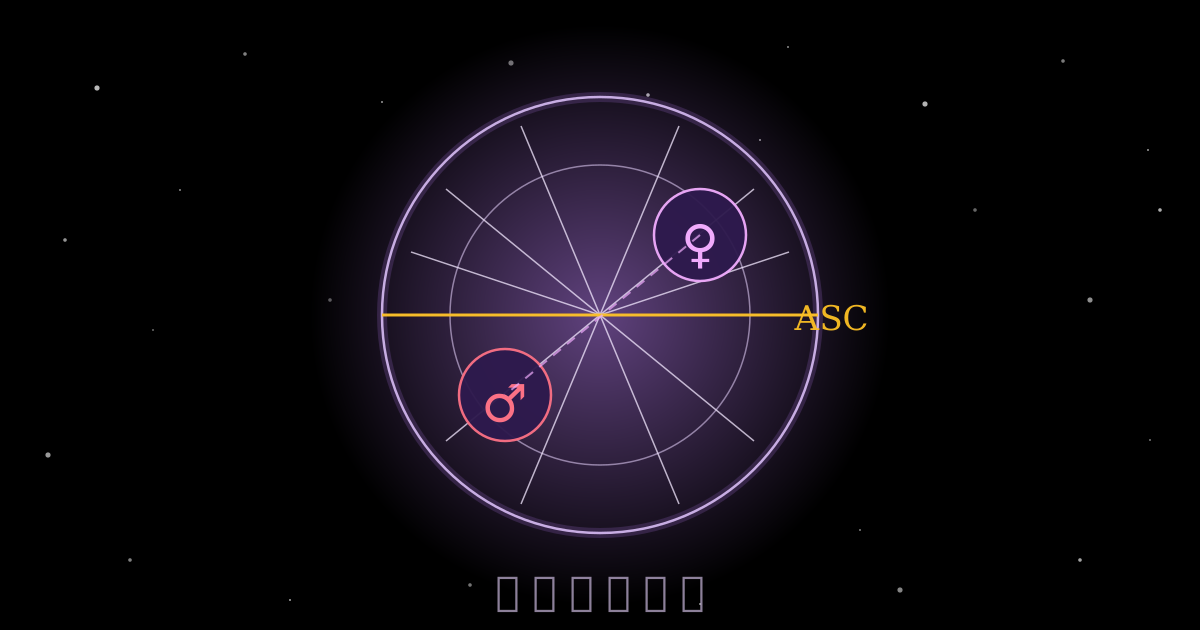
Most compatibility astrology stops at the easy stuff: your Sun against their Sun, your Venus against their Mars, your Moon signs talking to each other. But there is a deeper layer that working relationship astrologers watch even more closely — the house overlays. Take your chart and lay it over your partner's so the two wheels overlap, and your planets land somewhere inside their twelve houses. Your Venus might fall into their 7th house of partnership. Their Saturn might sit on your 1st house of self. Your Moon could light up their 4th house of home. These placements do not just color the attraction; they describe where in the other person's life you actually operate.
Think of it this way: planets are actors, signs are their costumes, and houses are the stages they perform on. Your partner's Moon in Aries tells you they feel things fast and hot — the costume. Their Moon landing in your 8th house tells you their feelings stir your depths, your intimacy, your fear of merging — the stage. Sign compatibility asks whether you and your partner are dressed alike. House overlays ask something more intimate: which rooms of each other's lives do you walk into, and what do you do once you are there? Read as a reflective lens rather than a fortune-telling verdict, overlays reveal the geography of a bond — where it glows, where it gets complicated, and where it asks for conscious care.
What Are Synastry House Overlays — and How Do You Find Them?
A house overlay forms whenever one person's planet sits inside one of their partner's twelve astrology houses. Because houses are calculated from the exact birth time, you need both birth dates, times, and places — without accurate times, house overlays cannot be calculated, and astrologers will tell you the rest of the analysis is guesswork. A synastry bi-wheel draws both charts on one page, one nested inside the other. Then the reading is simple: pick a planet of yours, find the house number it falls in on your partner's wheel, and read the meaning. Then flip it — find where their planets land in your houses — because the two directions tell different stories.
Why do the directions differ? Because of the roles each person plays. The planet person is the active energy — the one whose Venus does the loving, whose Mars does the pursuing, whose Saturn does the limiting. The house person is the one whose life area gets lit up — they receive the effect in their home, their career, their body. Your Venus in their 7th house means you adore them in a way that centers their partnership zone. Their Venus in your 7th means they adore you right back in yours — but the lived experience of each role is different. The planet person feels like the giver of that energy; the house person feels it arrive.
Why Overlays Matter More Than Most People Think
Two couples can have nearly identical sign compatibility and completely different relationships — and house overlays are often why. Consider two women both dating men with Venus in Scorpio. In one chart the Scorpio Venus lands in the woman's 5th house of romance: the overlay reads as a love that is playful, dramatic, magnetic — a romance in the spotlight. In the other chart the same Scorpio Venus lands in the woman's 12th house of hidden things: now the overlay reads as a bond that feels fated and secretive, hard to name, impossible to ignore. Same planet, same sign, entirely different stage — and the relationship plays out to a different script.
This is why astrologers say overlays describe the story of the relationship rather than just its chemistry. Sign-to-sign aspects describe what two people are like; house overlays describe what happens between them. They show up in the small, constant textures of daily life: whose planets land in your 2nd house influences how money feels between you; whose Moon sits in your 4th influences how home and family feel; whose Mars occupies your 10th influences how public ambition plays out in the partnership. If signs are the weather, overlays are the terrain.
The Relationship Houses: 1st, 5th, 7th, 8th and 12th
Five houses get most of the attention in romance readings, and for good reason — each governs a different room of the relationship.
Planets in the partner's 1st house is the fascination signature. The house person often finds the planet person physically and personally captivating — they cannot stop looking at them, noticing them, being energized by their presence. A partner's Sun in your 1st is the classic I-am-drawn-to-you overlay: you feel seen and vital around them. A partner's Mars in your 1st can feel electric — or, if the relationship is tense, irritating at a gut level, because every move they make lands directly on your sense of self.
Planets in the partner's 5th house is the romance-and-fun signature. The 5th governs pleasure, play, dating, creativity, and children — it is the house of falling in love rather than settling down. A partner's Venus in your 5th traditionally reads as joyful, affectionate dating energy; their Moon in your 5th as emotional playfulness; their Jupiter as laughter that makes everything feel like an adventure. Couples with strong 5th-house overlays often say the same thing: being together is fun.
Planets in the partner's 7th house is the partnership signature. The 7th is the house of committed partnership and marriage — so planets here carry weight. A partner's Venus in your 7th is one of the sweetest placements in all of synastry: they adore you, they cherish the bond, and you experience their devotion right in your partnership zone. Their Jupiter in your 7th traditionally reads as generosity toward the relationship itself. Their Saturn in your 7th reads as seriousness — either the bond-that-endures or the bond-that-burdens, depending on everything else.
Planets in the partner's 8th house is the intimacy signature. The 8th governs shared resources, sexuality, psychological depth, and transformation — the merging places. Overlays here run deep and rarely stay casual. A partner's Moon in your 8th can create emotional bonding that feels almost psychic; their Pluto in your 8th is the famous magnetic-and-intense signature, transformative and sometimes obsessive. 8th-house overlays describe relationships that change both people — the question is only whether the change is healing or wounding.
Planets in the partner's 12th house is the mystery signature. The 12th is the house of the hidden, the subconscious, the karmic, the unspeakable — and planets here often operate below the surface. A partner's Sun in your 12th can feel fated and confusing at once: you are fascinated by someone you cannot quite read. Their Neptune in your 12th can feel dreamlike — or deceptive. 12th-house overlays are the hardest to interpret and the ones people obsess over most, precisely because the connection refuses to be pinned down.
A Quick Tour of All Twelve Houses
Beyond the famous five, every house brings its own color. Here is the overlay map at a glance:
2nd house — money, values, self-worth. A partner's planets here influence your financial comfort and what you feel you deserve. Venus here can feel like shared generosity; Saturn here can raise questions about spending, earning, and worth that need honest conversation.
3rd house — communication, siblings, daily rhythm. Mercury here means you talk constantly and easily; Mars here means you argue with the same ease. This overlay shapes the daily texture of conversation.
4th house — home, family, roots. The Moon here traditionally reads as emotional safety at home; Saturn here can feel like one partner sets the household rules. This is the domestic-emotional foundation overlay.
6th house — daily routine, health, work. Planets here show up in the logistics of life together — chores, schedules, habits. Not glamorous, but couples with strong 6th-house overlays build functional shared lives.
9th house — beliefs, travel, philosophy. Jupiter here expands the relationship's worldview; the overlay reads as adventure, learning, and shared meaning. Couples with 9th-house overlays often bond over beliefs and journeys.
10th house — career, reputation, public life. A partner's Sun or Mars here spotlights your ambitions — they make you want to shine professionally. It can also mean the relationship plays out publicly, for better or worse.
11th house — friendship, community, hopes. Venus or Jupiter here traditionally reads as genuine friendship inside the romance — the partner who is also your favorite person to hang out with.
Read this way, a synastry chart becomes a map of where two lives intersect — not just whether they click, but where the clicking happens.
The Heaviest Planets to Receive in Your Houses
Not all planets carry equal weight as overlays. The luminaries and the personal planets shape daily experience most directly, while the outer planets color the background.
Their Sun in your houses — vitality and focus. Wherever their Sun lands, your attention follows. Their Sun in your 7th centers the relationship itself; in your 10th, your ambitions; in your 4th, your emotional roots. The house person often feels more alive in that life area when the Sun person is around — which is why Sun overlays are so magnetic, and why their absence is felt so sharply.
Their Moon in your houses — emotional attunement. The Moon person instinctively understands what the house area needs. Their Moon in your 2nd soothes your money anxieties; in your 5th it plays; in your 8th it bonds at depth. Moon overlays describe comfort — the sense that this person gets what that part of your life needs without being told.
Their Venus in your houses — affection and pleasure. Venus is the planet everyone wants in their houses. Their Venus in your 7th adores the partnership; in your 11th it cherishes the friendship; in your 5th it romances you. Wherever Venus lands, the house person tends to feel liked, wanted, and easy around the Venus person.
Their Mars in your houses — energy and friction. Mars energizes whatever it touches — and friction is energy too. Their Mars in your 1st is electric attraction or instant irritation; in your 10th it drives your ambitions forward; in your 7th it can mean a passionate partnership — or one where conflicts need a healthy outlet.
Their Saturn in your houses — the teacher, the tester, the bond. Saturn overlays are the most debated in synastry. Their Saturn in your 7th can read as the commitment that holds through storms — or as heaviness and criticism in the partnership. Their Saturn in your 10th can steady your career — or judge it. Tradition says Saturn binds: couples with strong Saturn overlays often stay together longest, because Saturn takes the relationship seriously. But seriousness needs warmth elsewhere in the chart to feel like love rather than duty.
The outer planets — Jupiter (expansion, generosity), Uranus (excitement, instability), Neptune (idealism, fog), Pluto (intensity, transformation) — color overlays generationally and dramatically. Their Jupiter in your houses brings luck and laughter to that area; their Pluto brings intensity that can heal or consume.
Reading Overlays Wisely: Three Rules
First, read both directions. Your Venus in their 7th and their Venus in your 7th are not the same experience. The planet person expresses; the house person receives. A one-sided overlay — many of your planets in their houses, few of theirs in yours — can describe a relationship where one person feels more impacted, more changed, more swept along. Mutual overlays in the same houses describe reciprocity: you both light up the same rooms of each other's lives.
Second, watch the planet-house fit. Astrologers look at whether the planet is comfortable in that house's territory. Venus in a 7th-house overlay sings — Venus loves partnership. Saturn in a 7th-house overlay labors — Saturn takes partnership seriously. Mars in a 12th-house overlay can feel like hidden irritation; Mercury in a 3rd-house overlay talks effortlessly. The planet describes how the energy behaves; the house describes where. When the how fits the where, the overlay flows. When it clashes, it asks for conscious handling.
Third, overlays are tendencies, not verdicts. This is the entertainment-framing rule that keeps astrology honest: no overlay guarantees love or dooms it. A supposedly difficult overlay — Saturn in the 7th, Pluto in the 8th, a pile of planets in the 12th — describes where the relationship's work lives, and work done well becomes the relationship's greatest strength. The couples who thrive with heavy overlays often credit those very placements for the depth of the bond. The overlay shows the terrain. How you walk it is up to you.
Using House Overlays in Your Own Relationship
The practical move is simple: generate the bi-wheel, list the overlays in both directions, and read them as a conversation starter rather than a diagnosis. Where do your planets land in their chart — what part of their life do you activate most? Where do theirs land in yours — where do you feel their presence strongest? The answers often confirm what you already sensed: of course their Mars is in my 10th — they are the reason I started the business. Of course their Moon is in my 4th — home finally felt like home when they arrived.
Then ask the generous question overlays invite: what does this placement need from me? If your Saturn falls in their 2nd house, the question is how to bring steadiness to their money worries without bringing judgment. If their Neptune lands in your 12th, the question is how to meet the dreaminess without getting lost in it. Overlays work best as maps for kindness — they show you exactly where your partner is most affected by you, which is exactly where your care matters most. The stars may describe the terrain, but generosity is what walks it well.
Frequently asked questions
What are synastry house overlays?
In synastry — the astrology of two charts compared — house overlays happen when one person's planets fall into the houses of their partner's chart. They show where in the other person's life you have the biggest impact: their money, their home, their partnership zone, their hidden fears.
How do I find my synastry house overlays?
You need both birth dates, times, and places so both charts have house cusps. Any synastry calculator or chart tool can generate a bi-wheel — two charts drawn one inside the other. Look at which houses of your partner's chart your planets land in, then do the same in reverse. Each direction tells a different story.
Which house overlays matter most in romance?
The classic relationship houses draw the most attention: planets in the partner's 1st house (physical fascination), 5th house (romance and fun), 7th house (partnership and marriage themes), 8th house (intimacy and merging), and 12th house (the hidden, karmic, hard-to-name bond). But every house colors the connection in its own way.
What does my partner's Venus in my 7th house mean?
Traditionally, one person's Venus falling into the other's 7th house is one of the sweetest signatures in synastry: the Venus person adores and cherishes the house person, and the house person experiences that devotion in their partnership zone. It is often described as a natural marriage-like ease — though the rest of both charts still shapes how it plays out.
Can difficult house overlays be worked with?
Yes. Overlays describe tendencies and focal areas, not verdicts. Saturn overlays can feel heavy or turn out to be the bond that holds everything together; 12th-house overlays can feel confusing or deeply intuitive. The overlay shows where the work and the gifts live — what a couple does with them is up to them.
Keep exploring

Venus Sign Love Compatibility: How You Love & Who You Love Best
Venus sign love compatibility explained — find your Venus sign and see exactly how all 12 Venus placements love, clash, and harmonize in relationships.
Read the meaning →
Moon Sign Compatibility: Emotional Needs & Deep Bonds Explained
Moon sign compatibility explained — how your Moon sign shapes emotional needs, comfort, and intimacy, and how two Moon placements bond, soothe, or clash in a relationship.
Read the meaning →
Mars Sign Compatibility: Desire, Drive & Conflict Explained
Mars sign compatibility explained — how your Mars sign shapes desire, pursuit, ambition, and conflict style, and how two Mars placements interact in a relationship.
Read the meaning →
Sun Sign Compatibility: Identity, Ego & Life Purpose Explained
Sun sign compatibility explained — how your Sun sign shapes your identity, ego, and life purpose, and which Sun sign pairings radiate together, respect each other, or rub each other the wrong way.
Read the meaning →