
Black Tourmaline Meaning: The Stone of Protection & Grounding
The Stone That Holds the Line
Every tradition has its guardian stone — the one you reach for when the world feels too loud, too sharp, or too much. In crystal practice, that stone is black tourmaline. It doesn't sparkle like amethyst or glow like rose quartz. It's opaque, striated, and unapologetically dark: a stone that looks the way protection feels. Where most crystals are chosen for what they attract — love, calm, clarity — black tourmaline is chosen for what it keeps out.
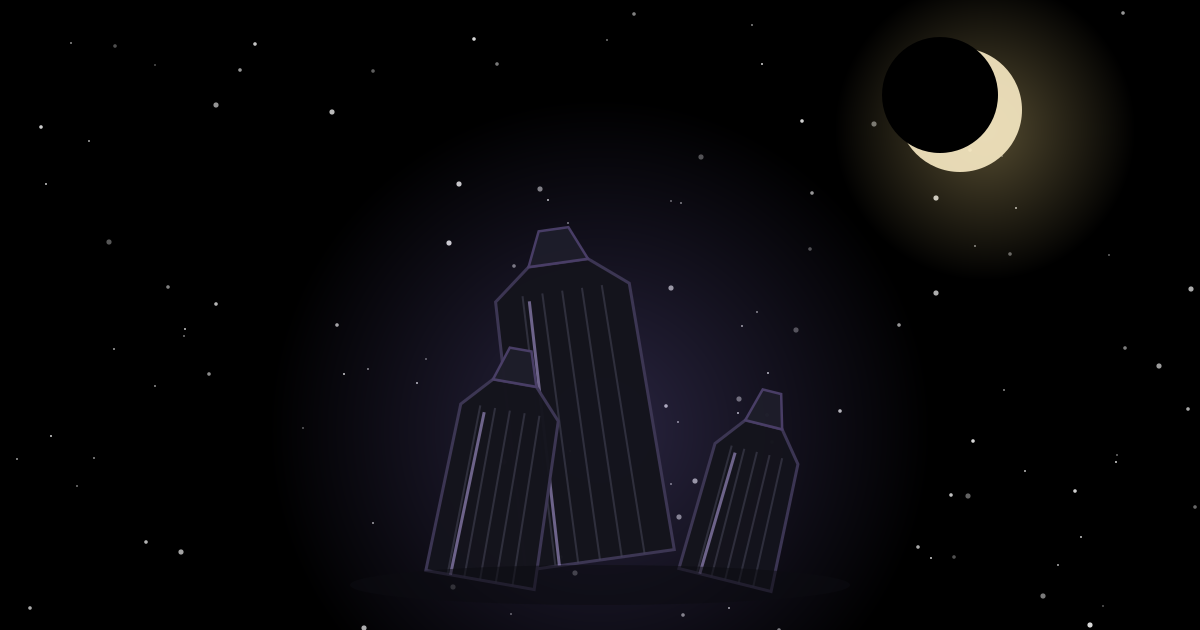
Mineralogically, black tourmaline is schorl, the iron-rich black member of the tourmaline family — one of the most chemically complex minerals on Earth, a borosilicate with a signature of striated, grooved prism faces that run the length of each crystal. Those striations aren't just decorative: they're the visual fingerprint that separates real schorl from dyed glass and polished black obsidian. Tourmaline forms in elongated hexagonal-ish columns with triangular cross-sections, often in stubby "woody" clusters or elegant single points, and it's found on every continent — Brazil, Afghanistan, and the US Northeast among classic sources.
Tourmaline is famously piezoelectric: squeeze or heat the crystal and it develops an electric charge. Eighteenth-century Dutch traders noticed it attracting dust and ash from hot coals and called it aschentrekker — "ash puller." That real, measurable electrical quirk helped seed tourmaline's reputation as an "absorber," and the crystal community ran with it: black tourmaline became the stone that soaks up negativity the way a sponge soaks up water. Whether you take that literally or as a beautiful metaphor, the ritual use is the same.
The usual framing here applies: this is spiritual and wellness tradition, not science or medicine. Black tourmaline is a companion for boundaries and grounding rituals — it is not a treatment for anxiety, depression, insomnia, or any health condition, and it does not block electromagnetic radiation. If you're struggling, professionals are the real help; the stone is the comforting object that reminds you to seek it.
What Black Tourmaline Represents
The core themes of black tourmaline have been strikingly consistent across cultures and decades:
- Protection: the signature meaning — a shield against negative energy, heavy atmospheres, and psychic "static." The guardian at the gate.
- Grounding: the root-chakra stone par excellence, used to pull scattered, overthinking energy back down into the body.
- Boundary-setting: practitioners use it as a physical reminder to hold emotional boundaries — with draining people, toxic workplaces, and their own intrusive thoughts.
- Purification: traditionally used to "cleanse" the energy of rooms, objects, and other crystals.
- Safety and stability: the stone of secure footing, carried for travel, moving house, and new beginnings.
The through-line is held space. Black tourmaline doesn't lift you up like citrine or open your heart like rose quartz — it stands beside you, solid and dark, and holds the perimeter so you can relax inside it. For empaths, anxious minds, and anyone whose energy leaks in crowded rooms, that sense of a defended perimeter is the whole point.
Protection Rituals: How People Actually Use It
Black tourmaline's reputation rests on practical rituals, not abstract theory. Here's how practitioners actually deploy it:
- The doorway guardian: the single most common placement — a piece by the front door (or above it) to "filter" what enters the home. Some people add one at each corner of the house, a classic protection grid.
- The desk sentinel: a chunk beside the computer or on the desk for stressful workdays — the tactile boundary between you and the chaos of the inbox.
- Pocket carry: a tumbled stone in the pocket for difficult meetings, crowded commutes, and draining social events — squeezed like a worry stone when tension rises.
- Jewelry: pendants, rings, and bracelets for all-day contact; black tourmaline pairs visually with everything.
- The bedroom ward: on the nightstand or under the bed for practitioners who credit it with blocking nightmares and anxious nighttime thoughts.
- The travel companion: tucked in a suitcase or carry-on for the "rooted anywhere" feeling during travel.
A simple boundary ritual practitioners love: before a difficult interaction, hold your black tourmaline, take three slow breaths, and picture a dark, porous wall between you and the other person — porous enough for kindness, dense enough for drama. Walk in with the stone in your pocket. The wall is visualization, the confidence is real: you gave yourself a physical anchor and thirty seconds of preparation, which is more than most people bring to a hard conversation.
Grounding: The Root Chakra Connection
In chakra tradition, black tourmaline resonates with Muladhara — the root chakra at the base of the spine, the seat of safety, survival, and belonging. When practitioners say they feel "scattered," "floaty," or "in their head," they reach for root stones, and black tourmaline is the heaviest hitter of the bunch.
A classic grounding exercise: sit with both feet flat on the floor, a black tourmaline in each hand or one at your feet, and breathe slowly for five minutes, imagining roots extending from your feet into the earth. It sounds theatrical, but the mechanics are sound — slow breathing with feet on the floor activates the parasympathetic nervous system. The stone is the ritual object that gets you to actually sit down and do it. As with all these practices, the belief you hold matters less than the regularity with which you practice; the nervous system responds to the ritual, not the doctrine.
Black tourmaline is also the stone of choice for "earth-star" meditations, barefoot walks (pocket stone in tow), and garden work — anything that puts you back in contact with the ground under the noise. If amethyst is the stone of the quiet mind, black tourmaline is the stone of the steady body.
The EMF Question: An Honest Answer
Let's be direct, because this is the most-searched question about black tourmaline and it deserves a straight answer: no crystal — black tourmaline included — has been shown to block, absorb, or neutralize electromagnetic fields in any measurable way. The idea took off because of tourmaline's real piezoelectric property, and because "a stone by my router" is an appealingly simple fix for modern tech anxiety.
That doesn't make the ritual worthless — it makes the mechanism different from what the marketing claims. A black tourmaline next to your phone can be a genuinely useful behavioral anchor: a reminder to take screen breaks, to not scroll in bed, to put the phone down at dinner. Those habits measurably reduce the actual harms of overexposure (poor sleep, fractured attention, eye strain). The stone didn't fix your screen time; the stone reminded you to fix it, which is arguably more valuable.
If EMF exposure is a genuine concern for you — say, you're managing a medical device or sleeping next to heavy electrical equipment — talk to an electrician or your doctor, not a crystal shop. Use the stone for what it's good at (grounding rituals, boundary reminders) and use real-world measures for real-world physics.
Cleansing Black Tourmaline
Practitioners cleanse black tourmaline more frequently than other stones, on the logic that the "shield" stone absorbs the most and needs the most frequent reset:
- Running water: brief cool rinse — schorl is hardy (7–7.5 on the Mohs scale), but avoid long soaks and harsh soaps.
- Smoke cleansing: sage, palo santo, cedar, or incense — pass the stone through the smoke with intention.
- Moonlight: a few hours on a windowsill at night; the full moon is traditional, any night works.
- Sound: singing bowls, bells, or clapping — a few minutes of clear tone.
- Selenite: resting on or near a selenite slab, the crystal world's "self-cleaning" helper.
- Earth burial: some practitioners bury stones briefly to "reset" them — effective theater, if you mark the spot.
Avoid prolonged direct sun (some black stones can heat-fracture, and the habit is simply unnecessary) and harsh chemicals. Monthly is the common cadence for a heavily-used protection stone; intuitively, cleanse it whenever it "feels heavy" — which is to say, whenever you've been through something heavy. The ritual of resetting your tools is also a ritual of resetting yourself.
To dedicate the stone, hold it and state its job plainly: "You hold the boundary. I rest inside it." Revisit the intention when you cleanse it. Corny? Slightly. Effective? Practitioners have done some version of this for centuries, and the ones who stick with it report the same thing: not magic — habit, clarity, and the calm that comes from having a plan for the hard rooms in life.
Black Tourmaline Varieties Worth Knowing
Tourmaline is a family, and the black member has colorful relatives with their own lore:
- Schorl: true black tourmaline — the protection stone of this article, striated and opaque.
- Watermelon tourmaline: pink core, green rind — the heart-chakra darling, used for emotional balance.
- Verdelite: green tourmaline, traditionally associated with growth and vitality.
- Rubellite: red-to-pink tourmaline, the dramatic heart stone.
- Dravite: brown tourmaline, sometimes called "champagne tourmaline," used for grounding like schorl.
- Indicolite: blue tourmaline, the rare throat-chakra communicator.
You don't need the rainbow to start — schorl is affordable and abundant, which is part of its charm. The protector stone is a working-class stone: cheap enough to place at every door, tough enough to ride in your pocket for years, dark enough to go with everything.
Spotting Real Black Tourmaline
Because schorl is inexpensive, it's less faked than precious stones — but the market still has pitfalls:
- Striations: real black tourmaline shows fine lengthwise grooves. No striations, no trust.
- Texture: schorl has a slightly woody, matte-to-subvitreous texture — not the mirror-gloss of polished obsidian or dyed glass.
- Cross-section: genuine crystals often show triangular or rounded-triangular cross-sections.
- Weight: schorl feels relatively light for its size compared to glass fakes.
- Price: suspiciously cheap "watermelon" or flawless glossy black pieces deserve skepticism; ask the seller to name the variety and disclose treatments.
Buy from mineral dealers and established crystal shops, ask direct questions ("Is this natural schorl? Any dyes or heat treatment?"), and trust sellers who answer plainly. The stone's job is honesty at the door — its seller should match.
Closing: The Guardian at the Door
Black tourmaline endures — in pockets, at doorways, on desks across the world — because it answers a permanent human need: the need to feel safe inside your own life. Not invulnerable, not isolated — just held. A line that says: the noise stops here, and within it, you can breathe.
So place the stone. Cleanse it monthly. Carry it into the hard rooms and squeeze it when the meeting turns. Let it remind you, at the exact moment you need reminding, that boundaries are not walls — they're the doors you choose to open, on your own terms. The stone doesn't guard you. It reminds you that you're the guardian, and you always were.
Frequently asked questions
What does black tourmaline actually do?
By tradition, black tourmaline is a shield: practitioners use it to "absorb" or deflect negative energy, heavy moods, and draining environments. People keep it by the front door, on their desk, or wear it as jewelry as a grounding anchor. Think of it less as a magic forcefield and more as a ritual object that reminds you to hold your boundaries — the real protection is the habit of checking in with yourself that the stone prompts.
Is black tourmaline good for EMF protection?
It's the stone most often marketed for EMF "protection," usually placed next to phones, routers, and computers — but there is no scientific evidence that any crystal blocks electromagnetic fields. If having one on your desk helps you set healthier tech boundaries (phone-free wind-downs, scheduled breaks), that's genuinely valuable. Just don't rely on a stone for real EMF concerns; distance and limiting exposure are what actually reduce it.
Can black tourmaline go under my pillow?
Practitioners are divided. Some swear by it for warding off nightmares and anxious nighttime thoughts; others find it too intense or "buzzy" for sleep and prefer it on the nightstand or across the room instead. Try it for a few nights and let your sleep quality decide — there's no universal rule, only your own experience.
How do I cleanse black tourmaline?
Practitioners cleanse black tourmaline more often than most stones, precisely because it's "used up" absorbing heavy energy. Popular methods: running water (it's hardy), smoke cleansing, moonlight (a few hours; avoid prolonged harsh sun), sound, or resting it on selenite. Whether you believe in energetic buildup or not, a monthly cleanse ritual doubles as a nice reset for your own intentions.
How can I tell if my black tourmaline is real?
Real black tourmaline (schorl) has visible striations — fine grooves running lengthwise along the crystal — and often shows trigonal/hexagonal cross-sections with a slightly irregular, woody texture. It rarely has the glassy uniform shine of fake obsidian or dyed glass. Genuine pieces also feel relatively light for their size. Be wary of jet-black, perfectly glossy "tourmaline" at suspiciously low prices; buy from sellers who name the actual variety and disclose treatments.
Keep exploring

How to Cleanse and Charge Crystals: Complete Guide
How to cleanse and charge crystals: water, smoke, moonlight, sound & selenite. When to cleanse, stone-by-stone safety, and simple rituals that work.
Read the meaning →
Rose Quartz Meaning: The Stone of Unconditional Love
Rose quartz meaning & uses: the stone of unconditional love. Self-love rituals, emotional healing, relationship guidance, cleansing and crystal care.
Read the meaning →
Crystals for Anxiety: Calming Stones & Grounding Rituals
Crystals for anxiety: amethyst, rose quartz, lepidolite & more. An honest guide to calming stones, 5-minute grounding rituals, and real coping tools.
Read the meaning →
Dreaming of Being Chased: Meaning
Being chased in a dream reflects what's pursuing you in waking life — stress, deadlines, or feelings you're avoiding. Decode the pursuit.
Read the meaning →