
Blue Moon Spiritual Meaning: Rare Lunar Energy & How to Work With It
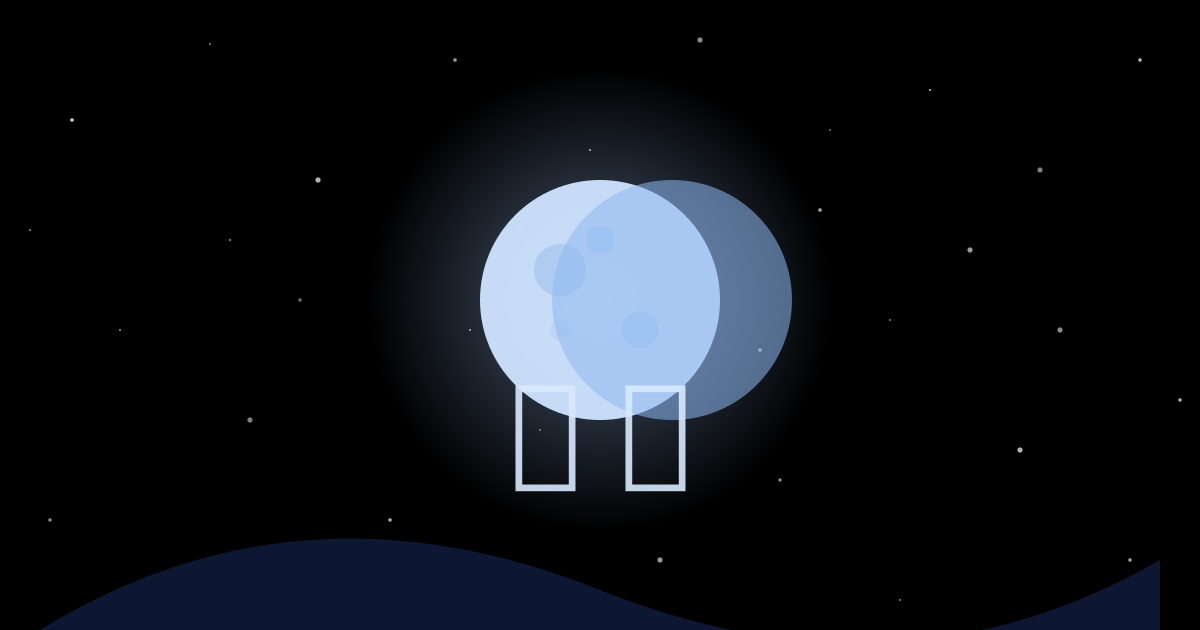
Every month gives us a full moon — bright, beautiful, and reliably on schedule. But every two or three years, the calendar does something odd: it squeezes an extra full moon into a single month, or a single season. This bonus moon is called a blue moon, and despite what the name suggests, it looks exactly like every other full moon. Its rarity, though, has given it a reputation. We even built the phrase "once in a blue moon" into the language to mean something precious and unlikely.
Spiritual practitioners and moon-loving dreamers treat the blue moon as more than a calendar quirk. If a regular full moon is a monthly appointment with release and gratitude, a blue moon is the rare, unrepeatable version — the one where you bring out the big intention, the release you have been circling for years, the wish you only make when the sky itself cooperates. This guide covers the astronomy behind blue moons, what they symbolize, and how to work with the next one when it arrives. Think of everything here as reflective, symbolic practice — entertainment and contemplation, not predictions.
What Is a Blue Moon? The Astronomy, Simply
The moon orbits Earth roughly every 29.5 days, while most of our calendar months run 30 or 31 days. Every so often, those two cycles misalign just enough to fit two full moons inside one month. The second one is the modern definition of a blue moon.
There is also an older definition. Before the "two full moons in one month" usage took over, a blue moon meant the third full moon in an astronomical season that contains four full moons (most seasons have three). This seasonal definition comes from old farmers' calendars, which named each season's moons — the Harvest Moon, the Hunter's Moon — and needed a way to label the extra one when a season ran long.
Both definitions describe the same rarity. Monthly blue moons happen about 7 times in every 19 years; seasonal ones arrive roughly every two and a half to three years. When someone says "once in a blue moon," this is the math behind the idiom — a genuinely uncommon event, even in a sky full of regular moons.
Does the Moon Actually Turn Blue?
Almost never. The phrase "blue moon" is not about color at all — it is about calendar timing. A blue moon rises looking like a perfectly ordinary full moon: silvery-white, round, and magnificent.
That said, the moon can genuinely appear blue under extraordinary atmospheric conditions. After major volcanic eruptions — like Krakatoa in 1883 — vast amounts of ash and aerosols in the upper atmosphere scatter red light and let blue light through, tinting the moon visibly blue for weeks. Forest fire smoke can do something similar on a smaller scale. But these are atmospheric flukes, unrelated to the calendar blue moon. If the moon ever does look blue on a blue-moon night, count yourself twice-blessed: you witnessed two rarities at once.
The Spiritual Meaning of a Blue Moon
Symbolically, a blue moon carries a double charge: it is a full moon (culmination, illumination, release) and it is rare (specialness, second chances, the unexpected). Lunar spiritual traditions interpret it several ways:
- The amplifier. The most common reading: a blue moon is a full moon turned up a notch. Whatever the full moon illuminates in your life — a pattern ready to end, a truth ready to face — arrives with extra clarity. Dreams around blue moons are often reported as unusually vivid, which fits the full moon's reputation for stirring the subconscious.
- The second chance. Because it is the "extra" moon, some traditions read it as a do-over moon. Missed last month's intentions? Released something incompletely? The blue moon offers a cosmic grace period — a rare opportunity to revisit what slipped.
- The wild card. Folk sayings tie the blue moon to the unexpected: strange luck, surprising meetings, events that "only happen once in a blue moon." In a spiritual reading, this is the moon of the unplanned — a reminder that not everything meaningful can be scheduled.
- The threshold. Some practitioners treat the blue moon as a doorway between the ordinary lunar rhythm and something larger — a natural moment for the one big ritual you would never schedule monthly.
None of this is astronomy, of course — it is meaning-making, the human habit of hanging stories on the sky. Treated that way, as reflection rather than prediction, the blue moon is a lovely excuse to pause and ask: what is the one rare, important thing I have been waiting for?
When Is the Next Blue Moon?
Blue moons are uncommon enough that each one tends to be announced with fanfare online. The most recent monthly blue moon was August 30, 2023 (and a supermoon at that), and the most recent seasonal blue moon fell on August 19, 2024. Looking ahead, the next monthly blue moons arrive in May 2026 and December 2028, with seasonal blue moons scattered in between. Because the exact dates depend on which definition you follow and your timezone can shift a full moon across midnight into an adjacent month, it is worth checking an astronomy calendar for your location as the date approaches — a fun planning ritual in itself.
One practical note: because blue moons are rare, they make excellent journal prompts. When one is approaching, many moon journalers set aside the evening in advance, the way you might buy a ticket to a rare concert. The anticipation is half the practice.
A Simple Blue Moon Ritual
The guiding principle of a blue moon ritual is singularity: one moon, one theme, one significant intention or release. Where a regular full moon ritual might carry a whole list, the blue moon asks for focus.
1. Choose your one thing
A few days before the blue moon, sit with a question: if the universe granted me one "once in a blue moon" wish — or offered me one rare release — what would it be? Write it down. Not five things. One. The constraint is the point; rarity demands precision.
2. Prepare as for a full moon
Follow the bones of a standard full moon ritual: cleanse your space, ground yourself with slow breaths, light a candle. Because this moon is special, many practitioners add something blue — a blue candle, a piece of blue lace agate or lapis lazuli, a bowl of water with a blue flower floating in it — as a nod to the occasion.
3. Speak it aloud
Under the moon (or facing a window, or simply holding the intention in mind), speak your one thing aloud. If it is a release: "I release..." followed by the old weight you are finally setting down. If it is an intention: state it in the present tense, as though it were already true. Saying it aloud moves it from thought into the body — practitioners describe this as the moment an intention stops being a daydream and becomes a decision.
4. Seal it with an object
Charge something to carry the moon's memory: a jar of moon water made on the blue moon night, a stone held during the ritual, or the written intention folded into your journal. A year from now, when you find it again, you will have a small time capsule of what mattered to you under the rarest moon of all.
5. Close with gratitude
Thank the moon, snuff your candle, and rest. Many people report vivid, narrative dreams after blue moon rituals — keep a journal by the bed and note what surfaces. The blue moon's reputation for illumination extends into sleep.
Blue Moon vs. Supermoon: Don't Confuse Them
People often blur blue moons and supermoons, but they are different rarities. A supermoon is about distance: the full moon happens when the moon is near perigee (its closest approach to Earth), making it look about 14 percent larger and 30 percent brighter than a faraway full moon. A blue moon is about timing: an extra full moon in a month or season.
Sometimes the two coincide — August 2023's blue moon was also a supermoon, a genuine double rarity. When they do, practitioners tend to read the combination as doubly amplified: big, bright, and rare all at once. But neither affects you more than a regular full moon in any physical sense; the power of both is in the attention you choose to give them.
Blue Moons Across Cultures
Not every culture uses the "blue moon" label, but extra moons in the calendar have been noticed and named everywhere. Traditional Chinese and Jewish lunisolar calendars insert entire leap months to keep the lunar and solar years aligned — the functional cousin of the blue moon. In parts of European folklore, an extra full moon in a season was considered a powerful time for divination and dream work, since it broke the neat one-moon-per-phase rhythm that farmers relied on.
The modern monthly definition, interestingly, traces to a misreading of an old astronomy article that spread through popular media in the 1980s. The "mistake" stuck because people loved it. There is something fitting about that: a calendar quirk born of a misunderstanding, now carrying real meaning for millions of sky-watchers. Language and ritual are like that — the story that survives is the one people want to keep.
Common Mistakes When Working With a Blue Moon
First, don't expect the moon to look blue — then feel cheated when it doesn't. The magic is in the timing, not the tint. Second, don't overload the ritual. The temptation on a rare night is to cram in every intention you have ever had; resist it. One clear focus beats twenty vague ones. Third, don't skip the ordinary full moon practice in favor of only showing up for blue moons — the monthly rhythm is what trains your attention; the blue moon is the bonus round. And finally, don't treat the blue moon as a deadline. If you miss the exact night, the energy — and the symbolism — keep for a day or two either side. The sky is generous with grace periods.
Dreaming Under a Blue Moon
Full moons already have a folk reputation for vivid dreams and restless sleep, and the blue moon inherits it in amplified form. If you keep a dream journal, a blue moon night is worth preparing for: put the journal and a pen by the bed, set a gentle intention before sleep ("I am open to whatever my mind wants to show me"), and record anything you remember immediately on waking, before the details dissolve. Dream dictionaries and guides can help you explore the symbols — but the most useful interpretation is usually the simplest one: what did the dream feel like, and what in your waking life feels the same? The blue moon, rare and illuminating, is a fitting backdrop for exactly that kind of honest self-reading.
Until the next one arrives — and they always do, once in a blue moon — keep your regular lunar practice alive. The ordinary full moons are the rehearsal; the blue moon is the performance. And when the rare one finally rises, step outside, look up, and make it count.
Frequently asked questions
How often does a blue moon happen?
Monthly blue moons — two full moons in one calendar month — occur roughly every 2 to 3 years, about 7 times in every 19-year cycle. Seasonal blue moons, the third full moon in a season that has four, arrive on a similar schedule, roughly every 2.5 to 3 years. Because the lunar cycle is 29.5 days and most months are 30 or 31 days, the extra full moon sneaks in only when the timing lines up.
What is the difference between a monthly and a seasonal blue moon?
A monthly blue moon is the modern, popular definition: the second full moon in a single calendar month, like January 2018 when there were full moons on the 1st and the 31st. A seasonal blue moon is the older, traditional definition: the third of four full moons in an astronomical season. Traditional farmers' calendars used seasons, so the older definition predates the monthly one by generations.
Should I do a full moon ritual on a blue moon?
Many lunar practitioners treat a blue moon as an amplified full moon ritual, perfect for bigger releases or intentions you have been saving for the right moment. You can follow your usual full moon ritual — release lists, gratitude, moon water — but practitioners often suggest choosing one significant theme rather than a long list, matching the rare, singular nature of the event.
Does a blue moon actually look blue?
No — the name has nothing to do with color. A blue moon looks like an ordinary, beautiful full moon. On very rare occasions, the real moon can appear bluish through smoke or dust in the atmosphere, such as after large volcanic eruptions, but that has nothing to do with the calendar definition of a blue moon.
Is a blue moon a good time for manifesting new intentions?
Spiritually, full moons are traditionally associated with release and culmination rather than new beginnings — that is new moon work. Many practitioners use a blue moon for 'once in a blue moon' wishes: the one big intention or release you have been putting off. Frame it as an intentional review of the rare, important thing you have been waiting for, then return to new moon intentions when the cycle turns.
Keep exploring
Full Moon Ritual Guide: Release & Manifest Under the Full Moon
Learn exactly how to perform a powerful full moon ritual for release, gratitude, and renewal — step-by-step guide with supplies, timing, and intention ideas.
Read the meaning →
How to Make Moon Water: A Complete Guide to Lunar-Charged Water
Learn how to make moon water step by step — the best moon phases, jars, spoken intentions, crystal pairings, and 7+ ways to use your lunar-charged water.
Read the meaning →
What Does It Mean to Dream About Flying?
Flying dreams rank among our happiest. Discover what dreaming about flying means — freedom, ambition, confidence — and what turbulence reveals.
Read the meaning →
Cancer Zodiac Sign: Personality, Traits & Compatibility
Cancer (Jun 21–Jul 22) is a nurturing water sign ruled by the Moon. Discover Cancer personality traits, strengths, love compatibility, and careers in
Read the meaning →