
Cold Moon Meaning: Why December's Full Moon Is Called the Cold Moon
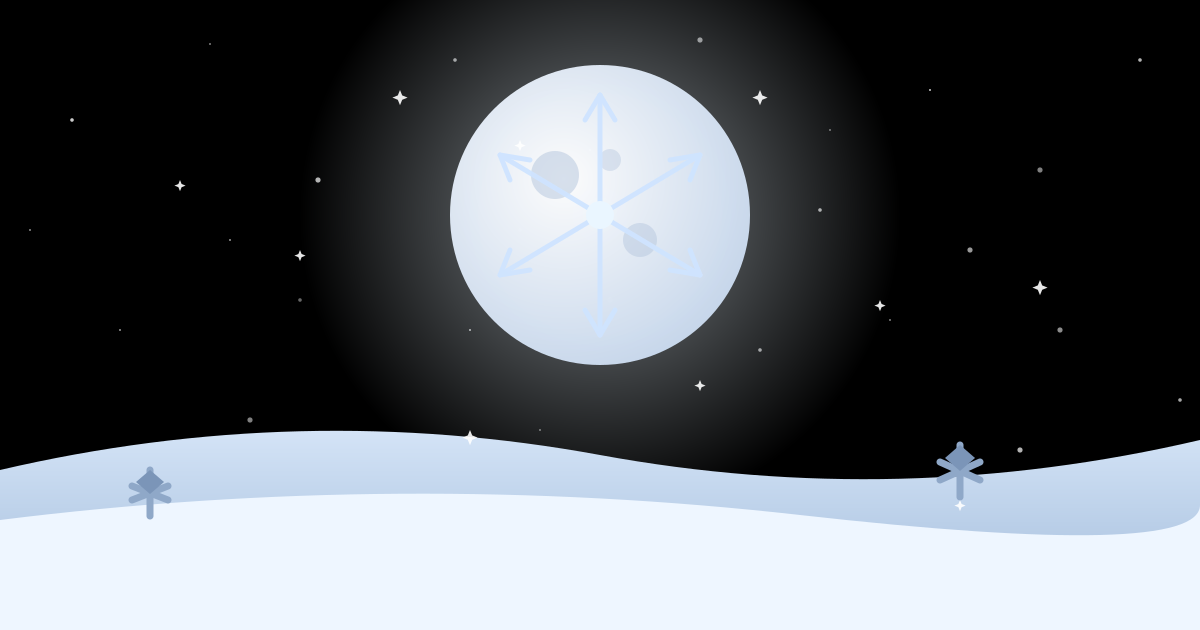
Why Is December's Full Moon Called the Cold Moon?
The named full moons of North American folk tradition were popularized by the Old Farmer's Almanac, which drew on Algonquin and other Indigenous naming traditions tied to the seasonal calendar. December's entry is the most literal of the whole list, and it needs no metaphor to explain it: December is cold. It is the month when the year's longest nights arrive with the winter solstice, when the cold settles in for good in the northern climates that named these moons, and when the landscape goes quiet under frost and early dark. The full moon of that month became the Cold Moon, and the name has stuck for centuries, long after most people stopped measuring the year by firewood and frozen ground.
There is a second, quieter reason the name fits so well. December's full moon is the full moon of the year's end, and it rises at the moment when the old year is nearly spent and the new one has not yet begun. Every other named moon belongs to a season in progress — planting, growing, harvesting, preparing — but the Cold Moon belongs to the pause between years. It is the moon of the threshold: the last full moon before the calendar turns, shining on a world that has finished its work and is waiting, in the dark and the cold, for the light to start coming back.
One astronomical note is worth knowing, because it makes the Cold Moon genuinely special to watch. In December, the full moon sits opposite the low winter sun, so it arcs high across the Northern Hemisphere sky — the highest full moon arc of the year. Where July's full moon rides low and golden near the horizon, December's full moon climbs high and stays up for the longest night of the year, bright and clear in the cold air. Cold air holds less moisture and haze, so winter moonlight often looks sharper and whiter than summer moonlight, which only adds to the feeling that this moon belongs to the cold.
One common expectation is worth correcting early. The Cold Moon is not blue, icy, or frost-colored. It is an ordinary full moon, the same silver disk as any other month's. If you go out to see it, expect a beautiful ordinary full moon hanging high over a quiet winter landscape — which, on a clear December night, with frost on the ground and stars sharp overhead, is beautiful enough.
The Other Names for December's Full Moon
Like most named moons, December's full moon carries a family of alternate names from different traditions, and together they describe the same midwinter moment from several angles. One of the best known is the Long Night Moon, for the year's longest nights around the winter solstice — the full moon that rises into the longest darkness of the year and stays up the longest. Another is the Moon Before Yule, marking the moon that precedes the winter solstice festival, when the old year is gathered up and the return of the light is celebrated.
Other names include the Oak Moon in some Celtic-inspired lists, for the oak's endurance through winter, and the Winter Moon in a few folk calendars, plain and direct. In some traditions it is also called the Wolf Moon's neighbor in spirit, since January's Wolf Moon follows hard on its heels. The through-line across all of them is unmistakable: whatever you call it, December's full moon is the moon of the year's darkest, coldest, quietest nights — the moon of endings, endurance, and the long wait for the light to return.
The Spiritual Meaning of the Cold Moon
Named moons carry emotional weather in the folklore, and the Cold Moon's weather is quiet, clear, and inward: stillness, endurance, and honest reflection. Three themes dominate the spiritual reading of this moon.
Stillness
The first theme is the most countercultural of the year, and the most welcome. December is the month when the natural world stops performing: the fields are bare, the trees are dormant, the animals are sheltered or sleeping, and the cold itself enforces a slower pace. The lore of this moon frames that stillness as a gift rather than a problem: the year has run its course, the work is done or it is not, and nothing you do under a December full moon will hurry the spring. The reflective prompt is not what else can you squeeze out of the year, but what happens if you sit still for one evening and let the year be finished?
Endurance
The second theme is the quiet strength of things that survive winter. The oak keeps its shape under snow, the evergreen keeps its color through the cold, and the people who named this moon kept their fires lit through the longest nights. The folklore treats endurance not as dramatic heroism but as ordinary persistence: keeping warm, keeping fed, keeping going, one cold night at a time. The reflective question: what did you endure this year that you have not yet given yourself credit for — the hard season you got through without ceremony, the difficulty you carried without applause?
Honest Reflection
The third theme is the one that gives the moon its staying power. Cold is honest: it strips away decoration, it shows what is actually built to last, and it makes pretense uncomfortable. The folklore frames the Cold Moon as the year's honest mirror — the moon under which you can finally see the year as it was, not as you planned it or as you wish it had been. The reflective question: if you told the truth about this year, without the story you usually tell, what would the honest version say? The Cold Moon's lore says that kind of honesty is the only useful starting point for a new year.
Cold Moon vs. the Other Winter Full Moons
Winter's named moons read like a three-act story of the cold season, and the Cold Moon is the opening act. The Cold Moon (December) is the moon of the threshold: the year's end, the longest nights, the stillness before anything new begins. The Wolf Moon (January) is the moon of the deep winter: wolves howling in hunger outside the village, the cold at its most demanding, endurance tested rather than merely promised. The Snow Moon (February) is the moon of the heaviest snow and the longest patience — the winter that feels endless, the month of waiting for a thaw that has not yet arrived.
The difference matters. The Wolf Moon is about surviving the cold at its hardest, the Snow Moon about enduring the cold at its longest, and the Cold Moon about meeting the cold at its beginning — the moment of turning inward, taking stock, and deciding what the new year will carry. If you track the named moons as a yearly story, December is the chapter where the protagonist stops, looks back over the road traveled, and packs deliberately for the road ahead. It is not the struggle of midwinter; it is the quiet preparation before it.
One more distinction is worth making. The Cold Moon is sometimes confused with the Snow Moon, since both belong to cold months, but their folklore is different in tone. The Snow Moon's lore is about heaviness and patience — snow piling up, roads closing, the world buried and waiting. The Cold Moon's lore is about clarity and honesty — cold air, bright stars, long nights, and the year's end laid out plainly. Snow buries; cold reveals. That is why December's moon, not February's, became the moon of reflection.
What the Cold Moon Means for You: Three Reflection Themes
If you want to work with the moon's symbolism rather than just admire it, the lore suggests three questions, one for each theme. These are journaling prompts, not cosmic instructions — the moon will do whatever it does regardless, and the value is in the ten minutes of honesty.
The stillness check. When did you last sit still without trying to improve anything? Not planning, not fixing, not optimizing — just sitting, the way winter sits. The Cold Moon's lore says stillness is not wasted time; it is the season's own work, and the year needs its winter as much as its summer. Write down one evening this week when you will do nothing productive on purpose.
The endurance inventory. What did you get through this year? Not what you achieved, but what you endured: the hard months, the losses, the slow problems, the days you kept going without feeling like it. The lore's instruction is to count endurance as an accomplishment in its own right, not as the absence of achievement. List three things you survived this year, and let that list stand without apology.
The honest review. What is the true story of your year? Strip away the version you tell at parties and the version you tell yourself on bad days, and write the middle version: what actually happened, what actually changed, what actually matters now. The Cold Moon's lore says the new year cannot be planned honestly from a dishonest account of the old one, and December's long nights are the year's best time for telling the truth.
A Simple Cold Moon Ritual: The Winter Hearth Review
December folklore pairs the full moon with a year-end review, and the Cold Moon's ritual is exactly that: fifteen minutes, a pen, one honest list, and one small act of release. You will need paper, a pen, and a warm drink on a cold night.
First, draw a simple line down the middle of the page. On the left, write what the year gave you — not only the good things, but the true things: the lessons, the people, the endurance, the surprises. On the right, write what the year cost you — the energy spent, the plans that failed, the things you carried too long. Cold is honest, and the point of the two columns is to see the year whole, gains and costs together, without editing either side.
Then, at the bottom of the page, write two sentences. The first: the one thing you are carrying into the new year on purpose — a person, a practice, a project, a value. The second: the one thing you are leaving behind — a finished obligation, an old grudge, a plan that is no longer yours. Fold the paper, keep it somewhere you will find it in January, and finish the drink. The folklore says the written choice completes the ritual; the psychology says that a named intention beats a vague resolution every time. Then look at the moon if the sky is clear, and let December be what it is: the year's end, honestly seen, before the light starts coming back.
The Honest Fine Print
This is a mystical-entertainment site, and the usual honesty applies: the Cold Moon will not make you wiser, your reflections truer, or your new year arrive on schedule. Named moons are folklore, and folklore is a storytelling technology, not a force of nature. December's full moon exerts no special influence on human affairs beyond the ordinary full moon's light — and even that influence is mostly about visibility and sleep disruption, not destiny.
What the Cold Moon genuinely offers is the year's best-timed excuse to tell the truth about the year. It arrives exactly when the calendar is about to turn, and a named, storied moon is a better journaling prompt than a blank page. Take the symbolism, leave the superstition, and carry one honest intention into the new year. The winter is real regardless of what the moon was doing.
Your Cold Moon Game Plan
The next Cold Moon rises with December's full moon — the moon of the year's longest nights, and the full moon of midwinter at its threshold. If you want to catch it:
- When to look: the night of December's full moon, any time after dark — December's full moon rides high and stays up for the longest night of the year, so there is no need to catch it at moonrise.
- Where to look: anywhere with a clear sky overhead; the high arc means you can see it from a yard, a window, or a winter walk, and cold, dry air usually makes it look especially sharp and bright.
- The ritual night: do the fifteen-minute winter hearth review on the full moon night itself, or any evening in the week around it — the folklore is generous about timing.
- The follow-through: the lore's real assignment comes after: the honest review you wrote, the one thing you carry forward on purpose, the one thing you leave behind. A moon is a prompt; the new year is the answer.
The Cold Moon has been rising over frozen fields and long winter nights for as long as there have been people to name it. Go look at it, tell the truth about your year, and let December be what it is: the season of stillness, before the light returns.
Frequently asked questions
What is the Cold Moon?
The Cold Moon is the traditional name for December's full moon. The name comes from North American folk tradition, popularized by the Old Farmer's Almanac: December brings the year's longest nights and its coldest weather, and the full moon of that month rises into the coldest skies of the year.
Will the Cold Moon look any different from other full moons?
No. The Cold Moon looks like an ordinary full moon. Its name describes the season, not the moon's color or size. December's full moon does ride unusually high in the Northern Hemisphere sky, because the full moon sits opposite the low winter sun, so it stays visible for a very long night — but it is still the same silver disk.
What is the spiritual meaning of the Cold Moon?
In spiritual folklore, the Cold Moon symbolizes stillness, endurance, and honest reflection. It is the moon of the year's end: the long nights invite a slower pace, the cold strips away distraction, and the lore frames December as the month to take stock before the year turns.
What should I do during the Cold Moon?
December folklore pairs the full moon with a year-end review. A simple Cold Moon practice: list what the year actually taught you, name the one thing you are carrying into the new year on purpose, and let one thing go — a finished obligation, an old grudge, a plan that is no longer yours. The practice is reflective entertainment, not a guaranteed result.
When is the next Cold Moon?
The Cold Moon rises with December's full moon each year. The next Cold Moon falls in December 2026. Each December full moon is traditionally called the Cold Moon, regardless of the exact calendar date.
Keep exploring
Snow Moon Meaning: Why February's Full Moon Is Called the Snow Moon
Why is February's full moon called the Snow Moon? The folklore behind the name, its alternate names like the Hunger Moon, the spiritual symbolism of patience, honest desire and rest, and a simple 15-minute February hush ritual.
Read the meaning →
Wolf Moon Meaning: Why January's Full Moon Is Called the Wolf Moon
Why is January's full moon called the Wolf Moon? The wolf-howling folklore behind the name, its spiritual symbolism of instinct, community and the wild voice within, and a simple 15-minute howl-and-listen ritual.
Read the meaning →
Beaver Moon Meaning: Why November's Full Moon Is Called the Beaver Moon
Why is November's full moon called the Beaver Moon? The beaver-trapping and dam-building folklore behind the name, its spiritual symbolism of preparation, industriousness and winter readiness, and a simple 15-minute dam-check ritual.
Read the meaning →
Full Moon Ritual Guide: Release & Manifest Under the Full Moon
Learn exactly how to perform a powerful full moon ritual for release, gratitude, and renewal — step-by-step guide with supplies, timing, and intention ideas.
Read the meaning →