
Last Quarter Moon Meaning: Spiritual Significance of the Release Phase
What Is the Last Quarter Moon?
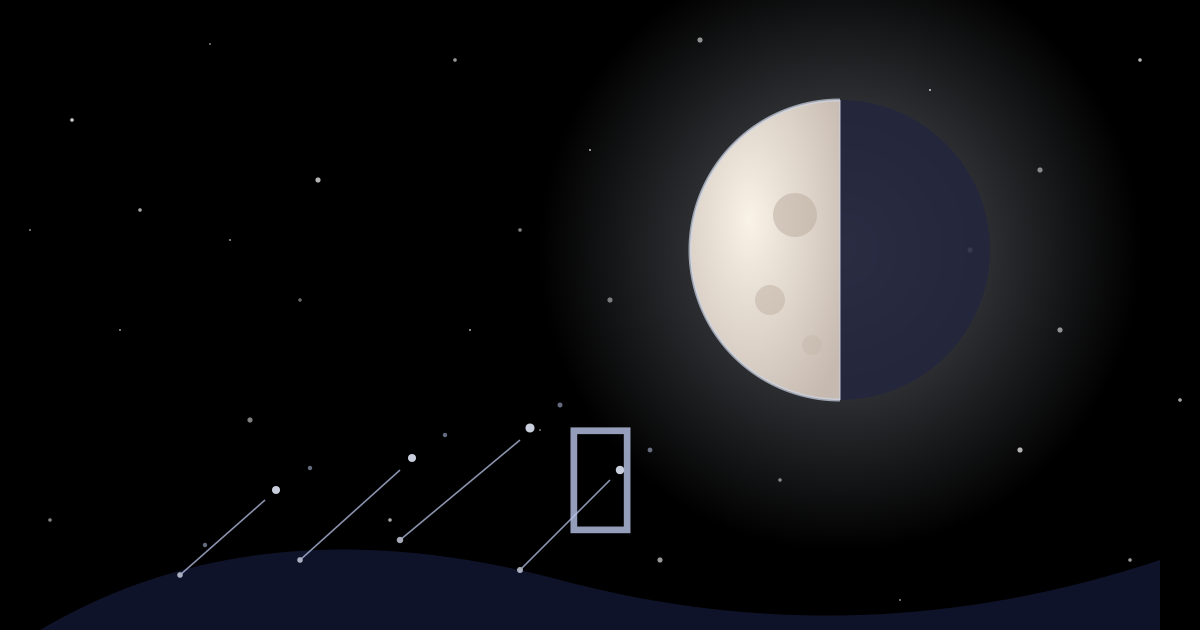
Every month, the moon runs a roughly 29.5-day cycle from darkness to full brilliance and back to darkness again. The last quarter moon is the milestone about three-quarters of the way through that journey — approximately 21 days after the new moon, and about seven days after the full moon. Half of the moon's face is lit and half is dark, which is exactly why astronomers sometimes call this phase the third quarter moon: the moon has completed three quarters of its orbit around Earth, not because only a quarter of it is visible.
The "quarter" naming trips up almost everyone at first. The moon cycle is divided into quarters by time, not by light: new moon to first quarter is one quarter of the orbit, first quarter to full moon is the second, full moon to last quarter is the third, and last quarter back to new moon closes the fourth. At both quarter phases the moon looks exactly half lit — but they are mirror images. In the Northern Hemisphere, the first quarter moon shows its right half illuminated; the last quarter moon shows its left half illuminated. (In the Southern Hemisphere, the halves swap.) A handy memory trick: the last quarter moon looks like a "C" shape of light, curving like the start of the word "closing" — the cycle is closing.
The last quarter moon has a quiet, underdog reputation among the phases. It never headlines the calendar the way eclipses, supermoons, or the big named full moons do. It rises around midnight, climbs high in the early morning hours, and is often still visible after sunrise — which means half the people who ever see it notice it by accident on their way to work. The folklore treats that unglamorous visibility as the whole point: this is not the moon of grand rituals and dramatic declarations. It is the moon of the morning after, of quiet accounting, of deciding what stays and what goes.
The Spiritual Meaning of the Last Quarter Moon
Where the first quarter moon's folklore is about commitment and the full moon's is about illumination, the last quarter moon's folklore is about the art of release. Three themes run through the traditional reading of this phase.
Release
The dominant symbolism is simple: let something go. The moon is visibly losing light, and the lore reads that waning as instruction. This is the phase traditionally linked to forgiving an old hurt, dropping a grudge, quitting a habit that no longer serves, or admitting a project is not working and stopping the slow bleed of attention. The reflective logic is gentle rather than dramatic — release is framed as making room, not as failure. Every lunar gardener knows you prune in the waning phase so the new growth has light.
Honest evaluation
The second theme is the review. About three weeks have passed since the new moon, when many people following lunar traditions set their intentions. The last quarter is the folklore's scheduled checkpoint: what did you set out to do, and how is it actually going? The tradition encourages a specific kind of honesty here — not the first-quarter's "push harder," but "is this even the right thing to push on?" It is the phase of adjusting the sails rather than rowing harder, of rewriting the intention, or of quietly deciding that this particular goal belongs to a future season.
Forgiveness and clearing
The third theme is the most personal: forgiveness, including self-forgiveness. Lunar folklore has long associated the waning moon with loosening — of attachments, of resentments, of the story you keep retelling about what someone did or what you failed to do. The suggested practices are symbolic: writing the unsent letter and destroying it, saying the apology out loud in an empty room, cleaning one drawer as a stand-in for the inner clutter. The psychology underneath is sound even stripped of the mysticism: rituals of closure give the mind permission to stop rehearsing.
Last Quarter Moon vs. First Quarter Moon
The two half-lit moons are the most confused pair in the whole lunar calendar, so the distinction is worth pinning down. The first quarter moon comes about a week after the new moon, rising around noon and setting around midnight, with its right half lit in the Northern Hemisphere. Its traditional symbolism is commitment and decisive action — the obstacles that surfaced as your intentions took shape, and the push needed to overcome them. It is a building moon, an adding moon, a "yes, and" moon.
The last quarter moon comes about a week after the full moon, rising around midnight and setting around noon, with its left half lit. Its traditional symbolism is release and course-correction — the evaluation after the harvest, the letting go of what did not work. It is an editing moon, a subtracting moon, a "yes, but differently" moon.
A farming metaphor runs through the old almanac lore: the first quarter is planting-season energy, the last quarter is pruning-season energy. Neither is better; they are the two halves of any honest cycle. Every tradition that takes the moon seriously — agriculture, project planning, even workout programming — respects both the push and the cut. The last quarter moon is the cut, and the folklore treats it as sacred work rather than loss.
Where the Last Quarter Moon Fits in the Cycle's Story
If you track the eight phases as a monthly narrative, each one has a chapter, and the last quarter moon is the penultimate chapter — the one before the ending. The story so far: the new moon planted the seed of intention. The waxing crescent took the first tender steps. The first quarter overcame the first real obstacles. The waxing gibbous refined and adjusted. The full moon brought illumination — the bright, sometimes uncomfortable clarity of seeing things as they are. Then the waning gibbous began the harvest: gratitude for what came through, sharing the results.
The last quarter moon is where the story's heroine does the honest audit. What worked? What did not? What needs to be forgiven, released, or rewritten before the cycle closes? And then the waning crescent closes the book with rest and surrender, making the dark space the new moon needs to begin again. Skipping the last quarter's audit, in this narrative, is how you end up carrying dead weight into the next cycle — same intentions, same frustrations, same unresolved residue. The folklore's warning is gentle but clear: the new moon cannot plant in soil that was never cleared.
A Simple Last Quarter Moon Ritual: The Fifteen-Minute Release
The last quarter moon's traditional practice is a release ritual, and it fits on one evening in about fifteen minutes. You will need a pen, paper, and either a fire-safe bowl or a shredder. Fire safety matters more than atmosphere — a candle and a ceramic dish are enough, or skip the fire entirely and tear the paper into tiny pieces.
First, spend five minutes on the audit. Look back at the intentions you set at the new moon — or simply at the month behind you — and write down three honest answers: what worked, what did not, and what you are still carrying that you do not want to carry anymore. Be specific. "I am still annoyed about the comment at dinner" is a better release candidate than "negativity."
Then write the release list on a separate sheet: everything you are choosing to let go of. The grudge, the unrealistic expectation, the half-finished obligation you secretly resent, the story about yourself that expired years ago. Read each item aloud once, slowly, and acknowledge it — the tradition insists that release works better on things you have actually named than on vague "bad energy."
Then destroy the list. Burn it safely if that feels right, or tear it into confetti and throw it away. The destruction is the ritual's core symbol: the thing is gone, and so is the permission to keep rehearsing it. Close with one sentence of gratitude for the month — what came through, what you learned, even what the failures taught. Then rest. The last quarter moon asks nothing more of you. That is the whole point: the release is the work.
The Honest Fine Print
This is a mystical-entertainment site, and the usual honesty applies: the last quarter moon will not forgive your grudges for you, close your loops for you, or magically clear your schedule. Half-lit moons exert no measurable influence on human decisions — the influence is the one you grant them by sitting down, once a month, to do an honest audit you might otherwise postpone forever. The moon is a calendar, not a therapist.
What the last quarter moon genuinely offers is a recurring appointment with the hardest question: what are you still holding that is not helping? Religions, therapy modalities, and productivity systems all schedule some version of this review — the lunar version just happens to be beautiful and free. Take the symbolism, skip the superstition, and burn the list. The list is paper either way. The relief, people consistently report, is real.
Your Last Quarter Moon Game Plan
The last quarter moon rises around midnight and rides high through the morning hours — look east in the small hours or catch it lingering in the daytime sky after sunrise. If you want to work with its folklore:
- When to look: the night of the last quarter moon, after midnight — it climbs the sky while most people sleep and is still up at dawn.
- The identifying check: in the Northern Hemisphere, the left half of the moon is lit — the "C" of closing. If the right half is lit, you are looking at a first quarter moon instead.
- The ritual night: do the fifteen-minute release on the last quarter night or within a day or two on either side — the folklore is flexible about timing.
- The follow-through: the release list only matters if you stop picking the items back up. When the old grievance or habit knocks this week, the lore's answer is the same every time: already released.
The next last quarter moon arrives on October 29, 2026, in the current lunar cycle — and then again about every 29.5 days after that. Go find the half-lit moon in the small hours, audit the month, burn the list, and clear the soil. The new moon is coming, and it will need the room.
Frequently asked questions
What is the last quarter moon?
The last quarter moon is the half-lit moon that appears about three weeks into the lunar cycle, roughly seven days after the full moon. In the Northern Hemisphere it looks like the left half of the moon is illuminated. It is also called the third quarter moon, because the moon is three-quarters of the way through its orbit around Earth.
Is the last quarter moon good for manifesting?
In lunar folklore the last quarter moon is not the peak manifesting window — that role belongs to the waxing phases and the full moon. The last quarter is the folklore's "harvest review" phase: release what is not working, adjust your approach, forgive what needs forgiving, and tidy up loose ends so the next new moon starts clean. As entertainment, it is framed as editing, not wishing.
What should I do during the last quarter moon?
Lunar tradition pairs this phase with release work: write down what you are ready to let go of — a grudge, a stalled goal, a bad habit — and safely destroy the paper as a symbolic act. It is also the traditional time to forgive, reconcile, declutter, and adjust any intention you set at the new moon that is not quite working. The practice is reflective entertainment, not a guaranteed result.
What is the difference between the first and last quarter moons?
Both are half-lit moons, but they face opposite directions in the cycle. The first quarter moon appears about a week after the new moon and looks like the right half is lit in the Northern Hemisphere; its folklore is about commitment and decisive action. The last quarter moon appears about a week after the full moon with the left half lit; its folklore is about release, evaluation, and forgiveness. One is a push forward, the other is a graceful letting go.
When is the next last quarter moon?
The last quarter moon arrives roughly once every 29.5 days, about three weeks after each new moon. In the lunar cycle running through October 2026, the last quarter moon falls on October 29. After that, the next one lands about a month later, on November 28, 2026.
Keep exploring
The 8 Moon Phases & Their Meanings: A Complete Spiritual Guide
Explore the spiritual meaning of all 8 moon phases — from new moon intentions to full moon release — and learn how to align your rituals with each phase.
Read the meaning →
New Moon Intentions Ritual: How to Set Intentions That Manifest
Discover the new moon intentions ritual step by step — how to write powerful intentions, time your ritual, and tend your goals through the waxing moon.
Read the meaning →
Full Moon Ritual Guide: Release & Manifest Under the Full Moon
Learn exactly how to perform a powerful full moon ritual for release, gratitude, and renewal — step-by-step guide with supplies, timing, and intention ideas.
Read the meaning →
Waxing Gibbous Moon Meaning: Spiritual Significance of the Refinement Phase
What does the waxing gibbous moon mean spiritually? Discover the symbolism of this nearly-full phase — refinement, adjustment, and patient trust — plus a simple ritual for preparing for the full moon.
Read the meaning →