
Snow Moon Meaning: Why February's Full Moon Is Called the Snow Moon
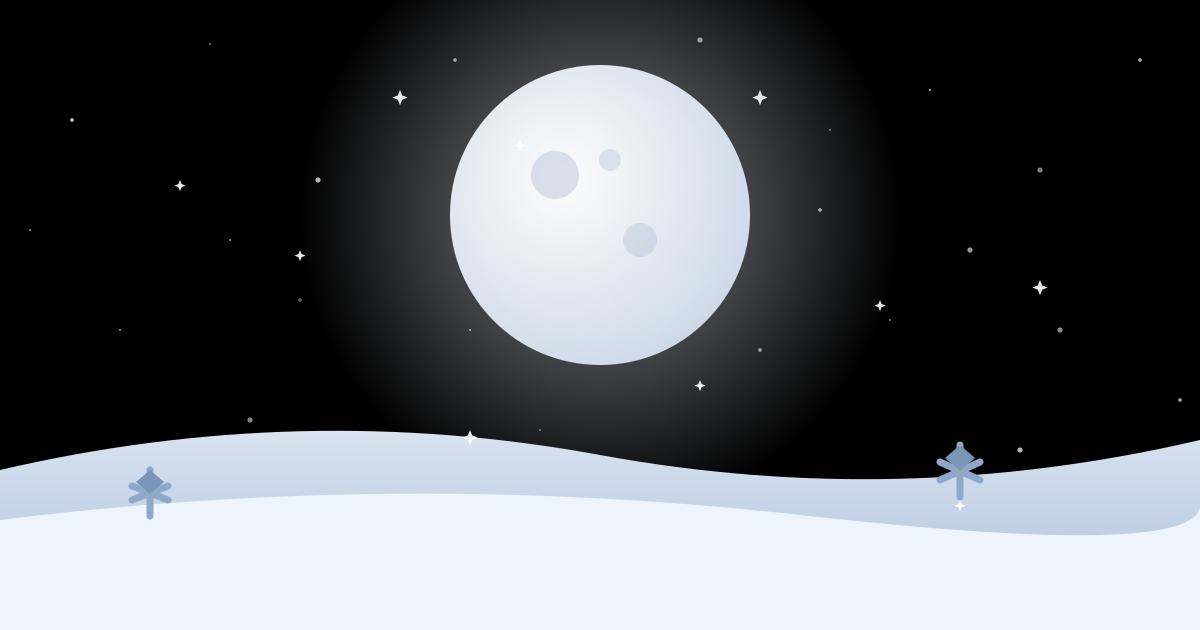
Why Is February's Full Moon Called the Snow Moon?
The named full moons of the year — Harvest, Hunter's, Wolf, Flower — come mostly from North American folk tradition, popularized by the Old Farmer's Almanac. The Snow Moon is February's entry, and its name needs no detective work: in much of North America, February brings the heaviest snows of the year. January is colder, December is darker, but February is when the accumulation peaks — the deep-snow month, the month when winter stops being a novelty and becomes the landscape.
The name carries a long shelf of alternates, and the alternates tell the harder half of the story. Hunger Moon is the most common second name, and it comes from the same reality: game was scarce, hunting was brutally hard, and winter stores were running thin by February. The Storm Moon refers to February's frequent blizzards. Some traditions recorded by the Almanac include the Bone Moon — a name that needs no translation — and the Bear Moon, a nod to the season when bears sleep through the hunger in their dens, waiting it out the way everything else in February must.
The usual honesty note applies: historians debate how much of the Almanac's list is genuinely old Indigenous naming versus colonial-era folk tradition, and the specific nations credited vary by source. What is solid is the pattern — February as the snow month — because it is observable fact dressed up as folklore. Anyone who has lived through a February in the northern United States or Canada knows the name fits. The snow is the point. Everything else is commentary.
Astronomically, the Snow Moon is unremarkable in the way most named moons are unremarkable: it is simply February's full moon, full for the same reasons every full moon is full. It rides a moderately high arc in the Northern Hemisphere sky — not as high as December and January's moons, but still commanding long winter nights. Its reputation is entirely atmospheric. February's air is often the coldest and clearest of the year, and a full moon over fresh snow is one of the brightest natural light shows the night sky offers, because the snow bounces the moonlight back at you. The Snow Moon is the only named moon whose stage is also its mirror.
The Spiritual Meaning of the Snow Moon
If named moons carry emotional weather, the Snow Moon's weather is the hush: patience, honest wanting, and the discipline of rest. Three themes dominate the spiritual reading of this moon.
The hunger audit
The Hunger Moon name survives because it names something realer than appetite. February is the month when the things you have been denying yourself all winter get loud — the project you shelved, the conversation you postponed, the life change you told yourself you'd make after the holidays, then after the new year, then after the cold snaps. In the lore, the Snow Moon asks a blunt question: what are you actually hungry for? Not the resolution-version, polished and presentable — the raw version, the one you are a little embarrassed to admit. The folklore treats unacknowledged desire as the real hunger of February, and naming it as the first meal.
Stillness as a practice
Snow does something no other weather does: it quiets the world. Sound deadens, colors wash out, movement slows, and the landscape enters a state that looks like nothing happening. The Snow Moon's lore holds that this is not nothing — it is the practice. Stillness is treated here as a skill rather than an absence: the deliberate choice to stop forcing outcomes for one moon cycle. February is the year's reminder that rest is not the reward for finishing; it is part of the work. The reflective prompt: what are you currently trying to force that would benefit from one month of being left alone?
The pause before renewal
Every winter story knows that spring is coming, and the Snow Moon's lore is the chapter right before the turn. Beneath the snow, nothing has died that was not meant to die — the perennials are waiting, the seeds are dormant, the whole landscape is holding its breath. In the folklore, this moon is the symbol of trust in unseen processes: the things you planted last year, the decisions you made in the autumn, the slow work that shows no surface progress. The Snow Moon asks you to act like the seeds do — to be quiet, to be patient, and to trust that the thaw is not something you have to earn.
Snow Moon vs. Other Named Full Moons
Set against its neighbors, the Snow Moon's emotional weather is distinctive. The Wolf Moon (January) is about voice and appetite — the living thing in the winter landscape, what you hunger for and whether you will say it out loud. The Snow Moon (February) is about the aftermath of that honesty: now that you have named what you want, can you sit with the wanting without panicking about it? Where the Wolf Moon is loud, the Snow Moon is hushed. One is the cry; the other is the silence after.
Then comes the Worm Moon (March), and the contrast sharpens further. The Worm Moon is about thaw and emergence — earthworms surfacing, the first green, the world's restart. The Snow Moon is the last full moon of the deep freeze, the final chapter before the turning. If you track the named moons as a yearly story, the Wolf Moon is the chapter where the protagonist gets honest, the Snow Moon is the chapter where they wait, and the Worm Moon is the chapter where the waiting pays off. The Snow Moon is the hardest of the three to romanticize, which is exactly why the lore values it: patience is the least photogenic virtue and the most necessary one.
One confusion worth clearing up: the Snow Moon is not a supermoon by definition, and it is not any bluer or larger than other full moons. It can look unusually bright — but that is the snow doing the work, reflecting moonlight back up into the night. Any site selling you the Snow Moon as the year's most spectacular moon is selling theater. The theater is free, it happens every February, and it is genuinely lovely. It just isn't astronomy.
What the Snow Moon Means for You: Three Reflection Themes
If you want to work with this moon's symbolism rather than just admire it, the lore suggests three questions — one for each theme. These are journaling prompts, not cosmic instructions. The moon will do whatever it does regardless, and the value is in ten minutes of honesty on the coldest nights of the year.
The hunger audit. Write down one desire you have been downplaying — to yourself, not to anyone else — and describe it plainly, without the justifications you usually attach. Then write down what you are afraid would happen if you admitted it out loud. The point is not to act on it immediately; the Snow Moon's lore is about acknowledgment, not execution. February is for naming the hunger, not feeding it. The feeding comes later, when the ground thaws.
The stillness inventory. List the three things you are currently trying hardest to force — the email you keep rewriting, the outcome you keep checking on, the plan you keep revising. Pick one and give it a Snow Moon moratorium: no action, no checking, no revising until the next full moon. The lore's claim is that stillness is information — that stepping back for a month tells you whether the thing needed your effort at all, or just your anxiety.
The seed check. What did you plant — literally or figuratively — in the last year that shows no surface progress yet? The Snow Moon's lore treats dormancy as success-in-progress: the seed under the snow is not failing, it is waiting. Write down one slow thing you are tempted to declare dead, and give it the benefit of February's doubt. Some things are just on winter's schedule, not yours.
A Simple Snow Moon Ritual: The February Hush
Full moon folklore centers on release, and the Snow Moon's version is the quietest ritual of the year: the February hush. Fifteen minutes, no supplies beyond paper, a pen, and a window — and if you have snow outside, the ritual is twice as good, because the whole point is the hush that snow makes.
Go to a window after dark on the full moon night, or step outside if you can stand the cold. If there is snow, look at the way the moonlight sits on it — that blue-white glow is the Snow Moon's signature, the mirror effect that makes February's moonlight the brightest of the year. If there is no snow, fill a bowl with ice water and set it where the moonlight (or candlelight) can catch the surface; the folklore is flexible about the medium, strict about the mood. Spend two full minutes just looking. No phone, no narration, no productive thinking. Two minutes of hush.
Then write two short lines. The first: the one desire from your hunger audit, stated as plainly as you can manage. The second: the one thing you are giving a moratorium — the forcing you are officially pausing until the next full moon. Fold the paper and put it somewhere you will find in a month: a drawer, a book, a coat pocket. You are not releasing these things the way the Wolf Moon releases them; you are wintering them — setting them aside the way the landscape sets aside its seeds, to be revisited when the thaw comes. Blow out the candle, if you lit one, and go back inside. The hush does the rest.
The Honest Fine Print
This is a mystical-entertainment site, and the usual honesty applies: the Snow Moon will not make you patient, reveal your true desires, or guarantee that the things you are waiting for will arrive. Named moons are folklore, and folklore is a storytelling technology, not a force of nature. The snow that gave this moon its name was weather, not a message. February's full moon exerts no special influence on human affairs beyond the ordinary full moon's light — and even that influence is mostly about visibility and sleep disruption, not destiny.
What the Snow Moon genuinely offers is the year's best excuse for doing less on purpose. February is the month when willpower is thinnest and the cultural pressure to be productive never lets up, and a named, storied moon is a better reason to pause than a motivational quote. Take the symbolism, leave the superstition, and keep the folded paper in the drawer. The desire and the moratorium are yours regardless of what the moon was doing — and the thaw, as always, is on its own schedule.
Your Snow Moon Game Plan
The next Snow Moon rises with February's full moon — the second named moon of the year, arriving in the month of the heaviest snows. If you want to catch it:
- When to look: the night of February's full moon, after moonrise — it will be the bright, high moon dominating long winter nights, with snow (where it lies) doubling the light.
- Where to look: anywhere with a clear view and, ideally, snow on the ground; the moonlight-on-snow effect is the whole show. A hill, a field, or even an unlit parking lot works.
- The ritual night: do the fifteen-minute February hush on the full moon night itself, or any of the two nights flanking it — the folklore is generous about timing, and the snow does not check the calendar.
- The follow-through: the lore's real assignment comes after: honor the moratorium — leave the forced thing alone until the next full moon — and revisit the folded paper when March arrives. A moon is a prompt; the thaw is the answer.
The Snow Moon has been rising over the deepest snows for as long as there have been people to name it. Go look at it, say nothing for two minutes, and let the rest of February be what it is: cold, quiet, and patient — the world holding its breath before the spring.
Frequently asked questions
What is the Snow Moon?
The Snow Moon is the traditional name for February's full moon. The name comes from North American folklore, popularized by the Old Farmer's Almanac, and refers to February's place as the month of the year's heaviest snowfall. It is also called the Hunger Moon and the Storm Moon.
When is the next Snow Moon?
The Snow Moon rises with February's full moon each year. The next Snow Moon falls in February 2027. Each February full moon is traditionally called the Snow Moon, regardless of the exact calendar date.
What is the spiritual meaning of the Snow Moon?
In spiritual folklore, the Snow Moon symbolizes patience, honest desire, and rest before renewal. Falling in the deepest, quietest stretch of winter, it is associated with acknowledging what you hunger for, practicing stillness, and trusting the pause before spring's growth.
What should I do during the Snow Moon?
A simple Snow Moon practice: stand at a window or go outside on the full moon night, watch the moonlight on the snow (or hold a bowl of ice water if there is no snow), and write one desire you have been denying and one thing you are done forcing. The ritual works as reflective entertainment, not as a guaranteed change.
What is the difference between the Snow Moon and the Hunger Moon?
They are alternate names for the same February full moon. Snow Moon emphasizes the weather — the month's famously heavy snows — while Hunger Moon emphasizes the hardship: game was scarce and winter stores ran low. Different names for the same cold reality.
Keep exploring
Full Moon Ritual Guide: Release & Manifest Under the Full Moon
Learn exactly how to perform a powerful full moon ritual for release, gratitude, and renewal — step-by-step guide with supplies, timing, and intention ideas.
Read the meaning →
Blood Moon Meaning: Spiritual Significance of the Red Lunar Eclipse
What does a blood moon mean spiritually? Explore the meaning of the red moon during a total lunar eclipse — transformation, endings, and emotional release.
Read the meaning →
Harvest Moon Meaning: Spiritual Significance & Folklore
What does the harvest moon mean? Discover the spiritual significance of the golden autumn full moon — abundance, gratitude, and reaping what you sow.
Read the meaning →
The 8 Moon Phases & Their Meanings: A Complete Spiritual Guide
Explore the spiritual meaning of all 8 moon phases — from new moon intentions to full moon release — and learn how to align your rituals with each phase.
Read the meaning →