
Wolf Moon Meaning: Why January's Full Moon Is Called the Wolf Moon
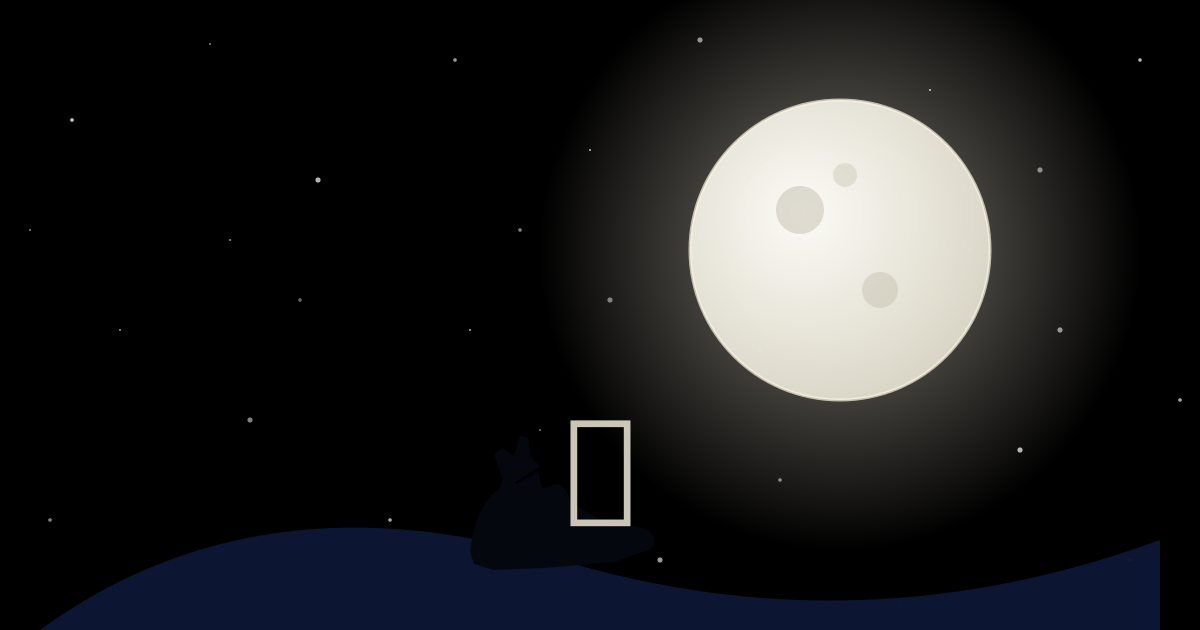
Why Is January's Full Moon Called the Wolf Moon?
The names we give the year's full moons — Harvest, Hunter's, Snow, Flower — mostly come from North American folk tradition, popularized by the Old Farmer's Almanac. The Wolf Moon is January's entry, and its origin story is the most cinematic of all: amid the cold and deep snows of midwinter, the wolves howled hungrily outside the village. The name is attributed to early colonial settlers hearing actual wolf packs in the dark January woods, though some traditions credit it to Indigenous peoples' names for the month.
A quick honesty note before the lore begins: historians debate which specific nations used the "wolf" name and how much of the Almanac's list is settler folklore versus genuinely ancient naming. What is certain is that the name has been attached to January's moon in American popular culture for well over a century, and it stuck because it is a perfect image — the loneliest month, the brightest light, the wild things crying out in the dark. Whatever its precise anthropology, the Wolf Moon is real in the only way moon names are real: people have been looking up at January's full moon and calling it that for generations.
As a piece of astronomy trivia, the Wolf Moon is the first full moon of the calendar year, and it always follows the winter solstice by roughly three weeks. In the Northern Hemisphere it rides high across the sky on the longest nights of the year — which is simply geometry (the full moon sits opposite the sun, and in January the sun rides low), but which adds to the lore's drama. The moon is bright because the nights are long and the air is often cold and clear. The wolves, metaphorical or not, have the perfect stage.
The Spiritual Meaning of the Wolf Moon
Named moons carry emotional weather in the folklore, and the Wolf Moon's weather is midwinter: endurance, instinct, and the company you keep. Three themes dominate the spiritual reading of this moon.
Instinct over intellect
The wolf survives January on instinct — it does not hold meetings about the cold. In the lore, the Wolf Moon asks when you last trusted a gut feeling without demanding it produce a spreadsheet first. January is the month of resolutions and five-year plans, and the Wolf Moon's counter-message is that your body knew things before your planner did. The reflective prompt: what did your instincts tell you last year that you argued yourself out of?
The pack
Wolves are pack animals, and the folklore of this moon is heavy on community. Midwinter is when the pack matters most — no wolf hunts January alone. The lore frames the Wolf Moon as the month to audit your pack: who shows up in the dark months, and who are you showing up for? Loneliness peaks in winter for a lot of people, and the moon's symbolism treats reaching out as the instinct, not the exception.
Quiet endurance
The third theme is the least glamorous and the most honest: keeping going. The Wolf Moon is not about breakthroughs or manifestations or new beginnings — every other moon gets those themes. This one is about the unglamorous middle of the cold season, when the novelty of January has worn off and spring is still a rumor. The lore's virtue here is simply not quitting. Light a candle if you like; the symbolism will survive without one.
Wolf Moon vs. Other Named Full Moons
Every named moon has its emotional weather, and the Wolf Moon's is distinctive when set against its neighbors. The Hunter's Moon (October) is about the hunt — pursuit, effort, gathering. The Beaver Moon (November) is about preparation — building the dam before the freeze. The Cold Moon (December, an alternate name for December's full moon) is about the deep night — stillness and the year's turning. The Snow Moon (February) is about the aftermath — the heaviest snows, the waiting.
The Wolf Moon sits between the Cold Moon and the Snow Moon, and its theme is the living thing in the landscape rather than the landscape itself. The other winter moons are about weather and stillness; this one is about appetite and voice — what you hunger for, and whether you are willing to say it out loud. If you track the named moons as a yearly story, the Wolf Moon is the chapter where the protagonist gets honest about what they actually want.
One common confusion to clear up: the Wolf Moon is not a supermoon by definition. It is only a supermoon in years when January's full moon coincides with perigee, the moon's closest approach to Earth. Its fame is folkloric, not astronomical — it is beloved for the name and the midwinter drama, not for being unusually large. Any site telling you the Wolf Moon is "the biggest moon of the year" is selling you theater. The theater is lovely; it just isn't astronomy.
What the Wolf Moon Means for You: Three Reflection Themes
If you want to work with the moon's symbolism rather than just admire it, the lore suggests three questions, one for each theme. These are journaling prompts, not cosmic instructions — the moon will do whatever it does regardless, and the value is in the ten minutes of honesty.
The instinct audit. Write down one decision from the past year where your first instinct was right and you talked yourself out of it, and one where your first instinct was wrong and reflection saved you. The point is not to conclude that instinct is always right — it isn't — but to learn your own pattern: do you override yourself too easily, or not easily enough?
The pack audit. List the three people you would call at 2 a.m. in a real emergency, and then — the harder part — the three people who would call you. If the lists don't overlap the way you'd like, the lore of the Wolf Moon says January is the month to close the gap: one call, one invitation, one check-in. Community is the wolf's survival technology.
The endurance inventory. What are you currently enduring that deserves acknowledgment rather than a pep talk? The Wolf Moon's lore honors the middle of hard things — not the inspiring beginning, not the triumphant end, just the long dark stretch. Naming it is the ritual. Some winters are just survived, and surviving them counts.
A Simple Wolf Moon Ritual: The January Release
Full moon folklore centers on release — the waning that follows is the symbolic exhale — and the Wolf Moon's version is the January release. Keep it to fifteen minutes; elaborate ceremony is optional and, frankly, misses the point of a moon whose virtue is plain endurance.
You will need paper, a pen, and a candle or a window with a view of the moon. Write two short lists. The first: one instinct you ignored this year that you wish you had honored. The second: one burden you are done carrying — a grudge, a worry, a standard you hold yourself to that no one else does. Read both lists aloud, once. Then destroy the paper safely — burn it in a fireproof bowl if you can do so safely, or tear it into small pieces and throw it away. The destruction is the release; the reading is the honesty.
Then, the wolf part: go outside or open the window, look at the moon if it is visible, and say one thing you want out loud — not whispered, not journaled, spoken. The folklore says the wolf's power is the voice; the psychology says that stating a desire aloud makes it harder to pretend you never had it. Both agree the point is the saying. Then blow out the candle and go inside. That's the whole ritual. Fifteen minutes, one honest sentence, and the dark January sky doing what it has always done.
The Honest Fine Print
This is a mystical-entertainment site, and the usual honesty applies: the Wolf Moon will not change your year, heal your relationships, or make your instincts sharper. Named moons are folklore, and folklore is a storytelling technology, not a force of nature. The wolves that gave this moon its name were hungry animals in a hard winter, not spirit guides. January's full moon exerts no special influence on human affairs beyond the ordinary full moon's light — and even that influence is mostly about visibility and sleep disruption, not destiny.
What the Wolf Moon genuinely offers is a well-timed excuse for reflection. The first full moon of the year arrives just as resolutions are wobbling, and a named, storied moon is a better journaling prompt than a blank page. Take the symbolism, leave the superstition, and keep the one honest sentence you said out loud. That sentence is yours regardless of what the moon was doing.
Your Wolf Moon Game Plan
The next Wolf Moon rises with January's full moon — the first full moon of the new year, about three weeks after the winter solstice. If you want to catch it:
- When to look: the night of January's full moon, after moonrise — it will be the bright, high-riding moon dominating the winter sky all night long.
- Where to look: anywhere with a clear eastern horizon at dusk; the full moon rises as the sun sets. Cold, clear January air often makes it spectacularly sharp.
- The ritual night: do the fifteen-minute January release on the full moon night itself, or any of the two nights flanking it — the folklore is generous about timing.
- The follow-through: the lore's real assignment comes after: the one call to your pack, the one instinct you will stop overriding. A moon is a prompt; the week after is the answer.
The Wolf Moon has been rising over midwinter for as long as there have been people to name it. Go look at it, say the honest thing out loud, and let the rest of January be what it is: cold, dark, and survivable — especially in good company.
Frequently asked questions
What is the Wolf Moon?
The Wolf Moon is the traditional name for January's full moon. The name comes from North American folklore, popularized by the Old Farmer's Almanac, describing hungry wolves howling outside villages on midwinter nights. It is the first full moon of the calendar year.
When is the next Wolf Moon?
The Wolf Moon rises with January's full moon each year. The next Wolf Moon falls in January 2027, about two months after the winter solstice. Each January full moon is traditionally called the Wolf Moon, regardless of the exact calendar date.
What is the spiritual meaning of the Wolf Moon?
In spiritual folklore, the Wolf Moon symbolizes instinct, community, and endurance through hardship. As the first full moon of the year falling in deep winter, it is associated with trusting your instincts, leaning on your pack, and honoring the quiet strength it takes to keep going when resources feel thin.
What should I do during the Wolf Moon?
Full moon folklore centers on release and gratitude. A simple Wolf Moon practice: write down one instinct you ignored this year and one burden you are ready to release, read them under the moon or by candlelight, and then burn or tear the paper as a symbolic letting-go. The ritual works as reflective entertainment, not as a guaranteed change.
Is the Wolf Moon the biggest full moon of the year?
Not necessarily. The Wolf Moon is simply January's named full moon — it is only a supermoon in years when the full moon coincides with the moon's closest approach to Earth. Its fame comes from the name and the midwinter folklore, not from being unusually large or bright.
Keep exploring

Full Moon Ritual Guide: Release & Manifest Under the Full Moon
Learn exactly how to perform a powerful full moon ritual for release, gratitude, and renewal — step-by-step guide with supplies, timing, and intention ideas.
Read the meaning →
Blood Moon Meaning: Spiritual Significance of the Red Lunar Eclipse
What does a blood moon mean spiritually? Explore the meaning of the red moon during a total lunar eclipse — transformation, endings, and emotional release.
Read the meaning →
Harvest Moon Meaning: Spiritual Significance & Folklore
What does the harvest moon mean? Discover the spiritual significance of the golden autumn full moon — abundance, gratitude, and reaping what you sow.
Read the meaning →
The 8 Moon Phases & Their Meanings: A Complete Spiritual Guide
Explore the spiritual meaning of all 8 moon phases — from new moon intentions to full moon release — and learn how to align your rituals with each phase.
Read the meaning →