
Oracle Cards for Career Decisions: Spreads for Job Choices & Crossroads

There is a particular kind of career stuckness that facts alone cannot fix. You have the spreadsheet of pros and cons. You have compared the salaries, the commutes, the managers. You have asked three friends and gotten four opinions. And still, at 2 a.m., the question hums: should I stay, or should I go? That is the moment most people reach for an oracle deck — not because they want a card to choose for them, but because they want a different kind of conversation with themselves.
Used honestly, that is exactly what a career reading gives you. A card does not know your boss, your mortgage, or your industry. What it does is interrupt your usual loop. The image lands, something in you reacts — relief, resistance, a sudden laugh — and that reaction tells you something your pros-and-cons list could not. The card is a mirror with better lighting. This guide shows you how to use that mirror well, without handing your career over to it.
What Oracle Cards Can — and Cannot — Do for Your Career
Let us set the frame before the first shuffle, because the frame is what makes a career reading useful instead of confusing. For entertainment and reflection, oracle cards are wonderful at a few specific things. They slow a rushed decision down. They name an emotion you have been calling something else — boredom that is really burnout, ambition that is really restlessness, loyalty that is really fear. They point at a factor you have been ignoring, like the commute you keep minimizing or the learning opportunity you keep dismissing. And they give you language: a single image or word you can carry into a journal entry, a conversation with a mentor, or a negotiation.
What they cannot do is just as important. A card cannot predict whether you will get the job, whether the startup will survive, or whether a new boss will be kind. It cannot replace research: talking to people in the role, reading the offer letter carefully, checking the numbers, or sleeping on a big decision. And it should never be the only voice in the room for a decision that affects your income, your health, or your family. If a reading ever tells you to quit on the spot, ignore a contract, or take a financial risk you cannot afford, treat that as a prompt to pause and gather facts — never as an instruction.
The healthiest rule for career readings is simple: cards for reflection, facts for decisions. Every spread in this guide ends with a practical step for that reason. A reading that leaves you only with a feeling has not finished its work; a reading that leaves you with one concrete action — send the email, ask the question, update the resume — has.
Before You Pull: Ask a Better Work Question
Career readings go wrong most often before a single card is drawn, because the question is too big, too vague, or too loaded. “Should I quit my job?” is a verdict question, and verdict questions make every card feel like a judge. Better questions invite reflection instead of a ruling. They name the real tension and leave room for an answer you did not expect.
Instead of “Should I quit?” try: “What am I not seeing about my current role?” or “What do I actually need from my next chapter at work?” The first question opens your eyes; the second names your criteria, which is what a good decision is built from.
Instead of “Will I get the job?” try: “What energy should I bring to this interview?” or “What should I pay attention to in this role?” You cannot control the hiring panel, but you can control your preparation and your attention — and those are the things a reading can genuinely support.
Instead of “Is this offer good?” try: “What matters most to me in this offer, beyond the salary?” or “What would I regret not asking about?” Salary matters, but so do hours, growth, manager style, and stability. A card that points at one of those quiet factors is doing its best work.
Instead of “What is my dream career?” try: “What part of my work lights me up that I have been ignoring?” Dream-career questions are so large they paralyze. A smaller question — what energizes you on a Tuesday afternoon — gives you something you can act on this week.
Write your question down before you shuffle. Readers who write the question first report clearer readings, and the reason is simple: the written question stops you from quietly rewriting it after you see a card you dislike. Shuffle while holding the question lightly, not desperately. Then pull, and read the card as a response to the question you actually wrote.
Spread 1: The One-Card Work Check-In
Best for: a weekly pulse check, a Monday-morning intention, or the day before a big meeting. Time: two minutes.
Pull one card and ask: “What do I need to notice about work this week?” Read the image first, before the guidebook. What do you see — a door, a storm, a ladder, an open road? Notice your first feeling before your first interpretation. That feeling is data: excitement, dread, boredom, and relief each point at something real.
Then finish with a sentence in your journal: “This week, I will pay attention to ___.” That sentence is the whole reading. If the card shows a closed door and you write “I will pay attention to the conversations I keep avoiding,” you have turned a symbol into a plan. Carry the card's image in your mind through the week and check back on Friday: was the card pointing at something true? Over time, this simple practice teaches you your deck's vocabulary for work — which images mean rest, which mean risk, and which mean it is time to speak up.
Spread 2: Stay, Leave, Grow — The Classic Three-Card Crossroads
Best for: the stay-or-go question, a role change, or a move to a new team. Time: ten minutes.
Lay out three cards in a row. Card 1 is Stay: what does staying in this role teach or offer you right now? Card 2 is Leave: what does leaving open up — and what does it cost? Card 3 is Grow: what does growth look like, whichever path you choose? That third card matters most, because it refuses the trap of the binary. Growth is not owned by either option; it is something you carry with you.
Read the three cards as a story, not as votes. Two encouraging cards do not mean “go,” and two heavy cards do not mean “stay.” Look for the tension: does the Stay card show comfort or stagnation? Does the Leave card show freedom or fear? Does the Grow card point at a skill, a boundary, or a conversation? The most honest readings are the ones where the cards disagree with each other, because real career decisions are disagreements too — between security and ambition, loyalty and hunger, rest and momentum.
After reading, write down one fact you still need before deciding: the salary band, the notice period, the manager's actual expectations, the state of your savings. Then go get that fact. The spread's job was to show you what to investigate, not to replace the investigation.
Spread 3: The Crossroads — Two Paths, Side by Side
Best for: choosing between two concrete options — two offers, a promotion versus a new company, freelancing versus employment. Time: fifteen minutes.
Lay out two columns of two cards each. The left column is Path A: card 1 is what this path offers, card 2 is what it asks of you. The right column is Path B, with the same two positions. Every path has both a gift and a price, and a spread that shows only gifts is flattering you. The card for what a path asks of you is often the most valuable card in the reading, because it names the cost you have been romanticizing away.
Read each column on its own first, then compare. Which column's price feels honest and payable — long hours for a skill you genuinely want, or a pay cut for hours with your family? Which column's gift feels like something you actually want, rather than something that merely sounds impressive? Finally, pull one card underneath both columns: the bridge card. It answers, “What do I need regardless of which path I choose?” Often that card names the real work — a boundary, a skill, a conversation — and it is the same on either road, which is itself a useful discovery.
Spread 4: The Career Compass — Four Directions
Best for: feeling lost rather than choosing between options, a career review, or the start of a new year. Time: fifteen minutes.
Lay out four cards in a diamond. North is Purpose: what direction is your work pointing you toward? East is Skills: what are you learning or being asked to learn? South is Foundations: what supports you — income, routine, relationships, health? West is Release: what are you ready to put down? Most career confusion is not a lack of options; it is a tangle of these four directions pulling at once, and laying them out separately untangles them.
Pay special attention to the South card. Readers love to focus on purpose and skills and skip foundations, but foundations are what make a bold move survivable. If the South card shows depletion — an empty cup, a cracked vessel, a long road with no rest — the reading is telling you to shore up the base before you leap: savings, sleep, support, or a simpler week. A compass reading that ends with “rest first” is not a failed reading; it is a wise one.
Spread 5: The Job Offer Spread — Five Cards, No Romance
Best for: evaluating a specific offer, a promotion, or a freelance contract. Time: fifteen minutes.
Lay out five cards. Card 1 is the Role: what is this job really like day to day? Card 2 is the People: what is the human environment — manager, team, clients? Card 3 is the Growth: where does this lead in a year or two? Card 4 is the Hidden Cost: what is not in the offer letter — hours, travel, emotional load, instability? Card 5 is Your Next Step: one concrete action before you answer.
This spread works because it forces you past the headline number. An offer can glitter on salary and still cost you your evenings, your health, or your creative life, and the Hidden Cost card is designed to make you ask about exactly that. After the reading, do the unglamorous work the cards cannot do: read the contract, ask about hours and expectations in writing, talk to someone who has done the role, and check what the total package is actually worth. Then let the reading sit overnight before you reply. A decision made the same hour as a reading is a decision made on adrenaline.
How to Read Work Cards Without the Guidebook
Oracle decks have no fixed meanings, so career readings live or die on how you read imagery. Start with the picture, not the title. A ladder can mean promotion, but it can also mean exhaustion — climbing without rest. A door can mean opportunity, but also a boundary you need to close. An anchor can mean stability, or it can mean being stuck in one harbor. A storm can mean conflict, or the honest conversation that clears the air. The same image means different things in different careers, and that is a feature, not a flaw: your life is the dictionary.
Use four layers, in order. First, the image: what do you literally see, and what catches your eye first? Second, the feeling: what emotion arrives before you think? Third, the story: if this card were a scene from your work life, which scene would it be? Fourth, the guidebook: what does the creator say, and where do you agree or disagree? Disagreement is valuable. When your reading differs from the book, your reading is usually the truer one for your situation, because you are the one living the career.
Watch for repeat cards across work readings. If the same card keeps appearing whenever you ask about work, it is your deck's way of developing a vocabulary with you — a stalker card for your career. Journal it each time it appears and note what was happening at work that week. Over a month or two, a pattern usually emerges, and that pattern is often the most honest career guidance a deck can give: not a prediction, but a record of what keeps asking for your attention.
A Sample Reading: Maya and the Two Offers
Maya, a fictional example, had two offers: a promotion at her current company and a new role at a smaller firm. She used the Crossroads spread. Path A, the promotion, showed a card of a sturdy bridge for what it offered and a card of a heavy pack for what it asked. Path B, the new firm, showed a card of an open window for what it offered and a card of a winding, unlit road for what it asked. The bridge card underneath both columns showed a key.
Her first reaction was disappointment — she had wanted a clear winner. But reading slowly, the story was honest. The promotion offered continuity and asked for endurance: more of the same weight, carried further. The new firm offered air and asked for uncertainty: a road she could not yet see. The key underneath said the same thing on either road: the real question was not which company, but what she wanted to unlock — creative freedom she had not asked for in either role.
So Maya did the practical work the spread pointed to. She asked her current manager, in writing, whether the promotion could include the creative project she wanted. She asked the new firm about mentorship and the first ninety days. The answers, not the cards, decided it: the current company said yes to the project, and she stayed — with a condition she would never have thought to negotiate before the reading. That is a career reading working properly: the cards did not choose, they clarified what to ask for.
Mistakes That Muddy a Career Reading
Pulling until you like the answer. If you reshuffle three times hoping for a brighter card, you are not reading — you are shopping. One pull per question, then sit with it. Discomfort is information.
Asking the same question every day. Daily pulls about one decision turn a reflection tool into an anxiety loop. Ask once, act on the practical step, and revisit only when something has actually changed.
Treating a card as permission to skip the facts. A beautiful card does not make a bad contract good. Always read the offer, check the numbers, and talk to a human before deciding.
Reading only for yourself, in secret. Career decisions improve with outside voices — a mentor, a friend in the field, a former colleague. Use the reading to prepare the conversation, then have it.
Ignoring the body. If a reading leaves you tense, sleepless, or tearful about work, that is not just symbolism. Chronic work stress deserves real support: rest, a conversation with someone you trust, or professional help if it persists.
A One-Week Career Clarity Practice
If you are at a crossroads and want structure, try this week. Day 1: write your question and do the Stay, Leave, Grow spread. Day 2: journal on the Grow card — what does growth look like in plain language? Day 3: gather one missing fact the reading pointed to. Day 4: pull one card for the energy to bring to a work conversation, then have that conversation. Day 5: do the Career Compass and check your foundations honestly. Day 6: rest from the cards entirely and let the week settle. Day 7: reread your journal and decide on one next step — not the whole future, just the next step. A career is built from next steps, and a week of honest reflection usually reveals which one is yours.
The Card Is a Mirror, Not a Manager
The best career reading does not end with certainty. It ends with clarity about what you value, what you fear, what you have been avoiding, and what you need to find out next. That is less dramatic than a prediction, and far more useful. A deck cannot manage your career — but it can hand you back to yourself at the exact moment you most need a clear conversation with yourself.
So shuffle with a real question, read slowly, and then do the practical thing the cards pointed toward. Send the email. Ask the question. Rest properly. Update the resume. The cards open the door; you still have to walk through it — and that is exactly how it should be.
Frequently asked questions
Can oracle cards tell me whether to quit my job?
No card can make that decision for you, and a responsible reading never claims to. Oracle cards work best as a reflection tool: they surface what you already feel about your work, highlight a factor you may be ignoring, and give you a question to carry into the practical decision. The decision itself should rest on facts such as pay, workload, health, and alternatives.
What is the best oracle card spread for a job decision?
For most job decisions, start with the three-card Stay, Leave, Grow spread: one card for what staying teaches you, one for what leaving opens, and one for what growth looks like either way. It is simple, honest, and it refuses to hand you a yes-or-no answer — which is exactly what a career crossroads needs.
Should I do an oracle reading before a job interview?
A short pre-interview pull can be a useful confidence ritual — one card for the energy to carry in, one for what to watch for. Treat it as preparation for your mindset, not as a prediction about the outcome. Your preparation, research, and answers are what will carry the interview.
What if I pull a scary card about my career?
A heavy card is usually a prompt, not a verdict. Ask what part of your work life it mirrors: a deadline, a difficult conversation, burnout, or a fear you have been avoiding. Then translate it into one practical step, such as asking for a clearer brief, resting properly, or updating your resume. If work stress is affecting your wellbeing, talk to a trusted person or a professional.
How often should I read oracle cards about work?
Once per decision is plenty, with a weekly one-card check-in if you like the ritual. Pulling repeatedly until you get the answer you want — sometimes called card shopping — only deepens confusion. If you feel compelled to pull again and again, that urge itself is the message: pause, gather facts, and decide with a clear head.
Keep exploring
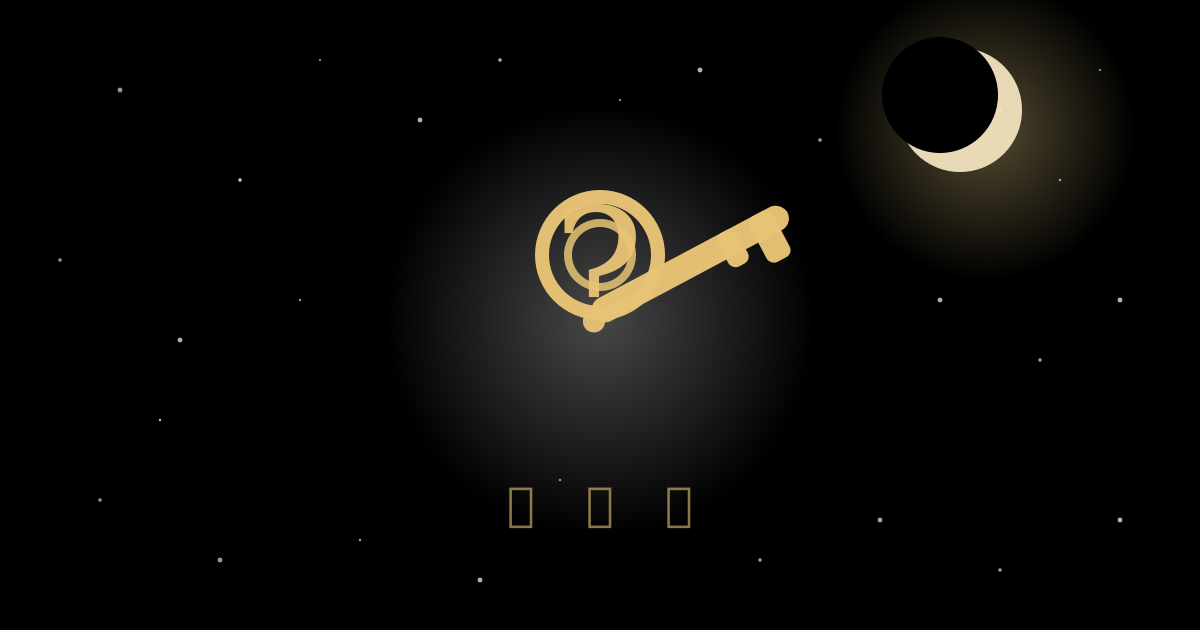
How to Ask Oracle Cards the Right Questions: 15 Examples That Get Clearer Answers
How to ask oracle cards questions that get answered: the 4 rules of great questions, 15 copy-paste examples for love, career & clarity, plus the questions to stop asking.
Read the meaning →
Oracle Card Spreads & Daily Draws: Simple Layouts That Work
Oracle card spreads for beginners: the daily draw, 5 easy spreads (past-present-future, year ahead), lunar layouts & reading for others.
Read the meaning →
Oracle Card Journaling: A Simple Practice That Deepens Your Readings
Oracle card journaling: the 90-second one-line method, the 5-minute evening journal, prompts that unlock intuition & the monthly review that reveals your patterns.
Read the meaning →
Morning Oracle Card Ritual: A 5-Minute Daily Pull for Clarity & Intention
A 5-minute morning oracle card ritual: the exact daily pull routine — grounding, intention-setting, one card, and a 90-second read — plus a 7-day beginner plan and mistakes to avoid.
Read the meaning →