
Oracle Cards for Shadow Work: A Gentle Beginner's Guide
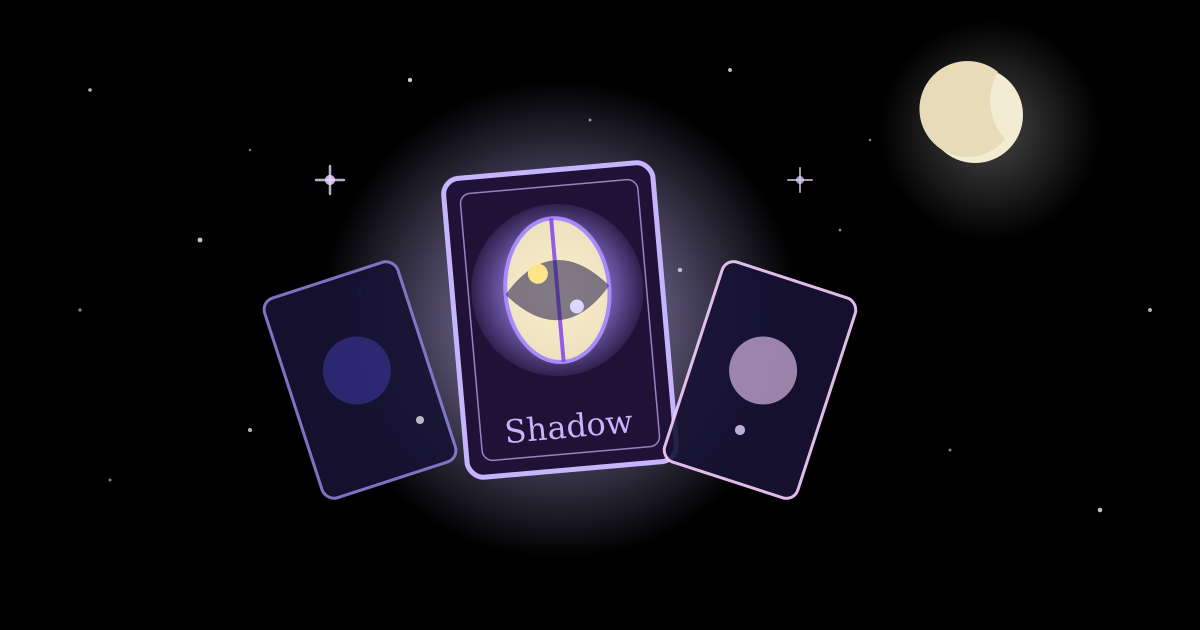
Shadow work has a dramatic reputation, and that reputation scares off the very people it could help most. The internet version sounds like a confrontation in a dark room: face your demons, dig up your past, cry it out, emerge transformed. Real shadow work, done well, is far quieter than that. It is the practice of noticing the parts of yourself you usually skip over — the jealousy you rationalize, the boundary you never set, the compliment you deflect — and asking, with curiosity rather than judgment, where those patterns come from and what they are trying to protect.
Oracle cards fit this work beautifully, and not because the cards know your secrets. They fit because a card gives your wandering mind something concrete to look at. A picture of a locked door, a wilting flower, or a figure turning away from the light can say, in one glance, what a blank journal page cannot: here is a feeling you have been avoiding, and here is a safe way to start talking about it. The card is a mirror, not a fortune teller. You supply the meaning; the card supplies the starting point.
This guide keeps the practice gentle on purpose. You will learn how to set up a safe session, five spreads that start small and grow gradually, how to read difficult cards without fear, and how to turn a reading into real-life change instead of just another entry in a notebook. Everything here is offered for entertainment and personal reflection. It is not therapy, it does not diagnose anything, and it never replaces professional support when you need it.
What Shadow Work Actually Means
The term comes from psychologist Carl Jung, who used the word shadow for the traits, feelings, and memories we push out of our conscious self-image. The shadow is not evil. It holds plenty of good material too: creativity you were told was impractical, anger you were taught was rude, ambition you learned to hide to stay likable. Anything you decided, consciously or not, was not acceptable to show becomes part of the shadow.
Shadow material leaks out anyway. It shows up as overreactions that surprise you, as patterns you repeat in relationships, as the traits in other people that irritate you out of all proportion. Psychologists sometimes call that last one projection: the qualities we cannot admit in ourselves are easiest to spot in everyone else. Shadow work is simply the habit of catching those leaks and asking what they reveal, without turning the answer into a verdict about your character.
Oracle cards help in three specific ways. First, they externalize the feeling: instead of wrestling with a vague sense of unease, you are looking at an image and describing it, which is much easier. Second, they slow you down: shuffling, laying out cards, and writing forces a pause between a trigger and your usual reaction. Third, they offer language: a card titled Boundaries or Release hands you a word for something you have only felt as a knot in your stomach. None of this requires believing the cards are magical. It only requires believing that reflection, done regularly, changes how you see yourself.
Before You Begin: Ground Rules That Keep It Safe
Shadow work earns its gentle reputation only when you protect the practice. These five rules are non-negotiable for beginners, and experienced readers keep them too.
Rule 1 — Short sessions, firm endings. Set a timer for 20 minutes. When it rings, the reading is over, even mid-thought. Write one closing sentence — what you noticed, what you will do next — and put the deck away. Boundaries around the practice teach your mind that reflection is safe because it ends.
Rule 2 — One question at a time. Vague questions like what is wrong with me produce vague, upsetting readings. Specific questions produce useful ones: what pattern showed up in my argument with my sister? What am I avoiding about this job decision? What need is behind my frustration this week? One question, one spread, one journal entry.
Rule 3 — Stay in the shallow end first. For your first month, work with everyday patterns: procrastination, people-pleasing, comparison, perfectionism, fear of speaking up. Leave deep trauma, grief, and childhood wounds to qualified professionals. A card deck is a journaling prompt, not a therapist, and knowing that limit is what makes the practice responsible.
Rule 4 — You are allowed to stop. If a reading brings up distress, tears, shaking, or numbness, close the reading immediately. Drink water, step outside, do something ordinary. You can return to the journal entry later, or not at all. Stopping is not failure; it is the practice working — you noticed a limit and honored it.
Rule 5 — End with an action, not just insight. Insight without action becomes rumination. Every reading should end with one small, concrete, kind step you can take within 48 hours: send the text, set the boundary, rest without guilt, apologize for the sharp comment. Shadow work changes your life through these small steps, not through dramatic revelations.
Choosing a Deck for Shadow Work
You do not need a special shadow-work deck to begin. Any deck whose artwork you can sit with honestly will work, including the general deck already on your shelf. That said, a few qualities help. Look for imagery that feels honest rather than harsh: art that shows difficulty with compassion, not horror-movie dread. A guidebook you actually enjoy reading matters more than the deck's theme, because you will return to its words when a card confuses you. Card size matters too — a deck that shuffles comfortably in your hands will get used far more than a beautiful deck that fights you.
Shadow-specific decks do exist, and they are worth exploring once you have a few weeks of gentle practice behind you. Their cards tend to name patterns directly — avoidance, control, grief, envy — which can speed up reflection but can also feel blunt on a fragile day. A good compromise is to start with your favorite general deck and keep a shadow deck for the weekly deeper spread, once the habit feels steady. If a deck consistently makes you dread pulling cards, it is the wrong deck for this work, no matter how popular it is. Trust that signal.
Five Gentle Shadow-Work Spreads
Start with spread one. Move to the longer spreads only when the shorter ones feel comfortable. Lay cards left to right, face up, and journal each card before pulling the next one.
Spread 1 — The Mirror (1 card). Ask: what am I not seeing about myself right now? Pull one card. Describe the image in plain words first — colors, posture, what the figure is looking at or away from — then ask what feeling it brings up. This single-card pull is the whole practice in miniature, and it is enough for most days.
Spread 2 — Light and Shadow (2 cards). Card 1: the part of me I show easily. Card 2: the part I keep hidden. Read them as a pair, not as good versus bad. The hidden card is often a strength in disguise: the anger card may be a boundary trying to form, the silence card may be rest you have been denying yourself. Ask what each side needs from the other.
Spread 3 — Seen, Hidden, Next Step (3 cards). Card 1: what I already know about this pattern. Card 2: what I am avoiding about it. Card 3: one small step that would help. This is the workhorse spread for a specific situation — a recurring argument, a stalled decision, a habit you want to change. The third card keeps the reading practical instead of circular.
Spread 4 — The Letter (3 cards). Imagine the hidden part of you could write you a letter. Card 1: what it wants you to know. Card 2: what it is afraid of. Card 3: what it needs from you. Write the letter in your journal in the first person — I have been trying to tell you... — even if it feels strange. Many readers find this spread unlocks the most honest writing they do all week.
Spread 5 — The Weekly Check-In (4 cards). Card 1: what drained me this week. Card 2: what sustained me. Card 3: a pattern I repeated. Card 4: a kinder way forward. Do this one on the same day each week, and after a month, reread the four entries together. The repeating cards and themes are your shadow's vocabulary, and spotting them is the real progress.
How to Read a Difficult Card Without Fear
Every shadow worker eventually pulls a card that stops them cold: a tower, a figure in chains, a card titled grief or endings. The fear is understandable, and it is also misplaced. A card is ink and symbolism, not a prediction, and its job in this practice is to start a conversation, not to end one. Use this four-step reading method whenever a card feels heavy.
First, describe before you interpret. Spend a full minute naming only what you see: the colors, the light, the direction the figure faces, what is in shadow and what is lit. Description keeps you in observation instead of panic. Second, name the feeling, not the fate: this card makes me feel exposed, or sad, or defensive. Feelings are data; they are not verdicts. Third, ask the card a question: what part of my life feels like this image right now? The answer usually points to something specific and manageable — an unanswered email, a conversation you keep postponing — not to catastrophe. Fourth, shrink the action: what is the smallest kind step I could take about this in the next two days? A difficult card with a small action attached stops being scary and starts being useful.
Watch out for the two classic traps. The first is over-pulling: drawing card after card until one finally says what you wanted to hear. If you catch yourself reshuffling, stop — the first cards were the reading. The second is literalism: treating a card about endings as proof a relationship will end, or a card about illness as a health warning. Cards speak in metaphor. If a reading ever raises a real health or safety concern, take it to a qualified professional, not back to the deck.
Journaling Prompts That Go Deeper
A spread gives you the cards; prompts give you the words. After any pull, pick one or two of these and write for five minutes without editing yourself.
What feeling did I expect this card to bring up, and what feeling actually came? When have I felt this way before, and what was happening then? What would I say to a friend who pulled this card? What part of this reading do I want to argue with, and why? What need is hiding underneath the emotion this card names? What would change if I believed this card was trying to help me, not warn me? What small boundary would make this pattern easier to live with? What am I pretending not to know about this situation? Which card in this spread would I hide from someone else, and what does that say? What did I learn about myself that I can actually use this week?
Keep the journal private and imperfect. Crossed-out lines, half sentences, and contradictions are signs the practice is honest. Reread entries monthly, not daily: patterns need distance to become visible, and daily rereading turns reflection into rumination. When you spot a theme repeating across three or more entries — the same fear, the same avoided conversation — that theme is your next shadow-work question, ready when you are.
A Sample Reading, Start to Finish
Imagine you pull the three-card Seen, Hidden, Next Step spread about procrastinating on a job application. Card 1, what you already know, shows a figure standing at a crossroads: you know you want the change and you know you are stalling. Card 2, what you are avoiding, shows a cracked mirror: the avoidance is not laziness, it is fear of being seen and judged in a new role. Card 3, the next step, shows a small lit candle: not submit the whole application today, just open the form and fill in your name.
Notice what the reading did not do. It did not predict whether you will get the job. It did not diagnose your confidence. It gave you a kinder story than lazy — a person afraid of visibility — and a step so small it is hard to refuse. That is shadow work done right: a shift in self-understanding plus one concrete action. Write the reading down, do the small step within 48 hours, and note what happened. Over weeks, these small steps compound into the very changes the dramatic version of shadow work promises but rarely delivers.
Common Mistakes and How to Avoid Them
Reading every day on the same question. Re-pulling daily on one issue is anxiety disguised as reflection. Give a question at least a week to breathe, and work on a different theme in between.
Confusing the card with the truth. A card is a prompt, not evidence. If a reading contradicts what you know about a situation, trust what you know. The deck serves your judgment; it does not replace it.
Skipping the closing step. A reading that ends in feelings and never reaches an action leaves you stirred up with nowhere to go. Always finish with one small step, even if the step is simply rest or wait.
Working alone on heavy material. If a theme keeps bringing distress, bring it to a therapist, counselor, or trusted support person. The strongest shadow workers know when a deck has reached its limit and a human conversation is needed.
Judging the shadow. Calling a trait bad, toxic, or broken shuts down reflection instantly. Try neutral language instead: this pattern protected me once, this feeling has information, this part of me needs attention. Compassion is not indulgence; it is what makes change possible.
A 7-Day Gentle Starter Plan
Day 1: pull the Mirror card and journal for five minutes. Day 2: reread yesterday's entry and notice one sentence that surprises you. Day 3: try the Light and Shadow spread on an everyday pattern like procrastination or comparison. Day 4: rest day — no cards, just notice when the pattern shows up in real life. Day 5: pull Seen, Hidden, Next Step on that pattern and take the small step. Day 6: write the Letter spread in your journal, first person, no editing. Day 7: reread the week's entries, circle one repeating theme, and choose next week's question from it. That is the whole plan. No drama, no marathon sessions, just a week of honest attention.
Shadow work with oracle cards is not about becoming someone else. It is about becoming more honest with the person you already are — noticing the hidden rooms in your own house and deciding, room by room, what to keep, what to rearrange, and what to let go of. The cards cannot do that work for you, but they can sit beside you while you do it, one image, one question, one small step at a time. Pick up the deck tonight, set the timer for twenty minutes, and ask the simplest shadow question there is: what am I not seeing about myself right now? Then listen, without flinching, to whatever the mirror shows you.
Frequently asked questions
What is shadow work with oracle cards?
Shadow work with oracle cards is a self-reflection practice: you use a card's image and message as a prompt to notice patterns, feelings, and parts of yourself you usually avoid. It is a tool for journaling and honest thinking, offered here for entertainment and personal reflection, not as therapy or a prediction.
Is shadow work safe for beginners?
Yes, when you keep it gentle and bounded: short sessions, one clear question, a journal, and a stopping point. Skip deep trauma topics on your own, take breaks when a reading feels heavy, and talk to a qualified professional if difficult feelings persist. The cards are prompts, not a substitute for support.
Which oracle deck is best for shadow work?
Any deck whose artwork you can sit with honestly, including a general deck you already own. Shadow-specific decks exist, but they are not required. Choose art that feels honest rather than harsh, with a guidebook you actually enjoy reading, and a card size that shuffles comfortably.
What if I pull a scary or negative card during shadow work?
Treat it as a question, not a verdict. Ask what the image is pointing at, what feeling it brings up, and what small, kind action could help. No card predicts doom or diagnoses anything. If a card leaves you distressed, close the reading, write down what came up, and return to it later with fresh eyes.
How often should I do oracle card shadow work?
Once or twice a week is plenty for most beginners, with a single card on the other days if you like. Shadow work is reflective, not a daily test. Give each reading a few days to settle before pulling again on the same question, and keep a short journal so you can spot patterns over time.
Keep exploring
How to Cleanse Your Oracle Cards: 7 Simple Methods That Work
How to cleanse oracle cards: smoke, moonlight, selenite, knocking, sound & breath resets — plus when to cleanse and how to reconnect with your deck.
Read the meaning →
Best Oracle Decks for Beginners (2026 Guide)
The best oracle decks for beginners: classic, nature, moon & shadow-work decks reviewed, plus a 5-minute ritual for choosing your first deck.
Read the meaning →
How to Read Oracle Cards: A Beginner's Guide
How to read oracle cards: a complete beginner's method — asking questions, the 3-card spread, developing intuition, and building a daily practice.
Read the meaning →
Oracle Card Journaling: A Simple Practice That Deepens Your Readings
Oracle card journaling: the 90-second one-line method, the 5-minute evening journal, prompts that unlock intuition & the monthly review that reveals your patterns.
Read the meaning →