
Bracelet Lines Meaning: What the Lines on Your Wrist Mean

Everyone stares at the lines on the palm — the life line, the heart line, the head line. But palmistry has a quiet secret that most beginners walk straight past: the most telling lines may be the ones you never noticed at all. Slide your gaze an inch down from your palm to your wrist, and there they are — a set of horizontal rings circling the wrist like invisible bracelets, known to palmists as bracelet lines or, in the old French term, rascettes.
You have probably looked at these lines a thousand times without seeing them. They are easy to dismiss as mere creases of skin, the kind the body makes where it bends. But in the traditional reading, bracelet lines are anything but incidental. They are read as the foundation of the entire palm — the ground the house stands on. If the life line describes your energy and the head line your mind, the bracelet lines describe something more elemental still: your vitality, your stamina, the steadiness of your life's rhythm. Think of the major palm lines as the melody and the bracelet lines as the bass line — unnoticed until it is gone, and holding everything else together.
Finding Your Bracelet Lines
Hold your arm out, palm facing up, wrist relaxed and flat. Look at the band of skin where your palm ends and your forearm begins — roughly a two-inch strip across the wrist. There you will find one to four horizontal lines arcing across the wrist. Most people can see at least two; some see three clearly; a few show a faint fourth. Count both wrists, because they often differ, and because the comparison itself is part of the reading.
Note four qualities, the same grammar that applies to every line on the hand: how many lines there are, how deep and clear each line is, whether any line is broken, chained, or curved, and whether the lines rise upward into the palm or sit cleanly across the wrist. That is the entire vocabulary of the wrist. Everything else is interpretation.
One practical note: wrist creases deepen with age, flexing, and weight changes, and they can shift over the years — palmists consider this a feature, not a bug. The hand is treated as a living record, and the wrist as its most changeable chapter. A reading of bracelet lines is a snapshot of right now, which is precisely what makes it interesting to revisit.
The Number of Lines: One, Two, Three — or More
The number of bracelet lines is the first and most discussed feature of the wrist, and the lore around it is rich. Tradition holds that three clear, well-formed bracelet lines are the classic ideal — sometimes called the three bracelets of fortune. Symbolically, the first line is linked to vitality and physical steadiness, the second to balance in work and resources, and the third to clarity and fulfillment in later chapters of life. Having all three visible is read as a life of good rhythm: not a promise of ease, but a portrait of someone whose energy tends to hold steady across the long arc.
Two clear lines are by far the most common pattern, and palmistry reads them plainly: a sound foundation with the third bracelet — the line of later fulfillment — still developing. In old readings this was cheerfully taken to mean the best years were still ahead, and honestly that is as good a way as any to read an unformed line: as unfinished business rather than absence.
A single strong bracelet line deserves better than the suspicion some old books give it. Where three lines suggest breadth, one deep, unbroken line suggests concentration: energy gathered and aimed. Tradition reads the single-line wrist as the mark of someone who puts everything into one channel — focused, self-sufficient, uninterested in spreading themselves thin. Artists, specialists, and single-minded builders often show this pattern. One bracelet, worn well, is not less than three; it is simply a different way of wearing strength.
Four or more distinct lines are uncommon, and tradition treats them as the sign of an exceptionally robust constitution — energy to spare. The folk reading ties the fourth line to fortunate later years, and some old European texts even linked prominent fourth lines to a long, vigorous life. Treat such readings as the entertainment framing they are: a story the wrist tells, not a guarantee anyone could sign.
Depth and Clarity: The Quality of the Lines
Beyond number, palmists weigh the quality of each line. Deep, clear, evenly etched bracelet lines are read as steady, well-regulated energy — someone whose vitality runs on a reliable schedule. The person with crisp wrist lines is the friend who sleeps well, recovers quickly, and generally has something left in the tank. In traditional terms, the lines show a constitution that handles what life throws at it.
Faint, thin, or barely visible lines tell a different story in the old books: scattered or delicate energy, a constitution that runs hot and cold. Modern palm readers tend to translate this less dramatically — as sensitivity, a nervous system that registers everything, someone who thrives on rhythm and routine because their energy needs managing rather than spending. If your lines are faint, the traditional counsel is almost comically practical: rest is not optional for you; it is infrastructure.
Also notice whether the lines are straight across or arched. Lines that bow upward into the palm are read as ambition pushing into life — energy that wants to go somewhere. Lines that sag downward toward the forearm are read in some traditions as energy sinking into worry or depletion. A gentle, level arc is considered the balanced middle: energy that neither strains upward nor sinks.
Breaks, Gaps, Chains, and Curves
The markings on bracelet lines are where the wrist gets personal. A break or gap in a bracelet line is traditionally read as a period when the person's energy genuinely faltered — an illness survived, a burnout recovered from, a chapter of overwork that left its signature. The crucial detail is what comes after the break: a line that resumes strongly is read as recovery and renewed steadiness, which is arguably the most encouraging thing any palm line can say. The break is the wound; the continuation is the healing.
Chained bracelet lines — lines made of small linked ovals rather than a clean stroke — are read as a habit of scattered energy: the person who gives a little to everything and holds nothing in reserve. Old books are blunt about this pattern, and modern readers soften it into useful advice: the chained wrist belongs to someone whose vitality leaks through a dozen small commitments, and the remedy is consolidation, not more effort.
A bracelet line that curves sharply upward into the palm, nearly touching the life line, appears in some traditions as a special marking — energy rising to meet life's demands head-on. And small crosses or stars touching a bracelet line are read as notable chapters: a cross as a difficulty weathered, a star as a moment of unexpected good fortune. As with every marking in palmistry, these are read as highlights in a story, not as verdicts.
Which Wrist Should You Read?
As with the rest of the hand, palmistry reads the two wrists differently — and the difference is where the reading gets interesting. The dominant hand's bracelet lines traditionally describe your cultivated life: the habits you have built, the energy you have shaped through choices, the rhythm you actually live by. The non-dominant hand's lines are read as your baseline: inherited constitution, the tendencies you started with, the raw material.
Compare them. If your dominant wrist shows three clear lines while your non-dominant shows one faint one, the traditional reading is flattering: you have built steadiness you were not born with — discipline that became constitution. If the pattern reverses — strong lines on the non-dominant wrist, faint ones on the dominant — the old reading suggests a natural vitality that current habits are not supporting, which is really just palmistry's poetic way of saying: rest more, and your body will thank you.
It is worth remembering, too, that the wrist changes. Weight shifts, aging, and even years of typing can redraw these lines. Palmists who take the craft seriously re-read the wrist periodically, treating it as a journal rather than a birth certificate. Your bracelet lines today describe the life you are living; check again in a year and see what changed.
Bracelet Lines and the Rest of the Hand
No line is read alone, and the bracelet lines earn their keep as context for the major lines. The classic pairing is with the life line: where the life line arcs around the thumb describing vitality and major chapters, the bracelet lines describe the foundation that vitality rests on. A strong life line over faint bracelet lines is read as impressive energy running on a shaky base — the sprinter with no training plan. Faint life line over strong bracelet lines reads as the reverse: modest daily energy backed by deep reserves.
The bracelet lines also frame the Mount of Venus — the fleshy pad at the base of the thumb — sitting directly above them. A full, firm Mount of Venus with clear bracelet lines beneath is the traditional picture of robust, warm vitality. And the lowest bracelet line sometimes sends small branches upward into the palm; these are read as influences rising from the foundation into life — family support, inherited steadiness, the quiet help that holds a person up.
The Longevity Legend — Read With a Wink
No honest guide to bracelet lines can skip the legend, and no honest guide should repeat it straight. The old claim — found in palmistry books across Europe and Asia — is that each complete bracelet line represents roughly a span of decades of life, with three full lines adding up to a long, full lifespan. It is a charming piece of folklore, and it is exactly that: folklore.
Here is the entertainment framing, stated plainly. Palmistry is a folk art for reflection and self-knowledge, not a medical instrument. Your wrist cannot diagnose you, predict your health, or measure your years — and any reader who claims otherwise is selling something. What the bracelet lines can do, and do beautifully, is prompt the questions that actually matter: Is my energy steady or scattered? Am I recovering from the hard chapters, or still living inside them? Am I building the rhythm I want, or just surviving the rhythm I have? The legend is fun at parties. The questions are useful on quiet evenings. Keep both, and confuse neither.
A Wrist-Reading Ritual for Tonight
Here is a small practice, and it takes five minutes. Sit somewhere comfortable and rest both wrists palm-up on your knees. Look at your bracelet lines — really look, the way you would look at a map of somewhere you are about to travel. Count them, trace each one with your eyes, and notice which line is strongest and which is faintest.
Then ask yourself one question for each wrist: What has my energy been like this year — steady, scattered, or recovering? Write the answer down, one sentence per wrist. Most people find the answer arrives instantly, as if the lines were just an excuse to finally say it out loud. That is, in the end, what palmistry has always been for: not telling you things you don't know, but giving you a beautiful, ancient permission slip to notice what you already do.
If one wrist shows a break and your year has indeed been hard, let the line that continues past the break do its quiet work. The wrist's oldest message is also its kindest: what was interrupted can resume, and what resumes often runs stronger than before.
A Final Thought on the Lines Below the Palm
The bracelet lines are palmistry's humble masterpiece — the part of the hand nobody studies and everybody wears. They ask for no belief, only attention: a glance downward, a moment of curiosity about the rings you have carried your whole life without naming. Whatever your wrist shows — one line or four, clear or chained, steady or recovering — read it the way you would read a letter from an old friend: with warmth, with interest, and with the understanding that the story is still being written. The lines on your wrist are not a verdict on your vitality. They are an invitation to tend it. And that invitation, unlike any prediction, is one you can actually accept.
Frequently asked questions
What are bracelet lines in palmistry?
Bracelet lines, also called rascettes, are the horizontal lines circling the wrist where the palm meets the forearm. Most people have two or three visible lines. Tradition reads them as the foundation of the palm reading — the base notes beneath the melody of the life, head, and heart lines — linked symbolically to vitality, balance, and life rhythm.
What does it mean to have three bracelet lines?
Three clear bracelet lines are the classic ideal in palmistry tradition, often nicknamed the three bracelets of fortune. They are symbolically linked to vitality, balanced energy, and a steadier life rhythm. Four or more distinct lines are rarer and traditionally read as an exceptionally robust constitution.
Is it bad to have only one bracelet line?
Not at all. Many people show only one strong line, and tradition reads a single deep, unbroken bracelet line as a sign of focus and self-sufficiency — someone who concentrates their energy in one direction rather than spreading it. The palm is read as a whole, and one line never defines anyone.
What do broken bracelet lines mean?
Breaks, gaps, and chained bracelet lines are traditionally read as periods of depleted or scattered energy — times of overwork, disruption, or imbalance that passed or are passing. A chained pattern suggests a habit of scattering energy; solid lines after a break are read as recovery and renewed steadiness.
Which wrist should you read for bracelet lines?
Read both wrists. The dominant hand's bracelet lines traditionally describe your outward life and cultivated habits, while the non-dominant hand's lines are read as inherited tendencies and inner constitution. Compare them to see where your lived habits support or differ from your natural baseline.
Keep exploring

Life Line Meaning: What Your Life Line Really Reveals
Your life line reveals vitality, energy and major life chapters, not lifespan. Learn to read its length, depth, breaks, branches and markings with our guide.
Read the meaning →
Heart Line Meaning: What Your Heart Line Says About Love
Your heart line maps your emotional nature: how you love, attach and heal. Learn to read its length, curve, breaks and forks, and what each marking reveals.
Read the meaning →
Mounts of the Palm: A Complete Guide to the 7 Mounts
The 7 mounts of the palm, Venus, Jupiter, Saturn, Apollo, Mercury, Moon and Mars, reveal your drives and talents. Learn to read every mount, step by step.
Read the meaning →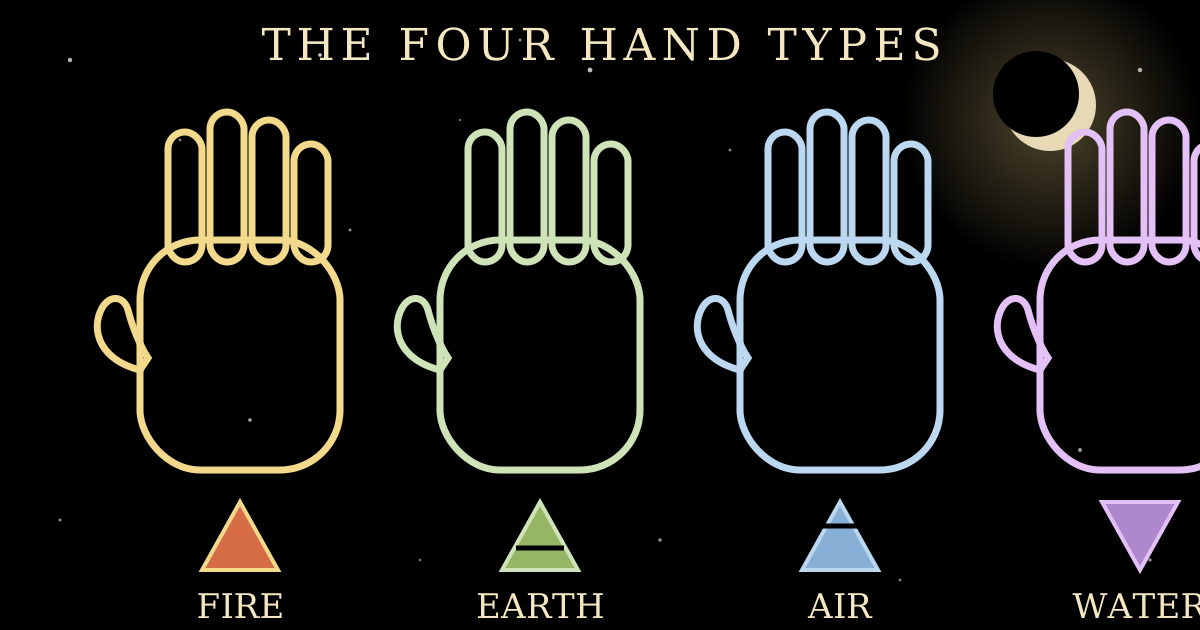
Palm Shape Meaning: The 4 Hand Types in Palmistry (Fire, Earth, Air & Water)
Before palmists read a single line, they read your hand's shape. Compare palm length to finger length to find your elemental hand type — fire, earth, air, or water — and what it reveals about love, career, and growth.
Read the meaning →