
Girdle of Venus in Palmistry: Meaning, Location & What It Reveals
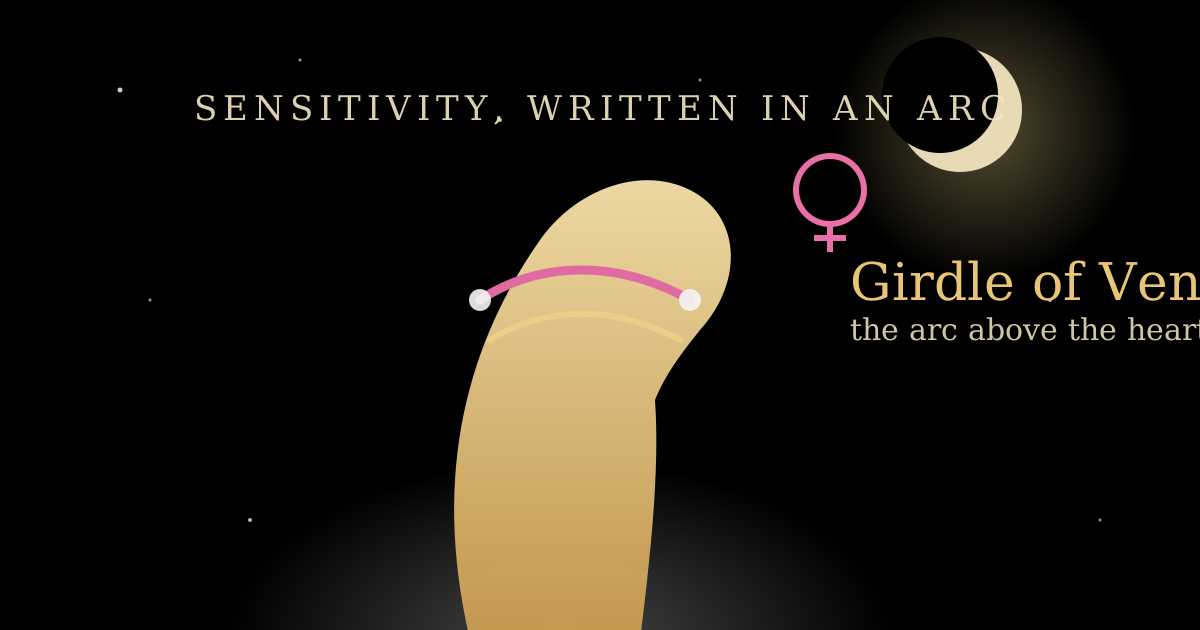
Most people know the three great lines of the palm: the life line, the head line, and the heart line. Fewer know about the quiet arc that sometimes floats above the heart line like a second, smaller rainbow. That arc is the Girdle of Venus, also called the Ring of Venus, and in palmistry tradition it is one of the most poetic markings on the hand. Where the heart line describes how you love, the girdle describes how deeply you feel — and how much of the world you let in.
If you have ever cried at a song for reasons you could not explain, felt a room's mood the moment you walked in, or known what someone needed before they said a word, the old palmistry books would nod toward this arc. It is traditionally the mark of the sensitive soul: the artist, the empath, the person whose inner life runs at a higher volume than most. But like every marking in palmistry, the girdle is a tendency, not a diagnosis — a description of your emotional weather, not a verdict on your life. Let us find it on your hand and learn to read it properly.
What Is the Girdle of Venus?
The Girdle of Venus is a curved line that sits above the heart line, in the upper part of the palm beneath the fingers. In its classic form it runs as a semicircle from the Mount of Jupiter — the fleshy pad beneath the index finger — across to the Mount of Mercury, beneath the pinky finger. Think of it as a bridge arching over the top of the palm, enclosing the territory of the heart line below it.
Its name comes from Venus, the planet and goddess of love, beauty, and feeling in the astrological system palmistry borrows from. The Mount of Venus at the base of the thumb already carries that planet's name, but the girdle is Venus's second signature on the hand: not the warmth and vitality of the mount, but the sensitivity and receptivity of feeling itself. Old texts sometimes call it the "girdle" because it girds, or encircles, the upper palm like a belt — holding the emotional life within its curve.
Here is the first surprise for beginners: a complete, unbroken girdle is uncommon. Many palmistry diagrams draw it as a bold, obvious arc, but in real hands it is often faint, partial, or absent entirely. Most people have no girdle at all, or only short fragments of one. That rarity is part of its reputation — when a full girdle does appear, traditional readers treat it as a strong, unmistakable signal.
How to Find the Girdle of Venus on Your Hand
Hold your dominant hand up, palm facing you, fingers relaxed and slightly spread. First find your heart line: the uppermost of the three major lines, running horizontally across the palm beneath the fingers. Now look just above it, in the strip of palm between the heart line and the bases of the fingers. You are looking for a curved line that arcs upward, like a shallow rainbow, roughly parallel to the heart line.
Good light helps enormously. Tilt your hand so light rakes across the palm, and bend your fingers slightly backward — this stretches the upper palm and can make faint lines stand out. If you see a short curve near the index finger side only, or near the pinky side only, that is a fragment, not the full girdle. If you see two or more short arcs stacked or overlapping, you may be looking at a broken or double girdle, which we will come to shortly.
Be careful not to confuse the girdle with other marks in the same area. Short vertical lines rising from the heart line toward the fingers are not the girdle. The small lines between the fingers, sometimes called worry lines or stress lines, run vertically too. The girdle runs horizontally, curving across the palm like the heart line itself. If the line you found runs up and down, it is something else. And remember to check both hands: the girdle, like every marking, can appear on one hand and not the other, and traditional readers compare the two before drawing conclusions.
The Complete Girdle: Deep Sensitivity and a Rich Inner Life
A clear, complete girdle — one smooth arc from the Jupiter side to the Mercury side, unbroken — is the classic reading, and it is a strong one. Traditionally, it marks a person of exceptional emotional sensitivity. Such people feel things at full volume: beauty moves them to tears, music rearranges their mood, and other people's pain registers almost as their own. The old books associate the complete girdle with artists, poets, musicians, healers, and counselors — anyone whose work depends on feeling deeply and expressing what they feel.
This sensitivity is also the traditional home of intuition. People with a complete girdle are said to pick up on unspoken feelings, sense tension in a room, and read between the lines of what others say. In modern language, we might call this high emotional attunement or empathy. It is a genuine gift: these are the friends who know you are struggling before you say so, the colleagues who sense a team's morale slipping, the partners who notice the small shift in your voice.
But every gift in palmistry has its shadow, and the girdle's shadow is overstimulation. A person who feels everything deeply can also be overwhelmed by it: crowded rooms, harsh criticism, sad news, and other people's stress can all hit harder. Traditional texts warn that the complete-girdle temperament may swing between emotional highs and lows, and may need solitude to recover — not because anything is wrong, but because a sensitive instrument needs quiet to stay in tune. If this sounds like you, the practical advice is simple and old: protect your rest, choose your environments, and treat sensitivity as a talent to manage, not a flaw to fix.
Broken, Fragmented, and Chained Girdles
Far more common than the complete arc is the broken girdle: an arc that appears in pieces, with gaps, or as a chain of short segments. Traditionally, this suggests sensitivity that comes in waves rather than at a constant pitch. The person feels deeply, but unevenly — intensely moved by some things and oddly untouched by others, or emotionally open in some seasons of life and guarded in others.
A chained girdle — where the arc looks like a series of small links — carries a similar reading with a slightly different flavor. Old texts associate chaining with emotional restlessness: feelings that churn, moods that shift quickly, and a heart that processes experience in bursts rather than a steady stream. None of this is a problem to solve. In fact, many creative people show fragmented girdles, and the tradition reads the fragments as evidence of a feeling life that is vivid but not always easy to organize — the raw material of art, not a defect in it.
Pay attention to where the breaks fall. A girdle that is strong on the Jupiter side (under the index finger) and fades toward Mercury is traditionally read as sensitivity weighted toward ideals and principles — moved by causes, beauty, and meaning. A girdle strong on the Mercury side and fading toward Jupiter leans toward sensitivity in communication and relationships — moved by what people say, and by the emotional weather between people. These are fine distinctions, and the honest reader treats them as prompts for reflection, not certainties.
The Double Girdle and Other Variations
Sometimes two arcs appear, one above the other, like a double rainbow. This is the double Girdle of Venus, and traditional palmistry reads it as sensitivity turned up even further. The double girdle is associated with extraordinary emotional intensity, vivid imagination, and sometimes the kind of sensitivity that borders on the psychic in old-fashioned language — hunches, vivid dreams, and a strong sense of atmosphere. Modern readers translate this more soberly: a person whose emotional antennae are exceptionally fine-tuned, for better and for worse.
Another variation is the girdle that dips down to touch or cross the heart line. When the arc meets the heart line, traditional readers see feeling and love intertwined: emotions that run so deep they shape relationships directly, for good or ill. A girdle that crosses the heart line more than once, or cuts through it in several places, is sometimes read as emotional turbulence in love — passionate attachments that burn bright and sometimes burn out. Again, treat this as a description of style, not a prediction: the hand shows how you tend to love, not whom you will love or how it will end.
There is also the girdle that appears on only one hand. Traditional palmistry compares the hands the way it does for every marking: the dominant hand is said to show your developed, lived emotional life, while the passive hand shows your natural, inborn tendencies. A girdle on the passive hand alone might suggest a sensitivity you were born with but have learned to guard. A girdle on the dominant hand alone might suggest sensitivity you have grown into — through art, relationships, or life experience. Both readings are invitations to notice, not verdicts.
Girdle of Venus, Love, and Relationships
Because it sits above the heart line, the girdle is often read alongside it for love. The heart line describes how you love — openly or guardedly, steadily or passionately. The girdle describes how much you feel while you love. A person with both a deep heart line and a complete girdle is traditionally the all-in lover: devoted, expressive, and emotionally present, but also vulnerable to heartbreak precisely because they feel so much.
In relationships, this sensitivity is a double-edged gift. On one side, it makes for an attentive, intuitive partner — someone who notices, remembers, and responds to the small things. On the other side, it can make a person reactive to a partner's moods, prone to taking things personally, or quick to absorb tension that is not theirs to carry. The old advice for the girdle temperament in love is the same advice modern relationship wisdom gives to highly sensitive people: learn to tell the difference between your feelings and your partner's, and build in time to process before you react.
It is worth saying plainly what the girdle does not do: it does not predict whether you will marry, how many relationships you will have, or whether a particular romance will last. No single line on the hand carries that kind of information, and any reader who claims otherwise is selling certainty the tradition itself never promised. The girdle describes your emotional instrument. What you play on it is up to you.
Girdle of Venus and Creativity
One of the happiest associations of the girdle is with creativity. Traditional palmistry links it to artistic talent — not necessarily professional talent, but the capacity to be moved by beauty and to make something from that feeling. People with a girdle often report that art, music, poetry, or nature affects them unusually strongly, and many channel that response into their own creative work.
This is why the girdle appears so often in the lore of artists and performers. It is not that the girdle causes talent; it is that talent and sensitivity travel together. A person who feels music deeply is more likely to make music. A person moved by color is more likely to paint. If you have a girdle and have never tried a creative practice, the tradition's nudge is gentle: try. Journal, sketch, play an instrument badly, take photographs of light you love. The girdle, in this reading, is not a badge but an invitation — evidence that your inner life is rich enough to be worth expressing.
There is also a quieter creative gift associated with the girdle: imagination. People with this marking are traditionally said to have vivid inner worlds — daydreams, stories, and images that feel almost real. That imagination can be a refuge and a resource, though the old books also warn that it can tip into worry when it runs without an anchor. The remedy they suggest is the same one artists have always used: give the imagination somewhere to go. Write it down, draw it, talk about it. An expressed feeling is easier to live with than a bottled one.
What If You Have No Girdle of Venus?
Most hands have no girdle at all, and that is completely normal. Traditionally, the absence of a girdle suggests a steadier emotional temperament: feelings run deep, but they are less easily stirred by atmosphere, art, or other people's moods. Such people tend to be emotionally even-keeled, practical in a crisis, and less likely to be overwhelmed by their surroundings. They may love just as deeply as anyone — they simply process feeling at a different volume.
It is important not to read absence as absence of feeling. Palmistry's language is about style, not capacity. A person without a girdle can be profoundly loving, loyal, and emotionally intelligent; their feelings simply arrive through a different channel — steadier, quieter, and less reactive to the moment. If you checked your hand and found nothing above your heart line, you have not failed a test. You have learned something true about your emotional style: you are the calm water, not the crashing wave, and both are needed.
And hands change. Palmistry has always taught that lines deepen, fade, and appear over a lifetime as habits and experiences shape the hand. A girdle that is faint now may deepen during a creative or emotionally intense period of life; a strong girdle may soften as a person learns to steady their feelings. The hand is a living record, not a fixed chart. Check again in a year — you may be surprised.
How to Read Your Girdle of Venus in 60 Seconds
Now put it all together. First, find the arc above your heart line — complete, broken, double, or absent. Second, note which side is strongest: Jupiter for ideals and meaning, Mercury for communication and relationships. Third, compare your two hands: is the girdle on one, both, or neither? Fourth, read it alongside your heart line: a deep heart line plus a girdle means feeling expressed through love; a faint heart line plus a girdle means feeling that runs richly inward.
Then do the most useful exercise in palmistry: check your reading against your own life. Are you the person who cries at films, senses a room's mood, and needs quiet after crowds? Does the girdle's description fit — or does it miss? Palmistry was always meant to be learned this way: not from a page, but from hands you can ask questions of, starting with your own. The Girdle of Venus, when you find it, is a small arc with a large message: you feel deeply, and that depth is not a weakness. It is, the old readers insisted, one of the finest things a hand can show.
Frequently asked questions
Where is the Girdle of Venus on the palm?
The Girdle of Venus is an arc-shaped line above the heart line, running between the mounts of Jupiter (under the index finger) and Mercury (under the pinky). It is also called the Ring of Venus.
What does a complete Girdle of Venus mean?
A clear, complete girdle traditionally marks high emotional sensitivity, strong intuition, and a rich inner life. It is often associated with artists, empaths, and people who feel things deeply.
Is the Girdle of Venus rare?
A full, unbroken girdle is uncommon; most people have no girdle at all or only fragments of one. Fragmented or partial girdles are far more common than complete arcs.
What does a broken Girdle of Venus mean?
A broken or fragmented girdle traditionally suggests sensitivity that comes in waves — intense feeling that is harder to steady or express consistently, rather than a constant emotional pitch.
What does it mean if you have no Girdle of Venus?
Having no girdle is normal and common. Traditionally it suggests a steadier, more even emotional temperament — feelings run deep but are less easily stirred by atmosphere, art, or other people's moods.
Keep exploring

Heart Line Meaning: How to Read the Line of Love
Your heart line maps how you love and feel. Learn to read its length, curve, depth, branches, and breaks — and how it pairs with the Girdle of Venus above it.
Read the meaning →
Mount of Venus in Palmistry: Love, Vitality & What Its Size Really Means
The Mount of Venus is the fleshy pad at the base of your thumb. Learn to read its size, firmness, lines and marks for what palmistry tradition says about love, warmth, vitality and passion.
Read the meaning →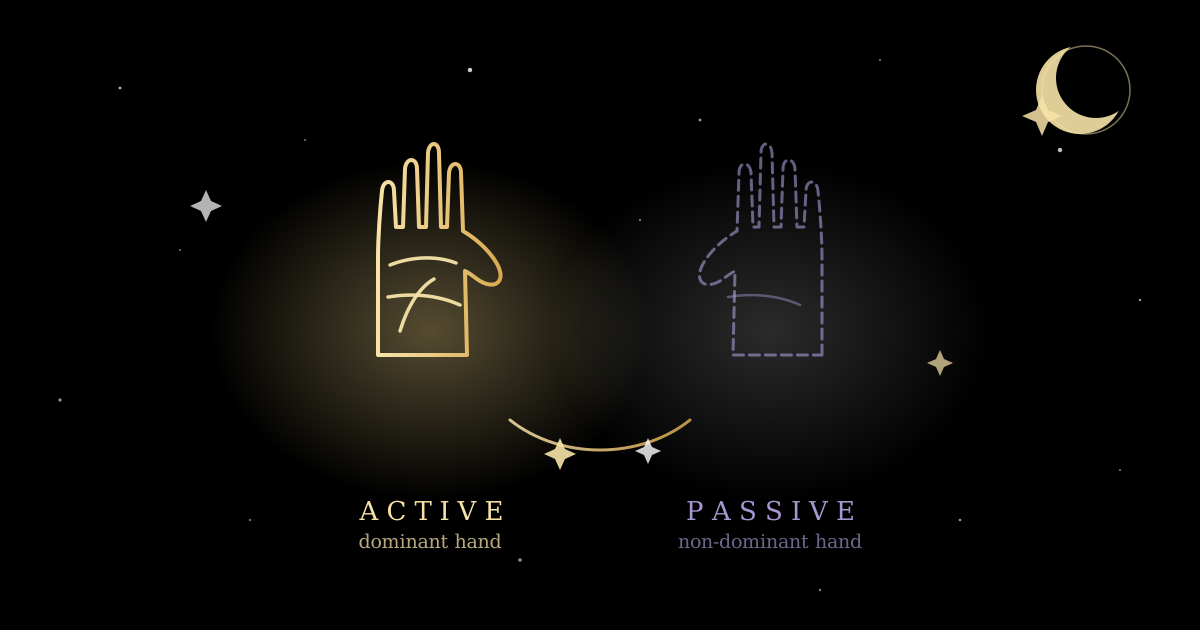
Which Hand Do You Read in Palmistry? Dominant vs Passive Hand
Which hand do you read in palmistry? Learn the dominant vs. passive hand tradition, the old men-and-women rules, why palmists read both hands, and how to compare yours.
Read the meaning →
What Does It Mean to Dream About Being Chased?
Being chased in a dream is frightening but meaningful. Learn what chase dreams reveal about stress, avoidance, and the fears you keep running from.
Read the meaning →