
Health Line in Palmistry: The Mercury Line, Vitality & What It Really Means
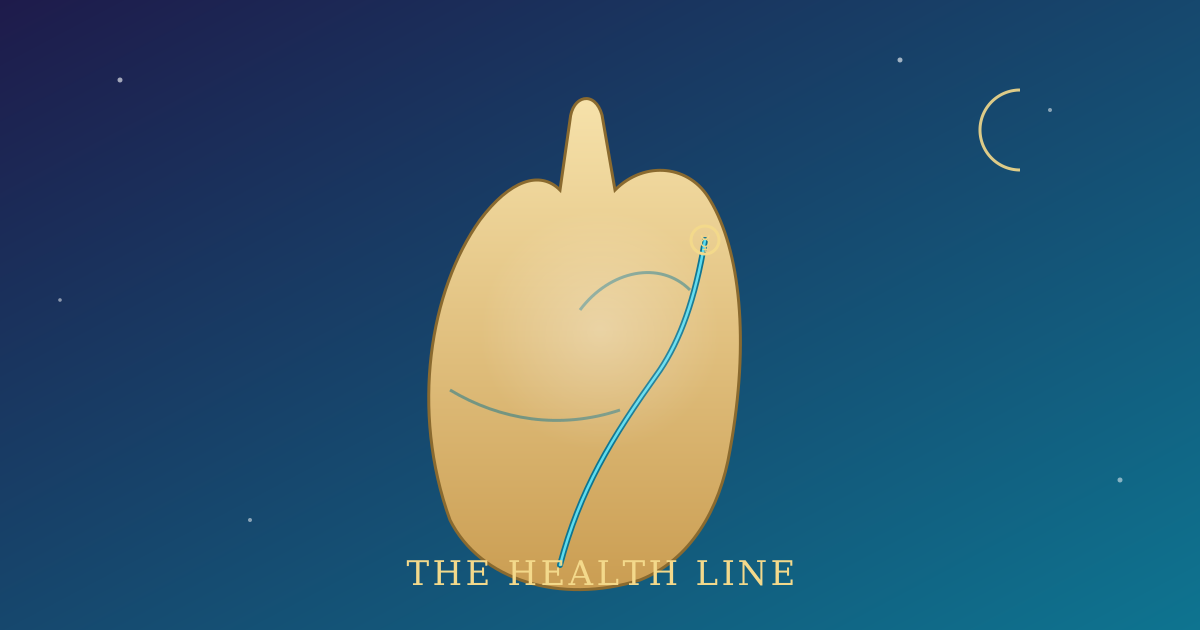
Most palmistry beginners learn the big three lines first: the life line, the head line, and the heart line. Then, one day, they notice a fourth, quieter line running up the side of the palm, and they wonder what it is. That line is the health line, also known as the Mercury line or the line of health, and it is one of the most misunderstood markings in the whole hand. It has an alarming name and a gentle meaning, and learning to read it properly is a good test of whether you are reading palmistry as symbolism or as superstition.
The first thing to know is that the health line is shy. Unlike the life line, which nearly everyone has, the health line is frequently faint, broken, wavy, or missing altogether. Old palmistry books do not treat that as a problem. In fact, many of them say the best health line is no health line at all, a clean palm in that corner being the traditional picture of a constitution with nothing to complain about. So if you have been searching your palm for this line and cannot find it, you may already have the answer, and it is a reassuring one.
Where Is the Health Line?
Hold your dominant hand open, palm up, fingers relaxed. Look at the pinky side of the palm, the edge below the little finger. The health line runs roughly vertically there, starting somewhere near the wrist or the lower palm and climbing toward the Mount of Mercury, the fleshy pad directly beneath the pinky. It usually travels on the outer half of the palm, sometimes hugging the edge, sometimes drifting closer to the fate line in the center. It may run the whole distance, or it may appear only in a short stretch, near the wrist, near the head line, or just under the pinky.
Because it is often faint, the best way to find it is to tilt your hand under a good light and let the creases catch the shadow. Do not press the palm flat and stretch the skin, which erases fine lines. Let the hand rest naturally, the way it falls when you are not thinking about it. If a vertical line appears on the pinky side, especially one that seems to aim at the base of the little finger, that is your candidate. If several faint verticals appear, the longest and clearest is usually taken as the health line, and the rest are treated as minor lines of influence rather than the main event.
Why It Is Called the Mercury Line
The health line's second name explains its meaning better than its first. Mercury, in the old planetary system of palmistry, rules communication, commerce, quick thinking, and the nervous system. The Mount of Mercury sits under the pinky, and the health line rises toward it, so the line is read as the state of the Mercury qualities in a person: how finely tuned their nervous system is, how quickly they process information, and how well they handle the buzz of modern life. That is why traditional readings of this line talk as much about worry, overthinking, and sensitivity as they do about physical energy.
This also explains why the health line is read alongside the head line rather than the life line. The life line describes vitality in the broad, physical sense, while the health line describes the nervous, mental side of energy: whether you recharge easily, whether stress sits in your body, whether you run hot with ideas and anxieties. A person can have a strong life line and a wavy health line, and the traditional reading would be someone with plenty of raw energy who spends it anxiously, like a strong engine with a sensitive throttle. The two lines tell different chapters of the same story.
A Clear, Deep Health Line
A clear, deep, unbroken health line is the classic picture of balance in the old books. Traditionally, it suggests a person whose energy is steady and well regulated, whose nervous system is sensitive but not overwhelmed, and who tends to notice what their body and mind need before small problems grow. It is also linked, through Mercury, to communication: clear speakers, good listeners, and people who are persuasive in business and negotiation often show a well-formed Mercury line, according to the tradition.
But the old texts add a nuance that modern readers sometimes miss. A very deep, heavily marked health line is not automatically better than a light one. In the traditional system, an overly prominent Mercury line can suggest a nervous system that runs too hot: a mind that never switches off, a tendency to worry, or a sensitivity to noise, crowds, and pressure. The ideal in the old books is a line that is clear enough to follow without effort but not carved into the palm. Think of it as a well-kept path rather than a highway. The reading, in other words, is about regulation, not intensity.
A Faint, Broken, or Wavy Health Line
Now the most common patterns. A faint health line, one you can barely see, traditionally suggests a person who does not dwell on their own energy levels. They may be the type who pushes through tiredness without noticing, or who simply has a sturdy, uncomplaining constitution that rarely demands attention. It is not read as weakness. Faintness here means quietness, and a quiet health line usually means there is little drama to report.
A broken health line, one that stops and restarts along its course, is traditionally read as energy that comes in chapters rather than one smooth run: periods of high output followed by periods of needing rest. The breaks are sometimes linked to life phases in the old books, with the lower portion near the wrist read as earlier life and the upper portion near the pinky as later life, though no honest reader would pin a break to a specific year. A wavy health line, one that meanders rather than running straight, is traditionally read as a sensitive, changeable nervous system: someone whose energy rises and falls with mood, weather, and workload, and who benefits most from routine, sleep, and calm surroundings.
A chained health line, a series of small linked loops, gets the strongest traditional language, and it deserves the gentlest modern handling. The old books link it to a delicate constitution and a tendency toward anxiety, and they advise rest and care. Read today, the useful version of that advice is simple and non-medical: if your energy feels fragile, protect it. Sleep, regular meals, movement, and less noise are good advice for anyone, and they are especially good advice for people whose hands, and lives, show a wavy line. What the line must never become is a diagnosis, a prediction, or a reason to worry about a specific condition.
A Missing Health Line
It is worth saying again, because it surprises nearly everyone: a missing health line is traditionally a good sign. Many palmistry books state it plainly. If the Mercury corner of the palm is smooth and unmarked, the tradition reads it as a constitution that runs without complaint, a nervous system that is not easily rattled, and a person who rarely needs to think about their own energy. Roughly speaking, the absence of a health line is the palmistry equivalent of a clean bill of health in the symbolic sense, and it is far more common than beginners expect.
This also resolves a common worry. People who cannot find their health line sometimes assume something is wrong with them or that they are missing some essential feature. The tradition says the opposite. The major lines, life, head, and heart, are the load-bearing walls of the hand. The health line is a later addition, a secondary line like the sun line or the fate line, and many perfectly ordinary hands do without it. If your palm is smooth on the pinky side, enjoy the quiet. It is, in the old language, the sound of nothing needing attention.
Where the Health Line Starts
When the health line is present, its starting point adds a chapter to the reading. A health line that begins at the wrist, near the bracelet lines, traditionally suggests energy patterns that run deep, present from early life, and tied to the body's basic rhythms. A health line that begins from the life line is read as energy closely tied to vitality and daily habits, while one that begins from the Mount of the Moon, the fleshy pad on the pinky side of the lower palm, is traditionally linked to imagination, intuition, and a nervous system stirred by feelings and dreams.
A health line that begins high, near the head line, and runs only a short way to the pinky is read as a more mental pattern: energy that depends on intellectual stimulation and that dips when the mind is bored. None of these starting points is better or worse than the others. They are simply different stories about where a person's energy comes from: the body, the habits, the imagination, or the mind. The most useful question to ask yourself is which story feels true, and whether your daily life is feeding that source or starving it.
Branches, Breaks, Islands, and Stars
Like every palm line, the health line carries small markings, and each has its traditional meaning. A branch rising from the health line toward the sun line, the vertical line under the ring finger, is traditionally read as energy channeled into creative work or public success. A branch dropping toward the life line is read as energy drawn back into the body, a sign in the old books to rest and simplify. An island, a small loop in the line, is traditionally read as a period of depleted energy or worry, while a break followed by a clean restart is read as recovery and a fresh chapter.
A star on the health line has a mixed reputation in the old texts, sometimes linked to sudden insight, sometimes to a shock to the system, and modern readers treat it gently, as a marker of a memorable turning point rather than a specific event. A square on or around the health line is read as protection, a period of sheltered energy, and a cross is read as a warning to slow down. As with every mark in palmistry, one sign is a whisper. A wavy health line on an otherwise calm hand, with a strong life line and a clear head line, means far less than the same waviness combined with a chained heart line and a restless thumb. Patterns across the hand are the conversation; single marks are only words.
Health Line, Life Line, and Head Line Together
The richest health line reading comes from combining three features. First, the life line: a long, clear life line beside any health line pattern suggests raw vitality that can carry a person through uneven chapters. Second, the head line: a clear, steady head line beside a wavy health line suggests a mind that can manage its own sensitivity, while a chained or broken head line beside a wavy health line suggests a mind that amplifies every fluctuation. Third, the Mount of Mercury itself: a full, firm pad under the pinky beside a clear health line is the traditional picture of Mercury energy in full flow, communication, adaptability, and quick recovery.
Read together, these features sketch an energy style rather than a medical chart. Two people can share a wavy health line and live entirely differently, one thriving on variety and stimulation, the other needing quiet and routine, depending on what the rest of the hand says. That is why experienced palmists resist judging a hand from one line. The health line tells you how sensitive the instrument is. The life line tells you how much power it has. The head line tells you who is conducting.
The Health Line and Work
Because it is Mercury's line, the health line also has a career chapter, and it is often more useful than the health chapter. A clear Mercury line traditionally suits work that rewards communication, analysis, and adaptability: writing, teaching, sales, medicine, technology, and any trade where quick thinking and good judgment matter. People with a strong health line are often the ones colleagues turn to when something needs explaining clearly or fixing fast, and the tradition links that reliability to Mercury's gift for turning information into action.
The shadow side of that gift, in the old books, is overwork. Mercury energy does not know when to stop, and a strong health line paired with a long, straight head line can describe someone who keeps solving problems long after everyone else has gone home. The practical reading is therefore a balance check, not a career prediction. If your health line is strong, the tradition suggests your work is to protect the instrument: regular breaks, real weekends, and a stopping time. A Mercury line is at its best when it is allowed to rest, because a rested mind communicates far better than an exhausted one.
What the Health Line Cannot Tell You
Every health line chapter needs this paragraph, and it needs it plainly. The health line cannot diagnose, predict, or rule out any illness, condition, or medical event. It cannot tell you how long you will live, whether you will get sick, or what is happening inside your body. Palmistry is a traditional symbolic system for reflecting on temperament and energy, and it has no medical standing whatsoever. If anything about your body worries you, a doctor is the only reader worth consulting, and the sooner the better.
That boundary is also what makes the health line worth reading at all. Freed from the burden of prediction, it becomes a useful mirror. Does your energy actually run the way the line describes? Do you recharge easily, or do you run hot and crash? Do you protect your quiet, or do you spend it? A line on the palm cannot answer those questions, but it can prompt you to ask them honestly, and honest answers about rest, stress, and pace are worth more than any fortune.
How to Read Your Health Line in 60 Seconds
Try it now. Hold your dominant hand open, palm up, fingers relaxed. Look at the pinky side of the palm and tilt the hand until the fine lines catch the light. Can you see a vertical line climbing toward the little finger? Is it clear, faint, broken, wavy, or absent? Where does it start, at the wrist, the life line, or the Mount of the Moon? Then check the life line and the head line beside it, and compare both hands, dominant and passive, for differences.
Finally, do the exercise that makes palmistry worth learning: check your reading against your own week. If your line is wavy, was this a wavy week, full of peaks and crashes? If your line is missing, do you genuinely rarely think about your energy? The hand is at its best when it teaches you to notice yourself more carefully, and the health line, quiet as it is, is a good place to practice that noticing. Whether it is clear, faint, or gloriously absent, it has done its job if it leaves you paying a little more attention to rest.
Frequently asked questions
Where is the health line on the palm?
The health line runs vertically on the pinky side of the palm, from near the wrist up toward the Mount of Mercury beneath the little finger. It is often faint, broken, or absent, and it is one of the last lines new readers learn to spot.
What does a clear health line mean in palmistry?
A clear, unbroken health line traditionally suggests steady energy, a sensitive nervous system that is well managed, and good communication skills. In the old system it is read as balance, not as a medical verdict of any kind.
What does a missing health line mean?
A missing health line is common and traditionally considered a good sign: it suggests a naturally robust constitution with nothing in particular to flag. Many palmistry books treat its absence as better than a heavily marked one.
Is the health line the same as the Mercury line?
Yes. The health line is also called the Mercury line or the line of health because it rises toward the Mount of Mercury under the pinky, the mount linked to communication, commerce, and the nervous system.
Can the health line predict illness?
No. The health line is a traditional symbolic reading about energy, stress, and balance, and it cannot diagnose, predict, or rule out any condition. Any real health concern belongs with a doctor, not a palm reading.
Keep exploring

Life Line Meaning: What Your Life Line Really Reveals
Your life line reveals vitality, energy and major life chapters, not lifespan. Learn to read its length, depth, breaks, branches and markings with our guide.
Read the meaning →
Mounts of the Palm: A Complete Guide to the 7 Mounts
The 7 mounts of the palm, Venus, Jupiter, Saturn, Apollo, Mercury, Moon and Mars, reveal your drives and talents. Learn to read every mount, step by step.
Read the meaning →
Heart Line Meaning: What Your Heart Line Says About Love
Your heart line maps your emotional nature: how you love, attach and heal. Learn to read its length, curve, breaks and forks, and what each marking reveals.
Read the meaning →
Bracelet Lines Meaning: What the Lines on Your Wrist Mean
Your bracelet lines are the rings circling your wrist below the palm. Learn what their number, depth, clarity, breaks, and chains traditionally say about vitality, balance, and life rhythm.
Read the meaning →