
Intuition Line in Palmistry: Meaning, Location & How to Read Yours
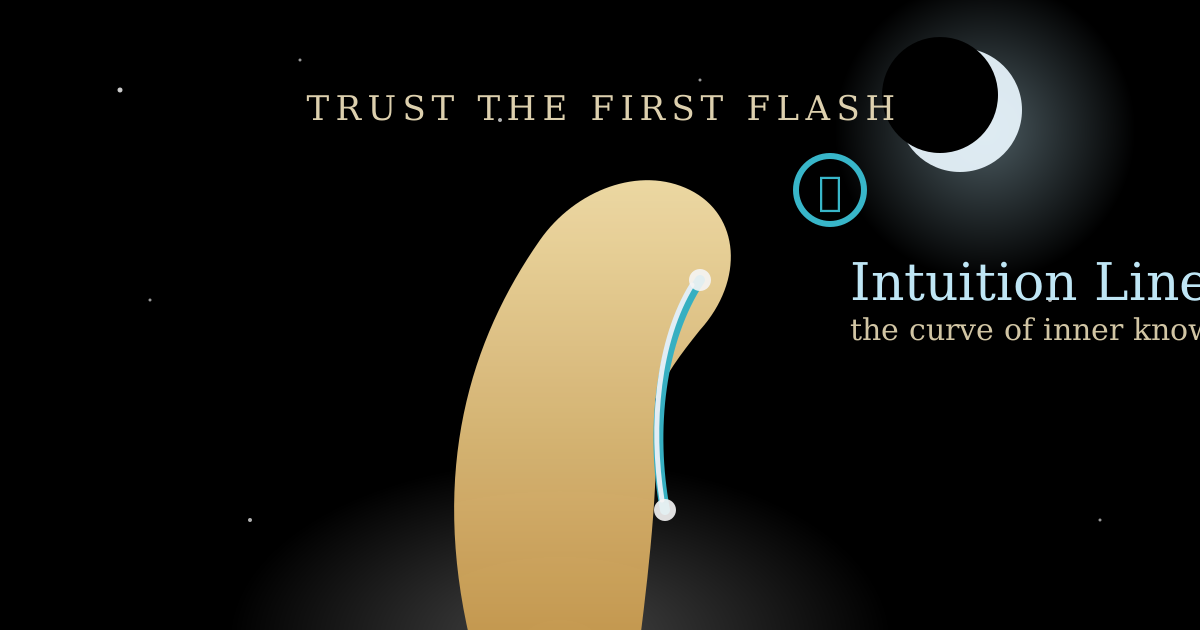
Everyone has had the experience: you meet someone and instantly feel at ease, or instantly feel wary, and only later do the reasons catch up with the feeling. You walk into a room and sense the mood before a word is spoken. You are about to make a decision, the facts point one way, and something quieter points the other — and the quieter voice turns out to be right. Palmistry gives that quieter voice a line of its own. It is called the intuition line, and it is one of the most intriguing marks in the hand precisely because it does not behave like the other lines.
The major lines — life, head, heart, fate — run across or up the palm, charting the big territories of vitality, mind, feeling, and direction. The intuition line keeps to the edge. It curves down the outer side of the palm, the side farthest from the thumb, in the territory of the Moon: the mount that palmistry associates with imagination, dreams, and sensitivity. That placement is the whole reading in miniature. This is not the line of careful reasoning or steady emotion. It is the line of the flash — the sudden knowing, the dream that answers a question, the feeling that arrives whole before thought has assembled it.
Where to Find the Intuition Line
Hold your dominant hand up, palm facing you, fingers relaxed. Find the outer edge of the palm — the side below the pinky, opposite the thumb. Now look at the lower half of that edge, the fleshy pad that swells toward the wrist. That pad is the Mount of Moon. The intuition line, when present, is a curved line that sweeps down through that region, roughly parallel to the edge of the hand, often beginning somewhere below the pinky and ending near the wrist or the lower Mount of Moon. Its shape is usually a gentle crescent, bowing outward toward the edge of the palm, like a small moon rising over the hand's horizon.
It is a shy line, and that is the first practical difficulty. The Mount of Moon is one of the most finely lined areas of the hand, full of small creases, and the intuition line can hide among them. Lighting helps enormously. Tilt your hand under a bright lamp, relax the fingers completely — tension flattens the mount and erases fine lines — and look with a magnifier or your phone camera zoomed in. A genuine intuition line tends to be longer and more continuous than the surrounding creases, and it follows the curve of the palm's edge rather than cutting across it. Check both hands, too: the line may appear on one hand and not the other, and traditional readers note which hand carries it, just as they do with every other mark.
Do not confuse the intuition line with its neighbors. The health line, also called the Mercury line, runs more centrally through the palm, from the wrist area up toward the base of the pinky — it crosses the palm's interior, while the intuition line hugs the edge. The via lasciva, a rarer companion line, runs in similar territory but is traditionally read very differently, as a mark of sensitivity tipping into excess. And the travel lines are short horizontal marks on the very edge of the palm itself, not a long curve through the mount. If the line you found sweeps down the Mount of Moon in a crescent parallel to the hand's edge, you have found the intuition line.
What the Intuition Line Traditionally Means
In classical palmistry, the intuition line is read as a sign of heightened sensitivity and reliable gut feeling. People with the line are traditionally said to pick up on what others miss: the tension behind a polite conversation, the real question inside a casual one, the moment a situation is about to change. This is why the old books link the line to healers, counselors, artists, and anyone whose work depends on reading people — but also to people in ordinary jobs who simply seem to know things before they are told.
There is a dream thread, too, and it follows naturally from the line's home on the Mount of Moon. The Moon governs the inner life in palmistry: dreams, imagination, and the unconscious. A line crossing that mount is traditionally read as a bridge between the unconscious and everyday awareness — vivid dreams that feel meaningful, hunches that arrive as images rather than words, and a tendency to know something in sleep that waking thought could not reach. Modern readers, translating the symbolism into psychological language, would call this pattern recognition plus empathy: a mind that notices small cues — tone, hesitation, body language — and assembles them below awareness. Either way, the practical advice is the same: notice the first impression, write it down, and check it later against what actually happened.
Empathy is the third strand. The intuition line is traditionally read as a mark of feeling what others feel, sometimes before they feel it themselves. That can be a gift and a burden in the same day: the person who senses a friend's distress across a crowded room is also the person who absorbs a tense office like a sponge. The old books were practical about this. They advised people with a strong intuition line to protect their quiet — time alone, time in nature, time away from other people's noise — not as indulgence but as maintenance. A sensitive instrument needs a quiet room.
Clear, Faint, Broken, or Double: Reading the Variations
Not all intuition lines are equal, and the variations carry the detail of the reading. A clear, deep, unbroken line — one smooth crescent sweeping cleanly down the Mount of Moon — is the classic form and the rarest. Tradition reads it as steady, trustworthy intuition: gut feelings that arrive clearly and prove reliable, an inner compass that rarely needs second-guessing. If you have this form, the old books would call you a natural intuitive, whether or not you have ever thought of yourself that way.
A faint line — barely visible, more a suggestion of a curve than a line — is traditionally read as latent sensitivity: the gift is present but quiet, perhaps unexercised or habitually overridden by logic. Many readers tell clients with faint lines that the mark tends to strengthen when they start paying attention to it deliberately: noting first impressions, keeping a dream journal, or pausing before decisions to ask what the quiet voice says. A broken or fragmented line is more common still. The curve appears in pieces, or fades in the middle. Traditionally this suggests intuition that arrives in flashes rather than as a steady signal, or gut feelings that the person hears but then talks themselves out of. Readers often pair a broken line with the head line: a strong, clear head line alongside it suggests the intuition is there but filtered through heavy reasoning, while a chained or wavering head line suggests the feeling gets drowned out by worry.
A double intuition line — two curves running side by side down the mount — is the intensified form: unusually strong sensitivity, vivid dream life, and a pull toward healing, counseling, or creative work. In the old texts, double lines were associated with people who live partly in the inner world — artists, mystics, and those who guide others through their own questions. A line that curves sharply toward the head line is traditionally read as intuition disciplined by thought: the person whose hunches arrive already half-reasoned, and who makes a good analyst of people. A line that curves toward the heart line is read as intuition led by feeling: the empath whose first read of a person is emotional before it is anything else.
The Line on Each Hand, and With Other Marks
As with every palmistry mark, the intuition line is read on both hands. On the dominant hand, it traditionally reflects the intuition you have developed through life — the gut feeling you actually use, sharpened by experience. On the passive hand, it reflects inborn inclination: the sensitive child, the young person who knew things they could not explain. A line on both hands is traditionally read as the strongest form, suggesting the gift is both innate and developed.
The line also gains meaning in combination. Paired with a well-developed Mount of Moon — full, firm, and raised — it suggests imagination backing the intuition: vivid inner imagery, strong dreams, and creative hunches that arrive as pictures. Paired with a long, sloping head line, it suggests intuition blended with imagination and flexible thinking, the classic combination for writers, artists, and counselors. Paired with a Girdle of Venus, the arc above the heart line, it suggests a rare blend of intuition and deep feeling — sensitivity doubled, which is why the two marks together were traditionally prized in healers and empathic readers. And paired with a Ring of Solomon, the arc around the index finger's base, it suggests wisdom guiding the intuition: the counselor who not only senses the truth but knows what to do with it.
Conversely, an intuition line on a hand with a flat, underdeveloped Mount of Moon is traditionally read as sensitivity without the inner space to use it — flashes of knowing that the person dismisses before they can act on them. The old advice for that combination was practical rather than mystical: keep a small notebook, record the first impression before the reasoning starts, and review it weekly. Patterns that look like coincidence one at a time often reveal themselves as a track record over a month.
What If You Do Not Have the Intuition Line?
Most people do not — and that is entirely normal. The intuition line is a bonus mark, not a requirement, and its absence says nothing negative about your judgment or sensitivity. Traditional palmistry is explicit on this point: the major lines and the mounts carry the core reading, and special marks like the intuition line add emphasis, not verdicts. Some of the most perceptive people in the old casebooks had no intuition line at all; their sensitivity showed in a sloping head line, a full Mount of Moon, or a Girdle of Venus instead.
It is also worth remembering that hands change. Lines deepen, fade, and occasionally appear over years as habits and life circumstances shift, and palmists have always treated the hand as a living record rather than a fixed sentence. If you go looking for the line and find only a fragment, you are in the majority — and if you find nothing, you have simply confirmed that your particular story is written elsewhere on the hand. The value of palmistry was never in collecting rare marks; it was in the attention it teaches you to pay to yourself and to others.
How to Use This Reading
Whether or not you carry the line, its lesson is portable. The intuition line celebrates a specific kind of intelligence: not the fastest mind or the most careful analysis, but the quiet ability to sense what is true before it can be proved. You can practice it directly. The next time you meet someone new, notice your first impression before conversation overwrites it — comfortable or wary, warm or guarded — and jot down a single word for it. The next time you face a decision, pause before the spreadsheet and ask what the quiet voice says. Then check, honestly, how often it was right.
And if you do carry the line, traditional advice is equally practical: treat the gift as a sense, not a verdict. A first impression is information, not proof, and the wisest use of intuition is as a hypothesis to test, not a conclusion to defend. The old books warned that sensitivity curdles into suspicion when it is never checked against fact. Used well, though, the intuition line's gift is simple and generous: it makes you the person in the room who notices what everyone else missed, and who says the thing that needed saying first. However you read your own hand, that is a skill worth keeping.
Frequently asked questions
What is the intuition line in palmistry?
The intuition line is a curved line that runs down the outer edge of the palm, from the area below the pinky toward the wrist, crossing the Mount of Moon. Traditional palmistry reads it as a mark of strong gut feeling, empathy, and a natural sensitivity to people and situations.
Is the intuition line rare?
A clear, well-formed intuition line is uncommon. Many hands show only a faint curve, a short fragment, or no line at all. Its absence means nothing negative in traditional readings — it is read as a bonus mark, not a requirement for good judgment.
What does a broken intuition line mean?
A broken or fragmented intuition line traditionally suggests intuition that arrives in flashes rather than steadily, or gut feelings that the person second-guesses. Readers often pair it with the head line to see whether logic or feeling tends to win the argument.
How is the intuition line different from the health line?
The intuition line curves along the outer edge of the palm, hugging the Mount of Moon, while the health line (also called the Mercury line) runs more centrally, from the wrist toward the base of the pinky. They occupy different ground, and tradition reads them for entirely different qualities.
Can you develop intuition if you do not have the line?
Traditional palmistry says yes — the line is read as a tendency, not a verdict. Attention, reflection, and practice listening to first impressions are the classic ways readers say intuition grows, line or no line, and hands are read as records that can change over time.
Keep exploring
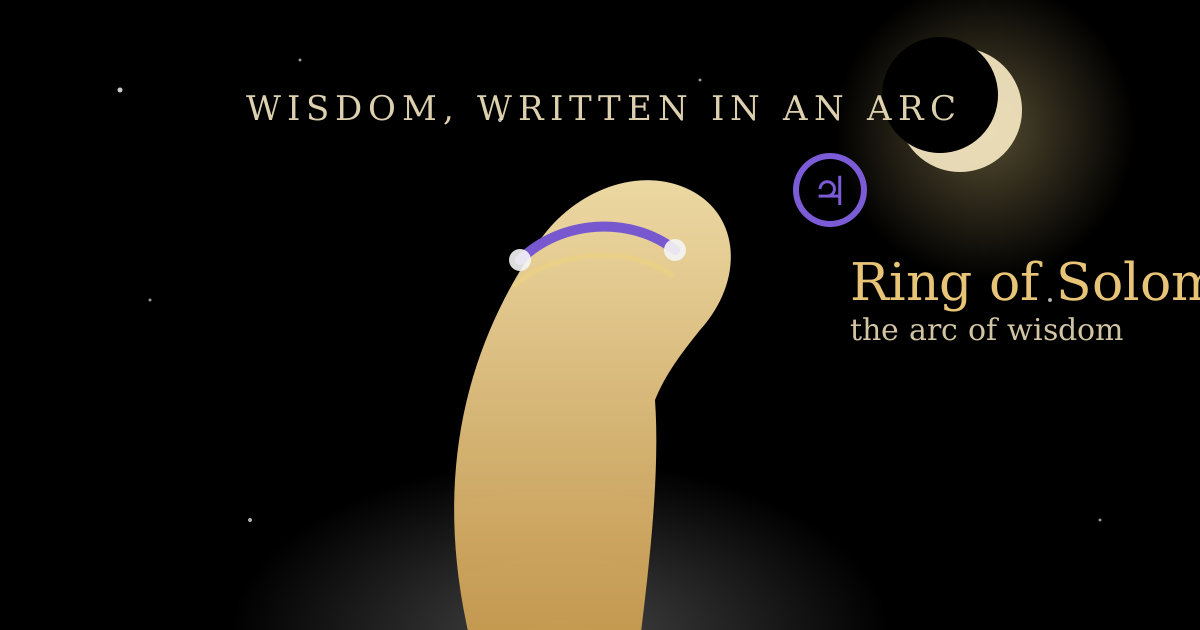
Ring of Solomon Meaning in Palmistry: Wisdom, Intuition & the Jupiter Arc
The Ring of Solomon is the arc circling the base of your index finger. Learn where to find it, what a complete, broken, double, or missing ring traditionally means for wisdom, intuition, and leadership.
Read the meaning →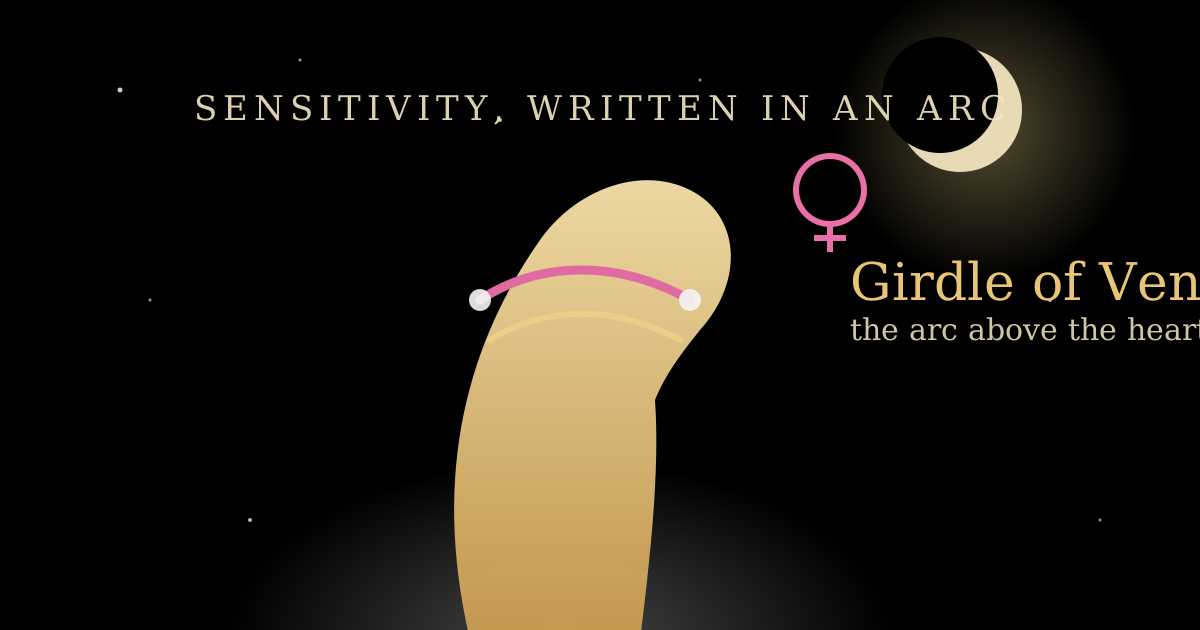
Girdle of Venus in Palmistry: Meaning, Location & What It Reveals
The Girdle of Venus is the arc above your heart line. Learn where to find it, what a complete, broken, double, or missing girdle traditionally means for sensitivity, love, and creativity.
Read the meaning →
Mounts of the Palm: A Complete Guide to the 7 Mounts
The 7 mounts of the palm, Venus, Jupiter, Saturn, Apollo, Mercury, Moon and Mars, reveal your drives and talents. Learn to read every mount, step by step.
Read the meaning →
Head Line Meaning: How to Read the Line of Your Mind
Your head line maps how you think: logic versus intuition, focus, creativity, and decision style. Learn to read its length, slope, depth, breaks, and the famous writer's fork.
Read the meaning →