
Mount of Jupiter Meaning in Palmistry: Leadership, Ambition & Confidence
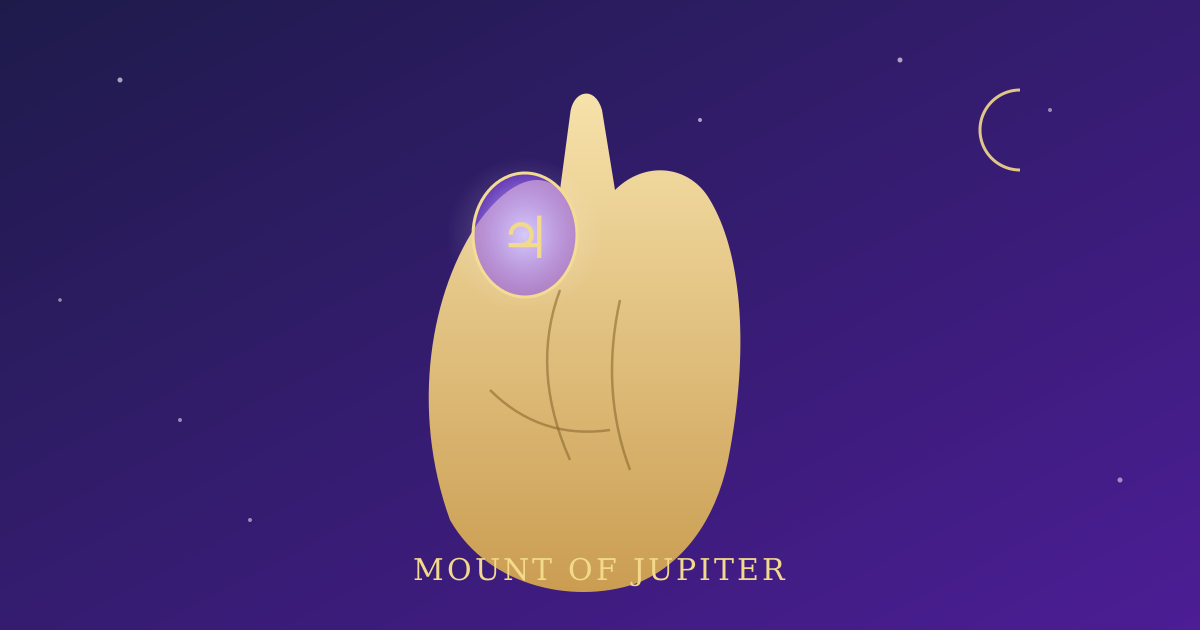
Every palm has a small landscape of rises and valleys, and near the top of that landscape, tucked beneath the index finger, sits one of the most telling features in the whole hand: the Mount of Jupiter. In classical palmistry, each mount is named for a planet, and Jupiter — king of the Roman gods, planet of expansion, honor, and good fortune — lends this mount its character. Where the Mount of Venus speaks of love and warmth, and the Mount of Saturn of duty and discipline, the Mount of Jupiter speaks of ambition: the drive to rise, to lead, to be recognized, and to shape something larger than yourself.
That is why the mount rewards a close look. A person can have a brilliant head line and a deep fate line, yet still hesitate to step forward — or, conversely, charge into leadership with a hand full of faint lines. The Mount of Jupiter helps explain the difference. It describes the engine behind achievement: not what you are good at, but how much you want the summit, how you handle authority, and whether applause fuels you or embarrasses you. Read on, and you will learn to find it, measure it, and interpret its marks — including the famous star that old palmistry books call one of the luckiest signs in the hand.
Where to Find the Mount of Jupiter
Hold your dominant hand up, palm facing you, fingers relaxed. The Mount of Jupiter is the fleshy pad directly beneath your index finger, along the upper edge of the palm. Press it gently with the thumb of your other hand: you will feel a soft, slightly raised cushion. Its neighbors tell you where its territory ends. To one side sits the Mount of Saturn beneath the middle finger; below and toward the thumb lies the inner edge of the palm, where the Mount of Jupiter blends toward the Mount of Venus at the thumb's base. The arc that sometimes circles the base of the index finger — the Ring of Solomon — runs across this very mount, which is why the two features are so often read together.
To judge the mount fairly, compare it with the other mounts on the same hand rather than with someone else's hand. Hands vary enormously in size, flesh, and age, and a mount that looks modest on a large, fleshy hand may be prominent on a slender one. The useful question is always relative: does the Jupiter pad rise higher than its neighbors? Does it feel firm and springy, or soft and flat? Does it dominate the top edge of your palm, or recede quietly? Palmists also compare both hands. The dominant hand is traditionally read as your developed character — the ambition you have built — while the passive hand shows your natural starting point. A mount that is strong on both hands suggests a lifelong trait; one that is stronger on the dominant hand suggests ambition grown through experience.
What a Prominent Mount of Jupiter Means
A prominent, well-developed Mount of Jupiter — raised, firm, and clearly defined — is the classic mark of ambition in palmistry tradition. Such people, the old books say, are natural organizers: they take responsibility without being asked, enjoy being in charge, and feel most alive when working toward a goal that others can see. Confidence comes easily to them, and so does a certain love of honor — titles, recognition, and respect matter, not from vanity alone but because they confirm that the effort was worthwhile. Teachers, managers, founders, clergy, and public servants frequently show this pattern, and so do the people who quietly run the family, the team, or the community project.
In its balanced form, a strong Jupiter mount pairs with generosity and principle. Jupiter was the god of justice as well as kingship, and the tradition insists that healthy Jupiter ambition wants to lead fairly: to protect the group, to share credit, and to use authority for something beyond the self. Watch for the supporting signs. A strong mount plus a long, straight index finger points to principled leadership. A strong mount plus a clear head line points to ambition guided by strategy rather than impulse. And a strong mount with a well-marked heart line suggests a leader who genuinely cares about the people following them — the combination every team hopes for.
A Flat or Underdeveloped Mount of Jupiter
At the other end of the scale, a flat or underdeveloped Mount of Jupiter — barely raised, soft, or almost absent — traditionally suggests modest ambition and a preference for supporting roles over the spotlight. These are the people who keep the project running while someone else takes the bow, and who often prefer it that way. The tradition reads this not as laziness but as a different set of values: humility, contentment, and a distaste for self-promotion. Many gifted craftspeople, carers, researchers, and behind-the-scenes operators have flat Jupiter mounts, and they are often happier for it.
The shadow side, honestly stated, is under-claiming. A person with a flat Jupiter mount may do excellent work and still hang back when promotion, credit, or leadership is offered, assuming someone else deserves it more. If this sounds familiar, palmistry tradition offers a gentle corrective: ambition is not the same as arrogance, and stepping forward is a skill, not a personality transplant. Interestingly, the mount can appear fuller at different stages of life — hands change with use, weight, and age — so readers treat a flat mount as a snapshot of the present, not a life sentence. Pair the reading with the index finger: a flat mount with a long index finger often means ambition held in reserve, waiting for the right cause.
An Overdeveloped Mount: When Ambition Tips Into Pride
Every strength has an excess, and Jupiter's is pride. An overdeveloped Mount of Jupiter — very large, hard, and dominating the whole upper palm — traditionally warns of ambition grown domineering: bossiness, a hunger for status, vanity about rank and titles, and a tendency to lecture rather than listen. The old texts are blunt about this pattern, describing people who must be first, must be obeyed, and take criticism as personal insult. In modern language, we might call it the difference between leading a room and needing to own it.
Two checks keep this reading honest. First, look at the thumb: a strong, firm thumb beside an overdeveloped mount suggests willpower reinforcing the dominance, while a flexible thumb softens it toward persuasion. Second, look at the heart line: a long, deep heart line beside a big Jupiter mount often means the ambition is still warm — the person wants to be admired, but also loved. And remember the framing that runs through all responsible palmistry: the hand describes tendencies, not verdicts. An overdeveloped mount is best read as an invitation to self-awareness — a reminder to share the stage, ask for honest feedback, and let authority be earned repeatedly rather than assumed.
Lines and Marks on the Mount of Jupiter
The mount's surface carries its own small vocabulary of marks, and these fine details often matter more than size alone. A cross on the Mount of Jupiter is traditionally read as a sign of a fortunate marriage or a happy, influential partnership — one of the kinder marks in the hand. A star is the most celebrated of all: the old books call a clear star on Jupiter a sign of recognition, honor, and success in a position of responsibility, sometimes described as the mark of a person destined to stand out in their field. A square is read as protection — a guard against the excesses of ambition, keeping pride and impulsiveness in check.
Other marks shade the picture differently. A grille — a crisscross mesh of fine lines — traditionally suggests vanity, superstition, or ambition scattered in too many directions at once. A triangle on the mount is read as skill in leadership, strategy, or diplomacy: the ability to plan and persuade. Single vertical lines rising on the mount are considered favorable, each one adding a note of purpose and drive, while a single deep horizontal line can suggest obstacles to ambition or a career interrupted and restarted. And the Ring of Solomon, the arc circling the base of the index finger across this mount, adds wisdom and intuition to the leadership picture — the leader who also listens inwardly. As always, one mark is a whisper; a cluster of agreeing marks is the conversation.
The Mount of Jupiter and the Index Finger
No mount is read alone, and Jupiter's closest partner is the index finger above it. A long index finger — reaching near or beyond the middle finger's first joint — strengthens everything the mount says: stronger ambition, greater confidence, a more natural command presence. A short index finger softens the reading toward caution, deference, and a preference for working within established structures rather than challenging them. A bent or twisted index finger is traditionally read as ambition expressed indirectly — diplomacy, humor, or working through others rather than head-on.
The finger's shape adds a final layer. A pointed index finger suggests idealism and inspiration guiding the ambition; a square tip suggests practical, methodical leadership; a spade-shaped tip suggests originality and a love of new ventures. Combine the mount and the finger for the full portrait: a prominent mount with a long, square index finger is the classic profile of the steady executive, while a prominent mount with a pointed finger describes the visionary — the person whose ambition is aimed at a cause rather than a corner office. Neither is better; they simply climb different mountains.
Jupiter in Love, Career, and Everyday Life
In career readings, the Mount of Jupiter is the first place a palmist looks when someone asks about advancement. A strong mount supports roles with visible responsibility — management, teaching, law, public service, entrepreneurship — and the tradition says such people are happiest when their work carries status they can be proud of. A flat mount does not mean career failure; it often means satisfaction found in mastery, service, or stability rather than rank. The honest question for any Jupiter reading is not "will you succeed?" but "what does success look like to you?" — and the mount sketches your answer.
In love and friendship, Jupiter's influence shows as loyalty, generosity, and a protective streak. The strong-Jupiter partner plans the celebrations, defends their people fiercely, and likes to be admired by the person they love. The shadow side is the same pride that appears at work: difficulty apologizing, or turning disagreements into contests. The balancing advice from the tradition is simple and practical: let your partner win sometimes, accept help graciously, and remember that in close relationships, being right matters less than being kind. Read this way, the Mount of Jupiter becomes less a fortune-telling device and more a mirror — a prompt for reflection about how you handle power, praise, and pride in daily life.
How to Read Your Mount of Jupiter in 60 Seconds
Now try it yourself. First, find the pad beneath your index finger and compare its height with the neighboring Saturn mount. Second, press it: is it firm and springy, or soft and flat? Third, glance at your index finger: long or short, straight or bent? Fourth, look for marks — a cross, star, square, grille, or the arc of the Ring of Solomon. In under a minute you have a working portrait of your ambition style: how hard you push, how you handle authority, and where pride might need watching.
Then do the exercise that makes palmistry come alive: read the mount on someone you know well and check the reading against reality. Does your ambitious friend show the prominent mount? Does your modest, steady colleague show the flat one? You will find, as generations of readers have, that the mount is surprisingly good at describing how people relate to success. The lines may tell you what life has brought, and the fingers how you express yourself — but the Mount of Jupiter tells you how much you want the summit, and what kind of leader you become on the way up. That is why it has held its place, beneath the finger of command, for thousands of years.
Frequently asked questions
Where is the Mount of Jupiter on the palm?
The Mount of Jupiter is the fleshy pad at the base of the index finger, on the upper edge of the palm. It sits beside the Mount of Saturn beneath the middle finger and above the inner edge of the palm near the thumb.
What does a prominent Mount of Jupiter mean?
A prominent, well-developed Mount of Jupiter traditionally suggests ambition, confidence, leadership drive, and a love of responsibility. In balance, it marks someone who organizes, inspires, and aims high.
What does a flat Mount of Jupiter mean?
A flat or underdeveloped Mount of Jupiter traditionally suggests modest ambition and a preference for supporting roles over the spotlight. It often pairs with humility and contentment, though the person may need encouragement to claim credit.
What does a star on the Mount of Jupiter mean in palmistry?
A star on the Mount of Jupiter is one of the most celebrated marks in traditional palmistry, said to indicate recognition, honor, and success in a position of responsibility. Like all palmistry marks, it is read as a traditional symbol of potential, not a guarantee.
Does the Mount of Jupiter relate to the index finger?
Yes. The Mount of Jupiter and the index finger are read together: the mount shows the drive, and the finger shows how it is expressed. A long index finger strengthens the Jupiter reading, while a short one softens it toward caution and deference.
Keep exploring

Mounts of the Palm: A Complete Guide to the 7 Mounts
The 7 mounts of the palm, Venus, Jupiter, Saturn, Apollo, Mercury, Moon and Mars, reveal your drives and talents. Learn to read every mount, step by step.
Read the meaning →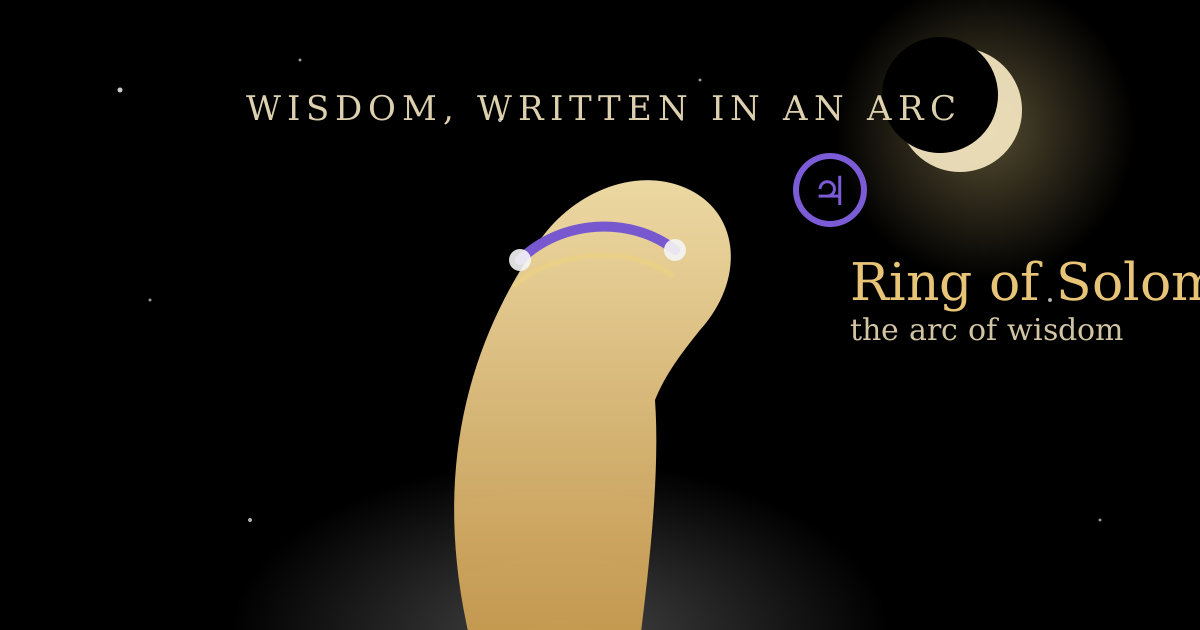
Ring of Solomon Meaning in Palmistry: Wisdom, Intuition & the Jupiter Arc
The Ring of Solomon is the arc circling the base of your index finger. Learn where to find it, what a complete, broken, double, or missing ring traditionally means for wisdom, intuition, and leadership.
Read the meaning →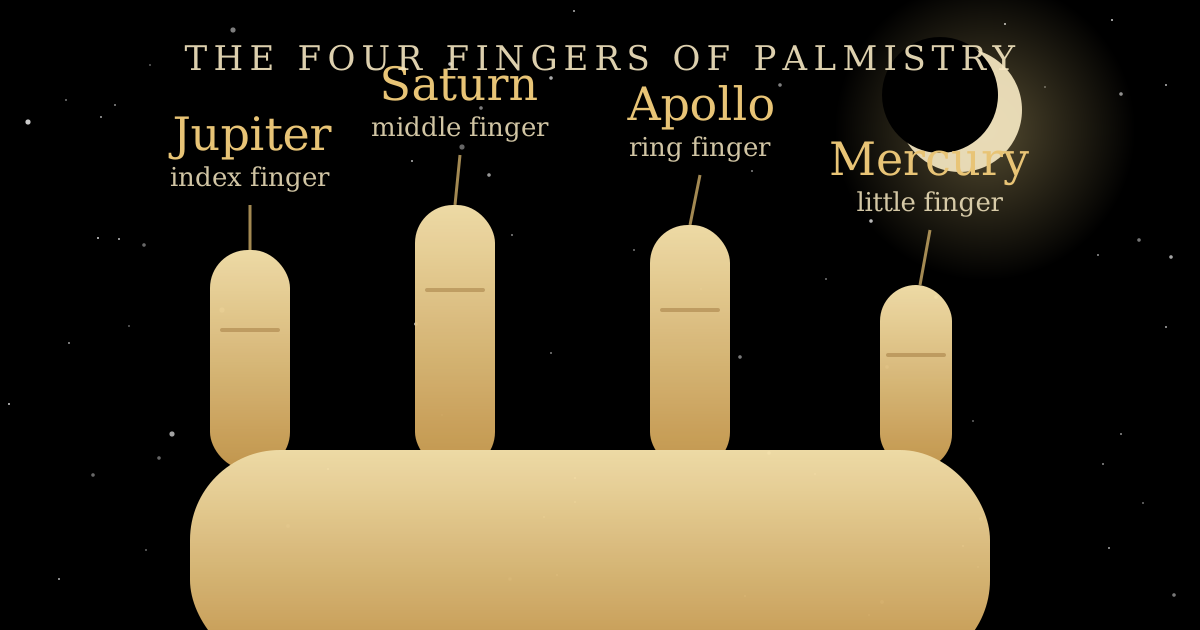
Fingers Meaning in Palmistry: What Each Finger Reveals
Each finger carries a planet's story — index for Jupiter's ambition, middle for Saturn's responsibility, ring for Apollo's creativity, little for Mercury's communication. Learn to read every finger's length, spacing, and shape.
Read the meaning →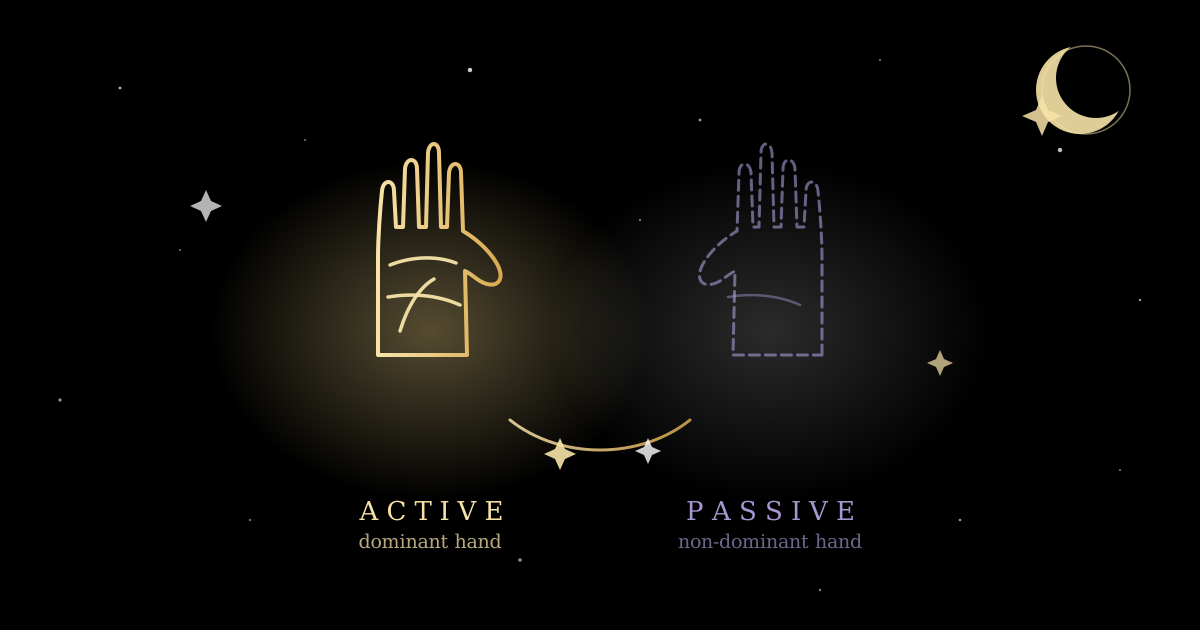
Which Hand Do You Read in Palmistry? Dominant vs Passive Hand
Which hand do you read in palmistry? Learn the dominant vs. passive hand tradition, the old men-and-women rules, why palmists read both hands, and how to compare yours.
Read the meaning →