
Thumb Meaning in Palmistry: Willpower, Logic & Thumb Shape
Ask a professional palmist which part of the hand they trust most, and many will point past the famous lines to something beginners barely notice: the thumb. In palmistry tradition, the thumb is the engine room of the whole hand — the seat of willpower, logic, and the power to turn intentions into action. The lines may map your story, the mounts may color your temperament, but the thumb, palmists say, is what decides how forcefully you live them.
This reverence has a surprisingly practical root. Your thumb gives you grip, precision, and the ability to shape tools — the anatomical foundation of everything humans build. So it makes intuitive sense that generations of readers linked the thumb to the will: the thing that seizes an opportunity and does not let go. Reading your thumb is simple, takes about a minute, and changes how you see every other mark on your hand. Let us begin.
The Two Phalanges: Willpower vs. Logic
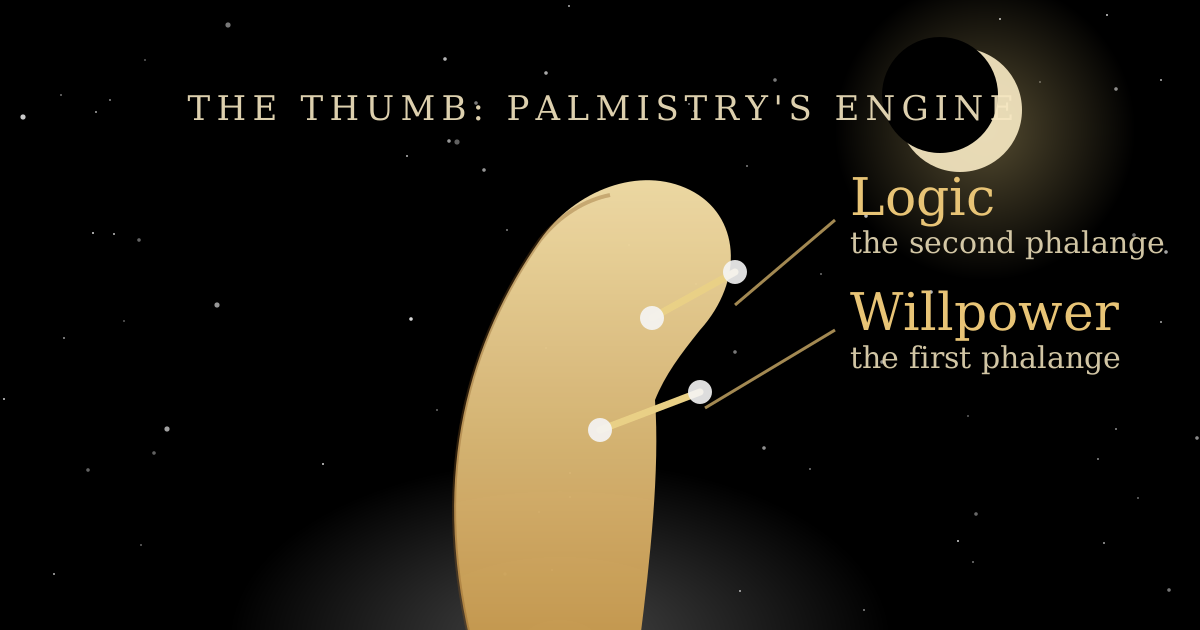
Unlike the fingers, the thumb has two phalanges (segments) instead of three, and traditional palmistry assigns each a distinct job. The first phalange — the tip segment, containing the nail — represents willpower and determination: your raw power to persist, decide, and push through. The second phalange — the segment closest to the palm — represents logic and reasoning: how carefully you think before you act. Look at your thumb now. Are the two segments roughly equal in size? One usually dominates.
When the first phalange (willpower) is larger and fuller than the second, the tradition reads a person of powerful resolve who may act before thinking — the classic "decide first, reason later" temperament. Entrepreneurs, athletes, and crisis-leaders often show this pattern. When the second phalange (logic) dominates, you get the analyst: careful, reasoned, sometimes so thorough that decisions stall. A balanced pair — both segments similar in size — suggests willpower and reason working as a team, which old palmistry texts considered the hallmark of sound judgment. Neither pattern is a verdict on your character; think of it as a description of your default operating system.
Long Thumbs and Short Thumbs
Thumb length is measured against the index finger. Hold your hand flat, fingers together: does your thumb reach at least halfway up the index finger's lowest segment? A long thumb — reaching well up the index finger — traditionally marks strong willpower, leadership drive, and an independent spirit. These are the people who organize the group trip, launch the project, and hold a position under pressure. Their challenge is not a lack of will but its overuse: steamrolling others, refusing to yield, or insisting on control.
A short thumb — stubby, or reaching barely to the base of the index finger — suggests a gentler, more impressionable will. Such people tend to be adaptable and sensitive to others, but may struggle with persistence and self-assertion, borrowing momentum from stronger personalities around them. Here is the important nuance the better palmistry books insist on: a short thumb describes temperament, not worth. Many deeply accomplished artists, carers, and collaborators have short thumbs — they simply achieve through flexibility and connection rather than force. And like all hand features, the thumb is read as tendency, not destiny.
Thumb Shape: Spade, Square, Conic, and Pointed
The thumb's tip shape carries its own vocabulary, borrowed from the finger-shape system. A spade-shaped (spatulate) thumb — wider at the tip than at the base — indicates originality and an active, restless energy. These people need motion and invention; they are the tinkerers, makers, and explorers. When the tip is dramatically clubbed or heavy, old texts gave it an ominous name — the "murderer's thumb" — which modern readers sensibly translate into plain language: intensity of will, stubbornness, and a direct, sometimes blunt approach to obstacles.
A square thumb tip suggests practicality, order, and method: the will applied systematically, step by step. A conic or rounded tip softens everything — artistic feeling, tact, a willpower that persuades rather than pushes. And a pointed tip, rare on thumbs, indicates quickness of mind and intuition, though with less staying power. Most thumbs are somewhere between these types; the reading is strongest when one type is unmistakable.
The Flexibility Test: Supple vs. Firm Thumbs
This is the most fun part of thumb reading, and you can test it right now. Press your thumb backward gently. A flexible or supple thumb — one that bends back easily — traditionally marks adaptability and generosity. These people bend with circumstances, forgive quickly, and spend freely (of money, time, and goodwill). The shadow side, the old books warn, is being too easily influenced: a supple thumb may bend to other people's wills as readily as it bends backward.
A firm, stiff thumb that barely yields suggests firmness of purpose and resistance to pressure. Nothing moves these people unless they decide to move — which makes them dependable anchors and, at the extreme, exasperatingly stubborn. Palmists also watch the thumb's carriage: held close against the palm and fingers, it suggests caution and reserve; held wide, jutting out from the hand, it suggests openness and confidence. Watch how someone's thumb sits when their hand is relaxed — that unconscious posture is part of the reading.
High-Set, Low-Set, and the Angle of the Thumb
Where the thumb joins the hand matters too. A high-set thumb — emerging higher up the hand, closer to the fingers — traditionally belongs to people with refined, intellectual wills: thinkers and strategists who prefer ideas to brute force. A low-set thumb — joining near the wrist — suggests a more instinctive, practical willpower: doers and builders whose strength is grounded in action.
Then there is the angle. Spread your fingers wide and note the angle between your thumb and index finger. A wide angle (nearly 90 degrees) indicates independence and self-reliance — the person who goes their own way comfortably. A narrower angle suggests a more cautious, conventional approach, staying closer to the tribe. Neither is better; the wide-angle thumb starts the business alone, the narrow-angle thumb builds it with a trusted team. Once again, the hand describes your style, not your ceiling.
Special Marks on the Thumb
The thumb carries its own small atlas of marks. The family ring — the crease circling the base of the thumb where it meets the Mount of Venus — is read as a sign of family bonds and inherited support. A clear, deep ring suggests strong family ties; a faint one, more independence from them. The waist of the thumb — a narrowing at the joint between the two phalanges — is traditionally read as tact: the will refined by diplomacy, power that knows when to soften. Thumbs without a waist are read as more direct and blunt in how they apply force.
Look also for the wheat grain or "eye" of the thumb: the almond-shaped marking that appears at the thumb joint on many hands. In Indian palmistry (samudrika shastra), a clear wheat-grain eye on the thumb is considered an auspicious sign — traditionally associated with prosperity, a comfortable life, and good fortune. And a grille or cross on the Mount of Venus beneath the thumb shades the reading of passion and vitality. As with every marking in palmistry, one sign is a whisper; patterns across the hand are the conversation.
How to Read Your Thumb in 60 Seconds
Now put it all together. First, compare your two phalanges — which is larger, willpower or logic? Second, judge your thumb's length against your index finger. Third, press it back gently to test flexibility. Fourth, note where it sets into your hand and the angle it makes with your index finger. In under a minute you have a working portrait of your decision style: how you choose, how you persist, and how you adapt.
Then do the most useful exercise in palmistry: read someone you know well and check your reading against reality. This is how the tradition was always meant to be learned — not from a page, but from hands you can ask questions of. You will find, as generations of readers have, that the thumb is eerily good at describing how a person operates. The lines tell you what life has brought; the mounts tell you who you are; but the thumb, the palmists insist, tells you what you will do about it. That is why it earned its place as the most respected digit in the hand — and the perfect starting point for your own reading practice.
Frequently asked questions
What does the thumb mean in palmistry?
The thumb represents willpower, logic, and the power to act on your intentions. Traditional palmists read its two phalanges separately: the first (tip) phalange shows willpower and determination, the second shows logic and reasoning.
What does a flexible thumb mean in palmistry?
A flexible or supple thumb traditionally suggests adaptability and generosity — the person bends with circumstances. A stiff, firm thumb suggests firmness of purpose and resistance to influence, with the shadow side being stubbornness.
What does it mean if you have a long thumb?
A long thumb, reaching well up the index finger, traditionally marks strong willpower and leadership drive. A short thumb suggests a gentler, more impressionable nature that may work best with support and structure.
What is a clubbed thumb in palmistry?
A clubbed or spatulate thumb tip, wider than its base, is traditionally called the murderer's thumb in old palmistry texts, but modern readers simply read it as intensity — brute force of will, stubbornness, and a direct, physical approach to problems.
Which thumb do you read, left or right?
Read both thumbs, just like the rest of the hand. Compare them: the dominant hand traditionally shows your developed willpower, while the passive hand shows your natural, inborn tendencies.
Keep exploring

Head Line Meaning: How to Read the Line of Your Mind
Your head line maps how you think: logic versus intuition, focus, creativity, and decision style. Learn to read its length, slope, depth, breaks, and the famous writer's fork.
Read the meaning →
Mounts of the Palm: A Complete Guide to the 7 Mounts
The 7 mounts of the palm, Venus, Jupiter, Saturn, Apollo, Mercury, Moon and Mars, reveal your drives and talents. Learn to read every mount, step by step.
Read the meaning →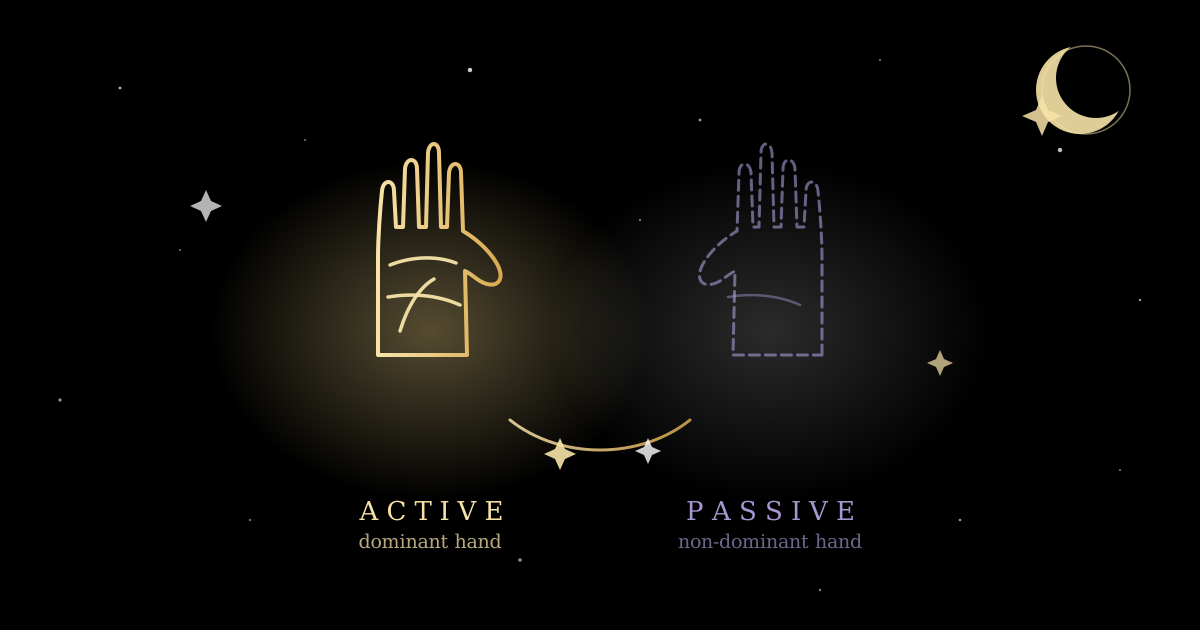
Which Hand Do You Read in Palmistry? Dominant vs Passive Hand
Which hand do you read in palmistry? Learn the dominant vs. passive hand tradition, the old men-and-women rules, why palmists read both hands, and how to compare yours.
Read the meaning →
What Does It Mean to Dream About Being Chased?
Being chased in a dream is frightening but meaningful. Learn what chase dreams reveal about stress, avoidance, and the fears you keep running from.
Read the meaning →