
Past-Life Fears and Phobias: 9 Signs Your Fear Comes From Another Life
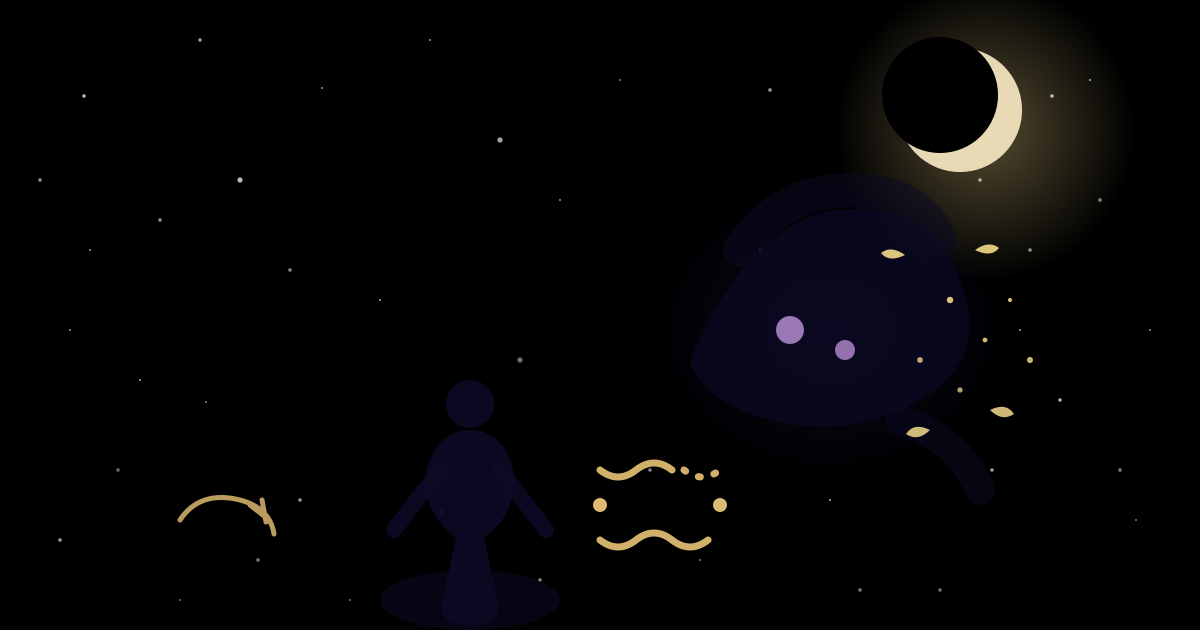
She had never nearly drowned. No childhood trauma, no scary incident at the lake, no overprotective parent who feared the water. And yet, from her earliest memories, standing near deep water made her chest tighten and her stomach drop — a dread that felt older than her whole life. When she told this to a friend who studied past-life theories, the friend asked one question: “What if the fear isn’t from this life at all?”
Across the reincarnation traditions of Hinduism, Buddhism, and Western spiritualism alike, there is a persistent idea: that intense, unexplained fears are carried imprints — emotional residue from experiences that ended badly in another lifetime. You do not have to be a believer to find the idea useful. Whether a phobia is a past-life memory, a forgotten early experience, or the brain’s symbolic pattern-matching, treating it as a story with an origin can loosen its grip. Here are the signs people associate with past-life fears, the most common phobias in the lore, and what to do with them — framed for reflection and exploration, not as medical advice.
The Classic Clue: A Fear With No Origin Story
Every phobia that earns a therapist’s attention has a possible psychological origin — but the past-life candidate looks different. The signature sign is a fear that is disproportionate and story-less: full-bodied panic about something that has never hurt you, in a family where nobody else shares it, with no memory of a first scary encounter. Psychologists call many of these specific phobias and note that they can form from forgotten early experiences or even from stories absorbed secondhand. The spiritual reading adds another layer: what if the “first encounter” happened in a life you don’t consciously remember?
Researchers at the University of Virginia documented cases that keep this question alive: children who not only described previous lives in detail but also carried phobias matching how those lives reportedly ended — a child terrified of water who described drowning, a child with a gunshot phobia who described a shooting. Skeptics can and do offer other explanations, but for the experiencer, the correlation is striking. A fear with no origin story is an invitation to look deeper — inward, backward, or both.
The Usual Suspects: Common Phobias With Past-Life Readings
Certain fears show up again and again in past-life literature. If one of these is yours, see if the traditional “story” attached to it resonates — resonance, in this framework, is itself data.
- Water (aquaphobia). The most cited past-life phobia of all. The traditional reading: a previous life that ended in drowning — a shipwreck, a flood, a fall into a river. People report the fear spiking around oceans and deep pools while being fine with bathtubs, which the lore reads as the imprint being tied to uncontrollable water.
- Fire (pyrophobia). Traditions connect this to lives ended by fire — house fires, or in historical eras, far darker fates. The lore notes that sufferers often flinch at open flames and candles while tolerating ovens and stoves, suggesting the imprint is about fire as an agent, not fire as a tool.
- Heights (acrophobia). The classic reading: a fall from a great height in a previous life. What makes this one interesting to past-life researchers is how many sufferers can point to the first time — the top of a staircase at age four, a balcony at six — with the fear arriving fully formed, as though it had been waiting.
- Confined spaces (claustrophobia). Often paired in the lore with lives ended in entrapment — caves, collapsed buildings, prisons, or being buried. The spiritual reading looks for a companion clue: a simultaneous aversion to being held down or restrained.
- Blood and needles. In past-life terms, this is read as an imprint from a violent wounding. Psychologists note this phobia is unusual because it can cause fainting (a vasovagal response) rather than pure panic — and some traditions take that dramatic bodily “shut-down” as a clue that the body is reenacting something specific.
- Crowds and public places. The lore’s reading: a past life involving persecution, public shaming, or a panicked crowd — a stampede, a riot, an execution audience. The imprint isn’t about people, it’s about being seen by many while unsafe.
- Darkness. Nearly universal in childhood and usually outgrown — which is exactly why traditions pay attention when it persists into adulthood. The spiritual reading asks what the darkness contains: if it’s not the dark itself but what the dark hid in another time, the fear has a story to tell.
The Mirror Image: Aversions Beyond Phobias
Not every past-life imprint is a full phobia. Some arrive as quieter aversions — strong dislikes that feel older than your biography. A refusal to wear certain uniforms. An inexplicable coldness toward a specific historical era. A job or skill that feels like a door you will not open: the sea, the stage, the pulpit. Traditions read these as the same phenomenon at lower volume — not the terror of how a life ended, but the weariness of a role played too long, or the flinch of an old wound that never quite healed.
There is a test spiritual readers suggest: does the aversion feel like disinterest, or like recognition with the volume turned down? Disinterest is flat and bored; the past-life kind has texture — a shiver, a sadness, a strange familiarity. When a topic makes you feel something you can’t explain, the lore says, you’re standing near a door.
Body Echoes: When the Fear Lives in the Flesh
Sometimes the imprint skips the mind and lands in the body. A throat that tightens near water. Hands that shake at heights before the mind has registered where it is. A panic response that fires faster than thought — the body reacting to a trigger the conscious mind hasn’t even named yet. Past-life traditions find this significant: if the fear were purely a learned story, they argue, the mind would lead and the body would follow. When the body leads, something older may be driving.
Researchers of reincarnation cases have long been interested in the physical layer — birthmarks and pains corresponding to described wounds are the most famous examples. A fear that announces itself physically, before thought, belongs to the same family of clues. It doesn’t prove a past life; it proves the fear is deep, and deep fears deserve deep listening.
Recurring Nightmares as Memory Fragments
Another classic sign: the same nightmare, over years, with the same setting, the same threat, the same ending — often set in a time or place you have never lived in. A medieval battlefield. A sinking ship. A burning building with a staircase you know by heart. Past-life dream workers treat these as memory fragments: the subconscious replaying the most charged moments of a previous life the way a projector loops a single scene.
Here’s a practical exercise from the dreamwork tradition: write down the nightmare immediately on waking, then re-enter it consciously the next day — sitting quietly, eyes closed, walking through the scene as an observer. Many people report that the scene “completes” itself when watched calmly: the ship reaches shore, the fire door opens, the chase ends. Whether that’s a memory resolving or the mind soothing itself, the effect is the same — the loop loosens.
Tracing a Fear to Its Imagined Source
If you want to explore the past-life reading of your own fear, traditions offer a gentle three-step method. First, write the fear’s biography: the earliest memory of it, what it feels like in the body, what images come with it, what it keeps you from doing. Be specific — fears become manageable when they have contours.
Second, ask the fear a question. In a quiet meditation, picture the fear as a figure and ask: what do you remember? Note whatever surfaces — an era, a landscape, a garment, a sound — without editing. Past-life regression therapists use guided versions of exactly this technique, and our regression guide walks through the full process for beginners.
Third, give it an ending. In meditation, imagine the scene the fear showed you, and then imagine it resolving differently — the door opens, the water recedes, you are pulled to safety. This is symbolic work, not history, and everyone involved knows it. But symbols are the language the fear speaks, so symbols are how you answer it.
A Gentle Caveat: Fears Are Also Treatable
The spiritual lens is for meaning; it is not a substitute for care. If a phobia is limiting your life — keeping you from traveling, working, driving, or seeing a doctor — please talk to a licensed mental health professional. Specific phobias are among the most treatable conditions in psychology, with exposure-based approaches showing strong results. There is no contradiction in doing both: therapy for the fear’s mechanics, spiritual exploration for its meaning. Many people find the two strengthen each other — the story gives the work heart, and the work gives the story somewhere to land.
A Small Ritual for Releasing an Old Fear
Traditions across cultures mark transitions with small rituals, and fears — old or new — are transitions waiting to happen. Try this: write the fear on a piece of paper in one sentence, as if it were a memory. “I am afraid of deep water, and I have been afraid for longer than I can remember.” Read it aloud. Then write a second sentence underneath: “This fear belonged to a story. The story is over. I am here, and I am safe.” Fold the paper and put it somewhere you’ll find in a month — a book, a drawer. When you find it, notice what’s changed. Rituals don’t erase fears by magic; they give the conscious mind a way to tell the deeper self that the danger has passed. Sometimes, that’s all the deeper self was waiting to hear.
Frequently asked questions
What does it mean spiritually to have a phobia with no cause?
Some spiritual traditions interpret an unexplained phobia as a carried imprint — an emotional residue from a past-life experience that ended badly around that trigger. Whether or not you accept the reincarnation framing, many people find that exploring the fear's imagined origin through journaling or meditation loosens its grip on the present.
Can a phobia really come from a past life?
There is no scientific proof that phobias come from past lives, but there are documented cases of children with fears matching described past-life deaths, such as drowning fears paired with accounts of drowning. Psychologists point to forgotten early experiences, absorbed stories, and the brain's pattern-matching as alternative explanations. Both lenses can be explored — the spiritual one for meaning, the psychological one for treatment.
What should I do about a phobia that affects my daily life?
If a fear is limiting your life — affecting work, travel, or relationships — talk to a licensed mental health professional. Exposure therapy and cognitive-behavioral approaches are well supported for phobias. Spiritual exploration can sit alongside professional help as a meaning-making practice, not as a replacement for it.
How can I explore whether my fear has a past-life story?
Start by writing the fear's earliest memory in detail, then try a guided past-life regression or a quiet meditation asking the fear what it remembers. Note whatever images, eras, or scenes surface without judging them. Many people find that giving the fear a story — even a symbolic one — reduces its charge, because it stops being an unnamed dread and becomes something with contours.
Keep exploring
Signs of Past-Life Dreams: 7 Clues You've Lived Before
Signs of past-life dreams: vivid historical dreams, déjà vu, unexplained phobias & affinities. Learn the signs and what to do with them.
Read the meaning →
Past-Life Regression: A Complete Beginner's Guide
Past-life regression guide: what happens in a session, professional vs self-guided methods, a complete script & what people experience.
Read the meaning →
Birthmarks and Past Lives: Do Old Wounds Leave Their Mark?
Birthmarks and past lives: the old-wounds theory, the UVA birthmark research, birthmark folklore by shape and position & what spiritual readers say your marks might mean.
Read the meaning →
Who Was I in a Past Life? Clues & How to Explore
Who was I in a past life? Explore the clues — affinities, dreams, fears — plus detective methods, regression & meditation for past-life discovery.
Read the meaning →