
Ansuz Rune Meaning: Wisdom, Communication & Odin's Voice
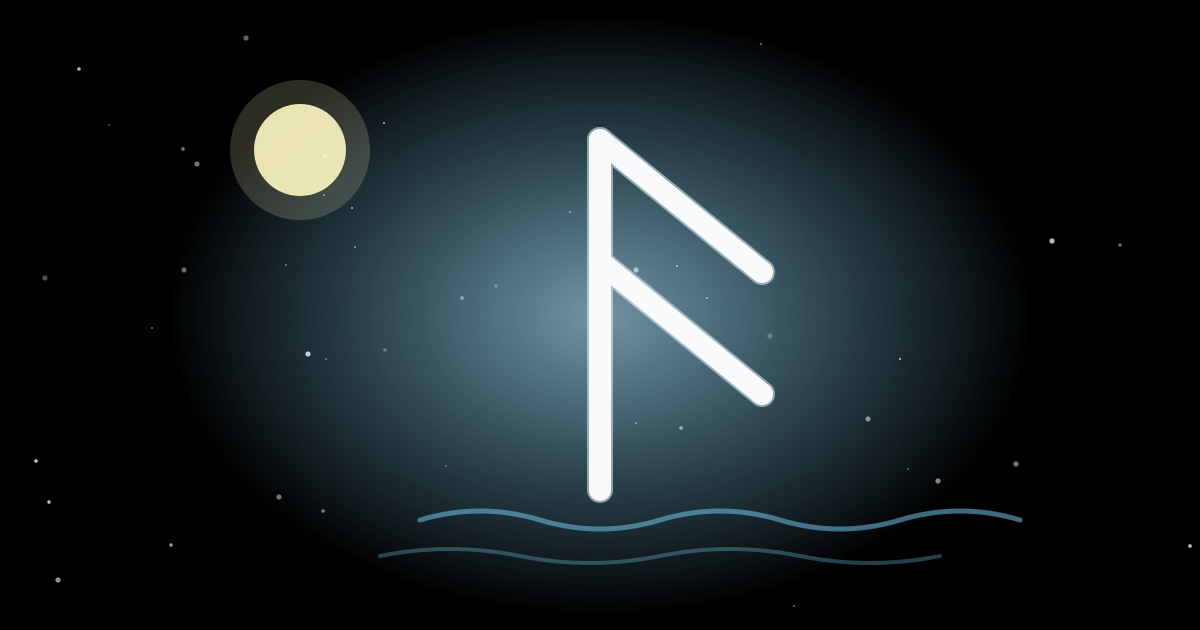
If the runes had a voice, it would sound like Ansuz (ᚨ). The fourth rune of the Elder Futhark is the rune of the mouth — of speech, song, poetry, counsel, and the breath that carries meaning from one mind to another. Its name literally means "god," and it belongs to the wisest of the Norse gods: Odin, who traded an eye for wisdom, hung nine nights on the World Tree to win the runes, and gave humanity the breath of life. To draw Ansuz is to be reminded that words are never "just" words — they are vessels of power.
Ansuz sits in the first family of runes, Frey's aett, alongside Fehu, Uruz, and Thurisaz. Where its neighbors speak of wealth, strength, and force, Ansuz speaks of something quieter and arguably more influential: the right word at the right moment. Think of the advice that changed your direction, the apology that healed a rift, the sentence in a book that rearranged your thinking. That is Ansuz at work — insight arriving through language, whether spoken aloud, written down, or arriving as a sudden flash of knowing.
Ansuz's Core Meaning in Divination
In a rune casting, upright Ansuz is the messenger rune. It announces that communication is the key to the question at hand — a conversation needs to happen, a message is on its way, or wisdom is arriving from an unexpected source. Pay attention to what people say in the coming days, the tradition teaches, because an important truth may be dressed in ordinary words. It is also the rune of good counsel: a mentor, teacher, elder, or even a book or podcast may hold exactly the guidance you have been circling.
Ansuz also governs inspiration and creative flow. Writers, speakers, teachers, and artists know the feeling of words arriving as if from somewhere beyond the self — the line that writes itself, the argument that assembles in midair. The Norse credited this to Odin's mead of poetry, the drink that turns ordinary speech into art. Drawing Ansuz before creative work is the rune's blessing on expression: trust the draft, say the thing, let the ideas come through you rather than from you.
There is a deeper spiritual register too. Ansuz's name means "god," and it carries the sense of divine breath — the Norse story says Odin gave breath to the first humans, Ask and Embla. In this light, Ansuz is the rune of spiritual listening: prayer, meditation, and the quiet practice of making yourself available to insight. The rune does not promise answers from the heavens. It promises something more practical: that if you quiet your own noise, you will hear what you have been needing to hear.
Ansuz in Love and Relationships
Runes speak of the heart too, and in matters of love Ansuz is the rune of honest conversation. Relationships live or die by communication, and Ansuz appearing in a love reading usually means a talk is needed — or that a recent one mattered more than you realized. It is the rune of the apology offered with real sincerity, the difficult truth finally said kindly, the late-night conversation after which everything feels clearer and closer.
For couples, Ansuz blesses listening as a love language. It suggests partners who ask real questions and wait for the answers, who check their assumptions instead of nursing them. If a relationship has been running on unspoken grievances, Ansuz is the nudge to speak up — gently, truthfully, before silence calcifies into resentment. The rune's wisdom is that most relationship problems are communication problems wearing disguises.
For those who are single, Ansuz can signal that love arrives through words. The captivating conversation that turns into coffee, the correspondence that deepens into something real, meeting someone through writing, teaching, or shared ideas. The Norse poets knew that eloquence was attractive — Odin himself won lovers with his words — and Ansuz reminds us that being interesting, curious, and articulate is its own kind of magnetism.
Ansuz in Career, Money, and Goals
In career readings, Ansuz is one of the most practical runes you can draw. It favors interviews, presentations, negotiations, exams, and anything where words do the work. A job interview under Ansuz's influence is the one where you speak clearly and are heard; a pitch becomes the moment your idea finally lands. For teachers, writers, coaches, lawyers, therapists, and salespeople — everyone whose livelihood runs through language — Ansuz is a green light to lean into your communicative gifts.
The rune also signals valuable advice and mentorship. Drawing Ansuz around a career question often means the answer is not to be found alone: ask the experienced colleague, take the informational interview, hire the coach, read the book. The Norse culture ran on counsel — kings kept skalds and wise men close — and Ansuz revives that tradition. Wisdom is social. The right conversation can save you years.
Financially, Ansuz carries a caution worth heeding: read the fine print. The rune of the mouth is also the rune of contracts, terms, and spoken promises — and its appearance near money questions advises careful reading and clear agreements. Get things in writing. Ask the clarifying question now rather than the expensive one later. Ansuz's relationship with wealth is through precision: the deal understood is the deal that prospers.
The Mythology and Symbolism Behind Ansuz
Odin's fingerprints are all over this rune. The name Ansuz is cognate with the Æsir, the tribe of gods Odin leads, and the rune embodies his defining gifts. It was Odin who, with his brothers Vili and Vé, shaped the first humans from driftwood and gave them önd — breath, spirit, life itself. Every breath you take is, in this mythology, a small share of Odin's gift. Ansuz is that breath made visible: inspiration in the oldest sense, air moving through the mouth carrying meaning.
Odin's second great gift of words was harder won. Disguised as a farmhand, he labored a whole summer to earn a single sip of the Mead of Poetry, the mythical drink that turns whoever tastes it into a skald and scholar. He stole three draughts, flew home in eagle form with the giants in pursuit, and shared the mead with gods and worthy humans. Every poem, song, and inspired speech since is said to carry a drop of it. When writers describe ideas arriving "from the muse," they are describing the Ansuz experience exactly.
The Anglo-Saxon rune poem captures the rune's dignity: "The mouth is the source of all language, a pillar of wisdom and a comfort to wise men, a blessing and a joy to every knight." Notice what it celebrates — not cleverness, but wisdom as comfort. Ansuz is the wise elder's counsel, the teacher's explanation that finally makes it click, the friend who says the thing you needed to hear in the way you could finally hear it. Its shape — a stave with two arms reaching downward like breath leaving the mouth, or like a speaker leaning toward a listener — has been read as the very image of address: words traveling from one person to another.
Ansuz Reversed: The Shadow of the Word
Unlike some runes, Ansuz has a potent merkstave — a shadow reading when it appears reversed. The rune of true words becomes the rune of false ones: deception, flattery, gossip, manipulation, and the "poisoned word" that sounds sweet and acts bitter. Reversed Ansuz advises you to question what you hear: Is this advice or is it an agenda? Is this person informing me or recruiting me?
In its milder form, reversed Ansuz simply means miscommunication — the crossed wires, the text read in the wrong tone, the assumption that becomes a conflict. The remedy is the rune's own medicine applied carefully: slow down, ask "what did you mean by that," and put important things in writing. Around contracts, signatures, and big commitments, reversed Ansuz is a firm instruction to read every line and get a second opinion.
Reversed Ansuz can also point inward: the words you are not saying. The truth you keep swallowing, the boundary you keep failing to state, the creative work you keep postponing. The rune's shadow sometimes reveals that the deception to worry about is self-deception. In readings, ask yourself which applies — bad counsel from outside, or honest words withheld from within.
How to Work With Ansuz: A Simple Practice
The most traditional way to connect with Ansuz is through the voice itself. Sit quietly and chant the rune's name — "ahhhn-sooz" — letting the sound resonate in your chest and throat. Feel the breath that carries it. The old galdr (rune-chant) tradition holds that sounding a rune awakens its current, and Ansuz responds to voice like no other rune. Even a few minutes of toning can settle a racing mind into unusual clarity.
For a daily practice, try morning pages with intention: write three pages of unedited thought each morning, inviting whatever wants to surface. Ansuz is the patron of this kind of unguarded writing, and practitioners often report that their best ideas arrive in the second or third page, once the performative voice tires out. Alternatively, end each day by writing one sentence you wish you had said — and noticing the pattern of what keeps going unsaid.
Ansuz's deepest practice is not speaking but listening. Choose one conversation a day and commit to hearing the other person completely before formulating your reply — no rehearsing, no interrupting, no planning your counterpoint. The Norse valued the good listener as highly as the good speaker; Odin's two ravens, Huginn (thought) and Muninn (memory), fly out each day to gather news and return to whisper it in his ear. Listening, in this tradition, is how wisdom enters. Practice it, and Ansuz's gift arrives on schedule.
Ansuz and the Other Runes
Ansuz rarely appears alone, and its neighbors color its message. With Raidho (the rune of journeys and rhythm), it can mean news from a journey or communication across distance — the letter, the call, the message that arrives exactly when needed. With Gebo (gift, partnership), Ansuz describes a relationship built on dialogue, or an agreement sealed by honest words — the handshake that means what it says.
With Kenaz (torch, knowledge), Ansuz becomes inspired clarity — the illuminating idea, the teacher's perfect explanation, creativity meeting craft. Near Nauthiz (need, friction), the message is harder: truth that hurts, feedback you did not want, a conversation you have been avoiding that can no longer wait. And beside Wunjo (joy, harmony), Ansuz promises the happiest of its meanings — words that heal, laughter shared, the community that forms when people truly speak to one another.
As always, remember that the runes are a spiritual and cultural tradition to explore for reflection and entertainment — not a guarantee of outcomes. Approach Ansuz with respect for its Norse roots, treat every reading as a mirror for your own words rather than a fixed prediction, and let Odin's rune do what it has done for centuries: remind you that the right word, spoken with honesty and heard with care, is one of the most powerful forces in any life.
Frequently asked questions
What does the Ansuz rune mean?
Ansuz (ᚨ), the fourth rune of the Elder Futhark, means "god" or "mouth" — it is Odin's rune of wisdom, communication, inspiration, and the spoken word. In readings it signals important messages, good advice, clear self-expression, and ideas arriving with divine timing.
What does Ansuz reversed mean?
Reversed, Ansuz is one of the runes with a strong merkstave (shadow) reading: miscommunication, deception, flattery, or advice you should not take at face value. It warns of 'poisoned words' — gossip, manipulation, or simply being misunderstood — and advises extra care with contracts, signatures, and sensitive conversations.
Is Ansuz the rune of Odin?
Yes — Ansuz is traditionally associated with Odin, the Norse god of wisdom, poetry, and magic. Its name literally means 'god,' and it carries his gifts: the breath of life given to the first humans, the stolen mead of poetry, and the wisdom won by hanging on the World Tree to learn the runes.
What does Ansuz mean in love?
In love readings, Ansuz is the rune of honest conversation — the talks that deepen a bond, apologies offered with sincerity, and partners who truly listen to each other. For singles it can signal a relationship beginning through words: a captivating conversation, long letters, or meeting through writing.
How do I work with Ansuz in daily practice?
Chant or tone the rune's name 'ahhhn-sooz' to open the throat and settle the mind, journal each morning to invite inspired ideas, and practice deliberate listening — hearing people fully before answering. Using Ansuz with real-world communication skills, from honest feedback to careful reading, deepens its symbolism.
Keep exploring

Sowilo Rune Meaning: Victory, the Sun & Unstoppable Energy
Sowilo (ᛊ) is the Elder Futhark rune of the sun, victory and unstoppable life force — one of the most purely positive runes. Learn its meanings in readings, love, career and daily practice.
Read the meaning →
Fehu Rune Meaning: Wealth, Abundance & New Beginnings
Fehu, the first rune of the Elder Futhark, means wealth, abundance and new beginnings. Discover its meanings for love, career, money and spiritual growth.
Read the meaning →
Algiz Rune Meaning: Protection, Intuition & Spiritual Defense
Algiz is the Elder Futhark rune of protection, intuition and spiritual defense. Learn its meanings in readings, love, career and daily protective practice.
Read the meaning →
Rune Spreads for Beginners: 7 Simple Casts to Start Reading Today
New to rune casting? Master 7 beginner-friendly rune spreads, from the single daily draw to the classic three-rune cast, with clear step-by-step instructions.
Read the meaning →