
Gebo Rune Meaning: The Gift Rune of Partnership, Generosity & Balance
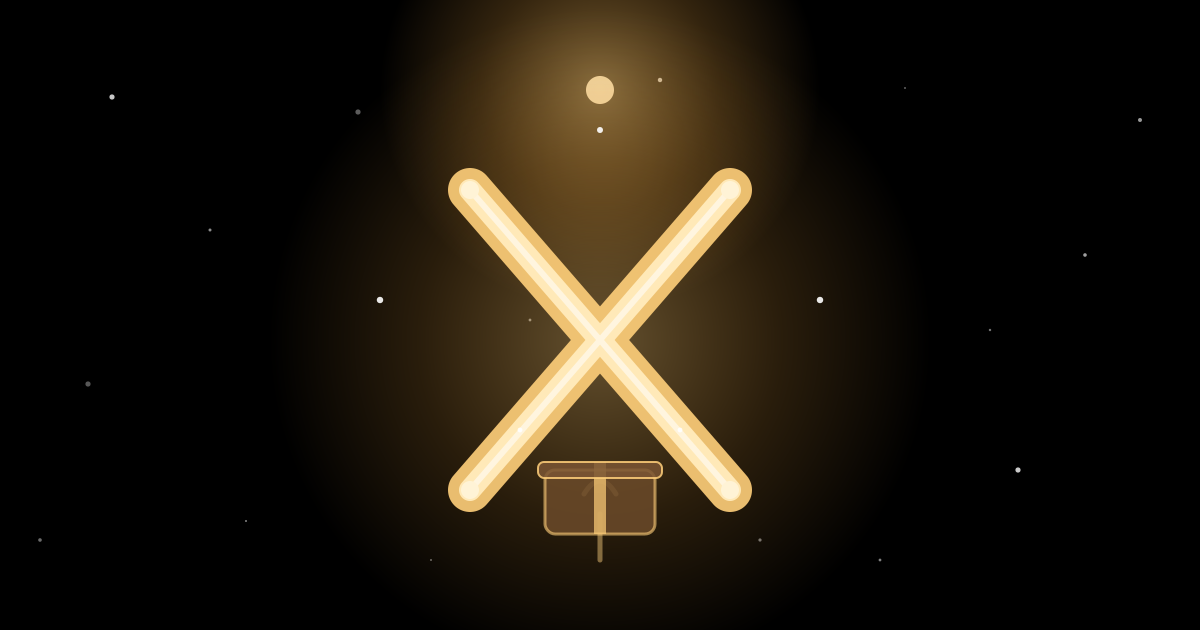
There is a rune that looks like a kiss — two lines crossing in the center, meeting in perfect balance. Gebo (ᚷ) is that rune, and its name means "gift." In a tradition full of runes about power, protection, and endurance, Gebo is the one about connection: the handshake, the wedding, the guest welcomed at the door. It asks a deceptively simple question: what passes between you and the other person, and is it balanced?
Gebo is the seventh rune of the Elder Futhark, closing the first half of Frey's aett. Its shape — an X, sometimes described as two gift-bearers embracing or a kiss between two worlds — carries its whole philosophy: a gift requires both a giver and a receiver, and the magic lives in the exchange itself. To draw Gebo is to be told that generosity is a current, not a one-way stream, and that the healthiest bonds are the ones where everyone gives and everyone receives.
Gebo's Core Meaning in Divination
In a rune casting, Gebo upright is the sign of reciprocity and partnership. Where a question involves two people — a romance, a friendship, a business deal — Gebo promises that the exchange is fair, or counsels you to make it fair. Gifts are coming, and they arrive in many forms: a helping hand, a reconciling gesture, an opportunity offered without hidden strings, or an agreement in which both sides genuinely benefit.
The rune also speaks of hospitality and generosity of spirit. For the Norse, gift-giving was not optional politeness but the backbone of social life — the guest-host bond was sacred, and the refusal to give was a refusal of community. Gebo carries that old ethic into the modern reading: give freely, receive graciously, and notice where the flow has been blocked. Sometimes the blockage is not that we give too little but that we receive poorly, deflecting compliments and help as if we have to earn every good thing.
Gebo shares one of Sowilo's rare traits: its X-shape is identical upright and upside down, so it has no true merkstave, or reversed, form. But modern readers often read Gebo in a shadow position as a warning about unbalanced exchange — generosity that is never returned, a relationship in which one person carries everything, or a gift with invisible strings attached. The rune's shape itself is the lesson: the X has two crossing arms, and if one arm is missing, there is no crossing at all.
Gebo in Love and Relationships
This is Gebo's home territory. In love readings, it is one of the warmest runes in the alphabet: the true partnership of equals, where affection, effort, and loyalty flow in both directions. This is not the breathless pull of new attraction but something sturdier — the quiet confidence of a bond where both people show up. For someone beginning a relationship, Gebo is a beautiful omen: it suggests a connection built on mutual generosity rather than one person pursuing while the other coasts.
For committed couples, Gebo often marks a season of deepening commitment — an engagement, a move in together, a joint project, or simply the mature decision to invest in the relationship as a partnership. It can also describe the generous gesture that heals a rift: the apology offered sincerely, the kindness given without keeping score, the choice to meet halfway. Gebo's message to couples is concrete and practical: relationships are not scored by who gives more, but nourished by a shared habit of giving.
In readings about someone new, Gebo points to a person who gives as freely as they receive — a partner with no games, no ledgers, no conditional affection. And sometimes its appearance is a gentle audit rather than a promise: look at your connections and ask where you are the only one giving. Gebo is kind but honest. A gift economy needs both sides.
Gebo in Career, Money, and Goals
Gebo's business face is the fair deal. In career readings it favors partnerships, collaborations, and agreements made in good faith — the co-founder who shares the vision, the contract with clean terms, the team where everyone's contribution is recognized. Job seekers draw Gebo before interviews that lead to offers with real negotiation room; entrepreneurs draw it when a partnership is about to crystallize. The rune says: this collaboration can work, because both sides have something to gain and the terms are honest.
With money, Gebo governs exchange rather than accumulation. It is the rune of the gift, not the vault — it blesses generous circulation: investing in people, paying fairly, supporting a partner's venture, accepting help when it is offered. Financially it can signal a profitable partnership, a gift or bonus, or a deal in which fairness itself is the advantage. But Gebo also issues its signature warning: watch for one-sided arrangements. A handshake that only benefits one hand is not a Gebo handshake. Read the terms, count the costs, and make sure the crossing is mutual.
For personal goals, Gebo's counsel is about mutual support. The fastest progress often comes through partnership — the study buddy, the accountability partner, the mentor whose time you repay with real effort. Gebo asks what you are contributing to the collaborations you rely on, and whether you are gracious about the help you receive. Generosity, it turns out, is a strategy as much as a virtue.
The Mythology and Symbolism Behind Gebo
In the Norse world, gift-giving was law — a social sacred bond. The guest-host relationship was protected by custom as serious as any oath: a traveler offered food and shelter was safe, and a host who fed a guest earned honor. The Old English rune poem describes the gift as a grace and an honor, a thing that adorns both giver and receiver. Archaeology backs the poetry: lavish grave goods — swords, rings, drinking horns — show a culture that poured wealth into gifts for the living and the dead, because generosity was how status, loyalty, and alliance were built.
Gebo's X may also carry a deeper symbol: the crossing point. Two lines meet at the center and continue, suggesting two lives, two forces, or two worlds intersecting and passing through each other changed. Some traditions see in it the image of a kiss — the meeting of mouths being the meeting of souls — or the knot of a wrapped gift, the bow tied where two ribbons cross. Every reading agrees on the geometry: the center where two become one for a moment, then continue onward.
Hospitality itself was woven into Norse cosmology. Odin wandered the world disguised as a beggar and a guest, testing the generosity of hall-keepers — the great god as the ultimate recipient of gifts, rewarding the generous and shaming the stingy. In that light, Gebo is quietly theological: every gift you give might be given to a god in disguise, and every gift you receive might carry a blessing you cannot see yet. The rune asks us to treat exchange as sacred, because the old stories say it is.
How to Work With Gebo: A Simple Practice
Gebo's practice is the most joyful in the runic alphabet, because it is done in the world with other people. Start with the small gift ritual: give something today with no strings attached — a compliment with no agenda, help you will never mention again, a small thing wrapped just to see someone's face light up. The Norse understood that small gifts keep the current of generosity moving; the practice is not the size of the gift but the freedom of it.
The harder half of Gebo's practice is learning to receive. Many people are generous givers and terrible receivers — they deflect compliments, refuse help, and treat every gift as a debt to repay. Try this for a week: when someone gives you something, from a compliment to a coffee, simply say "thank you" and let it land. No deflection, no instant repayment, no scorekeeping. Receiving graciously is Gebo's mirror practice, and for chronic over-givers it is the more transformative one.
For a reflective practice, try the Gebo journal. Each evening, write two lines: "What did I give today? What did I receive?" Not as a ledger but as an observation — watch the balance of your exchanges over a month and notice the patterns. Where is the flow rich and mutual? Where is one arm of the X missing? You can also draw the rune ᚷ on a gift card or before a partnership meeting as a reminder that the best exchanges leave everyone richer.
Gebo also works beautifully in bindrunes of partnership. Pair Gebo with Mannaz (humanity, community) for friendship and collaboration; with Wunjo (joy) for a happy union; with Kenaz (the torch, passion) for romantic partnership; with Othala (ancestral inheritance) for family gifts and legacy. Sketch your bindrune where partners can see it, or carry it into the conversation — the point is intention, not display: let what passes between us be generous and fair.
Gebo and the Other Runes
Gebo's pairings tell the story of relationships in motion. With Fehu (wealth), it promises prosperous exchange — the profitable partnership, the gift that becomes an asset, money moving through generous hands. With Wunjo (joy), it is the happy union: love, friendship, or collaboration that delights everyone involved. Beside Mannaz (the human rune), Gebo speaks of true friendship and chosen family — the bonds we build deliberately, gift by gift.
With Kenaz (the torch of knowledge and passion), Gebo can describe creative partnerships — two minds sparking off each other — or a romance rekindled by generosity. Near Othala, the gift takes ancestral form: inheritances, family blessings, the passing of something precious from one generation to the next. And with Nauthiz (need), Gebo's message deepens: in times of hardship, giving and receiving become sacred survival — the community that shares is the community that endures.
As always, remember that the runes are a spiritual and cultural tradition to explore for reflection and entertainment — not a guarantee of outcomes. Approach Gebo with respect for its Norse roots, treat every reading as a mirror for your own generosity rather than a fixed prediction, and let the gift rune do what it has done for centuries: remind you that what you give comes back, that what you receive is sacred, and that the X at the center of it all is the place where two lives meet.
Frequently asked questions
What does the Gebo rune mean?
Gebo (ᚷ), the seventh rune of the Elder Futhark, means "gift." It is the rune of sacred exchange — partnership, generosity, hospitality, and the balance of giving and receiving. In readings it points to relationships where both people contribute, agreements made in good faith, and gifts of every kind flowing in both directions.
Does Gebo have a reversed meaning?
Gebo's X-shape looks the same upright and upside down, so it has no true reversed form. In challenging positions it may suggest unbalanced giving — generosity that isn't returned, or a partnership where one side carries everything — but its core message is always reciprocity.
What does Gebo mean in love?
In love readings, Gebo is one of the warmest runes: a true partnership of equals, where affection, effort, and loyalty flow both ways. It can mark a relationship deepening into commitment, a generous gesture that heals a rift, or the arrival of a person who gives as freely as they receive.
Is Gebo good for career and business?
Gebo favors partnerships, deals, and collaborations made in good faith — fair contracts, mutually beneficial agreements, and teamwork where everyone contributes. It warns against one-sided arrangements: read the terms, and make sure the exchange is genuinely reciprocal.
How do I work with Gebo in daily practice?
Practice the gift economy in small ways: give something freely with no strings attached, or consciously accept a gift you'd normally deflect. Draw the rune ᚷ before a partnership meeting or on a gift card. A simple journaling practice — "What did I give today? What did I receive?" — brings Gebo's balance into everyday life.
Keep exploring

Sowilo Rune Meaning: Victory, the Sun & Unstoppable Energy
Sowilo (ᛊ) is the Elder Futhark rune of the sun, victory and unstoppable life force — one of the most purely positive runes. Learn its meanings in readings, love, career and daily practice.
Read the meaning →
Fehu Rune Meaning: Wealth, Abundance & New Beginnings
Fehu, the first rune of the Elder Futhark, means wealth, abundance and new beginnings. Discover its meanings for love, career, money and spiritual growth.
Read the meaning →
Algiz Rune Meaning: Protection, Intuition & Spiritual Defense
Algiz is the Elder Futhark rune of protection, intuition and spiritual defense. Learn its meanings in readings, love, career and daily protective practice.
Read the meaning →
Rune Spreads for Beginners: 7 Simple Casts to Start Reading Today
New to rune casting? Master 7 beginner-friendly rune spreads, from the single daily draw to the classic three-rune cast, with clear step-by-step instructions.
Read the meaning →