
Perthro Rune Meaning: Chance, Fate & the Mystery of the Lot Cup
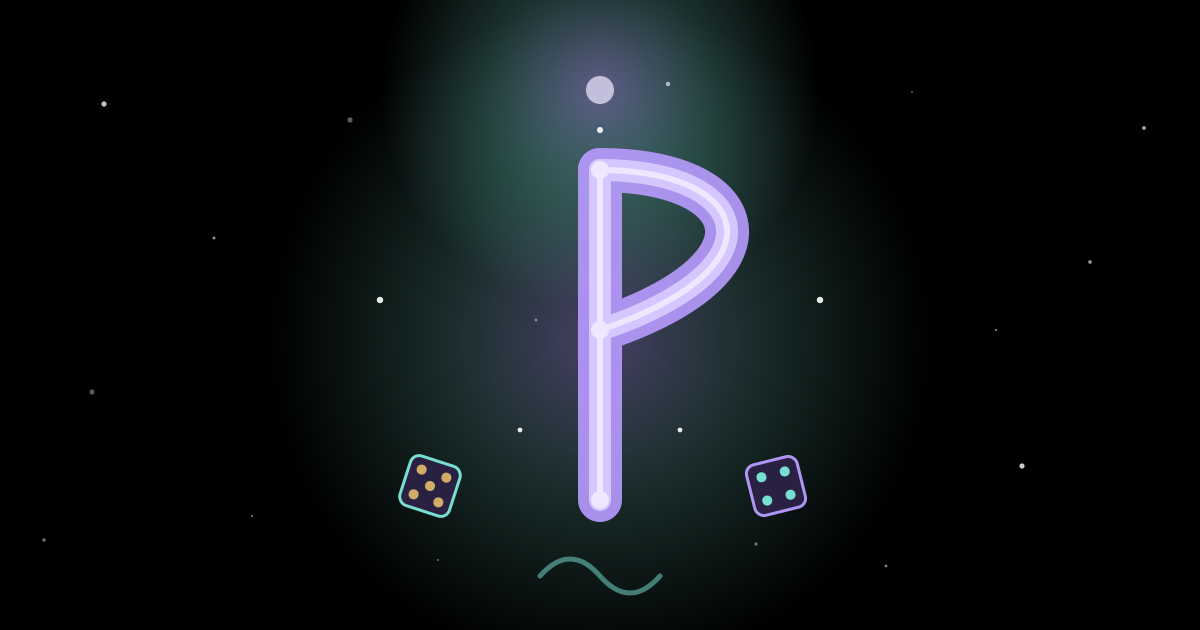
Every alphabet needs a rune for not knowing. Perthro (ᛈ) is that rune — the dice still rattling in the cup, the hand that has not yet thrown, the future that refuses to be read in advance. Its name is reconstructed from the Old English rune poem's "peorð," and scholars debate whether it meant "lot cup" or "pear tree." Most readers land on the lot cup: the vessel that holds dice, lots, and the raw material of fate itself. Where other runes describe what is — wealth, strength, the sun — Perthro describes what might be. It is the rune of the open question, and drawing it means the answer has not been written yet.
Perthro opens the second half of Hagal's aett, the family of runes ruled by cosmic disruption. Its shape — a straight stave with a bowl or cup on its upper half, like the letter P — pictures a container: something is being held, but you cannot see what. That is the whole of Perthro in one glyph. Life is handing you a cup, and the dice inside are still rolling. The rune does not tell you how they will land. It asks how you will play them.
Perthro's Core Meaning in Divination
In a rune casting, Perthro upright is the sign of chance and unfolding fate. It appears when a situation is genuinely uncertain — when probability, timing, other people's choices, and plain luck are all in play at once. A job interview with three strong candidates. A diagnosis waiting on test results. A message read but not answered. Perthro names that suspended moment honestly: the outcome is not decided, and anyone who claims to know it is guessing.
The rune also carries the joy of mystery. The Old English rune poem calls peorð "play and laughter where proud men sit together in the beer-hall, glad together" — a description of companionship and games, not dread. Perthro remembers that uncertainty is not only frightening; it is also the condition that makes hope possible. A guaranteed outcome is never exciting. The dice in the cup are exciting precisely because they could land anywhere. Drawing Perthro can be permission to feel the thrill of the unknown instead of trying to control it.
At the same time, Perthro warns about hidden variables. The cup is closed for a reason: something in the situation is not visible to you yet. There may be information you do not have, forces you cannot see, or a surprise waiting in the wings. The rune counsels prudence alongside boldness — enjoy the game, but do not bet the house on a hand you have not seen. And it gently insists on the one thing fortune cannot touch: your character. Dice land where they land. How you play your hand is always yours.
Perthro Reversed: The Shadow of the Gamble
Perthro's merkstave, or reversed form, is one of the runes' clearest warnings. Where upright Perthro celebrates the thrill of chance, reversed Perthro points to a relationship with risk that has gone wrong: gambling you cannot afford, compulsion disguised as optimism, or a losing streak chased with money, time, or dignity you do not have to spare. If this rune appears reversed, treat it as a firm boundary rather than a suggestion — the game has stopped being play and has started being a cost.
The reversed cup can also mean stagnation through fear of risk. Not everyone's problem is taking too many chances; some people draw reversed Perthro because they take none. The dice sit unthrown for years: the email never sent, the move never made, the relationship never risked. If that describes you, the rune is asking which fear is really running the show — and whether "safe" is just another word for stuck. The cup cannot stay closed forever.
Sometimes reversed Perthro is simply secrets and manipulation: the game is rigged, someone is hiding cards, the odds were never what they seemed. In questions about deals, partnerships, or promises, it says to slow down and verify. If someone is rushing you to decide before you have the full picture, Perthro reversed is the rune asking why.
Perthro in Love and Relationships
Perthro in love is the rune of the unknown heart. It describes relationships where the outcome is genuinely undecided — the exciting early stages where everything feels possible, the reconciliation that could go either way, the long-distance connection whose future depends on choices nobody has made yet. Perthro does not promise this love will last. It says the story is still being written, and your choices are part of the writing.
For singles, Perthro can mark a long shot worth taking — the person slightly outside your usual type, the approach that feels risky, the dating move that might fail beautifully. It also governs the sheer randomness of meeting someone: the right person at the wrong time, the wrong platform, the right party. Some loves are not planned. Perthro is the patron of the unplanned ones.
For couples, Perthro often points to secrets or surprises: something undisclosed that will change the shape of the relationship once it surfaces. That is not automatically bad — it can be a surprise trip, an engagement ring, a dream held back for fear of seeming foolish. But the rune asks for honesty about the stakes. A relationship is a gamble only worth playing when both people know the rules. If you are hiding the rules, you are not playing Perthro's game — you are playing with loaded dice.
Perthro in Career, Money, and Goals
Perthro's career face is the calculated risk. It favors bold moves made with open eyes: the job change with a real upside, the business launched on solid numbers rather than vibes, the creative work released before it feels "ready." Perthro distinguishes between risk and recklessness. Risk is information plus courage. Recklessness is courage without information. The rune blesses the first and warns about the second.
With money, Perthro is the rune of speculation — and its limits. It can describe windfalls, lucky breaks, and opportunities that arrived out of nowhere. But it also guards the oldest gambling wisdom in the book: never risk money you need. Perthro's joy is the small, affordable stake — the lottery ticket bought for fun, the side project funded from savings, the investment you could lose without pain. The moment the stake exceeds what you can afford to lose, you have left Perthro's territory and entered its reversed shadow. (And no rune, ever, is a betting tip. The odds do not read horoscopes.)
For personal goals, Perthro's message is about making your own luck. Studies of "lucky" people keep finding the same thing: they are not luckier, they are more open — to chances, to strangers, to unplanned detours. Perthro is that openness as a rune. Throw more dice and some of them land well. The goals that stall are usually the ones where no attempt was ever made.
The Mythology and Symbolism Behind Perthro
The Norse were serious gamblers. The Roman historian Tacitus, writing about the Germanic tribes, described dice players so consumed by the game that they would stake their freedom on a single throw — and if they lost, quietly go into servitude, "even though younger and stronger," because honor demanded the debt be paid. Archaeologists find dice and gaming pieces in graves across Scandinavia, from simple knucklebones to carved gaming boards for hnefatafl, the Viking strategy game. Gambling was not a vice to hide; it was woven into honor, fate, and fate's acceptance.
That worldview connects Perthro to wyrd — the Norse concept of fate. The Norns at the well of Urd cast the threads of every life, and the Old Norse mind held fate and free will in a strange, fertile tension: the weave is set, but how you meet it is yours. Perthro is the cup that holds that tension. The dice have been thrown by powers older than you, yet the game still has to be played. The rune's bowl shape even suggests a vessel of becoming — holding what is forming but not yet born.
The rune poem's "play and laughter" adds a dimension modern readers sometimes miss: fate was also entertainment. Games, dice, lots, and casting pieces were how the Norse consulted fate and how they spent long winter nights. Perthro sits at that intersection — the sacred and the playful in one glyph. It reminds us that taking fate seriously does not mean taking it grimly. The gods, the sagas suggest, are watching the game. They appreciate a good player.
How to Work With Perthro: A Simple Practice
The classic Perthro practice is the two-jar journal. Keep two notes on your phone or two pages in a journal: one labeled "Known" and one labeled "Unknown." Each day, write one thing you know for certain about your life and one thing that is genuinely uncertain. Over weeks, watch the Unknown list resolve — some fears evaporate, some risks pay off, some surprises land. The practice does two things: it trains you to separate real information from worry, and it builds a personal history of how uncertainty actually behaves in your life. Most people find their unknowns resolve far more kindly than they feared.
Before decisions with real unknowns, try drawing the rune. Sketch ᛈ on paper and list the three biggest unknowns in the situation beside it. Then, honestly, list what you would do if the best case happened and what you would do if the worst case happened. If both plans are livable, the risk is probably worth taking. If the worst case is unlivable, the cup is telling you to wait. This is Perthro's whole teaching in five minutes: size the risk, not just the dream.
Perthro also invites a play practice. The rune poem's warriors were glad together in the beer-hall — games were social, joyful, and low-stakes. Play something with friends this week: cards, board games, dice, anything where winning is beside the point. Notice how it feels to take chances when nothing real is on the line. That feeling — light, alive, unclenched — is what healthy risk-taking is supposed to feel like. Carry a little of it into the decisions that matter.
For a deeper working, meditate with the closed cup. Hold an actual cup or bowl, close your eyes, and picture the dice inside still rolling. Sit with the not-knowing for ten minutes without trying to resolve it. Our minds hate uncertainty so much that we invent false certainties just to escape it. Perthro's discipline is to hold the cup open — to let the future stay future — and to trust that you will handle whatever comes out of it when it comes.
Perthro and the Other Runes
Perthro's pairings are the story of fate meeting everything else. With Fehu (wealth), it is the windfall — unexpected money, the lucky break, the investment that pays off beyond expectation. But the pairing also warns: windfalls arrive and depart, so steward them like a guest, not a resident.
With Nauthiz (need), Perthro describes the gamble taken in desperation — the riskiest kind, because need narrows judgment. This combination asks you to separate the real need from the fantasy that one lucky throw will fix everything. Beside Algiz (protection), the message reverses into reassurance: take the leap, the safety net is real, you are more protected than you feel.
With Mannaz (humanity, community), Perthro becomes the social game — fate decided in the company of others, the beer-hall of the rune poem made literal. And near Dagaz (breakthrough, dawn), the dice finally land: the long uncertainty resolves into a new day. Perthro is the night of not knowing; Dagaz is the morning after.
As always, remember that the runes are a spiritual and cultural tradition to explore for reflection and entertainment — not a guarantee of outcomes. Treat Perthro as a mirror for your relationship with uncertainty rather than a prediction engine: it will not tell you how the dice land, but it will teach you to play them well.
Frequently asked questions
What does the Perthro rune mean?
Perthro (ᛈ), the fourteenth rune of the Elder Futhark, means the lot cup — the vessel from which dice and lots were drawn. It is the rune of chance, fate, mystery, and the unknown. In readings it points to things still in motion: outcomes not yet decided, hidden forces at work, and the invitation to take a leap while respecting uncertainty.
What does Perthro reversed mean?
Perthro reversed warns about gambling with what you cannot afford to lose. It can mark addiction to risk, a streak of bad decisions driven by compulsion, or stagnation — refusing to take any chance at all. Upright Perthro celebrates play; reversed, it says the game has stopped being fun and has started costing you.
Is Perthro a good rune for love?
Perthro in love is the rune of the unknown — a relationship whose outcome is still being decided. It can describe an exciting new connection full of possibility, or a long-shot romance worth the risk. It counsels honesty about the stakes: know what you are gambling with before you throw the dice.
Does Perthro mean good luck in gambling?
Perthro is the rune of the dice cup, so readers often associate it with gambling — but it does not promise wins. Its message is about your relationship with risk: calculated chances taken with open eyes are Perthro's joy, while compulsive gambling is its warning. Never treat a rune reading as a betting tip; the odds stay the odds.
How do I work with Perthro in daily practice?
Try the Perthro two-jar practice: write one thing you know and one thing you are uncertain about each day, and watch how uncertainty resolves over time. Draw ᛈ before decisions that involve real unknowns as a reminder to size your risks honestly. Journaling about chance — what surprised you, what you would repeat — builds a healthier relationship with fate.
Keep exploring
Gebo Rune Meaning: The Gift Rune of Partnership, Generosity & Balance
Gebo (ᚷ) is the Elder Futhark rune of the gift — sacred exchange, partnership, and the balance of giving and receiving. Learn its meanings in readings, love, career and daily practice.
Read the meaning →
Hagalaz Rune Meaning: Hail, Disruption & Unavoidable Change
Hagalaz (ᚺ) is the Elder Futhark rune of hail — sudden disruption, natural forces beyond human control, and the storm that clears the air. Learn its meanings in readings, love, career and practice.
Read the meaning →
Fehu Rune Meaning: Wealth, Abundance & New Beginnings
Fehu, the first rune of the Elder Futhark, means wealth, abundance and new beginnings. Discover its meanings for love, career, money and spiritual growth.
Read the meaning →
Algiz Rune Meaning: Protection, Intuition & Spiritual Defense
Algiz is the Elder Futhark rune of protection, intuition and spiritual defense. Learn its meanings in readings, love, career and daily protective practice.
Read the meaning →