
The Hanged Man Tarot Card Meaning: Surrender, Pause & Reversed
Meet The Hanged Man: The Card of the Willing Pause
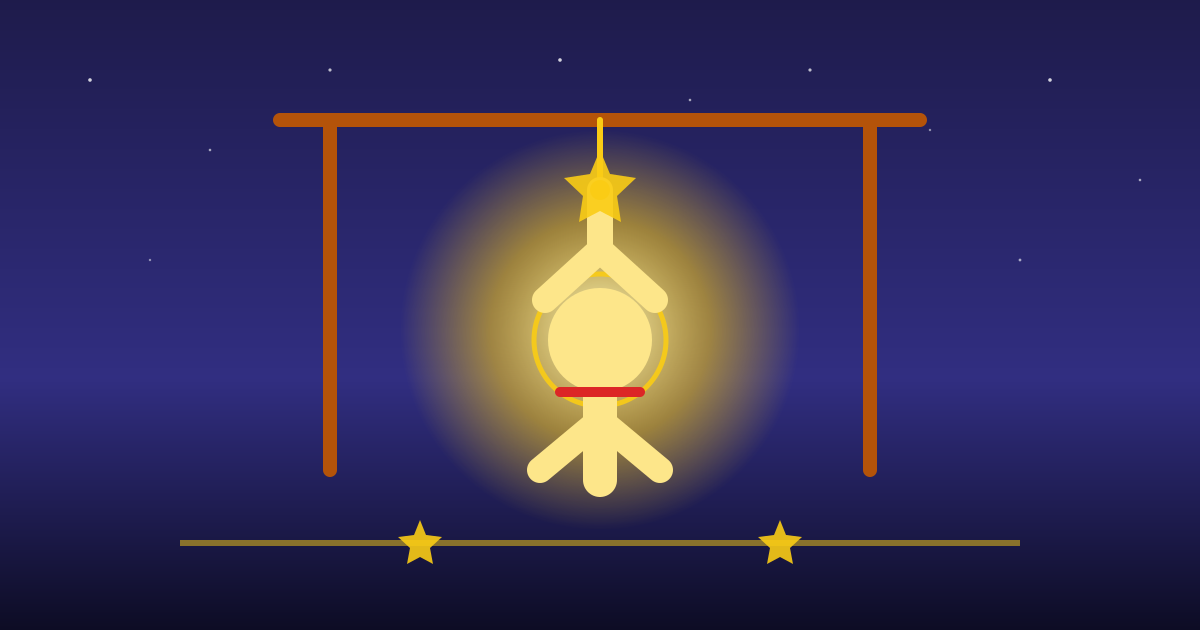
A man hangs upside down from a living tree, suspended by one foot from a golden branch, his other leg crossed behind it in a calm figure-four. His arms are folded loosely behind his back. His face is serene — not strained, not frightened, not pleading. Around his head glows a golden halo, the same light that crowns saints and sages. The tree he hangs from is alive, its branches still growing, its leaves still green. Nothing in the picture suggests punishment. Everything in it suggests choice.
That choice is the whole card. The Hanged Man is not trapped; he put himself there. In the older decks he was called the Traitor, a figure of punishment, but the modern card has quietly rewritten him into something far stranger and kinder: a volunteer for stillness. He has surrendered his freedom of movement on purpose, because movement was the problem. Every other card in the Major Arcana is going somewhere — the Fool leaping, the Chariot charging, the Hermit climbing, Death riding. The Hanged Man is the one card that stops. And in stopping, he sees what all the motion missed.
The card's place in the deck tells the same story. The Hanged Man follows Justice and precedes Death, and that sequence is no accident. Justice weighs and decides; Death ends and transforms. Between the decision and the ending there must be a pause — a space where the verdict settles, where the old self loosens its grip before the new one arrives. The Hanged Man is that space made into a person. He is the breath between chapters, the winter between harvest and spring, the silence after the question and before the answer. Readers who rush past him, eager for Death's drama or the Tower's lightning, miss the deck's quietest wisdom: nothing transforms while it is still thrashing. Transformation needs a still point, and the Hanged Man is it.
Notice what he is not doing. He is not struggling against the rope. He is not counting the minutes. He is not planning his escape. His folded arms say the work of this card is not done with the hands. His halo says the work is done with attention — the patient, upside-down attention that notices how different the world looks when you stop insisting it look the way it did yesterday. The Hanged Man's gift is perspective, and perspective, this card insists, cannot be grabbed. It can only be allowed.
The Hanged Man Upright: Surrender, Suspension, and Seeing Differently
When The Hanged Man appears upright, its first message is the simplest and the hardest: stop pushing. The situation you are asking about does not need more force right now. It needs time, and it needs your permission to take that time. This is not the advice most people want from a reading — they came for a plan, a date, a door to kick open — and it is often exactly the advice they need. The upright Hanged Man describes the project stalled in approvals, the relationship waiting on someone else's decision, the healing that refuses to be hurried, the answer that will not come while you are gripping the question. Pushing harder in these moments does not speed anything up. It only tangles the rope.
The upright card's second message is about surrender — but surrender in the card's own sense, which has nothing to do with giving up. Giving up is dropping the rope in despair. Surrender, in the Hanged Man's sense, is hanging from it willingly: releasing your grip on how things must go, and trusting that the pause itself is doing work you cannot see. The farmer does not dig up the seed to check whether it is growing. The musician does not rush the rest between notes. The Hanged Man's surrender is that kind of trust — the recognition that some things ripen only in stillness, and that your job right now is to hang, watch, and let the ripening happen. For entertainment and reflection: the pause is not the absence of progress. Sometimes the pause is the progress.
There is also a deeper upright meaning that experienced readers treasure: The Hanged Man as the card of the inverted view. Turned upside down, the familiar becomes strange, and the strange becomes true. The job you were sure you wanted looks, from this angle, like a cage with good lighting. The person you were sure was the problem looks, from this angle, like a mirror. The option you dismissed as impossible looks, from this angle, like the only honest door. The card does not tell you which of these inversions is true. It tells you to stay upside down long enough for the true one to announce itself. Insight, in this card, is not chased. It arrives, quietly, to the one who stopped chasing.
The Hanged Man Reversed: When the Pause Goes Wrong
Reversed, The Hanged Man describes a pause that has lost its wisdom — and the card is careful to name both ways it can go wrong. The first reversed reading is the pause that has become a stall: the waiting that is no longer ripening anything, only rotting. The relationship discussed endlessly and never decided. The project researched for a year and never begun. The apology drafted and never sent. Reversed in this form, the card is blunt: you are not surrendering anymore. You are hiding, and you have dressed the hiding up as patience. The halo has dimmed. The tree is still alive, but you have stopped growing on it. The counsel here is a decision — any honest decision, even a small one — because a small decision breaks a stall the way a single step breaks a frozen morning.
The second reversed reading is the opposite failure: the refusal to pause at all. The person who will not stop, will not rest, will not let a single day pass without forcing an outcome — and whose forcing has become the obstacle. The founder who launches before the product is ready, the lover who demands an answer before the other person has had time to feel, the worker who answers every message instantly and calls it dedication. Reversed in this form, the card's counsel is the upright card's gift, finally accepted: grant yourself the pause you have been refusing. One day unforced. One decision unmade. One rope, willingly hung from, for a little while. For entertainment and reflection: a reversed Hanged Man is not a failed card. It is a card asking which mistake you are making — stalling or rushing — and inviting you to correct it.
The Hanged Man in Love: Waiting, Sacrifice, and the Upside-Down View
In love readings, The Hanged Man upright is the card of the relationship in suspension — and suspension, here, is neither good nor bad. It is information.
For singles, the card often describes the season of waiting well: the crush that cannot be rushed, the timing that is not yours to control, the heart that needs to finish healing before it opens again. It favors the person who can sit with longing without grabbing at it — who can let a connection develop at its own pace rather than forcing a label onto it in week two. If you have been asking whether to send the message, make the move, or demand the answer, the Hanged Man suggests a different question first: what would this look like upside down? Perhaps the waiting is not rejection. Perhaps it is ripening. Perhaps the other person is hanging from their own branch, just as still, just as unsure, and the kindest move is to hang quietly beside them for a while.
For couples, upright Hanged Man describes the partnership in a necessary pause: the conversation postponed until tempers cool, the big decision — moving, marrying, parting — held in suspension while both people see it from new angles. It also names the card's tenderest meaning: the willing sacrifice, the small surrender one partner makes for the other without keeping score — the career paused, the city changed, the pride swallowed, offered freely rather than extracted. The card honors these sacrifices and also warns about them: a sacrifice given freely nourishes a relationship, but a sacrifice resented quietly poisons it. The Hanged Man asks the honest question — am I hanging here willingly, or am I hanging here because I am afraid to climb down?
Reversed in love, the card describes the pause curdled into avoidance: the relationship that has been on hold so long the hold has become the relationship, or the single person who calls their fear of dating patience. In dating, reversed Hanged Man often marks the refusal to decide — the situationship discussed forever and defined never, the ex kept warm while the future stays cold. The counsel is the same in every case: name which failure is yours, stalling or rushing, and correct it with one honest move.
The Hanged Man in Career and Money: The Stalled Project and the Patient Investment
Career-wise, The Hanged Man upright is the card of the stalled project that is not actually dead. The promotion frozen in a reorganization, the launch delayed by approvals, the business waiting on funding, the job search in its silent middle weeks. The card's advice is unglamorous and usually right: use the suspension. While the decision hangs, learn the skill, rewrite the proposal, rest the body, look at the whole situation upside down and ask whether the goal is even the right one. Many careers have been saved by a Hanged Man season — the forced pause that revealed the promotion was a trap, the company a sinking ship, the dream job a job that would have made its holder miserable. The delay, seen from the branch, was protection wearing a boring disguise.
The card also favors the work of waiting well in its own right: the researcher, the artist in gestation, the founder letting an idea ripen rather than launching it green. In negotiations and big decisions, the card suggests the suspended option: do not sign today if today feels forced. Sleep on it. Hang from it. Let the morning after the pause tell you what the afternoon of urgency could not. Money-wise, the Hanged Man is the card of the patient position: the investment held rather than traded in panic, the purchase postponed until the need is clear, the budget reviewed upside down — spending examined not for what it buys but for what it costs in freedom. It warns against the forced financial move made from impatience, the loan taken to end a wait that would have ended on its own. Reversed in career and money, the card warns of the two familiar failures: the project stalled past saving, kept alive by sunk cost and fear of admitting it, or the career rushed past wisdom, the leap taken before the branch was even found. For entertainment and reflection: the Hanged Man's career advice is the oldest in the book — when you cannot move forward, move your perspective, and let the forward arrive on its own schedule.
Symbols to Notice: Reading the Picture
The Hanged Man rewards a slow look. Here is what the details are saying:
- The living tree: the card's anchor — growth itself, still alive beneath the suspension. The Hanged Man does not hang from dead wood. He hangs from something growing, because the pause is part of the growth, not apart from it.
- The golden halo: illumination earned by stillness, not by effort. The halo says the insight this card offers is not won by striving. It is given to the one who stops striving long enough to receive it.
- The crossed legs: the figure-four, the calmest shape a hanging body can make. The legs say the suspension is chosen and comfortable — this is not a body in distress. It is a body at rest in an unusual position, and the rest is the point.
- The folded arms: surrender of the hands. The work of this card is not done by doing. The arms, folded behind the back, are the card's clearest symbol: stop handling it. Let it hang.
- The serene face: the card's rebuke to every alarm bell. A face this calm, upside down, is the whole teaching in miniature: the situation is not as dangerous as it feels. Calm is available even here — especially here.
- The single bound foot: the one attachment, willingly kept. The Hanged Man is held by a single point, not chained at every limb. The card's freedom is real: one foot is free, the rope is loose, and he could climb down any time. He stays because staying is wiser.
- The red and blue clothing: passion and calm worn together — the feeling self and the thinking self, both present, neither in charge. The Hanged Man's outfit says the pause holds both: the heart that wants to move and the mind that knows better, suspended in the same body.
When this card appears in your reading, notice which detail your eye lands on first. Drawn to the halo? The question is about insight — what truth is waiting for your stillness. To the tree? About growth — what in your life is ripening while you wait. To the crossed legs? About comfort — whether your pause is genuinely restful or merely stuck. To the serene face? About fear — what alarm in your life is louder than the danger deserves.
Try This: The Seven-Day Pause Practice
The Hanged Man is a stillness card, so here is a stillness practice — one small act of willing pause per day:
- Day one — the upside-down look (ten minutes): take the question that is pressing on you and write it out backwards: argue the opposite of what you believe about it. What does the situation look like from the other side of the branch?
- Day two — the unforced hour (one hour): give one hour to nothing productive at all — no phone, no errand, no improvement. Sit, walk, stare out the window. Notice how loud the urge to force things becomes, and let it pass without obeying it.
- Day three — the delayed reply (one act): choose one message, decision, or purchase you were about to rush, and delay it by a full day. Notice what the delay teaches you that urgency never would.
- Day four — the willing sacrifice (one act): give up one small urgency on purpose — the argument you could win, the point you could score, the last word you could take. Offer it freely, without keeping score, and notice the lightness that follows.
- Day five — the hanging view (twenty minutes): lie on your back, or tilt your head back, and look at your room upside down. Silly? Yes. That is the point. The Hanged Man's perspective begins with the body, and the body learns faster than the mind.
- Day six — the ripening list (twenty minutes): list what in your life is ripening in its own time — the skill, the relationship, the healing, the idea — and write one sentence of permission for each: you may take as long as you need. Then leave the list alone.
- Day seven — the climb down (one act): make one small decision you have been postponing — not the biggest one, the smallest honest one. The Hanged Man's pause ends the way it began: by choice. Climb down when the pause has taught you what it came to teach, and not a day later.
After seven days you will have something the card always offers the patient: a clearer view, a quieter mind, and the knowledge that stillness was never the enemy of progress. It was progress, wearing a disguise — a man hanging from a living tree, halo glowing, waiting for the world to look right-side up again.
Combinations: The Hanged Man Meets Other Cards
The Hanged Man lends its patient suspension — or its warning about pauses gone wrong — to whatever it touches:
- Hanged Man + Hermit: the sacred pause doubled — solitude and suspension together, the retreat that is also a waiting. When these two meet, the reading says: go quiet, and stay quiet, longer than feels comfortable.
- Hanged Man + Moon: waiting in the dark — the pause inside uncertainty, where even the reason for waiting is unclear. Trust the suspension anyway; the Moon's fog lifts on its own schedule, not yours.
- Hanged Man + Death: the pause before the ending — the transformation that cannot begin until the old self stops struggling. Hang first. Then let go. The order matters.
- Hanged Man + Tower: the suspension that ends suddenly — the long wait broken by lightning. When these two meet, the pause was preparation: the fall finds you already still, already calm, already ready.
- Hanged Man + Fool: the leap after the pause — stillness that finally ripens into a first step. The Fool's leap, taken after the Hanged Man's waiting, is the deck's wisest picture of timing.
- Hanged Man + Star: hope while hanging — the pause lit by a distant star. The waiting is not empty; it has a light at the end of it, and the star is the promise that the pause will end in hope rather than in loss.
As always, these are starting points. Your own readings will teach you pairings no book lists — The Hanged Man rewards the reader who learns that the quietest card at the table is often the one doing the most work.
Closing: Hang Still, and Let the World Turn
Here is The Hanged Man's whole teaching in one image: a man hanging upside down from a living tree, halo glowing, arms folded, face serene.
The tree, the halo, the crossed legs, the folded arms, the calm face, the single bound foot: the card is a portrait of patience as it actually looks — not passive, not defeated, but willing. Every delayed reply is the card working. Every upside-down look is the perspective shifting. Every day spent hanging quietly is the ripening doing its invisible work.
The Hanged Man does not ask you to hurry, to force, or to pretend the wait is easy. It asks you to hang, briefly, on purpose — to let the situation suspend, to let the new angle arrive, and to trust the slow work of seeing differently. The pause is not the absence of progress. Sometimes the pause is the progress. And when you climb down, you will see the world the way it always was: right-side up, and clearer than before.
Frequently asked questions
Is The Hanged Man a yes or no tarot card?
The Hanged Man is a not-yet card rather than a straight yes or no. It says the question needs a pause before it gets an answer: wait, look at it upside down, let something shift, and then ask again. It does not predict a fixed outcome; it advises patience as the honest move right now. For entertainment and reflection: a Hanged Man not-yet is not a no. It is a wait, offered kindly.
What does The Hanged Man reversed mean?
Reversed, The Hanged Man describes either a pause that has gone on too long or a refusal to pause at all: stalling dressed up as patience, or restless pushing when waiting would serve better. The card asks which one you are doing, and its counsel is a decision — either release the delay and act, or finally grant yourself the rest you have been resisting. For entertainment and reflection only.
What zodiac sign is associated with The Hanged Man?
The Hanged Man is associated with Neptune, the planet of dreams, dissolution, and seeing beyond the surface, and through Neptune with Pisces, the water sign of surrender and compassion. Neptune gives the card its upside-down logic: the answers that arrive only when you stop demanding them. It is card twelve (XII) of the Major Arcana, between Justice and Death.
Is The Hanged Man a bad card?
No. The Hanged Man looks alarming at first glance — a figure suspended by one foot — but his face is serene and his halo glows. He is not a victim; he is a volunteer. The card describes a chosen pause, a sacrifice of urgency, and a perspective that only stillness can give. It is one of the deck's gentlest teachers, and it rarely brings bad news — only the news that waiting is wiser than forcing.
Why is The Hanged Man upside down?
Because the card's whole message is about seeing the world from the opposite angle. Turned upside down, the familiar looks strange, and the strange looks true: the problem that seemed urgent looks smaller, and the option that seemed impossible looks obvious. The figure hangs willingly, legs crossed in a calm figure-four, because the inversion is the method — you do not understand this card by standing it upright. You understand it by joining it.
Keep exploring
The Hermit Tarot Card Meaning: Solitude, Inner Light & Reversed
The Hermit tarot card meaning fully explained — upright & reversed symbolism, solitude, inner wisdom, love, career, card combinations, and a 7-day solitude practice.
Read the meaning →
The Moon Tarot Card Meaning: Dreams, Illusions & Reversed
The Moon tarot card meaning fully explained — upright & reversed symbolism, dreams, intuition, confusion & illusions, love, career, card combinations, and a moonlit dream-journal practice.
Read the meaning →
The Temperance Tarot Card Meaning: Balance, Patience & Reversed
The Temperance tarot card meaning fully explained — upright & reversed symbolism, balance, patience, alchemy, love, career, card combinations, and a 7-day blending practice.
Read the meaning →
The Sun Tarot Card Meaning: Joy, Vitality & Reversed
The Sun tarot card meaning fully explained — upright & reversed symbolism, joy, vitality, clarity, love, career, card combinations, and a 7-day sunlight practice.
Read the meaning →