
Bell Symbol in Tea Leaves: News, Celebration & What It Means
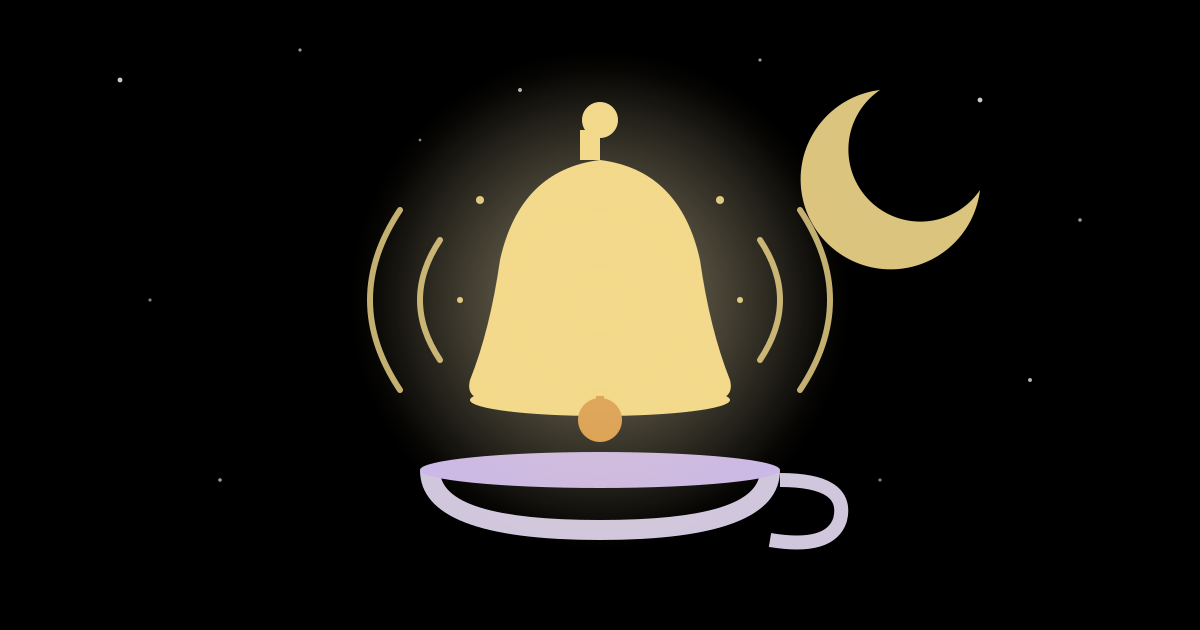
Long before phones and doorbells, the bell was how a community learned that something had happened. Church bells marked weddings and warned of danger. School bells called children in from the yard. Town bells gathered people for news they could not afford to miss. A bell is never background noise: it exists to be heard, and it asks everyone in earshot to stop and listen. That is why the classic tasseography texts read the bell as the symbol of an announcement — news arriving, attention being called, and a moment worth gathering for. When the leaves settle into a flared rim and a clapper at the bottom of your cup, the reading is about something you are about to hear, and about being ready when you hear it.
This guide covers everything the bell can tell you: its core meaning in tasseography, how a ringing, silent, or broken bell refines the message, how position reveals timing, the combinations that show exactly what kind of news is on its way, and what to do once the leaves have rung their bell for you.
The Core Meaning: News, Attention, and Celebration
At its simplest, a bell means something is coming that you need to hear. Where the bird promises news already in flight and the letter promises news already written, the bell promises news already sounding — it is on its way to your ears right now. Readers of the classic tasseography texts describe the bell as the cup's town crier: it does not create the event, it announces it, and its job is to make sure you do not miss it.
The second traditional meaning is celebration and gathering. Bells ring loudest at life's happiest thresholds — weddings, christenings, homecomings, holidays — and the cup borrows that joy. A clear bell can mean an invitation is coming, a happy announcement is near, or a gathering is forming around you: a party, a reunion, a ceremony, or simply a reason to raise a glass with people you love. If you have been waiting for good news, the bell is the cup's way of saying the waiting may be nearly over.
The third is a call to attention: the bell as alarm and as summons. Sometimes the news is not a celebration but a wake-up call — a deadline you have been ignoring, a conversation you have been putting off, a detail that needs your focus before it becomes a problem. The bell does not judge which kind of news it carries; it only insists that you listen. And in its most practical sense, the bell is the symbol of communication itself: a message sent, a call returned, a truth spoken out loud at last. If something has gone unsaid between you and someone else, the bell may be the cup nudging that conversation into the open.
Reading the Bell: Ringing, Silent, Cracked, and Small
Bells speak in sound, and the leaves borrow the whole vocabulary. A clear, upright bell with its clapper visible is the classic form: good news, clearly delivered, soon. This is the cup's most welcome bell — an announcement you can trust, an invitation worth accepting, a message that arrives intact. A ringing bell, shown with sound lines or motion around it, doubles the urgency and the joy: the news is not just coming, it is loud — a public announcement, a celebration everyone will hear about, or a message that changes the room when it lands.
Watch the clapper, because the clapper is the bell's voice. A bell with no clapper, or a bell shown hanging still, is the silent form — news delayed, an announcement postponed, or a message that has not yet found its voice. The silent bell is not bad news; it is unfinished news. It can mean someone is still deciding what to say, or that you are the one who needs to speak first. A small bell, like a handbell or a tiny chime, softens everything into the personal: a small joy, a quiet piece of good news, a friendly message from someone close — the kind of news that arrives as a text, not a trumpet.
Special forms carry their own weight. A large church bell or tower bell means public news — an announcement that concerns a whole community, a workplace, or a family at large: a birth, a wedding, a promotion, a move that everyone will know about. Two bells together traditionally mean agreement or a doubled announcement — two pieces of news arriving together, a couple's announcement, or good news confirmed from two directions. And a bell upside down is the cup's most curious image: news arriving in an unexpected form, an announcement you misread at first, or a celebration that comes disguised as an ordinary day — the bell asks you to listen for the message underneath the noise.
Position: Where It Sits and What It Says About Timing
As with every symbol, position shapes the bell's message. Near the rim, close to the handle: the news is personal and imminent — a message for you, arriving within days: an invitation, a call, a decision you have been waiting to hear. The bell is at your side of the cup, and the announcement has your name on it. Near the rim, far from the handle: news from your wider circle, arriving just as soon — someone else's announcement, a friend's happy news, or a community event you will be glad you heard about early.
In the middle band: the news developing over the coming weeks to months — an announcement being prepared, a celebration being planned, a message working its way toward you through intermediaries. This is the "stay reachable" position: the bell is telling you to keep your ears open and your phone charged, because the news will find you, but not today. At the bottom of the cup: the deepest reading — a foundational announcement: a life change that will be talked about for years, a truth finally spoken after a long silence, or a celebration that marks the end of one chapter and the start of another. The bell at the bottom rings for the long story, not the passing day.
Direction matters too. A bell leaning toward the handle rings for you — its news is yours to receive, and you should act on it when it lands. A bell leaning away suggests the news concerns others first — someone else's announcement that still touches your life, or a message you will hear secondhand: the cup asks whether you are listening at the right door. A bell near the top of the cup means the news is already close enough to hear faintly — check your messages, return that call, open that letter. A bell sinking toward the bottom can mean a message delayed — an announcement postponed, or news whose time has not quite come: the bell still rings, but softly, and patience is part of hearing it.
Bell Combinations: Reading the Neighbors
Bells gain their finest detail from the symbols around them. Bell + heart: the cup's happiest pairing — joyful romantic news: an engagement or wedding announcement, a declaration of love, or a celebration shared with someone dear. Bell + ring: a formal announcement — a wedding, an engagement, or a commitment made public: the two symbols together are the cup's way of ringing the news twice.
Bell + star: hopeful news — an announcement that brings luck or recognition, a success made public, or good fortune arriving with fanfare. Bell + key: news that unlocks something — the missing answer, the decision that opens a door, or information that resolves a long wait. Bell + bird: news traveling fast — a message already on its way, perhaps through an unexpected channel: expect to hear it sooner than you think.
Bell + house: news about home — a move, a family announcement, a gathering under your own roof, or visitors arriving. Bell + letter (or envelope): written news — the message arrives in words you can reread: an email, a letter, or a document worth keeping. Bell + tree: family news with deep roots — an announcement that concerns the whole family, a reunion long overdue, or news passed down through generations.
The cautionary pairings deserve equal attention. Bell + cloud: confusing news — a message muddied by rumor, gossip dressing up as fact, or an announcement you should verify before repeating: wait for the cloud to pass before you celebrate or worry. Bell + snake: news with a sting — a message delivered unkindly, or information used to manipulate: listen to the facts, not the tone. A cracked or broken bell: the message itself is damaged — news delayed, an invitation that falls through, or an announcement that disappoints: the remedy is the bell-keeper's own: check a second source, and do not act on the first telling alone.
The Bell in Different Questions
The bell adapts beautifully to whatever you asked. In a career question, it is the announcement's symbol: a promotion, a job offer, a public recognition, or news about your workplace that changes your plans. A bell with a key doubles this — the offer that opens the next door. In a love question, the bell rings for declarations — the feeling finally spoken, the invitation finally extended, or the celebration that makes a relationship public: a bell with a heart is the cup's wedding bell in miniature.
In a finance question, the bell counsels attention to messages about money — an invoice, an offer, or a decision that arrives as news rather than as a number on a page. Watch for the companions: bell with a letter suggests reading the terms carefully; bell with a cloud warns against acting on a rumor about money before the facts are confirmed. In a family question, the bell is the gathering's symbol — a family announcement, a reunion, a celebration that brings scattered people back to one table, or news about a relative that everyone will soon be discussing.
In a well-being reading, the bell speaks of listening to your inner signals — the value of paying attention to what your body and your routines have been telling you, and of treating rest as seriously as you treat alarms. It also points to social nourishment: the gatherings, conversations, and celebrations that restore you. This is reflection and encouragement, not diagnosis or medical guidance: the cup offers the image of the bell that calls people together, and suggests you answer it — show up, listen well, and let yourself be part of the occasion.
When the Bell Looks Troubled
Sometimes the bell arrives in a worried form, and it's worth knowing the difference between "news arriving" and "news going wrong." A cracked bell is the commonest troubled form — a message that arrives garbled, delayed, or disappointing: an invitation that falls through, news that is not quite what you hoped, or an announcement that needs a second source before you act on it. The remedy is the bell-keeper's own: verify before you repeat, and give the story a second telling before you decide what it means.
A silent bell, hanging without its clapper can mean a message withheld — someone who has not yet said what they mean, an announcement postponed, or news you are waiting on that simply is not ready: the cup asks whether you are demanding an answer before the speaker has found the words. A bell ringing without pause, shown with frantic motion lines, suggests noise rather than news — gossip, alarm, or too many voices at once: the reading asks you to separate the signal from the clamor and to listen only to the bell that rings true.
A bell muffled or wrapped means news softened on purpose — a truth delivered gently, an announcement kept small, or a celebration held quietly: the message is real, but its volume is chosen with care. And if you asked for news and found no bell at all, look for its sounding cousins: the bird (news in flight), the letter (news in writing), the star (news worth celebrating), or the key (the fact that unlocks the wait). Sometimes the cup answers with the message rather than the bell — or suggests that this season is for quiet, and the bell will ring when there is genuinely something to announce.
What to Do After Finding a Bell
A bell is an announcement, not a destination — and the best response is the listening one: stay reachable, check your messages, and be ready to answer when the news lands. If the reading suggests celebration, make room for it this week: accept the invitation, plan the gathering, or simply tell the people you love that you are glad they are near. Good news grows where it is welcomed.
If the bell speaks of a call to attention, do the careful work: return the call you have been avoiding, open the letter you have been setting aside, and say the true thing kindly when it is yours to say. And if the bell arrived in a troubled form — cracked, silent, or muffled — do the honest work of the bell-keeper itself: verify before you repeat, wait for the second telling, and give the message its full ring before you decide what it means.
Many readers mark a bell finding with a small ritual of attention: writing down the news they are hoping for before it arrives, or spending a quiet moment listening — no phone, no noise — simply noticing what they are actually waiting to hear. However you honor it, let the bell remind you of tasseography's most sociable truth: news is meant to be shared, and the cup rings its bell so that you will not face what comes next alone.
Frequently asked questions
What does a bell in tea leaves mean?
A bell in tea leaves traditionally means news on its way, a call to pay attention, or a celebration approaching. Bells have rung for weddings, warnings, and gatherings for centuries, and the cup borrows all three: the bell announces that something worth hearing is coming, and that you should be ready to listen when it sounds.
Is a bell in tea leaves good luck?
A bell is usually a welcome sign. Traditionally it leans toward good news — an invitation, an announcement, a happy gathering — especially when the bell looks clear, upright, and ringing. A silent or cracked bell softens the message into a caution: news delayed, or an announcement that needs checking before you celebrate.
What does a bell near the rim mean in tea leaves?
A bell near the rim means the news is close — days rather than months away. Near the handle it concerns you directly, such as a message, invitation, or decision arriving for you personally. Far from the handle it is news from your wider circle, perhaps about someone else, that still reaches your ears soon.
What does a broken or cracked bell mean in tea leaves?
A cracked or broken bell traditionally means a message that arrives garbled, delayed, or disappointing — an invitation that falls through, news that is not quite what you hoped, or an announcement that needs a second source before you act on it. It is a call to verify, not a reason to panic: the bell still rings, it simply asks you to listen twice.
What does a bell with a heart mean in tea leaves?
A bell with a heart is one of the cup's happiest pairings. It traditionally means joyful romantic news — an engagement or wedding announcement, a declaration of love, or a celebration shared with someone dear. If you are single, it can mean love news arriving through friends or a gathering rather than out of nowhere.
Keep exploring

Tea Leaf Symbols Dictionary: 40+ Meanings from Anchor to Star
From anchor to star: explore 40+ classic tea leaf symbols and their traditional tasseography meanings, covering love, fortune, travel, caution and animals.
Read the meaning →
How to Read Tea Leaves: A Beginner's Step-by-Step Guide
Learn tea leaf reading step by step: choosing the right tea and cup, brewing with intention, swirling, inverting and interpreting the symbols left behind.
Read the meaning →
Owl Symbol in Tea Leaves: Wisdom, Secrets & What It Means
Spot an owl in your tea leaves? Discover its tasseography meaning — wisdom, hidden truths, and messages from the night — plus posture details, position timing, owl combinations, and what to do next.
Read the meaning →
Cat Symbol in Tea Leaves: Independence, Intuition & What It Means
Spot a cat in your tea leaves? Discover its tasseography meaning — independence, intuition, and quiet mystery — plus posture details, position timing, cat combinations, and what to do next.
Read the meaning →