
Butterfly Symbol in Tea Leaves: Transformation, Joy & What It Means
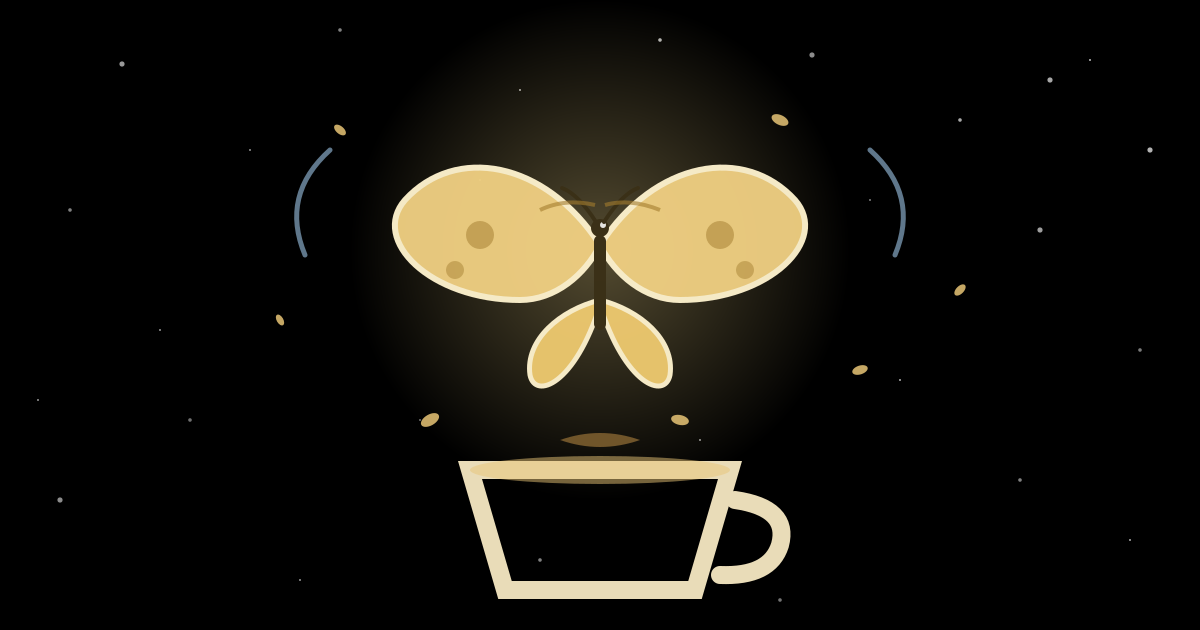
Few symbols make a tea reader smile faster than the butterfly. Look for the telltale shape in the dregs: a small body with two large wing forms spreading on either side, sometimes with antenna-like sweeps or spotted wing markings, caught mid-flutter above the leaves. When it appears, the cup is showing you its happiest insect — not the busy bee's toil or the spider's tangled work, but the creature that famously dissolves everything it was and becomes something winged.
The Greeks had a word for butterfly — psyche — which also means soul. That is how old this symbol runs. In Chinese and Japanese tradition the butterfly means joy, long life, and sometimes love itself; in Irish lore it can be a soul traveling; in the old tasseography books it sits near the top of the lucky-symbol lists, right beside the star and the fish. So when a butterfly forms in your cup, you are looking at one of the most hopeful shapes the leaves can draw: change that is not to be feared, but welcomed with open arms.
The Core Meaning: Transformation, Joy, Lightness
At its simplest, a butterfly means change that is becoming beautiful. The caterpillar-to-chrysalis-to-wing story is the whole message: something in your life has gone quiet, dissolved its old shape, and is about to emerge in brighter colors. This isn't the lightning-strike change of the broken chain or the long climb of the mountain — it is transformation you will enjoy witnessing. The new job that turns out to be exactly right, the move that opens a lighter chapter, the habit of self-doubt quietly molting into confidence.
The second traditional meaning is joy returning — specifically the light, social, pleasure-taking kind. After a cocoon season (illness, grief, burnout, a long grind), the butterfly traditionally announces that lightness is legitimate again: parties you'll actually want to attend, laughter that doesn't feel forced, the permission to have fun without earning it first. Readers of the old tasseography texts describe the butterfly as the cup's sign that the serious part is over and the delightful part has begun.
The third is personal metamorphosis — you, becoming. Not circumstances changing around you, but you changing: outgrowing an old role, an old story about yourself, an old fear. The butterfly is the soul-symbol (remember psyche), and in the cup it can mean the deep work is paying off — therapy, journaling, spiritual practice, or simply time has quietly rewired something, and the new self is unfurling its wings. And because butterflies are pollinators, they carry a fourth thread: connection and cross-pollination — ideas, friendships, collaborations drifting in from unexpected directions, the way butterflies carry pollen from bloom to bloom.
Reading the Butterfly's Details
The leaves never draw by accident, and the butterfly's form sharpens its message. A large butterfly with wings spread wide is the strongest form: a big, visible transformation — the career pivot everyone will notice, the life change with real wingspan, joy you don't have to hide. A small butterfly is the tender reading: a modest but real shift — a new friendship, a small creative opening, the first flutter of hope after a hard season. Don't dismiss it: small butterflies still cross whole gardens.
Wings up versus wings down matters in the cup's language. A butterfly with wings spread open — caught in flight — traditionally means change in motion right now: the transformation is happening, ride it. A butterfly with wings closed and resting means a change that is complete or gathering: you've emerged and now need to settle, or the next flight is forming quietly. It is reassurance, not a stall — rest after becoming is part of the cycle.
Direction tells you where the change is headed. A butterfly flying toward the handle — toward you — means the transformation is personal and approaching: your own becoming, a change arriving for you directly. A butterfly flying away from the handle means the change involves other people or distant circumstances: a loved one's metamorphosis, a shift in a group or workplace, news of change from afar. Multiple butterflies mean multiplied joy: a season of changes, a social flourishing, several good things transforming at once — or, classically, two butterflies together mean love: a romance taking wing, two people changing in tandem.
Color notes in the leaves (darker clumps versus pale trails) add flavor. A bold, dark-formed butterfly traditionally means a dramatic transformation — the kind with real before-and-after photos. A delicate, lightly-formed butterfly means a gentle shift — softer, subtler, felt more than seen. And the moth deserves its own note: it's the butterfly's night-shift cousin, drawn with fuzzier wings, and it traditionally means transformation happening in private or in the emotional depths — the inner change nobody sees, guided by intuition rather than daylight.
Position: Where It Lands and What It Says About Timing
As with every symbol, position shapes the butterfly's message. Near the rim, close to the handle: the transformation is personal and soon — your own change, already unfurling, arriving in days rather than months. This is the cup's way of saying the cocoon is already open. Near the rim, far from the handle: change at a distance — someone else's news, a shift in your wider circle, a transformation you'll witness rather than undergo.
In the middle band: the change developing over the coming weeks to months — the metamorphosis still in the chrysalis: the application sent, the relationship deepening, the new self still forming its wings. This is the "don't rush the cocoon" position: the transformation is real but not ready to fly, and forcing it early tears the wings. At the bottom of the cup: the deepest reading — a foundational identity change: a life-direction shift, a deep healing completing, the kind of becoming that redefines the next decade rather than the next month. The butterfly at the bottom speaks of the self you are growing into at the roots.
One more nuance readers watch for: a butterfly near a flower or garden symbol traditionally means the change has fertile ground — conditions are right, the nectar is there. A butterfly near the rim's top edge is the cup's image of imminent flight: the change is about to lift off, keep your eyes up.
Butterfly Combinations: Reading the Neighbors
Butterflies gain their finest detail from the symbols around them. Butterfly + sun: radiant transformation — the cup's happiest pairing: a change bathed in clarity and good fortune, success that is also joyful, the season going your way. Butterfly + flowers: the blooming reading — the transformation landing in fertile soil: the new venture flourishing, love blossoming, creativity finding its audience.
Butterfly + heart: love taking wing — a romance transforming: a friendship turning into something more, a relationship entering its butterfly phase after a difficult cocoon, or self-love newly in flight. Butterfly + key: the unlocking change — the transformation that opens doors: the qualification that leads somewhere, the insight that frees you, the change that is itself the key. Butterfly + star: guided transformation — the change carrying hope and direction: you are becoming who you hoped to be, the wish on its way to wings.
Butterfly + bird: news of change — the message carrying the transformation: the email, the call, the announcement that sets the wings in motion. Butterfly + coins or money bags: prosperity through change — the fortune arriving via metamorphosis: the career change that pays, the reinvention that becomes profitable. Butterfly + anchor: the lasting change — the transformation that holds: not a flutter that fades, but a becoming that roots — the new life that stays.
The cautionary pairings deserve equal attention. Butterfly + clouds: unclear wings — the transformation is real but the direction is foggy: don't steer until the air clears. Butterfly + spider or web: a change tangled in complications — the metamorphosis delayed by someone's interference or your own overthinking: find the thread and gently untangle it. Butterfly + scissors or sharp lines: the clipped-wing reading — something cutting the change short: the plan abandoned too soon, the joy interrupted before it could fly. The advice is kind but firm: protect the transformation; don't let impatience or criticism fold the wings.
The Butterfly in Different Questions
The butterfly adapts beautifully to whatever you asked. In a career question, it is among the most encouraging symbols: a reinvention bearing fruit — the new role, the pivot into work you actually love, the side project taking flight. A wings-spread butterfly doubles this: visibility is part of the change — let people see the new you. In a money question, the butterfly means fortune through flexibility: income arriving via a changed approach, the old method molting into a better one. Watch the pairing: butterfly + coins means the transformation is the profitable part — bet on the reinvention, not the old model.
In a love question, the butterfly is the romance-in-bloom symbol — affection transforming: a new relationship lifting off, an existing one entering a lighter, more joyful phase, or you becoming someone ready for love. Two butterflies are the classic courtship reading: mutual, playful, transforming together. In a family question, the butterfly traditionally means a household shift toward lightness: a child's new chapter, a family dynamic softening, the home itself feeling less heavy. And in a well-being reading, the butterfly speaks of recovery in motion — the return of energy, mood lifting, the cocoon of rest doing its work. This is reflection and encouragement, not diagnosis: the cup offers the image of becoming, and the wise response is to honor the pace of your own wings.
When the Butterfly Looks Troubled
Sometimes the butterfly arrives in a worried form, and it's worth knowing the difference between "beautiful change" and "change that needs tending." A fluttering, scattered butterfly — drawn darting in several directions — is the clearest cautionary form: scattered energy, pleasure without follow-through, the social butterfly who lands everywhere and roots nowhere. The advice is gentle: choose one flower. Depth beats dazzle.
A torn or damaged wing traditionally means a transformation interrupted — the change cut short by circumstance, criticism, or your own cold feet. The remedy is honesty: name what clipped it, and ask whether the wing can heal (most can) or whether this particular flight needs a different season. An upside-down butterfly — wings pointing toward the cup's bottom — suggests change resisted: the transformation trying to happen while you hold on to the cocoon. The reading asks a kind question: what are you still gripping that your wings can't lift?
A caterpillar in the cup — the butterfly's earlier self, drawn as a segmented crawler — means the change is still in its earthbound phase: the dissolving, the not-knowing, the patient dissolving before the wings. It isn't bad news; it's timing news. The chrysalis needs its full term. And the chrysalis or cocoon itself, drawn as a closed oval, means deliberate rest before becoming: a season of quiet preparation, invisible to the world, essential to the wings. Honor it — every butterfly you've ever admired spent time as something nobody applauded.
And if you asked about change and found no butterfly at all, look for its quieter cousins: the bird (news in motion), the key (the unlocking insight), the sunrise or sun (brightening conditions), or the phoenix and harvest symbols (transformation by another name). Sometimes the cup answers with the cocoon rather than the wings — the season of becoming that precedes the flight — or suggests that stillness, not change, is this season's work.
What to Do After Finding a Butterfly
A butterfly is an invitation to become, not a guarantee of the wings — and the best response is the gardener's one: prepare the ground, then let nature work. If the reading suggests transformation, feed the becoming: take the class, make the call, clear one evening a week for the thing that's unfurling. Metamorphosis favors the prepared — the cup shows the wings, but you have to give them air.
If the butterfly speaks of joy, do the permitting work: say yes to the invitation, take the afternoon off without guilt, let lightness be a practice rather than a reward. Joy, in the old lore, is attracted to the joyful — the butterfly lands where the flowers are. And if the butterfly arrived in a troubled form, do the tending work: focus the scattered energy, protect the interrupted change, or release the cocoon you've been gripping. The garden is large and the butterflies return — what matters is staying in bloom, not any single flight.
Many readers mark a butterfly finding with a small ritual of becoming: writing down one old self-description to retire and one new one to try on, planting something — a seed, a bulb, a window herb — as a living echo of transformation, or simply spending ten unhurried minutes watching real butterflies if the season allows, remembering that none of them hurried the chrysalis. However you honor it, let the butterfly remind you of tasseography's most hopeful truth: the cup doesn't only show what is — it shows what you are becoming — and right now, you are becoming something with wings.
Frequently asked questions
What does a butterfly in tea leaves mean?
A butterfly in the cup is tasseography's classic symbol of transformation: a change already in motion, a season of becoming, joy returning after a cocoon period. It traditionally means something in your life is emerging winged from something small and closed — a promotion, a new romance, a creative rebirth — and the change is the good kind.
Is a butterfly in tea leaves good luck?
Yes, the butterfly is one of the happiest symbols in the cup. It carries meanings of joy, light-heartedness, social pleasure, and success through graceful change. The only cautionary form is the fluttering or aimless butterfly, which can suggest scattered energy or pleasure-seeking without follow-through.
What does a butterfly near the handle mean in tea leaves?
Near the handle the butterfly is about your own transformation: a personal change already underway — a new chapter you are living into, a joy that belongs to you personally, or a metamorphosis in how you see yourself. Readers treat it as the cup saying the change is already inside you, just unfurling.
What does two butterflies in tea leaves mean?
Two butterflies together traditionally mean love and partnership: a relationship taking wing, two people changing together, or romance arriving alongside personal transformation. In older tasseography texts the paired butterfly is the courtship symbol — affection that is light, playful, and genuinely mutual.
What does a butterfly with its wings down mean in tea leaves?
A resting or closed-wing butterfly means a change that is complete or pausing: the transformation happened and now needs a quiet settling, or the next phase is gathering before the next flight. Readers treat it as reassurance — rest after becoming is part of the cycle, not a stall.
Keep exploring

Tea Leaf Symbols Dictionary: 40+ Meanings from Anchor to Star
From anchor to star: explore 40+ classic tea leaf symbols and their traditional tasseography meanings, covering love, fortune, travel, caution and animals.
Read the meaning →
How to Read Tea Leaves: A Beginner's Step-by-Step Guide
Learn tea leaf reading step by step: choosing the right tea and cup, brewing with intention, swirling, inverting and interpreting the symbols left behind.
Read the meaning →
Fish Symbol in Tea Leaves: Abundance, Prosperity & What It Means
Spot a fish in your tea leaves? Discover its tasseography meaning — abundance, prosperity, and good fortune flowing your way — plus position timing, fish combinations, and what to do next.
Read the meaning →
Tree Symbol in Tea Leaves: Growth, Roots & What It Means
Spot a tree in your tea leaves? Discover its tasseography meaning — growth, roots, and family strength — plus position timing, tree combinations, and what to do next.
Read the meaning →