
Crown Symbol in Tea Leaves: Honor, Authority & What It Means
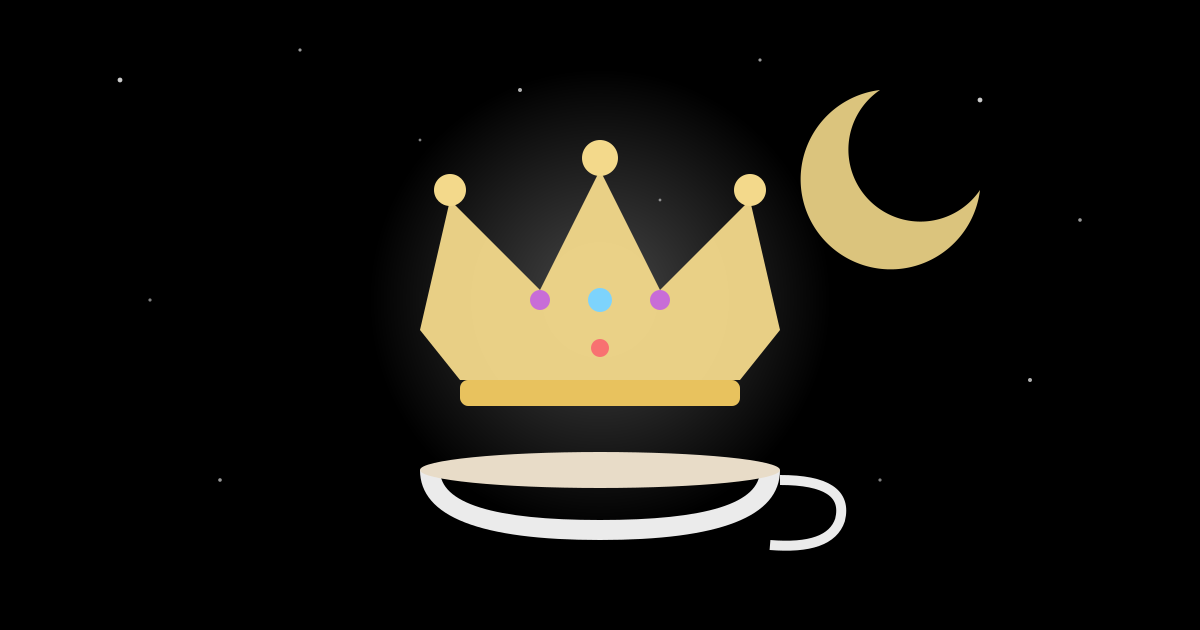
Of all the shapes the leaves can take, few are as instantly legible as the crown. No one needs a dictionary to feel what it means: a band of gold, points rising like small flames, jewels set along the rim. Across cultures the crown has stood for the same cluster of ideas — sovereignty, achievement, honor bestowed rather than seized — and the classic tasseography texts carry that meaning straight into the cup. Where the ring promises commitment and the star promises hope, the crown promises recognition: the moment when quiet work becomes visible, when others begin to see what you have long known about yourself. When the leaves settle into a banded circlet at the bottom of your cup, the reading is about standing, status, and the responsibilities that arrive with both.
This guide covers everything the crown can tell you: its core meaning in tasseography, how the crown's points, jewels, tilt, and condition refine the message, how position reveals timing, the combinations that show exactly where honor and authority matter most in your life, and what to do once the leaves have shown you their crown.
The Core Meaning: Honor, Authority, and Earned Standing
At its simplest, a crown means you are being seen. Not in the fleeting way of attention, but in the durable way of respect: someone whose opinion matters has noticed the quality of your work, your character, or your steadiness, and the cup suggests that notice is about to take a concrete form — a promotion, a title, an award, a public thank-you, or simply being asked to lead something that matters. The crown is the cup's way of saying the invisible ledger is being tallied, and the balance is in your favor.
The second traditional meaning is authority and responsibility. A crown is never only decoration; it is a job. Its appearance can mean a leadership role approaching — at work, in your family, or in a community you care about — or that you already hold an authority you have been reluctant to use. The cup asks a gentle question here: if the crown fits, are you wearing it, or are you still holding it in your hands, waiting for permission that has already been given?
The third is self-respect and dignity: the inner crown. Sometimes the honor the cup points to is not bestowed by anyone at all, but claimed quietly by you — a boundary finally held, a standard finally kept, a decision to stop apologizing for wanting more. In this reading the crown is a reminder to carry yourself as someone whose time and judgment have value, and to let that bearing do the persuading that pleading never could.
Reading the Crown's Points, Jewels, Tilt, and Condition
Crowns speak in detail, and the leaves borrow the whole vocabulary. A tall, upright crown with clear points is the classic form: honor approaching cleanly, recognition without complication, authority offered in good faith. This is the cup's most reassuring crown — the achievement is real, and the way forward is straight.
Count the points when you can, because tradition gives them weight. A crown with three points traditionally points to balance across mind, body, and spirit, or to recognition in three areas of life at once — work, home, and community. A crown with five points is the fuller form: complete honor, a success that touches every corner of your life. A single-pointed crown, more like a tiara's peak, narrows the message to one achievement — one project, one relationship, one long effort finally crowned.
Watch the jewels, because they color the honor. A crown set with bright, clear jewels means the recognition is genuine and lasting — the kind of praise that survives a second look. A crown with dark or cloudy stones suggests honor mixed with envy or complication: someone near the achievement may resent it, or the praise may come with expectations you should examine. A crown with one jewel larger than the rest points to a single standout success — one accomplishment that will define this season for you.
Special forms carry their own weight. A tilted crown means honor that is unsteady — a promotion offered before you feel ready, praise with strings attached, or authority being tested by others. It is not a refusal, but a caution: steady the crown before you wear it. A small, delicate crown softens everything into quiet recognition — a private thank-you, a family honor, or respect earned in a small circle that matters more than any crowd. A large, heavy crown warns that the honor is weighty: the role will demand real time and real sacrifice, and you should count the cost before accepting. Two crowns together traditionally mean shared honor — a partnership succeeding, a couple recognized together, or an achievement that belongs to a team rather than one person. And a broken or cracked crown is the cup's clearest caution: authority lost or challenged, a reputation needing repair, or an honor that was claimed too soon and must now be earned again.
Position: Where It Sits and What It Says About Timing
As with every symbol, position shapes the crown's message. Near the rim, close to the handle: the message is personal and imminent — recognition that belongs to you directly, arriving within days or weeks, an honor you have already earned and are about to receive. The crown is at your side of the cup, and the praise is already on its way. Near the rim, far from the handle: someone else's honor in motion — a partner's promotion, a child's award, or a colleague's success that still reflects well on you and may open a door for you too.
In the middle band: the themes developing over the coming weeks to months — a reputation building steadily, a leadership role maturing, a project whose recognition arrives in stages rather than all at once. This is the 'keep earning it' position: the crown is being fitted, not yet placed. At the bottom of the cup: the deepest reading — a foundational truth about your standing: a lifetime achievement, a legacy taking shape, or the quiet authority you carry because of who you have been for years, not what you did this week.
Direction matters too. A crown upright and facing the handle looks toward you — its honor is yours to receive, offered openly and without reservation. A crown facing away suggests recognition directed elsewhere — someone else's moment, or an honor you are watching from the audience: the cup asks whether you are content to applaud, or whether it is time to step forward yourself. A crown rising toward the rim means the honor is approaching — the announcement imminent, the promotion nearly decided. A crown sinking toward the bottom can mean an honor deferred — recognition delayed, or a title that will come only after one more season of proving.
Crown Combinations: Reading the Neighbors
Crowns gain their finest detail from the symbols around them. Crown + star: the brightest pairing in the cup — recognition guided by hope and good fortune, an honor that brings genuine happiness, or a wished-for goal finally receiving the acknowledgment it deserves. Crown + sun: public success — visibility, celebration, and a success that shines in the open rather than behind closed doors.
Crown + key: authority unlocking opportunity — the position that opens doors no effort alone could open, or a title that turns a locked situation in your favor. Crown + heart: honor in love — a relationship recognized and celebrated, a commitment honored publicly, or respect deepening into devotion. Crown + tree: deep-rooted standing — a family legacy, an elder's honor passed down, or a reputation grown slowly over many seasons and now impossible to ignore.
Crown + ring: a commitment crowned — marriage, a formal partnership, or a promise kept so well that it earns public honor. Crown + mountain: achievement after a climb — the honor that arrives only because you endured the hard road, and means more for exactly that reason. Crown + book (or scroll): honor through learning — a qualification, a publication, or knowledge itself becoming the source of your standing.
The cautionary pairings deserve equal attention. Crown + snake: honor tested by envy or deception — praise offered with a hidden motive, or a rival circling your success: accept the crown, but verify the hands offering it. Crown + cloud: confusion around the recognition — unclear criteria, gossip muddying an achievement, or your own doubt dressing up as humility: wait for the cloud to pass before you decide what the honor means. A crown beside a broken ring suggests an honor that costs a relationship — the promotion that strains a partnership, or the title that arrives at a personal price worth weighing honestly.
The Crown in Different Questions
The crown adapts beautifully to whatever you asked. In a career question, it is the promotion's and the leader's symbol: a raise, a title, a team of your own, or recognition that your quiet competence is the backbone of the place. A crown with a key doubles this — the inside position that opens the next door. In a love question, the crown asks about being valued — the partner who treats you as precious, the relationship finally given the public honor it deserves, or the nudge that you should expect to be cherished rather than merely tolerated.
In a finance question, the crown counsels dignified patience — rewards that come from reputation rather than risk: a client who returns because you were reliable, a bonus tied to steady performance, or an investment of effort that matures into standing and then into income. Watch for the companions: crown with a star suggests a windfall of recognition; crown with a cloud warns against spending an honor before it is confirmed. In a family question, the crown is the keeper of the family name — an elder honored, a child celebrated, or your own role as the one who holds the family's dignity steady through a difficult season.
In a well-being reading, the crown speaks of self-respect as a practice — the value of rest, boundaries, and treating your own time as worthy of protection. It points to habits that guard your energy the way a crown guards a head: quietly, consistently, without display. This is reflection and encouragement, not diagnosis or medical guidance: the cup offers the image of the circlet, and suggests you borrow its bearing when your own confidence wavers.
When the Crown Looks Troubled
Sometimes the crown arrives in a worried form, and it's worth knowing the difference between 'honor arriving' and 'honor at risk.' A tilted crown is the commonest troubled form — not a disaster, but an unsteadiness: authority offered before its foundations are ready, or praise that needs a second look before you lean on it. The remedy is the crown's own: pause, clarify the terms, and accept only what you can carry with dignity.
A crown slipping downward can mean standing under pressure — a reputation tested by a mistake, a role strained by overwork, or an honor that needs defending with honest effort rather than defensiveness. A heavy, oversized crown suggests a burden disguised as a reward — the promotion that costs your health or your home life, or the title that demands more than it gives: the cup asks whether the crown is worth its weight. A crown with missing jewels means recognition incomplete — praise that stops short, a reward smaller than the effort, or an achievement only partly acknowledged: the missing stones name what is still owed, and sometimes the honest move is to ask for it plainly.
A crown upside down means authority inverted — a situation where the wrong person is being honored, or where you have handed your own authority to someone else and need to take it back. And if you asked for recognition and found no crown at all, look for its quieter cousins: the star (hope and guidance), the sun (visible success), the mountain (the climb that earns honor), or the ring (commitment kept). Sometimes the cup answers with the road rather than the reward — or suggests that this season is for earning, and the crown will find you when the work has ripened.
What to Do After Finding a Crown
A crown is a way of standing, not a destination — and the best response is the dignified one: accept the recognition gracefully, carry the responsibility honestly, and let the honor change how you act rather than merely how you feel. If the reading suggests recognition, name one achievement this week that you have been downplaying: the project you saved, the person you steadied, the standard you held when no one was watching. Honor grows where it is acknowledged, first by you.
If the crown speaks of authority, do the careful work: clarify what the role actually asks, set the boundaries that will let you carry it well, and refuse the parts that would cost more than they are worth. And if the crown arrived in a troubled form — tilted, heavy, or missing jewels — do the honest work of the sovereign itself: steady it, lighten it, or ask plainly for what is missing, rather than wearing a crown that does not fit.
Many readers mark a crown finding with a small ritual of dignity: writing down the recognition they most wish to receive, then the concrete step that would earn it, or spending ten unhurried minutes simply sitting upright — shoulders back, breath steady — noticing what it feels like to occupy your own standing. However you honor it, let the crown remind you of tasseography's most regal truth: honor is not given to the loudest voice in the room, but to the steadiest presence in it.
Frequently asked questions
What does a crown in tea leaves mean?
A crown in tea leaves traditionally means honor, recognition, and authority — a sign that your efforts are being noticed, that a position of greater responsibility may be approaching, or that you are being invited to carry yourself with the dignity of someone who has earned respect. It is the cup's symbol of achievement made visible.
Is a crown in tea leaves good luck?
A crown is traditionally one of the cup's most encouraging symbols: it points to recognition, promotion, or an honor coming your way. Its luck depends on its condition — a clear, upright crown is a strong sign of success, while a tilted or broken crown suggests the honor is delayed, disputed, or comes with a responsibility you should weigh before accepting.
What does a crown near the handle mean in tea leaves?
The handle represents you, so a crown near it is a personal message: recognition that belongs to you directly. It traditionally means your own work is about to be acknowledged, or that you are ready to step into a leadership role you have been quietly preparing for. The honor is not borrowed — it is yours.
What does a tilted crown mean in tea leaves?
A tilted crown traditionally means honor that is unsteady — a promotion offered before you feel ready, praise that comes with strings attached, or authority that is being tested. It is not a refusal of the crown, but a caution: accept the recognition only when you understand what it will ask of you, and steady it before you wear it.
What does a crown with a star mean in tea leaves?
A crown with a star is one of the cup's brightest pairings. It traditionally means recognition guided by hope and good fortune — an honor that brings genuine happiness, a public success that feels true rather than hollow, or a goal you have wished for finally receiving the acknowledgment it deserves.
Keep exploring

Tea Leaf Symbols Dictionary: 40+ Meanings from Anchor to Star
From anchor to star: explore 40+ classic tea leaf symbols and their traditional tasseography meanings, covering love, fortune, travel, caution and animals.
Read the meaning →
How to Read Tea Leaves: A Beginner's Step-by-Step Guide
Learn tea leaf reading step by step: choosing the right tea and cup, brewing with intention, swirling, inverting and interpreting the symbols left behind.
Read the meaning →
Owl Symbol in Tea Leaves: Wisdom, Secrets & What It Means
Spot an owl in your tea leaves? Discover its tasseography meaning — wisdom, hidden truths, and messages from the night — plus posture details, position timing, owl combinations, and what to do next.
Read the meaning →
Mountain Symbol in Tea Leaves: Obstacles, Ambition & What It Means
Spot a mountain in your tea leaves? Discover its tasseography meaning — obstacles, ambition, and the climb ahead — plus shape details, position timing, mountain combinations, and what to do next.
Read the meaning →