
Heart Symbol in Tea Leaves: Love, Timing & What It Really Means
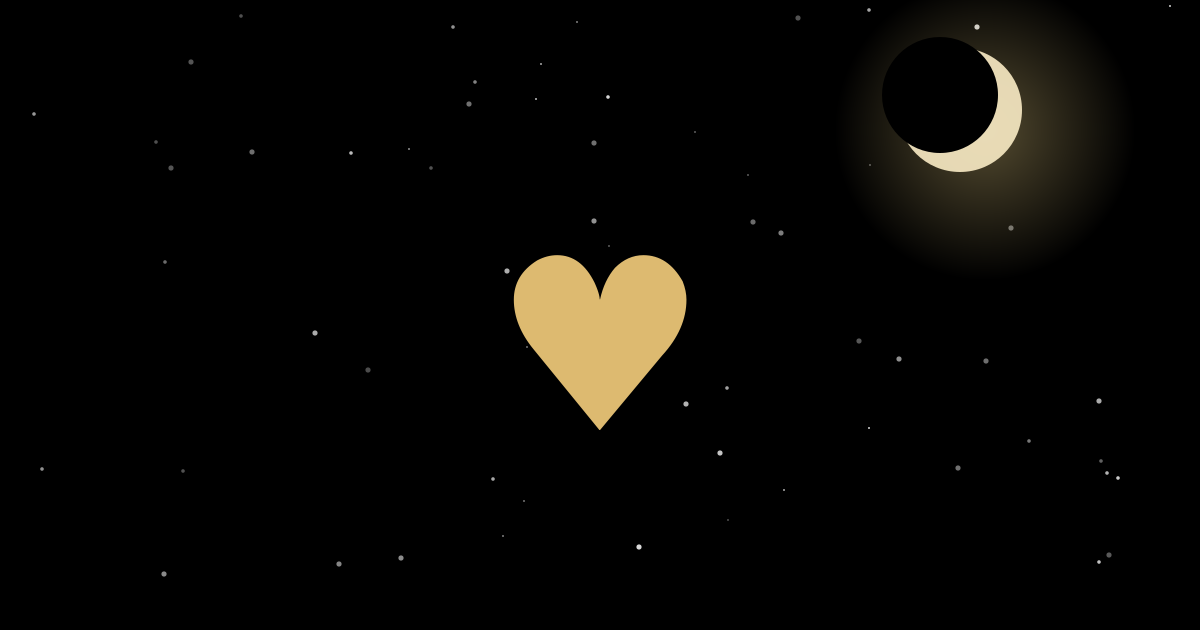
Few moments in tea leaf reading delight like spotting a heart. There it is among the leaves — unmistakable, a little lopsided perhaps, but clearly a heart — and suddenly the whole cup feels warmer. In tasseography, the heart is one of the most welcome symbols you can find, and one of the most nuanced. Its core meaning is beautifully simple: love, affection, emotional fulfillment. But whose love, when, and under what circumstances — that's where the cup's details come in.
This guide unpacks everything the heart can tell you: how its position reveals timing, how its shape and companions refine the message, and what to do with the warm news once you've read it.
The Core Meaning: Love in Its Many Forms
At its simplest, a heart in the leaves means love is active in your life — arriving, deepening, or asking for your attention. But "love" in tasseography is generously defined. It can mean romantic love, certainly, but also the love of deep friendship, family reconciliation, self-acceptance finally taking root, or a passion project that has captured your heart. Before assuming romance, ask which kind of love your question was really about. The cup usually answers the question you actually asked, not the one you think you asked.
A clear, well-formed heart is read as strong, healthy affection — love with good bones. A faint or partial heart suggests love that is developing, tentative, or not yet fully recognized — perhaps someone's feelings (or your own) still taking shape. Size matters too: a large heart dominates the reading and signals that love is the central theme of this period; a small heart is a sweet footnote, a tender detail in a larger story.
Position: When and How Close
Where the heart sits in the cup shapes its message enormously. Near the rim, close to the handle: love is present or imminent — days to weeks. Someone near you, perhaps already in your life, is central to this. Near the rim, far from the handle: love approaching from an unexpected direction — a new person, a surprise reconnection. In the middle band: love developing over the coming months; patience and openness are the themes. At the bottom of the cup: deep, foundational matters of the heart — long-term partnership potential, or emotional patterns rooted far back that are ready to be understood.
Also note orientation: a heart pointing toward the handle (toward you) suggests love coming into your life; pointing away can mean love you're giving out, or occasionally a love that's receding. An upside-down heart is traditionally read as love facing obstacles — not absent, but challenged.
Heart Combinations: Reading the Neighbors
Hearts rarely appear alone, and their neighbors write the fine print. Heart + ring: the classic combination — commitment deepening, possibly engagement or a significant promise. Heart + flowers: romance in bloom, admiration, joyful courtship. Two hearts: mutual, reciprocated love — the feelings flow both ways. Heart + bird: news about love — a message, a confession, an invitation. Heart + key: unlocking emotional barriers; someone (perhaps you) finally opening up.
Heart + snake: the cautionary pairing — jealousy, deception, or a love that requires clear eyes. Don't panic; treat it as advice to look carefully, not as doom. Heart + clouds: emotional confusion — feelings are real but unclear; wait for the skies to clear before deciding. Heart + dagger/knife: a painful but possibly necessary ending or boundary in love. Broken or cracked heart: heartbreak, disappointment, or love under strain — paired with healing symbols (dove, sun), it speaks of recovery, not ruin.
The Heart in Different Questions
Context is everything. In a romance question, the heart is wonderfully direct: affection is the theme, and position tells you the timing. In a career question, a heart often means passion for your work — follow what you love, or a project you're devoted to is about to reward you. In a family question, it speaks of reconciliation, warmth at home, or a relative's love you may have underestimated. In a self-reflection reading, the heart can be the most important message of all: the love you need to turn toward yourself.
This flexibility is why experienced readers always anchor the heart to the original question. The symbol is constant; the story changes with the asker.
When the Heart Doesn't Appear
What if you asked about love and found no heart at all? Don't despair — the cup may be answering a different layer of your question. Look instead for love's quieter emissaries: flowers (admiration and courtship), doves (peace and faithful devotion), rings (commitment forming), or two birds (partnership and companionship). Sometimes the absence of a heart is itself the message: this season is about foundations — career, healing, self-knowledge — with love waiting in the wings rather than center stage. And occasionally the cup simply declines the question; a murky, symbol-free reading on matters of the heart traditionally means the situation is still unfolding and clarity hasn't arrived yet. Love, like tea, can't be rushed.
What to Do After Finding a Heart
A heart in the leaves is an invitation, not a guarantee — and the best response is action, not just delight. If the reading suggests love approaching, make room for it: accept the invitation, start the conversation, be visible. If it suggests a relationship deepening, invest deliberately: plan the date, say the thing you've been holding back, show up fully. If it points to self-love, take it seriously — book the rest, set the boundary, treat yourself with the tenderness the cup is describing.
Many readers pair a heart finding with a small ritual: lighting a candle, writing a gratitude note to someone they love, or pulling a tarot card for elaboration (the Two of Cups and the Lovers are natural companions). However you honor it, let the heart remind you of tasseography's deepest truth: the leaves don't create love — they reflect the love already moving through your life, and invite you to meet it halfway.
Frequently asked questions
What does a heart in tea leaves mean?
A heart is one of tasseography's happiest symbols, meaning love, affection, and emotional fulfillment. It can indicate romantic love, deep friendship, family warmth, or even passion for your work — context from your original question determines which.
Does a heart in tea leaves mean someone loves me?
It suggests love is active around you — possibly someone's affection, a deepening bond, or love approaching. Position matters: near the rim by the handle means it's close and soon; at the bottom means deeper, longer-term emotional themes.
What does a broken heart symbol mean in tea leaves?
A cracked or broken heart traditionally indicates heartbreak, disappointment, or love under strain. It's a warning to protect your feelings, not a fixed prediction — especially when healing symbols like the dove or sun appear nearby.
What does a heart next to a ring mean in tea leaves?
Heart plus ring is the classic commitment combination — a relationship deepening toward engagement, marriage, or a significant promise. It's considered one of the most fortunate pairings in the cup.
Can the heart symbol mean self-love?
Yes. In self-reflection readings, a heart often points to the relationship with yourself — a need for self-compassion, rest, or finally accepting something about who you are. Many readers consider this the heart's most important message.
Keep exploring
Tea Leaf Symbols Dictionary: 40+ Meanings from Anchor to Star
From anchor to star: explore 40+ classic tea leaf symbols and their traditional tasseography meanings, covering love, fortune, travel, caution and animals.
Read the meaning →
How to Read Tea Leaves: A Beginner's Step-by-Step Guide
Learn tea leaf reading step by step: choosing the right tea and cup, brewing with intention, swirling, inverting and interpreting the symbols left behind.
Read the meaning →
What Does It Mean to Dream About Water?
Water in dreams mirrors your emotional state. Discover what dreaming about water means — calm seas, floods, drowning — and how each reflects feelings.
Read the meaning →
How to Interpret Your Dreams: A Beginner's Guide
Learn how to interpret your dreams with this beginner-friendly guide: dream journaling, decoding symbols, and a simple 5-step method that works.
Read the meaning →