
Mountain Symbol in Tea Leaves: Obstacles, Ambition & What It Means
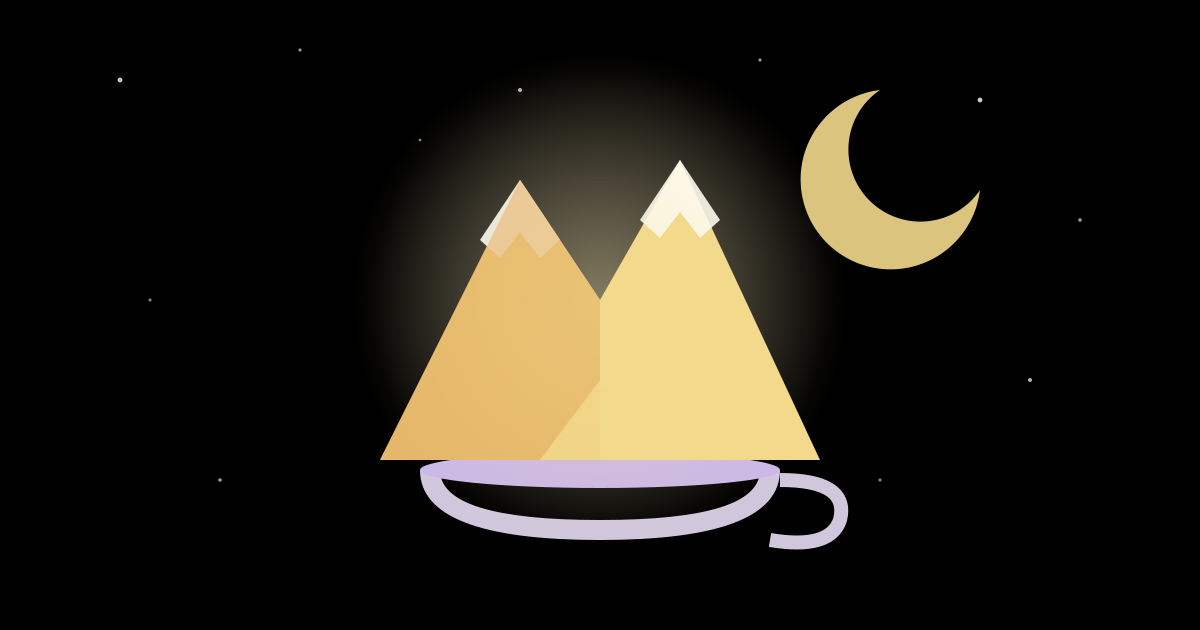
Every traveler knows the feeling of seeing a mountain across a valley: part awe, part hesitation, part quiet determination. That is exactly the feeling the mountain carries into the teacup. In folklore and story across the world, mountains are where heroes are tested, where hermits find wisdom, where gods were said to live, and where ordinary people discover what they are made of. The classic tasseography texts borrow all of that and read the mountain as the symbol of the obstacle that is also an invitation — the challenge, the ambition, and the climb that changes the climber. When the leaves settle into a peak or a ridge at the bottom of your cup, the reading is about effort with a purpose: something in your life will ask more of you, and the asking is the point.
This guide covers everything the mountain can tell you: its core meaning in tasseography, how the mountain's shape, height, and snow refine the message, how position reveals timing, the combinations that show exactly where the climb matters most in your life, and what to do once the leaves have shown you their mountain.
The Core Meaning: Obstacle, Ambition, and the Climb
At its simplest, a mountain means something stands in the way — and it is worth getting past. Where the anchor promises stability and the key promises an opening, the mountain promises effort. Readers of the classic tasseography texts describe the mountain as the cup's way of naming a difficulty honestly: a project that will take longer than hoped, a goal that demands new skills, a conversation you have been putting off, a standard you have set for yourself that will not be met by coasting.
The second traditional meaning is ambition. A mountain is not only a barrier; it is also a summit, and people climb mountains on purpose. The mountain in your cup can mean a goal you have chosen — a promotion, a degree, a creative work, a healthier life — that is big enough to be a little frightening. The cup is not warning you away from it. It is confirming that the goal is as large as it feels, and that the size is part of its value.
The third is endurance and perspective: the mountain is the symbol of the long view. From the valley, a mountain looks like a wall; from the summit, the whole landscape rearranges itself. Its appearance can mean that a period of steady work is ahead, that patience will matter more than speed, and that you will understand the situation differently once you have climbed through it. The mountain rewards the walker, not the sprinter.
Reading the Mountain's Shape, Height, and Snow
Mountains speak in silhouette, and the leaves borrow the whole vocabulary. A single rounded mountain is the classic form: one clear challenge, manageable and well-defined — a hurdle you can name, plan for, and clear. This is the cup's most reassuring mountain: the obstacle is real, but so is your ability to meet it.
Height changes the story. A tall, steep mountain means a major undertaking — the kind of goal that will take months, not days, and that may require help, training, or resources you do not yet have. A small hill rather than a mountain softens everything into a minor delay or a modest effort: a bump in the road, not a blockade. Readers pay attention to proportion here: the mountain's size in the cup is often read as the challenge's size in your life.
Special forms carry their own weight. A snow-capped mountain is the lofty goal — something admired from a distance that demands preparation and respect: the summit is real, but it is not a casual outing, and the snow asks you not to rush. A mountain range traditionally means a series of challenges rather than one — a season of climbing, where each peak reveals the next, and where pacing yourself matters more than any single summit. A mountain with a path winding up it is one of the cup's most encouraging forms: the way through already exists — a route, a plan, or a guide is available if you look for it. And a mountain with a figure standing on top is the symbol of achievement in sight: the climb is nearly done, or someone near you has already shown that the summit can be reached.
Position: Where It Sits and What It Says About Timing
As with every symbol, position shapes the mountain's message. Near the rim, close to the handle: the challenge is personal and imminent — your own obstacle, your own ambition, surfacing within days or weeks. The mountain is at your side of the cup, and the climb is already beginning. Near the rim, far from the handle: someone else's mountain in motion — a challenge in your wider circle, a colleague's or loved one's climb that you may be asked to support.
In the middle band: the themes developing over the coming weeks to months — a project maturing, a goal taking shape, a difficulty that will grow clearer as you approach it. This is the "prepare now" position: the mountain is telling you that the time to gather supplies, skills, and allies is before the slope steepens. At the bottom of the cup: the deepest reading — a foundational challenge, a long-standing ambition, or a pattern of facing hard things that has shaped who you are. The mountain at the bottom speaks of the climbs that define a life, not just a season.
Direction matters too. A mountain blocking the handle suggests the obstacle stands directly in your path — the thing you cannot go around and must go through. A mountain with a pass or valley beside it suggests a way around exists, even if it is longer: the cup asks whether the direct route is really the only one. A mountain behind another symbol can mean the challenge lies beyond the nearer matter — deal with what is in front first, and the mountain will come into focus when you are ready for it.
Mountain Combinations: Reading the Neighbors
Mountains gain their finest detail from the symbols around them. Mountain + sun: the most hopeful pairing in the cup — success after effort, the summit in sunlight, a goal that rewards the climb with clarity and recognition. Mountain + star: guidance on the ascent — a mentor, a guiding principle, or a hope that keeps you walking when the slope is steep.
Mountain + key: the way through — a solution, a skill, or a connection that unlocks the difficult part: the pass through the range, found at last. Mountain + path or road: the journey itself — a long undertaking with stages, rest stops, and milestones: measure progress by the path traveled, not only by the summit. Mountain + tree: deep-rooted strength — growth that survives hard seasons, family support on the climb, or a goal that matures slowly like a forest on a slope.
Mountain + heart: a challenge in love — a relationship tested by distance, timing, or honest difficulty, where the climb is the work of staying. Mountain + house: a household or home challenge — a move, a renovation, a family matter that needs steady effort rather than a quick fix. Mountain + bird: news from above the climb — perspective arriving from a higher view, or a message that reframes the difficulty entirely.
The cautionary pairings deserve equal attention. Mountain + cloud: confusion around the challenge — a goal obscured, a difficulty exaggerated by worry, or facts still foggy: wait for clearer weather before you judge the size of the climb. Mountain + snake: a hidden complication on the slope — a detail overlooked, or a person whose help comes with strings: check the path before you trust it. A mountain with a storm above it: a turbulent period around the challenge — the climb will be harder for a while, and shelter, patience, and good company matter more than speed.
The Mountain in Different Questions
The mountain adapts beautifully to whatever you asked. In a career question, it is the promotion's and the project's symbol: a demanding role, a qualification to earn, or recognition that comes only after visible effort. A mountain with a key doubles this — the credential or connection that opens the next level. In a love question, the mountain asks about endurance in affection — the distance to close, the honest conversation to climb toward, or the reassurance that a relationship worth keeping is sometimes a relationship worth working for.
In a finance question, the mountain counsels steady building — savings grown over time, a debt climbed down step by step, or an investment that rewards patience rather than haste. Watch for the companions: mountain with a sun suggests the effort pays; mountain with a cloud warns against judging the goal while the figures are still unclear. In a family question, the mountain is the keeper of the long effort — a family goal pursued together, a move or milestone that asks everyone to pull in the same direction, or your own role as the steady one on a shared slope.
In a well-being reading, the mountain speaks of sustainable effort — the value of small daily steps, rest built into the climb, and goals sized to what you can actually carry. It also points to perspective: the view changes as you ascend, and a difficulty that looks like a wall from below often looks like a path from higher up. This is reflection and encouragement, not medical guidance: the cup offers the image of the climb, and suggests you borrow its patience with your own pace.
When the Mountain Looks Troubled
Sometimes the mountain arrives in a worried form, and it's worth knowing the difference between "a climb ahead" and "a wall with no way through." A sheer cliff with no path is the commonest troubled form — a goal that feels impossible from where you stand: the remedy is the mountaineer's own, which is to look for another route, better equipment, or a guide, rather than to charge at the rock face. The mountain is not saying no; it is saying not this way, not yet.
A mountain crumbling or sliding can mean a plan losing its footing — foundations that need checking before the climb continues: the cup asks whether the goal itself is sound, or whether the route needs rebuilding. A mountain in darkness, barely visible suggests a challenge not yet fully seen — the shape of the difficulty still forming: give it time to come into view before you commit to a strategy.
A mountain that blocks out the sun means a difficulty casting a long shadow — worry growing larger than the obstacle itself, or a challenge crowding out everything else in life. The reading asks you to step back and measure the mountain against the rest of the landscape: it is one feature, not the whole horizon. And if you asked for guidance and found no mountain at all, look for its gentler cousins: the hill (a small effort), the path (the journey itself), the key (the solution), or the star (the guidance). Sometimes the cup answers with a level road — or suggests that this season is for walking the valley, and the mountain will find you when you are ready to climb.
What to Do After Finding a Mountain
A mountain is a way of traveling, not a verdict — and the best response is the climber's own: break the ascent into stages, pack properly, and keep walking. If the reading suggests a challenge, name the first step this week: the email you keep postponing, the skill you need to begin learning, the honest conversation you have been circling. Mountains are climbed one step at a time, and the first step is the only one you have to take today.
If the mountain speaks of ambition, do the honest work: write the goal down, divide it into base camps, and find one person who has climbed something like it before. And if the mountain arrived in a troubled form — sheer, crumbling, or shadowed — do the patient work of the mountaineer itself: scout another route, check your foundations, and give the weather time to clear before you decide the summit is out of reach.
Many readers mark a mountain finding with a small ritual of resolve: writing down the goal at the top of a page and the first three steps beneath it, or spending ten unhurried minutes imagining the view from the summit — not as fantasy, but as a reminder of why the climb is worth making. However you honor it, let the mountain remind you of tasseography's most enduring truth: the obstacle and the achievement are often the same shape, seen from different sides.
Frequently asked questions
What does a mountain in tea leaves mean?
A mountain in tea leaves traditionally means an obstacle, a challenge, or an ambition that requires effort — the cup's way of saying something worth doing stands between you and where you want to be. It is not a stop sign; it is a climb. The mountain asks whether you are willing to prepare, persist, and take the slope one steady step at a time.
Is a mountain in tea leaves good luck or bad luck?
A mountain is neither good luck nor bad luck — it is honest. Traditionally it means effort will be required, but also that the effort leads somewhere higher. A single rounded mountain often points to a challenge you can handle; a steep or rugged range suggests a longer climb that still rewards persistence. The cup treats the mountain as a measure of the goal, not a verdict on it.
What does a mountain near the handle mean in tea leaves?
The handle represents you, so a mountain near it is a personal challenge — an obstacle in your own path, or an ambition you have set for yourself. It traditionally means the work is yours to do and the timing is close: the climb is already beginning, even if you have not yet named it as one.
What does a snow-capped mountain mean in tea leaves?
A snow-capped mountain traditionally means a lofty or distant goal — something admired from afar that will take planning, patience, and perhaps help from others to reach. The snow adds dignity and distance: the summit is real, but it is not a weekend trip. Prepare properly, and do not rush the ascent.
What does a mountain with a path mean in tea leaves?
A mountain with a path is one of the cup's most encouraging forms. It traditionally means the way through the difficulty already exists — a route, a plan, or a guide is available if you look for it. The obstacle is real, but it is not a wall: follow the path, take it in stages, and the climb becomes a journey rather than a blockade.
Keep exploring

Tea Leaf Symbols Dictionary: 40+ Meanings from Anchor to Star
From anchor to star: explore 40+ classic tea leaf symbols and their traditional tasseography meanings, covering love, fortune, travel, caution and animals.
Read the meaning →
How to Read Tea Leaves: A Beginner's Step-by-Step Guide
Learn tea leaf reading step by step: choosing the right tea and cup, brewing with intention, swirling, inverting and interpreting the symbols left behind.
Read the meaning →
Owl Symbol in Tea Leaves: Wisdom, Secrets & What It Means
Spot an owl in your tea leaves? Discover its tasseography meaning — wisdom, hidden truths, and messages from the night — plus posture details, position timing, owl combinations, and what to do next.
Read the meaning →
Tree Symbol in Tea Leaves: Growth, Roots & What It Means
Spot a tree in your tea leaves? Discover its tasseography meaning — growth, roots, and family strength — plus position timing, tree combinations, and what to do next.
Read the meaning →