
Owl Symbol in Tea Leaves: Wisdom, Secrets & What It Means
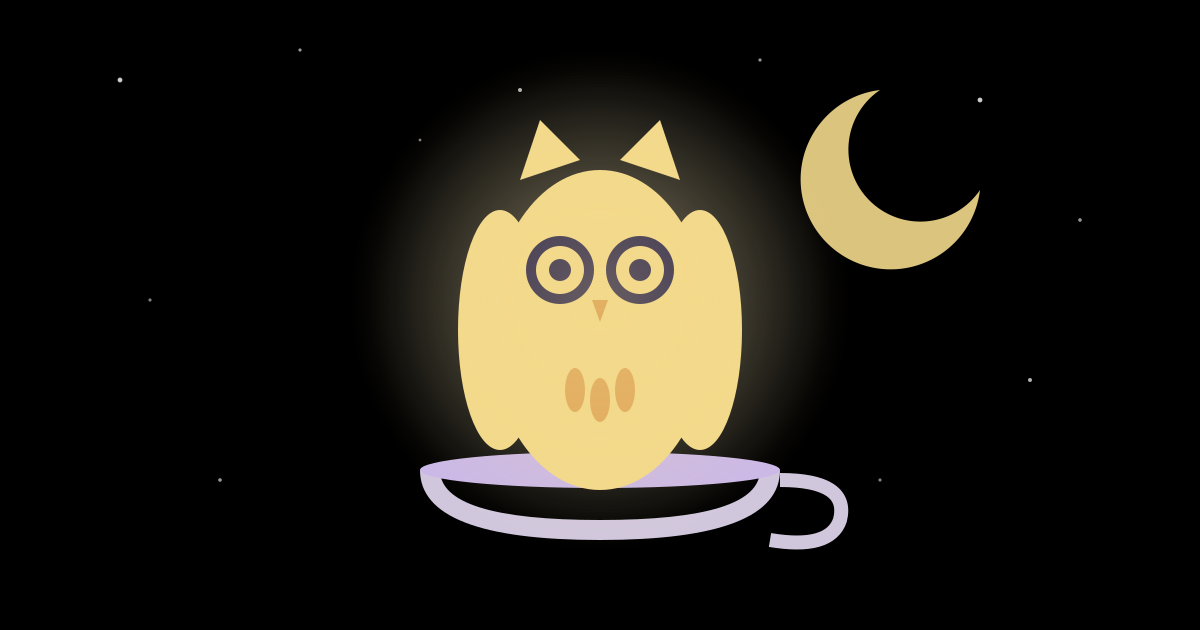
If the dog is the cup's most faithful visitor and the cat its most independent one, the owl is its most knowing one. It arrives without announcement, perches in the dark, and sees what the daylight misses. Owls have carried that reputation for thousands of years: companions of Athena, goddess of wisdom, in ancient Greece; watchers of the night in folklore across Europe, Asia, and the Americas; birds that hear a mouse move under snow. That long association lives in the cup, and the classic tasseography texts read the owl as the symbol of wisdom earned in the dark, secrets near the surface, and messages that arrive when the world is quiet. When the leaves settle into round eyes and a feathered brow at the bottom of your cup, the reading is about what you know but have not yet said — and what is about to be revealed to you.
This guide covers everything the owl can tell you: its core meaning in tasseography, how the owl's eyes, wings, and posture refine the message, how position reveals timing, the combinations that show exactly where wisdom and secrets matter most in your life, and what to do once the leaves have shown you their owl.
The Core Meaning: Wisdom, Secrets, and the Night Watch
At its simplest, an owl means you know more than you think you know. Where the bird promises news and the star promises hope, the owl promises perception — the quiet, unglamorous kind of wisdom that comes from watching longer than everyone else and speaking only when it counts. Readers of the classic tasseography texts describe the owl as the symbol of the watcher: the cup's way of saying pay attention, because the important detail is the one nobody is pointing at.
The second traditional meaning is secrets and hidden truths. Owls hunt at night, and the cup borrows that hour as metaphor: the owl appears when something concealed is stirring — a fact not yet spoken, a motive not yet named, a part of your own feelings you have been avoiding. The owl does not create the secret; it announces that the secret is ready to be found. Sometimes the hidden truth belongs to someone else, and the owl asks whether you are ready to hear it. Sometimes it belongs to you, and the owl asks whether you are ready to admit it.
The third is guidance through uncertainty: the owl is the bird you consult when the path is dark. Its appearance can mean a wise advisor is near — a mentor, an elder, a friend whose counsel you should seek — or that you are becoming that advisor for someone else. And in the active sense, the owl is the symbol of discernment: the reminder to separate what is true from what is merely loud, to wait one more night before deciding, and to trust the observation you made when nobody was performing for you.
Reading the Owl's Eyes, Wings, and Posture
Owls speak in stillness, and the leaves borrow the whole vocabulary. A perched owl, calm and upright is the classic form: watchful wisdom, a truth held patiently, guidance that is already available if you sit quietly enough to receive it. This is the cup's most reassuring owl — nothing is urgent, and everything important is already in view.
Watch the eyes, because the owl is all eyes. An owl with wide, open eyes is the alert form — heightened intuition, a detail you must not miss, a situation that rewards a second look. The open-eyed owl means your instincts are sharp right now: believe the first quiet reading, not the revised one. An owl with closed or half-closed eyes means wisdom at rest or a truth deliberately unexamined: something you are choosing not to see, or knowledge that needs sleep and distance before it settles. A closed-eyed owl is not a warning so much as permission — the answer will be clearer after you stop staring at it.
Special forms carry their own weight. A flying owl, wings spread is the messenger: news traveling fast, often at night or through an unexpected channel — a message, a revelation, or a piece of gossip that changes how you see a situation. A small owl or owlet softens everything into learning: a new study, a young wisdom just beginning, a student's question that turns out to be the right one. Two owls together traditionally mean shared counsel — a meeting of wise minds, advice confirmed from two directions, or a conversation that finally names the thing everyone has been avoiding. And an owl with its head turned fully around is the cup's most striking image: the ability to see behind you — the past, the motive, the pattern — and the invitation to look at what you have been walking away from.
Position: Where It Sits and What It Says About Timing
As with every symbol, position shapes the owl's message. Near the rim, close to the handle: the message is personal and imminent — your own intuition speaking now, a truth about your life surfacing within days, a secret you are about to be told or to tell. The owl is at your side of the cup, and the knowing is already yours. Near the rim, far from the handle: someone else's wisdom in motion — another person's secret, a revelation in your wider circle, or advice arriving from an unexpected quarter that you should still take seriously.
In the middle band: the themes developing over the coming weeks to months — a period of study, a slow uncovering, a decision that matures in the dark before it is made in the light. This is the "keep watching" position: the owl is telling you that patience is not passivity here, it is the method. At the bottom of the cup: the deepest reading — a foundational truth about what you truly know: a long-held secret, a wisdom earned through a hard season, or a pattern in your life that only makes sense when you look at it whole. The owl at the bottom speaks of the kind of knowing you will carry for years.
Direction matters too. An owl facing the handle looks toward you — its message is yours to receive: wisdom offered, a truth meant for your ears, guidance arriving on schedule. An owl facing away suggests the knowing is directed elsewhere — someone else's secret, or a truth you are not yet meant to hold: the cup asks whether you are prying at a door that is not yours to open. An owl flying toward the rim means the message is approaching — the revelation imminent, the news on its way. An owl flying toward the bottom can mean a truth receding — a secret kept a little longer, or a question whose answer needs more night before it is ready.
Owl Combinations: Reading the Neighbors
Owls gain their finest detail from the symbols around them. Owl + moon: the most intuitive pairing in the cup — hidden emotions surfacing, guidance arriving through dreams and feelings rather than facts, a night-time knowing that deserves your trust. Owl + star: wisdom leading somewhere hopeful — a guiding insight, a mentor's advice that lights the path, or clarity arriving after a long confusion.
Owl + key: a secret unlocking — the missing fact that opens a situation, a truth that resolves a stalemate, or knowledge as the key no amount of force could replace. Owl + book (or scroll): study rewarded — learning, research, or a document that changes the picture: read the fine print, and read it twice. Owl + tree: deep-rooted wisdom — an elder's counsel, family knowledge passed down, or a slow-growing understanding that has finally matured.
Owl + heart: a truth about love — an unspoken feeling finally named, or the wise course in a relationship being the honest one, even when honesty is uncomfortable. Owl + house: a household secret or a truth about home — something under your own roof that needs naming, or wisdom about where you truly belong. Owl + eye: the watcher watched — scrutiny, either yours or someone else's, and the reminder that perception runs both ways.
The cautionary pairings deserve equal attention. Owl + snake: wisdom tested by deception — a clever half-truth, or knowledge used unkindly: verify before you repeat. Owl + cloud: confusion around the message — a truth obscured, gossip muddying the facts, or your own worry dressing up as intuition: wait for the cloud to pass before you act. An owl with a broken wing: wisdom interrupted — advice you cannot yet use, or a messenger delayed: the truth is real, but its timing is not yet.
The Owl in Different Questions
The owl adapts beautifully to whatever you asked. In a career question, it is the mentor's and the strategist's symbol: a wise colleague's counsel, a piece of institutional knowledge that changes your plan, or recognition that your own quiet observation is your greatest professional asset. An owl with a key doubles this — the inside knowledge that opens the right door. In a love question, the owl asks about honesty in affection — the feeling nobody has named yet, the conversation that would change everything if it happened, or the nudge that the wisest move is to say the true thing kindly.
In a finance question, the owl counsels careful reading — examine the terms, verify the claim, and distrust the offer that arrives in a hurry. Watch for the companions: owl with a book suggests research before commitment; owl with a cloud warns against deciding while the facts are still foggy. In a family question, the owl is the keeper of the family story — an elder's memory, a truth the family has circled for years, or your own role as the one who finally names it with care.
In a well-being reading, the owl speaks of listening to your inner life — the value of rest, reflection, and paying attention to what your body and your dreams have been telling you. It also points to wise habits: the routines that protect your energy the way an owl guards its territory — quietly, consistently, without display. This is reflection and encouragement, not diagnosis or medical guidance: the cup offers the image of the bird that sees in the dark, and suggests you borrow its patience with your own unanswered questions.
When the Owl Looks Troubled
Sometimes the owl arrives in a worried form, and it's worth knowing the difference between "wisdom arriving" and "wisdom withheld." A startled owl, wings half-raised is the commonest troubled form — an alarm, not a disaster: a warning to look again, gossip that needs checking, or your own instincts flaring for a reason you have not yet named. The remedy is the owl's own: pause, observe, and verify before you react.
An owl in darkness, barely visible can mean a truth still forming — not hidden from malice, simply not ready: the cup asks whether you are demanding an answer before the season has produced one. A caged or tethered owl suggests wisdom constrained — good counsel you cannot act on yet, or knowledge that must wait for the right moment: the cage is usually temporary, and naming the constraint is often what loosens it.
An owl crying out at night means a message that refuses to stay quiet — the thing that keeps waking you, the conversation that keeps returning, the fact that will not be ignored much longer. The reading asks you to hear it out rather than stuff it back into the dark. And if you asked for guidance and found no owl at all, look for its knowing cousins: the moon (intuition), the star (guidance), the key (the fact that unlocks), or the book (study that reveals). Sometimes the cup answers with the question rather than the bird — or suggests that this season is for gathering, and the owl will find you when you have watched long enough to deserve it.
What to Do After Finding an Owl
An owl is a way of seeing, not a destination — and the best response is the watchful one: look longer, speak less, and let the truth finish arriving. If the reading suggests wisdom, seek one wise voice this week: the mentor you keep meaning to call, the elder whose stories you have half-heard, the friend whose judgment you trust when your own is noisy. Wisdom grows where it is consulted.
If the owl speaks of a secret, do the careful work: verify before you repeat, name the truth kindly when it is yours to name, and leave alone the doors that are not yours to open. And if the owl arrived in a troubled form — startled, caged, crying out — do the honest work of the watcher itself: slow down, check the facts, and give the night its full turn before you decide.
Many readers mark an owl finding with a small ritual of attention: writing down the first quiet thought that came with the cup before the explanations started, or spending ten unhurried minutes in the dark — no phone, no noise — simply noticing what surfaces. However you honor it, let the owl remind you of tasseography's most watchful truth: the dark is not the absence of sight, it is where the sharpest sight is learned.
Frequently asked questions
What does an owl in tea leaves mean?
An owl in tea leaves traditionally means wisdom, hidden knowledge, and a truth that is about to come to light. It is the cup's night watchman: a sign that you already sense more than you have admitted, that a secret or an unspoken fact is near the surface, and that careful observation will serve you better than quick action.
Is an owl in tea leaves good luck or bad luck?
An owl is neither simply lucky nor unlucky — it is a messenger. Traditionally it brings wisdom and warning in equal measure: good news when the owl looks calm and watchful, and a caution to look closer when it looks startled, flying, or paired with troubled symbols. In either case the owl's message is useful, because it arrives before the thing it warns about.
What does an owl near the handle mean in tea leaves?
The handle represents you, so an owl near it is a personal message: your own intuition is trying to get your attention. It traditionally means you already know something important that you have not yet acted on, or that a truth about your own life is ready to be faced. Trust the quiet knowing, not the loudest voice in the room.
What does a flying owl mean in tea leaves?
A flying owl traditionally means news traveling fast, often at night or through an unexpected channel — a message, a revelation, or a piece of gossip that changes how you see a situation. If the owl flies toward the handle, the news concerns you directly; flying away suggests news about someone else, or a truth moving out of reach for now.
What does an owl with a moon mean in tea leaves?
An owl with a moon is one of the cup's most intuitive pairings. It traditionally means hidden emotions surfacing, a dream or a feeling that deserves attention, or guidance arriving through your inner life rather than through facts. It is a strong invitation to listen to your intuition — and to your dreams — over the coming nights.
Keep exploring
Tea Leaf Symbols Dictionary: 40+ Meanings from Anchor to Star
From anchor to star: explore 40+ classic tea leaf symbols and their traditional tasseography meanings, covering love, fortune, travel, caution and animals.
Read the meaning →
How to Read Tea Leaves: A Beginner's Step-by-Step Guide
Learn tea leaf reading step by step: choosing the right tea and cup, brewing with intention, swirling, inverting and interpreting the symbols left behind.
Read the meaning →
Dog Symbol in Tea Leaves: Loyalty, Friendship & What It Means
Spot a dog in your tea leaves? Discover its tasseography meaning — loyalty, friendship, and protection — plus posture details, position timing, dog combinations, and what to do next.
Read the meaning →
Cat Symbol in Tea Leaves: Independence, Intuition & What It Means
Spot a cat in your tea leaves? Discover its tasseography meaning — independence, intuition, and quiet mystery — plus posture details, position timing, cat combinations, and what to do next.
Read the meaning →