
Snake Symbol in Tea Leaves: Transformation, Warning & What It Means
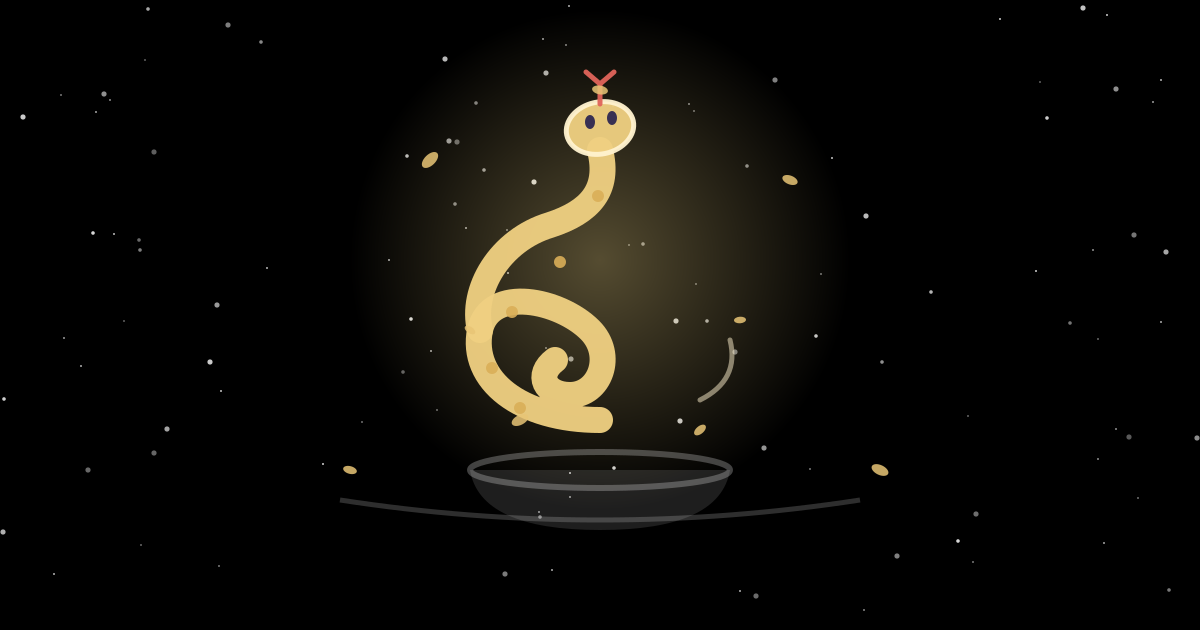
Few symbols divide a tea-leaf reader's attention like the snake. The dog promises loyalty, the heart promises love, the star promises guidance — but the snake arrives with a forked message, and that is exactly why it matters. In folklore across the world, the snake is both healer and trickster: the creature on the healer's staff, the guardian of hidden treasure, the tempter in the garden, the animal that renews itself by slipping out of its own skin. That long, tangled reputation lives in the cup, and the classic tasseography texts read the snake as the symbol of transformation in progress, wisdom that works in secret, and — when it strikes — a warning worth heeding. When the leaves settle into an S-curve or a coil at the bottom of your cup, the reading is about the change you are already undergoing and the truths that are moving quietly underneath it.
This guide covers everything the snake can tell you: its core meaning in tasseography, how the snake's shape and posture refine the message, how position reveals timing, the combinations that show exactly where transformation and caution matter most in your life, and what to do once the leaves have shown you their snake.
The Core Meaning: Transformation, Wisdom, Warning
At its simplest, a snake means something is changing — and the change is already underway. Where the butterfly promises change arriving on the wing, the snake promises change from within: the old skin loosening, the habit outgrown, the identity quietly outgrown before you have named it. Readers of the classic tasseography texts describe the snake as the symbol of renewal through shedding: the cup's way of saying you are not stuck, you are molting, and the tightness you feel is the old skin, not the new life.
The second traditional meaning is hidden wisdom and instinct. Snakes sense the world through vibration and scent — they know things before they see them — and the cup borrows that gift as metaphor: the snake appears when your instincts already know something your thinking mind has not caught up with. A snake in the cup can mean a gut feeling deserves a hearing, a piece of knowledge is being kept from you, or a truth you have been avoiding is ready to be looked at plainly.
The third is the warning: snakes bite when startled, and their appearance asks for care rather than fear. A snake in the cup can mean deception nearby — not necessarily malice, but a situation with a hidden angle — or a confidence that needs guarding, or a step that should be taken slowly rather than rushed. And in the healing sense, the snake is the symbol of recovery and renewal: the creature on the healer's staff, the reminder that wounds close, that old patterns can be shed, and that the quiet work of getting better is already happening.
Reading the Snake's Shape and Details
Snakes speak in shape, and the leaves borrow the whole vocabulary. A coiled snake, resting in a neat spiral is the classic form: energy gathered, wisdom waiting, a change paused just before it begins. This is the cup's most reassuring snake — you already hold what you need, and the power is coiled, not absent. A snake stretched out in a long S-curve is the moving form — transformation in motion, a journey through change, flexibility carrying you past an obstacle that force could never shift.
Watch the head. A snake with its head raised is the alert form — awareness heightened, a truth surfacing, your instincts fully awake. The raised head means the hidden thing is about to be seen: a revelation, a confession, a moment of clarity. A snake with its tongue flicking is the tasting form — information gathering, a secret being tested, someone (perhaps you) sensing the atmosphere before speaking. A snake shedding its skin — shown as a double outline or a curl beside the body — is the renewal form in its purest state: the old version of something is already coming off, and the new one is underneath.
Special forms carry their own weight. A snake striking or rearing with mouth open is the warning at full volume — a sharp word coming, a boundary about to be tested, or your own anger asking to be handled before it handles you. A snake wrapped around something — a tree, a ring, a house — means that thing is held by transformation: a relationship changing shape, a home situation evolving, a commitment being renegotiated. Two snakes together traditionally mean duality in motion — two paths, two truths, or a partnership going through its own shedding together. And a small, slender snake softens everything into a whisper: a minor change, a quiet insight, a small warning easy to miss — handle it gently and it will not need to grow louder.
Position: Where It Sits and What It Says About Timing
As with every symbol, position shapes the snake's message. Near the rim, close to the handle: the message is personal and imminent — a transformation happening inside you right now, a secret close to home, or an instinct about your own life that deserves trust. The snake is at your side of the cup, and the change is already in your immediate orbit. Near the rim, far from the handle: someone else's transformation in motion — a friend's reinvention, another person's secret, or a change in your wider circle that will reach you soon.
In the middle band: the themes developing over the coming weeks to months — a slow shedding, a truth emerging gradually, a situation that will look entirely different by the season's end. This is the "be patient with the molt" position: the snake is telling you that the change is real even though the new skin is not fully visible yet. At the bottom of the cup: the deepest reading — a foundational transformation: a life chapter closing, a core belief being shed, or a long-held secret finally ready for daylight. The snake at the bottom speaks of the kind of change you will remember as a turning point.
Direction matters too. A snake facing the handle looks toward you — its message is yours to receive: wisdom offered, a warning meant for your ears, a change asking for your attention. A snake facing away suggests the transformation is directed elsewhere — someone else's secret, or a change you are witnessing rather than undergoing: the cup asks whether you are being asked to keep a confidence. A snake moving toward the rim means the change is approaching fast — the shedding nearly complete, the revelation imminent. A snake moving toward the bottom can mean a truth sinking deeper — something being buried again, or a change postponed: the reading asks what is being avoided.
Snake Combinations: Reading the Neighbors
Snakes gain their finest detail from the symbols around them. Snake + key: hidden knowledge unlocking something — a secret that opens a door, wisdom that solves a problem, or a truth that, once spoken, changes the situation entirely. This is one of the most hopeful snake pairings: the warning turns into the answer. Snake + tree: deep-rooted transformation — a change growing from old foundations, healing that runs through family or long history, growth that has been quietly underway for years.
Snake + heart: love in transformation — a relationship shedding an old pattern, passion renewing itself, or a truth in love that needs speaking. Snake + star: wisdom as guidance — an instinct worth following, a mentor's hidden counsel, the path lit by what you already sense. Snake + moon: secrets and intuition doubled — dreams carrying messages, hidden emotions surfacing, the unconscious speaking loudly: pay attention to what you dream this week.
Snake + ring: a commitment changing shape — a promise renegotiated, a bond tested and renewed, or a contract that needs reading twice before signing. Snake + house: transformation at home — a household change, a family secret, or the home itself entering a new chapter. Snake + apple: temptation and knowledge in the oldest pairing — a choice with a hidden cost, or wisdom that comes with a price: read the fine print, literally and otherwise.
The cautionary pairings deserve equal attention. Snake + dog: loyalty tested by deception — a faithful friend in a difficult spot, or someone's devotion pulling them in two directions: the same pairing the dog's own guide flags, read from the snake's side. Snake + knife or scissors: a sharp break — a truth that will cut, a betrayal to guard against, or a clean severing that, though painful, is necessary. Snake + cross or coffin: an ending tied to the transformation — something must fully die for the new skin to hold: the cup asks what you are ready to let go of for good.
The Snake in Different Questions
The snake adapts to whatever you asked. In a career question, it is the reinvention symbol: a role changing shape, a skill quietly becoming your real asset, or office politics with a hidden angle — read the room before you speak, and trust the instinct that says something is shifting. A snake with a key doubles this — hidden knowledge opening a professional door. In a love question, the snake asks about honesty in affection — a truth that would renew the relationship if spoken, a pattern that needs shedding, or the nudge that the most transformative person in your orbit might be the one you keep underestimating.
In a finance question, the snake counsels careful reading — a deal with a hidden clause, money tied up in something transforming, or a financial habit ready to be shed. Watch for the companions: snake with tree suggests slow, rooted growth; a striking snake warns against a rushed signature. In a family question, the snake is the keeper of the household's deeper story — a family pattern changing, a long-held secret approaching daylight, or your own role as the one who finally names what everyone already senses.
In a well-being reading, the snake speaks of shedding as healing — the slow work of releasing what no longer fits, the body and mind renewing themselves the way skin renews. It also points to instinct as a health ally: the quiet signal worth listening to, the rest that the molt requires. This is reflection and encouragement, not diagnosis or medical guidance: the cup offers the image of the animal that renews itself by letting go, and suggests you borrow its example.
When the Snake Looks Troubled
Sometimes the snake arrives in a worried form, and it's worth knowing the difference between "transformation in progress" and "warning to heed." A striking snake with mouth open is the commonest troubled form — not a curse, but an alert: a sharp word coming, a boundary about to be tested, or a situation with a hidden bite. The remedy is the snake's own: stay still, watch carefully, and do not provoke what is already coiled.
A tangled or knotted snake can mean complications — a situation twisted by too many hidden threads, a truth tangled in other people's stories: the cup asks you to find one thread and pull gently rather than yanking the knot. A snake with its head down or flattened suggests wisdom suppressed — an instinct ignored, a truth swallowed, or your own voice quieted when it should have spoken. Raise it: say the thing, kindly and plainly.
A snake chasing its own tail means a cycle repeating — the same pattern, the same argument, the same old skin tried on again: the reading asks what would actually break the loop this time. And if you asked for guidance and found no snake at all, look for its quieter cousins: the butterfly (transformation on the wing), the moon (hidden truths surfacing), the key (knowledge that opens), or the tree (growth with deep roots). Sometimes the cup answers with the change rather than the animal — or suggests that this season is for resting between skins, and the snake will find you when the new one is ready.
What to Do After Finding a Snake
A snake is a process, not a verdict — and the best response is the patient one: watch, listen, and let the old skin come off in its own time. If the reading suggests transformation, name one thing you are ready to shed: the habit, the story, the role that no longer fits. Shedding is not dramatic — it is quiet, and it starts with naming. If the snake speaks of hidden wisdom, do the quiet work of listening: sit with the gut feeling before explaining it away, and notice what you already know.
If the snake arrived as a warning, do the careful work: read the document twice, guard the confidence, ask the plain question before assuming the worst. Protection here is not fear — it is attention. And if the snake arrived in a troubled form — striking, tangled, chasing its tail — do the honest work of the shedder itself: untangle one thread, break one loop, speak one truth.
Many readers mark a snake finding with a small ritual of release: writing down the old pattern on paper and letting it go — torn, buried, or simply set aside — or spending unhurried time alone, doing nothing in particular, while the new skin hardens. However you honor it, let the snake remind you of tasseography's most quietly hopeful truth: nothing that sheds is truly stuck, and the tightness you feel may be the old skin, not the new life.
Frequently asked questions
What does a snake in tea leaves mean?
A snake in tea leaves traditionally means transformation and hidden wisdom — and, depending on its shape, a warning. It is the cup's symbol of shedding an old skin: a change you are ready for, knowledge you already hold but have not yet trusted, or a situation that needs handling with care rather than force.
Is a snake in tea leaves good or bad luck?
A snake is neither simply good nor simply bad — it is a symbol to read carefully. A calm, coiled snake traditionally signals healing, wisdom, and positive transformation. A striking or tangled snake is the cup's warning: watch for deception, guard a confidence, or slow down before signing anything. The shape decides the tone.
What does a snake near the handle mean in tea leaves?
The handle represents you, so a snake near it is a personal message: a transformation happening inside you, a secret you are keeping (or that is being kept from you), or an instinct you should listen to. It traditionally means your own wisdom is the thing to trust right now.
What does a coiled snake mean in tea leaves?
A coiled snake is the classic form of rest and readiness: energy gathered, wisdom waiting, a change paused just before it begins. Traditionally it means you already hold what you need — the power is coiled, not absent — and the right moment to act is closer than it looks.
What does a snake with a key mean in tea leaves?
A snake with a key traditionally means hidden knowledge unlocking something: a secret that opens a door, wisdom that solves a problem, or a truth that, once spoken, changes the situation entirely. It is one of the most hopeful snake pairings — the warning turns into the answer.
Keep exploring

Tea Leaf Symbols Dictionary: 40+ Meanings from Anchor to Star
From anchor to star: explore 40+ classic tea leaf symbols and their traditional tasseography meanings, covering love, fortune, travel, caution and animals.
Read the meaning →
How to Read Tea Leaves: A Beginner's Step-by-Step Guide
Learn tea leaf reading step by step: choosing the right tea and cup, brewing with intention, swirling, inverting and interpreting the symbols left behind.
Read the meaning →
Dog Symbol in Tea Leaves: Loyalty, Friendship & What It Means
Spot a dog in your tea leaves? Discover its tasseography meaning — loyalty, friendship, and protection — plus posture details, position timing, dog combinations, and what to do next.
Read the meaning →
Cat Symbol in Tea Leaves: Independence, Intuition & What It Means
Spot a cat in your tea leaves? Discover its tasseography meaning — independence, intuition, and quiet mystery — plus posture details, position timing, cat combinations, and what to do next.
Read the meaning →