
Umbrella Symbol in Tea Leaves: Protection, Shelter & What It Means
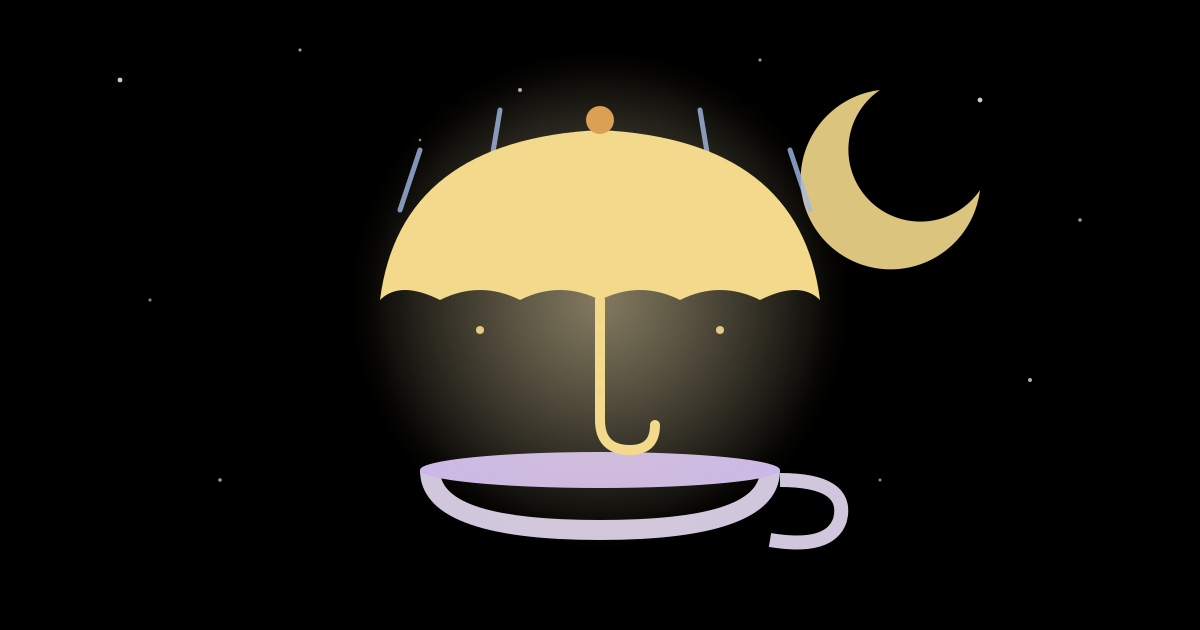
Every culture that knows rain knows the umbrella. It is one of the few everyday objects whose whole purpose is care: it exists to stand between a person and the weather. It is carried before it is needed, opened in a single motion, and shared without a second thought — two strangers can walk dry under one canopy. That is why the classic tasseography texts read the umbrella as the symbol of protection. Unlike the anchor, which promises steadiness, or the bell, which announces news, the umbrella promises something more practical: you will not have to face the coming weather unprotected. When the leaves settle into a curved canopy with a handle beneath it, the reading is about shelter — what is shielding you, what needs shielding, and whether you are ready when the rain starts.
This guide covers everything the umbrella can tell you: its core meaning in tasseography, how an open, closed, broken, or upside-down umbrella refines the message, how position reveals timing, the combinations that show exactly what kind of protection is involved, and what to do once the leaves have opened their umbrella for you.
The Core Meaning: Protection, Shelter, and Readiness
At its simplest, an umbrella means you are covered. Where the mountain warns of a climb and the cloud warns of confusion, the umbrella answers both: the weather may be coming, but you have shelter. Readers of the classic tasseography texts describe the umbrella as the cup's roof in miniature — a sign of security, insurance, and care. It can mean a person who protects you, a resource that cushions a blow, or a habit of foresight that is about to pay off: the savings account, the honest conversation, the plan B that was never glamorous and is now exactly what you need.
The second traditional meaning is shelter for others. An umbrella is rarely a solitary object. It shades whoever stands beneath it, and the cup borrows that generosity. An umbrella can mean you are the shelter — the friend, parent, or colleague others come to when their own weather turns — or that someone is quietly holding an umbrella over you: a mentor, a partner, a family member whose support you have been taking for granted. If you have been the strong one lately, the umbrella may be the cup's way of saying it is your turn to be kept dry.
The third is readiness itself: the umbrella as foresight. The person who carries an umbrella on a cloudy morning is not afraid of rain; they are prepared for it. In the same way, the umbrella in the cup often appears before the difficulty, not during it — a gentle early warning that lets you prepare while preparation is still cheap. It is also the symbol of boundaries: a canopy draws a line between you and what falls on you, and the umbrella can mean a boundary that needs drawing — saying no, limiting access to your time, or deciding what you will no longer stand out in the rain for.
Reading the Umbrella: Open, Closed, Broken, and Upside Down
Umbrellas speak in states, and the leaves borrow the whole vocabulary. A wide-open, sturdy umbrella is the classic form: protection active and working. This is the cup's most reassuring umbrella — shelter already in place, a difficulty you will pass through without getting soaked, or help that is already on its way. A large umbrella, shading a wide area, doubles the meaning: protection that covers more than just you — a household, a team, a family kept dry together.
Watch whether the umbrella is open, because an unopened umbrella tells a different story. A closed umbrella, shown furled and slim, means protection available but not yet in use: savings unspent, help unoffered, a boundary not yet set, or a plan made but not yet acted on. The closed umbrella is not a warning of disaster; it is a nudge. The cup is pointing out that the umbrella is already in your hand and asking whether it is time to open it. A small umbrella, like a parasol, softens everything into the personal and the social: protection from embarrassment or gossip, a graceful way out of an awkward situation, or shade from attention rather than from storms.
Special forms carry their own weight. A broken or torn umbrella means shelter that needs mending — a safety net with a hole in it, a boundary that has been crossed too often, or support you have been counting on that is thinner than you thought. The remedy is practical: check the plan, repair the boundary, and do not assume the old shelter still holds. Two umbrellas together traditionally mean shared protection — a couple, a partnership, or a community looking out for one another — or doubled security, such as two sources of support arriving at once. And an umbrella upside down is the cup's most curious image: protection offered in the wrong direction, help that collects rain instead of shedding it, or shelter you are holding for someone else while standing in the rain yourself — the umbrella asks whether your care is pointed the right way.
Position: Where It Sits and What It Says About Timing
As with every symbol, position shapes the umbrella's message. Near the rim, close to the handle: protection is personal and imminent — a difficulty arriving within days that you are already equipped for, or a boundary you need to set this week. The umbrella is at your side of the cup, and the shelter has your name on it. Near the rim, far from the handle: protection offered to, or coming from, your wider circle — someone else's rainy season that you can help shelter, or help arriving from an unexpected direction just as soon.
In the middle band: protection developing over the coming weeks to months — a safety net being built, a plan maturing, or support gathering around you. This is the "keep preparing" position: the umbrella is telling you to keep saving, keep the conversation open, and keep the boundary firm, because the rain it anticipates is still on its way. At the bottom of the cup: the deepest reading — a foundational shelter: a home, a long-term safety net, a relationship or faith that has held through many seasons, or a lesson about protection learned the hard way and now part of who you are. The umbrella at the bottom shades the long story, not the passing day.
Direction matters too. An umbrella leaning toward the handle shelters you — its protection is yours to use, and you should accept it when it is offered. An umbrella leaning away suggests the shelter concerns others first — someone else's protection that still touches your life, or help you are giving that may be leaving you exposed: the cup asks whether you are holding the umbrella for everyone but yourself. An umbrella near the top of the cup means the shelter is already close enough to use — reach for it, open it, and stop standing in weather you do not have to endure. An umbrella sinking toward the bottom can mean protection delayed — help that is coming but not yet here, or a safety net still being woven: the umbrella still shades, but softly, and patience is part of staying dry.
Umbrella Combinations: Reading the Neighbors
Umbrellas gain their finest detail from the symbols around them. Umbrella + house: the cup's most domestic pairing — protection for the home: a safe household, a move to somewhere more secure, or a family kept together through a hard season. Umbrella + heart: emotional shelter — love that protects rather than exposes, a partner who stands beside you in difficulty, or the safety of being fully known and still kept.
Umbrella + cloud or rain: the honest pairing — a difficult period is genuinely on its way, but the umbrella changes the story. Rain without an umbrella would mean getting soaked; rain with one means the trouble arrives and passes while you stay protected. Umbrella + key: protection that unlocks something — the safety net that makes a bold move possible, or the security that lets you take a risk you could not otherwise afford. Umbrella + star: hopeful protection — shelter with luck in it, a guardian influence, or a difficulty that ends better than expected.
Umbrella + tree: rooted protection — family shelter, support with deep roots, or a safety net built over generations: the kind of protection that does not appear overnight because it was planted long ago. Umbrella + ring: a protected commitment — a relationship, promise, or agreement kept safe through a hard season, or a bond that proves its strength precisely because it was tested. Umbrella + bird: news about protection — a message that help is coming, or word that a difficulty you feared has already been handled by someone looking out for you.
The cautionary pairings deserve equal attention. Umbrella + snake: protection with a catch — help offered with strings attached, or a shelter that costs more than it saves: accept the cover, but read the terms. Umbrella + mountain: a long climb under shelter — the difficulty will not be brief, but neither will the protection: pace yourself, because the umbrella is built for the whole journey. A broken umbrella: the shelter itself is the problem — a plan, boundary, or safety net that needs repair before the rain it was meant for arrives.
The Umbrella in Different Questions
The umbrella adapts beautifully to whatever you asked. In a career question, it is the safety net's symbol: savings that let you leave a bad job, a contract that protects you, a mentor who shields your early work, or a reputation solid enough to weather a setback. An umbrella with a key doubles this — the security that makes a brave career move possible. In a love question, the umbrella shades the relationship itself — a partnership that protects both people, a love that feels safe rather than stormy, or the quiet work of keeping each other dry through ordinary hard weeks.
In a finance question, the umbrella counsels practical protection — an emergency fund, insurance, or a budget with room to breathe. Watch for the companions: umbrella with a house suggests protecting the household budget first; umbrella with a cloud warns that a lean period is coming and the time to prepare is now, while preparation is still cheap. In a family question, the umbrella is the household's symbol — a home kept safe, elders cared for, children sheltered from adult worries, or a family that closes ranks when the weather turns.
In a well-being reading, the umbrella speaks of rest as protection — the value of boundaries, sleep, and saying no as genuine forms of self-care, and of treating shelter as seriously as you treat effort. It also points to social shelter: the people whose presence alone makes a hard week survivable. This is reflection and encouragement, not diagnosis or medical guidance: the cup offers the image of the canopy that keeps the rain off, and suggests you stand under it — accept help, set the boundary, and let yourself be kept dry.
When the Umbrella Looks Troubled
Sometimes the umbrella arrives in a worried form, and it's worth knowing the difference between "shelter holding" and "shelter failing." A torn or broken umbrella is the commonest troubled form — a safety net with a hole, a boundary crossed too often, or support thinner than you believed: the remedy is the umbrella-maker's own: inspect the canopy, mend what can be mended, and replace what cannot before the rain. The broken umbrella is not a verdict; it is a maintenance notice.
A closed umbrella in a storm can mean protection withheld — help available but not asked for, savings untouched out of fear, or a boundary you know you need but have not yet drawn: the cup asks whether pride, habit, or worry is keeping the umbrella shut while the rain falls. An umbrella blown inside out suggests shelter overwhelmed — a difficulty bigger than the protection prepared for it, or a plan that worked for small weather and failed in a gale: the reading asks you to upgrade the shelter rather than blame the storm. And an umbrella held for someone else while you stand in the rain means care pointed the wrong way — generosity that has become self-neglect: the cup asks whether the kindest move is to step under the canopy yourself.
An umbrella with no handle means shelter you cannot carry — protection tied to one place, one person, or one job, that cannot travel with you: the remedy is to build portable shelter — savings, skills, and relationships that move when you move. And if you asked for protection and found no umbrella at all, look for its sheltering cousins: the house (a safe place), the anchor (steadiness), the tree (rooted support), or the mountain (strength to climb through). Sometimes the cup answers with the shelter rather than the symbol — or suggests that this season is for building the umbrella, not yet for opening it.
What to Do After Finding an Umbrella
An umbrella is shelter, not a destination — and the best response is the practical one: check your cover, open what is closed, and mend what is torn. If the reading suggests protection already in place, name it this week: the savings, the person, the boundary, or the plan that is keeping you dry — gratitude makes shelter easier to keep. If the umbrella is closed, do the simple work of opening it: ask for the help, spend the savings on the thing they were saved for, or draw the boundary you have been rehearsing in your head.
If the umbrella arrived in a troubled form — torn, inside out, or held for everyone but you — do the honest work of the umbrella-maker itself: inspect before the rain, repair what can be repaired, and step under the canopy yourself when it is your turn to be kept dry. And if the umbrella shades others, do the generous work too: hold it steady, share the dry space, and remember that the best shelter is rarely used alone.
Many readers mark an umbrella finding with a small ritual of readiness: checking one practical safety net — a budget line, an insurance date, a conversation that needs having — or spending a quiet moment noticing who has held an umbrella over them lately, and saying thank you. However you honor it, let the umbrella remind you of tasseography's most practical truth: rain is not a punishment, and shelter is not luck — it is preparation, care, and the willingness to open what you already carry.
Frequently asked questions
What does an umbrella in tea leaves mean?
An umbrella in tea leaves traditionally means protection, shelter, and readiness — a sign that you are, or soon will be, covered against a difficult season. It can also mean that help is available: someone, or some resource, is ready to stand over you while the rain passes.
Is an umbrella in tea leaves good luck?
An umbrella is usually a reassuring sign. It does not promise sunshine, but it promises shelter: the traditional reading is that a difficulty is coming or already here, and that you have, or will find, the protection to get through it dry. An open, sturdy umbrella is the most welcome form.
What does an umbrella near the rim mean in tea leaves?
An umbrella near the rim means protection is needed soon — days rather than months away. Near the handle it concerns you directly, such as a personal difficulty you are about to be shielded from. Far from the handle it suggests protection offered to, or coming from, someone in your wider circle.
What does a closed umbrella mean in tea leaves?
A closed umbrella traditionally means protection that is available but not yet in use — savings unspent, help unoffered, or a boundary not yet set. The cup is not warning of disaster; it is pointing out that the umbrella is in your hand, and asking whether it is time to open it.
What does an umbrella with rain mean in tea leaves?
An umbrella with rain or clouds means a difficult period is genuinely on its way, but the umbrella changes the story: you will weather it. Rain without an umbrella would mean getting soaked; rain with one means the trouble arrives and passes while you stay protected.
Keep exploring
Tea Leaf Symbols Dictionary: 40+ Meanings from Anchor to Star
From anchor to star: explore 40+ classic tea leaf symbols and their traditional tasseography meanings, covering love, fortune, travel, caution and animals.
Read the meaning →
How to Read Tea Leaves: A Beginner's Step-by-Step Guide
Learn tea leaf reading step by step: choosing the right tea and cup, brewing with intention, swirling, inverting and interpreting the symbols left behind.
Read the meaning →
Bell Symbol in Tea Leaves: News, Celebration & What It Means
Spot a bell in your tea leaves? Discover its tasseography meaning — news, celebration, and calls to attention — plus ringing vs. silent bells, position timing, bell combinations, and what to do next.
Read the meaning →
Crown Symbol in Tea Leaves: Honor, Authority & What It Means
Spot a crown in your tea leaves? Discover its tasseography meaning — honor, recognition, and authority earned or approaching — plus crown details, position timing, crown combinations, and what to do next.
Read the meaning →